
You have successfully started your business, and sales are racking up. As a business owner who intends to expand, your next strategy is to reach a broader audience. So how do you make this a reality? One option you should consider is taking your business online. In today's technologically advanced world, an online store allows you to connect with local and international customers, extending your business reach beyond borders.
To create an online store, you need a website hosted on an e-commerce platform that serves as a meeting point between you and your customers. You can build your online store on this platform to display your products so that customers can browse through them, add them to their cart and pay at checkout.
Open Source E-commerce Platforms
Experienced coders and website developers often use open-source platforms when building an e-commerce store because of the customizable option that allows you to play around with different plugins on your site. Over the years, more e-commerce platforms have sprung out on the market, each easier to use than its predecessors. As a startup entrepreneur, you can access one of these platforms to build a scalable online store in just a few days.
Several free and paid options are available when looking for the most refined e-commerce platform for your online store. Open-source e-commerce platforms are mostly free to use, unlike closed-source platforms that are more expensive and require regular updates. If you are still unsure about the best open-source e-commerce platform that is right for you and your business, read on as we explore the top 15 platforms, their features, advantages, and drawbacks.
1. Magento Open Source
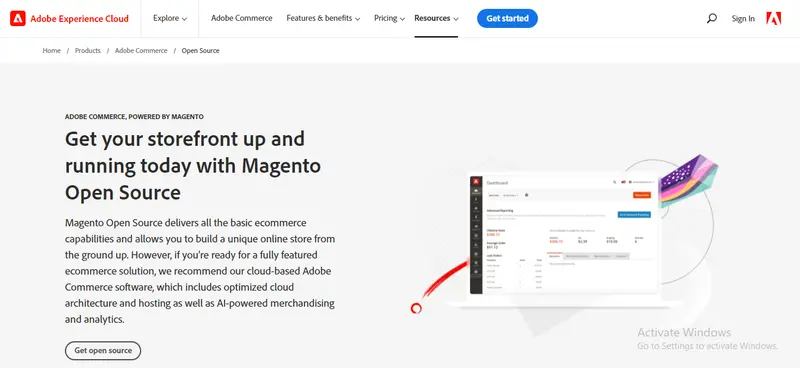
Magento is a popular Adobe-owned e-commerce platform with an easy-to-use interface that would benefit non-tech savvy users. Many retailers choose Magento Open Source due to its affordability and openness. With Magento, your business has access to almost limitless customizability and scalability options.
Website building, product catalog management, and marketing capabilities are all included in the core Magento features. However, if you choose to use the magneto open-source, you should purchase a domain name and SSL certificate.
Since it is an open-source platform, you will also need to buy your hosting, theme, and plugins to enable your store to run effectively. Don’t forget to add a payment processing partner to allow your customers to check out seamlessly.
Pros
Read More2. JigoShop

Jigoshop is a free and easy-to-use WordPress e-commerce plugin developed by Jigowatt, a UK-based company. In addition to enabling product sales on your WordPress website, the plugin provides comprehensive analytics tracking so you can maintain tabs on your site’s performance over time.
The plugin is used frequently due to its extensive customization capabilities. As an excellent WordPress shopping cart plugin, it provides all the features and tools you’d expect to set up an online store swiftly.
With its user-friendly interface, navigation is easy for techies and non-techies alike. Several free extensions could be used with Jigoshop, too. Additionally, you may expand your online store’s payment options by integrating more payment gateways and shipment alternatives.
Pros
Read More3. Joomla
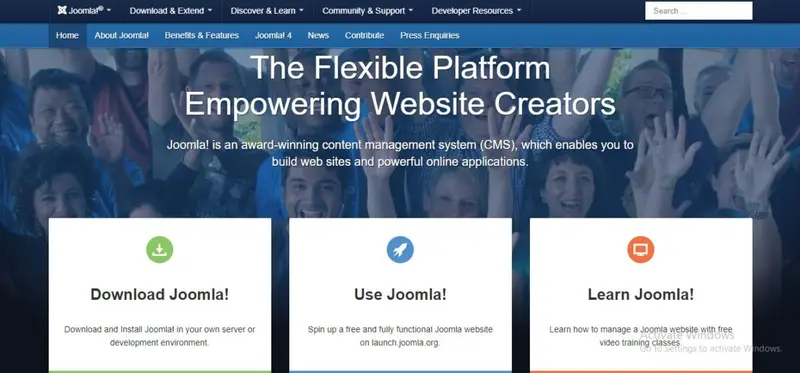
Joomla is free to download and use since it uses an open-source CMS. Open-source code and free plugins and templates will let you develop and customize your e-commerce any way you see fit on Joomla.
If you’re not pleased with the free alternatives, you may buy premium plugins and layouts for your website. Joomla is similar to WordPress, so you will need different e-commerce plugins to build your website entirely.
Some popular plugins include j2Store, HikaShop, MijoShop, etc. J2store is one of the free Joomla e-commerce extensions you can use without a lengthy registration procedure. Thanks to this extension, users’ eCommerce websites can be restyled entirely and redesigned with ease.
Pros
Read More4. WooCommerce
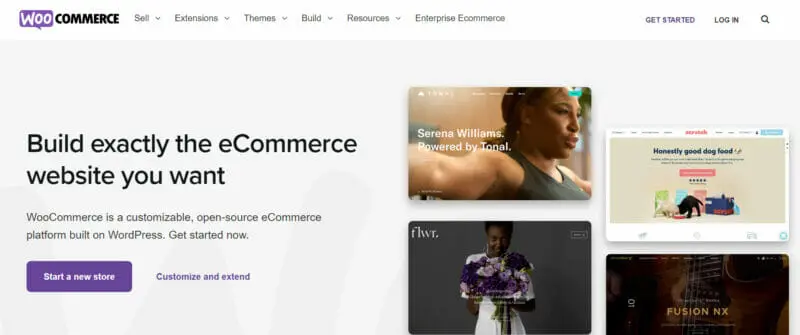
In terms of e-commerce, WooCommerce is one of the most popular platforms in the world. It’s a WordPress plugin that transforms your website into a powerful online storefront. It allows you to sell physical and digital items and associated products from specific marketplaces.
Setup wizards are available for all of WooCommerce’s features. As a result, many users choose WooCommerce over other hosted platforms because it gives them more choice over how they build their site. Though the WooCommerce plugin is free, you will need to pay for your hosting and domain name to install it on your WordPress dashboard. WooCommerce, being an open-source platform, requires that you handle all aspects of installation, management, backup, and optimization on your own.
Read More
5. OpenCart
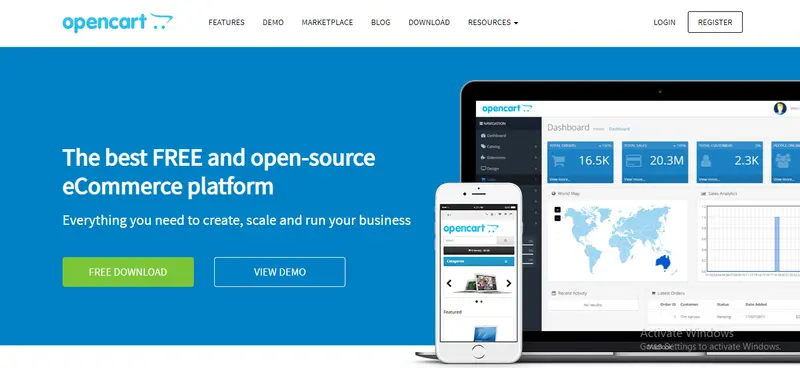
OpenCart is a PHP-based open-source platform. App installation is quick with support for different types of extensions. Additionally, you can utilize your shopping cart system and handle orders with ease. There are several product features to assist you in getting started. For example, each product in your shop can have a unique theme and design. To make significant changes, you’ll need to know a bit about coding and be familiar with the basics of setting up an e-commerce store.
You may choose to make your business available in more than 40 different languages. Due to its local and global use optimization, small and medium-sized businesses may find OpenCart’s open-source software suitable for their business.
Read More6. Wix

You might have come across a WIX ad at least once. It is a popular platform that has created a name in the industry through elaborate marketing campaigns and collaborations. This also extends to their customers as you can easily promote your Wix store using its email marketing and SEO features.
Wix is an excellent option for brands that want to create a fully working online store that includes both catchy designs and e-commerce features in one. You can use Wix as a novice or a seasoned techie. There are no coding skills required to use this platform since everything runs simply in your browser.
Read More7. Ecwid
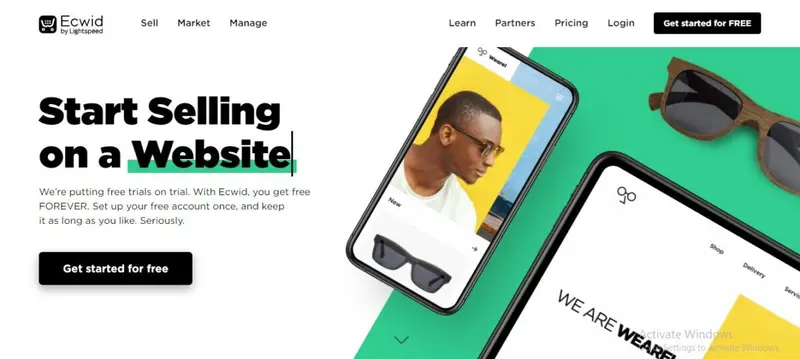
If your company sells online and in-store, Ecwid is a good integration on your site. Ecwid is coined from two words, “E-commerce and widgets.” As the name implies, you can add Ecwid as a plugin to other platforms like WordPress or Wix in just a few steps. It comes with a free version, but you can only offer ten products on the free plan.
It includes features like discount coupons and the option to sell digital goods. There is a paid version of it too, where users can receive a lot of value for their money with Ecwid’s $14.08/month venture plan.
Read More8. Drupal Commerce
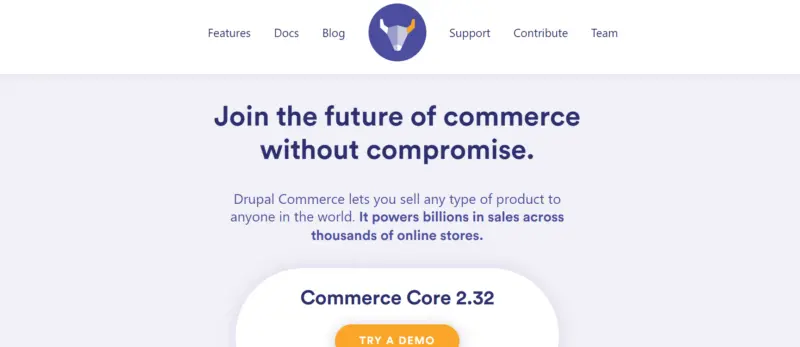
Drupal Commerce is an open-source eCommerce platform that helps make your eCommerce website search engine-friendly. With Drupal Commerce, you have the freedom to pick from a wide range of mobile-responsive themes and make design, style, and logic adjustments to make your online shop as unique as you want it.
By integrating with third-party systems, Drupal Commerce may be tailored to meet the ever-changing requirements and expectations of commerce websites of any size. Thanks to Drupal Commerce’s mobile-ready features, customers can access your store through any device. Drupal is also known to be highly secure, so you can be confident that all of your personal information and data will remain protected.
Pros
Read More9. Spree Commerce
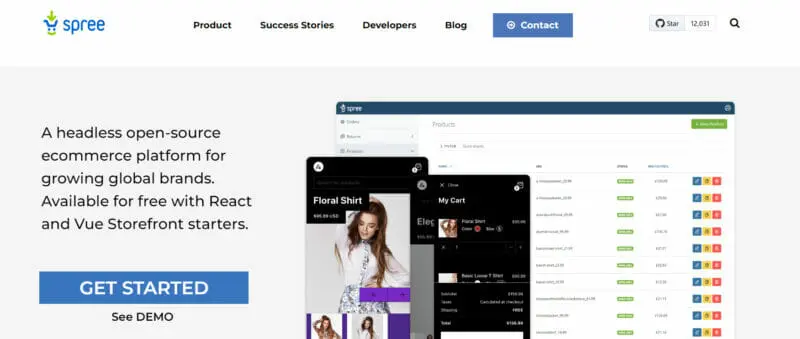
Large or small companies can use Spree Commerce because of its high adaptability. Technically, Spree Commerce might be a challenge to understand, but for web developers with the required skill, this can be an excellent e-commerce tool.
The Ruby on Rails community and the tool’s support package can be counted on to provide dependable assistance for non-tech savvy users. An analytics dashboard, SEO tools, and inventory management systems are just a few of the services available on the platform. There are also 45 languages available for use with Spree Commerce.
Pros
- ? Stores are highly customizable
- ? Quick and easy integrations with third-party systems
- ? Good customer support
- ? A wide range of powerful marketing and SEO options
Cons
Read More10. PrestaShop
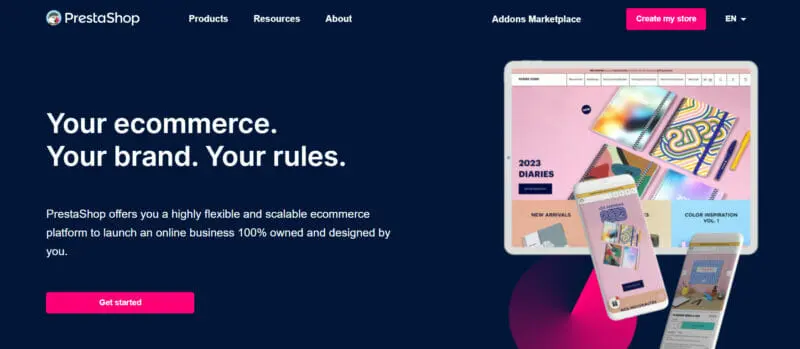
Prestashop is a France-based open-source e-Commerce company. It provides over 600 features, from shop administration to shipping and online marketing. PrestaShop is user-friendly and free to download but not entirely free to set up, as it comes with a maintenance fee and hosting. Also, you will need prior knowledge of coding to customize it entirely, or you will hire a web developer for assistance.
To see if PrestaShop is right for you, you can look at the online demo before downloading and installing the software. PrestaShop’s customization options will enable you to organize your products and set up different payment options.
Read More11. Jimdo

Jimdo is well-known for being an all-in-one website builder that doesn’t require prior coding expertise on the user’s part. It is easy to get started with Jimdo’s e-commerce features. Adding product galleries and having access to a professional domain are just two of the many benefits you’ll get. But the Jimdo free plan won’t allow you to sell or showcase your products unless you purchase a premium plan starting from $15.
Read More12. Weebly e-Commerce
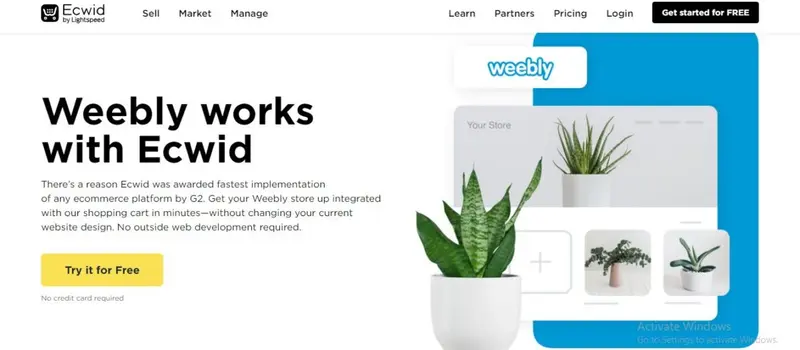
Weebly allows you to build a traditional website or an e-commerce store. You can access the same content-building tools from the beginning of the process. In Weebly eCommerce, you can drag and drop to create your storefront, just like on the regular website builder.
Products are added in the website manager away from the drag-and-drop editor. Product choices and categories may be added individually or in bulk using a spreadsheet. Weebly eCommerce has a unique feature. Emails are automatically generated depending on your store’s activity, and fresh templates are created as you add new products or categories.
Read More13. OsCommerce
OsCommerce is more than simply a front-end solution for your online shop. It also offers a broad range of functionality for backend administration, which extends to products. There are currently over 300,000 stores using osCommerce. Although the platform may be downloaded and installed for free, you’ll need developer skills to make alterations.
Read More14. nopCommerce
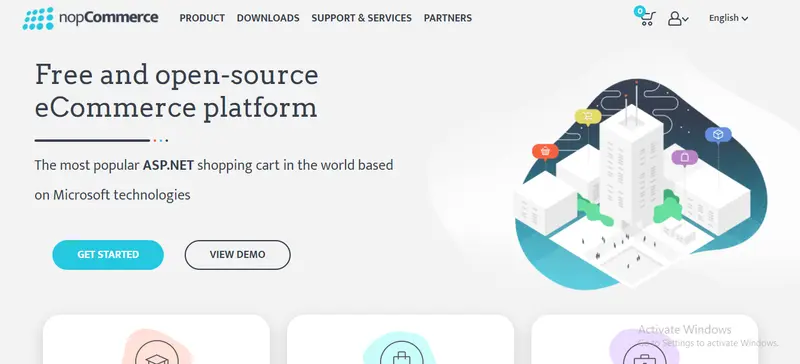
nopCommerce is an open-source eCommerce platform operating on ASP.NET core. It was released in 2008 and currently has over 2.5 million downloads. nopCommerce, as you may have guessed, is entirely free, but users will need some coding experience.
The nopCommerce feature set can be scalable to simultaneously handle a product catalog with millions of products and thousands of visitors. The admin panel is similar to OpenCart, but there are still notable differences. You can use the nopCommerce demo for a start, which allows quick access to a sample admin and independent shop.
Read MoreConclusion
Choosing the perfect eCommerce platform for your business needs might be challenging as a small business owner. But with the rise in popularity of online shopping, your business must be easily accessible to your customers regardless of their location.
Open-source e-commerce platforms enable you to customize your site to your taste. Although some of them might be complex and confusing to non-developers, you can use some platforms without coding experience.
If you still can't find your way around a platform, there are online communities you can reach out to for help. Explore the options listed above—their features, pros, and cons—to find the best one for your brand.
Frequently Asked Questions
What is an open source ecommerce platform?
Open-source eCommerce refers to any eCommerce software which allows its users access to its original source code. With open source code, you can modify the eCommerce platform for your own needs and give users control over your store’s design.
Is there an open source Shopify?
Shopify is an eCommerce platform, but Shopify is not open source. This hosted platform does not provide access to its source code.
Which is an open source ecommerce platform built on WordPress?
WooCommerce is fully customizable and open-source eCommerce platform on WordPress.
What is headless ecommerce platform?
A headless eCommerce platform is an online store. These stores are customer-facing and front-end businesses with a technical back-end, decoupled from one another.


