
Influencer marketing services help brands execute campaigns end-to-end, covering creator sourcing, content production, paid amplification, and performance tracking. Unlike platforms that support in-house teams, these services provide the operational structure required to run campaigns at scale and tie activity to measurable outcomes.
Influencer adoption continues to accelerate. According to our 2026 Influencer Marketing Benchmark Data, 85% of marketers report influencer marketing as an effective channel, while 72% expect budgets to increase by more than 50%.
That growth places pressure on teams to deliver consistent results across multiple creators, markets, and formats.
For brands without dedicated internal resources or established creator workflows, service providers reduce execution risk and improve speed to market.
The providers below are evaluated based on their ability to manage campaigns, integrate paid media, and deliver performance visibility.
Key Influencer Marketing Services Include
Influencer marketing services focus on execution, not just discovery. Most providers operate across five core areas:
- Creator Sourcing and Vetting: Agencies identify creators using audience demographics, engagement rates, and historical performance data. Vetting processes typically include fraud detection and brand safety checks.
- Campaign Strategy and Planning: Services align influencer activity with business goals such as reach, conversions, or product launches. This includes creator selection, content direction, and channel mix.
- Content Production and Approvals: Teams manage briefing, revisions, and approvals to ensure content meets brand and platform requirements while maintaining creator authenticity.
- Paid Amplification: Many providers extend organic content through Spark Ads, whitelisting, or dark posting. This layer connects influencer content with performance media budgets.
- Performance Tracking and Reporting: Reporting frameworks track impressions, engagement, clicks, and conversions. More advanced providers connect campaigns to revenue through affiliate links, promo codes, or platform integrations.
- Top Influencer Marketing Services
- 1. HireInfluence
- 2. Open Influence
- 3. Linqia
- 4. Influencer
- 5. The Shelf
- 6. Influencer Marketing AI
- How to Choose the Right Influencer Marketing Service
- Influencer Marketing Services vs Platforms
- Choosing the Right Influencer Marketing Services for Brands
- Frequently Asked Questions
Top Influencer Marketing Services
Check out these top influencer marketing service providers to get started.
Best For: Fortune 500 Companies and Brands Minimum campaign size: $50,000+ Influencer pool size: 5K+ vetted creators across major platforms Not suitable for: Small brands testing influencer marketing with limited budgets HireInfluence operates as a full-service execution partner, managing campaigns from creator sourcing through paid amplification and reporting. Campaign structure typically includes multi-phase workflows covering discovery, briefing, content production, and optimization, which allows brands to run coordinated activations across platforms such as TikTok, Instagram, and YouTube. HireInfluence is an award-winning, full-service influencer marketing agency trusted by the world’s most iconic brands since 2011 - including Microsoft, Coca-Cola, McDonald’s, Amazon, Walmart, NFL, and Toyota.
10 - 50 Austin, Los Angeles, New York, Houston Best for: Fortune 1000 Companies and Brands HireInfluence is an award-winning, full-service influencer marketing agency trusted by the world’s most iconic brands since 2011 - including Microsoft, Coca-Cola, McDonald’s, Amazon, Walmart, NFL, and Toyota.
Best For: Global brands running large-scale, culturally driven campaigns Minimum campaign size: $50,000+ Influencer pool size: 100K+ creators across international markets Not suitable for: Brands focused only on small-scale or performance-only campaigns Open Influence delivers full-service influencer marketing programs built around audience intelligence and cultural alignment. Campaign development relies on demographic, psychographic, and behavioral data to match creators with specific audience segments, reducing wasted impressions and improving relevance across markets. Execution covers strategy, creator sourcing, production, and distribution. Teams coordinate campaigns across multiple regions, allowing brands to maintain consistent messaging while adapting to local audiences. Their operational model supports international rollouts where centralized control and localized execution are required simultaneously. Best For: Fortune 500 brands building recurring creator programs with performance-based partnership decisions Minimum campaign size: $50,000+. Influencer pool size: 18M+ creators in its Resonate discovery database, representing searchable coverage rather than an exclusive roster. Not suitable for: Small businesses seeking low-budget creator promotions Linqia’s influencer marketing services suit brands that want each campaign to inform the next. Its offering combines creator selection and creative strategy with an approach to evaluating partnerships, helping marketers connect campaign performance with future casting decisions. Linqia is the leading independent influencer marketing agency in the U.S., specializing in data-driven campaigns for major brands, combining influencer marketing, paid media, and content production.
They are well known for their "guaranteed resul... 50+ San Francisco, Chicago, New York, Colombia Best for: Fortune 500 Brands Linqia is the leading independent influencer marketing agency in the U.S., specializing in data-driven campaigns for major brands, combining influencer marketing, paid media, and content production.
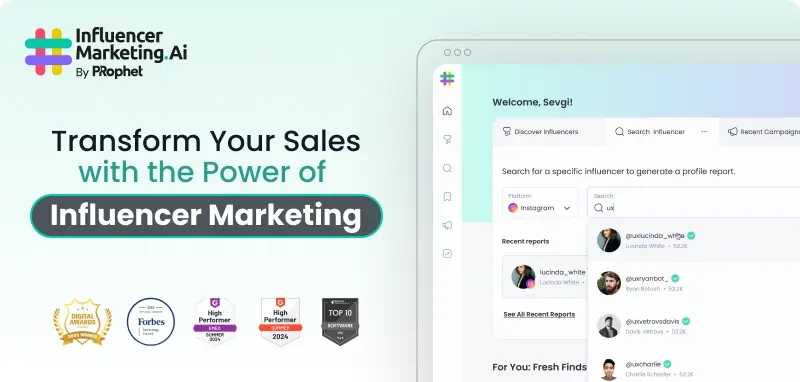
They are well known for their "guaranteed resul... Best For: Brands running integrated influencer campaigns tied to paid media and brand strategy Minimum campaign size: $50,000+ Influencer pool size: Global network across key social platforms Not suitable for: Brands looking for self-serve tools or small, one-off activations Influencer operates as a full-service agency with a strong focus on integrating creator campaigns into broader media strategies. Campaign planning is structured around audience insights and platform behavior, ensuring creator selection aligns with both brand positioning and distribution channels. Execution includes creator sourcing, briefing, production, and amplification. Teams manage large creator rosters across TikTok, Instagram, and YouTube, often supporting campaigns that run across multiple markets simultaneously. Best For: Medium and Small Size Brands Minimum campaign size: $100,000+ Influencer pool size: 5K+ Not suitable for: Brands prioritizing awareness-only campaigns without performance tracking The Shelf positions influencer marketing as a performance channel, structuring campaigns around conversion data rather than reach alone. Campaign planning starts with audience segmentation and historical performance benchmarks, allowing creator selection to align with expected outcomes such as clicks, sign-ups, or purchases. Execution includes creator sourcing, content planning, and campaign management, with a strong emphasis on testing and optimization. Campaigns are often built in phases, allowing teams to identify high-performing creators and scale investment toward assets that generate measurable results. Best For: Enterprise brands, ecommerce companies, performance marketers, and global agencies Minimum campaign size: Typically $10,000+, depending on campaign scope Influencer pool size: 400M+ creator profiles across major platforms Not suitable for: Teams that require fully managed campaigns with no internal involvement InfluencerMarketing.AI (IMAI) operates as a hybrid between a service provider and a software platform, combining automated workflows with hands-on campaign support. Instead of relying on manual sourcing and outreach, the platform uses performance and audience scoring to prioritize creators based on conversion potential.1. HireInfluence

HireInfluence


HireInfluence
2. Open Influence
3. Linqia

Linqia
Linqia
4. Influencer
5. The Shelf
6. Influencer Marketing AI
How to Choose the Right Influencer Marketing Service
Selecting the right influencer marketing service requires aligning provider capabilities with campaign goals, budget, and internal resources. The criteria below focus on measurable factors that impact performance and scalability.
Define Campaign Scope and Objectives
Campaign scope determines which type of service will deliver results.
One-off campaigns focused on product launches require different execution than always-on programs designed to drive consistent revenue. Brands targeting awareness often prioritize reach and impressions, while conversion-focused campaigns require tracking infrastructure, affiliate links, and paid amplification.
Service selection should match the primary objective. Agencies built for brand awareness may not deliver measurable ROI, while performance-driven providers may limit creative flexibility. Misalignment at this stage increases costs and reduces campaign efficiency.
Evaluate Creator Network Quality
Creator network size is less important than audience relevance and performance history. Evaluation should focus on audience demographics, geographic distribution, and platform-specific engagement rates.
For example, TikTok campaigns often prioritize short-form video engagement, while YouTube campaigns require longer-form content and higher production standards. Brands targeting specific regions or niches need providers with proven access to those audiences.
Fraud detection and audience authenticity also matter. Services that rely on inflated follower counts or low-quality creators introduce risk and reduce campaign effectiveness.
Assess Paid Media Capabilities
Paid media integration determines whether influencer content can scale beyond organic reach. Services that support whitelisting and Spark Ads allow brands to extend high-performing creator content into paid campaigns, improving cost efficiency.
Without paid amplification, campaigns depend entirely on organic distribution, which limits reach and reduces control over performance. Agencies that integrate influencer content into paid social workflows provide better alignment with broader marketing strategies and budgets.
Review Measurement and Attribution
Measurement frameworks should connect influencer activity to business outcomes. Basic reporting includes impressions, reach, and engagement, but these metrics do not reflect revenue impact.
Stronger services track clicks, conversions, and sales through affiliate links, promo codes, or ecommerce integrations. Granular reporting at the creator level allows brands to identify top-performing partners and reallocate budget accordingly.
Limited visibility into performance makes it difficult to justify spend or optimize campaigns over time.
Understand Pricing Models and Minimums
Pricing structures vary based on service scope and campaign complexity. Most providers operate on project-based fees or monthly retainers, with minimum campaign sizes typically starting at $10,000 and exceeding $50,000 for enterprise programs. Many go into hundreds of thousands of dollars.
Cost, however, is driven by the number of creators, content volume, production requirements, and paid media spend. Campaigns involving multiple markets or platforms increase coordination complexity and overall cost.
Clear pricing expectations help brands avoid under-scoped campaigns that fail to deliver meaningful results.
Influencer Marketing Services vs Platforms
Influencer marketing services and platforms solve different problems. Services handle execution end-to-end, while platforms provide tools for internal teams to manage campaigns. The table below outlines the key differences across core evaluation criteria.
|
Criteria |
Influencer Marketing Services |
Influencer Marketing Platforms |
| Primary function | Full campaign execution from strategy to reporting | Software tools for managing campaigns in-house |
| Creator sourcing | Managed by agency using vetted networks and data | Self-serve search across influencer databases |
| Campaign management | Agency handles briefing, coordination, and delivery | Internal team manages workflows and communication |
| Content production | Structured workflows with approvals and revisions | Requires internal coordination with creators |
| Paid media integration | Often includes whitelisting, Spark Ads, and paid amplification | Limited or requires external media buying setup |
| Measurement and attribution | Reporting tied to campaign outcomes, often including conversions and revenue | Dashboard-based analytics, requires setup for conversion tracking |
| Speed to launch | Faster execution due to established workflows and teams | Slower without internal processes and experience |
| Resource requirements | Minimal internal resources required | Requires dedicated internal team and expertise |
| Typical use case | Enterprise campaigns, multi-market rollouts, performance-driven programs | Small to mid-sized campaigns, testing, or in-house scaling |
Choosing the Right Influencer Marketing Services for Brands
Influencer marketing services vary significantly in execution model, pricing, and performance focus. Some providers specialize in large-scale brand campaigns, while others prioritize conversion tracking and revenue attribution.
The right choice depends on campaign objectives, internal resources, and budget thresholds. Brands running multi-market campaigns or managing high creator volume benefit from full-service partners that handle strategy, production, and paid amplification.
Teams with internal expertise may prioritize hybrid solutions that offer greater control and lower overhead. Evaluation should focus on measurable outputs, including reach, engagement quality, and conversion impact.
Clear alignment between service capabilities and business goals reduces wasted spend and improves long-term performance across influencer marketing programs.
Frequently Asked Questions
What role do influencer marketing platforms play for agencies and brands?
Influencer marketing platforms streamline discovery, vetting, and campaign management, giving agencies and brands access to advanced tools that simplify large-scale operations. A good overview of the top influencer marketing platforms shows how they offer fraud detection, analytics, and audience insights, all in one place.
How do you build an effective influencer marketing strategy?
A successful approach involves more than just hiring creators—it requires aligning objectives, messaging, and budget. A strong influencer marketing strategy emphasizes defining clear KPIs, selecting the right mix of influencers, and optimizing based on real-time performance.
What qualifies someone as an influencer?
An influencer is not defined by follower count alone but by the trust and authority they hold with their audience. Understanding what an influencer is requires looking at their ability to shape opinions, spark engagement, and drive meaningful brand actions.
How are influencer rates typically calculated?
Rates depend on factors such as platform, audience size, engagement levels, and content type. To make informed budgeting decisions, marketers often consult benchmarks like influencer rates that break down average costs across niches and formats.
Can influencer marketing work for small businesses as effectively as for large ones?
Yes—when done correctly, it scales down effectively. Many small businesses leverage micro- and nano-creators for cost-efficient, authentic campaigns. The growing number of influencer marketing examples highlights how brands of all sizes generate tangible results.
How do you measure whether an influencer campaign is successful?
Success is measured not only by vanity metrics but by business outcomes such as conversions, reach quality, and long-term customer growth. Clear frameworks for measuring influencer campaigns help marketers link activity to ROI and refine future initiatives.
What tactics can boost influencer campaign performance?
Tactics range from leveraging exclusivity and discount codes to using storytelling formats that align with the influencer’s voice. Marketers often experiment with proven influencer marketing tactics to maximize reach and impact across multiple platforms.
Why are micro-influencers gaining more attention from brands?
Micro-influencers typically have higher engagement and niche audience trust, making them valuable partners for targeted campaigns. Many marketers turn to guides on micro-influencer marketing to understand how to structure partnerships and achieve cost-efficient results.


