
A ranking is a timestamped snapshot, and it starts decaying the moment it is recorded. The search results that produced it keep moving underneath you: Google's Search Status Dashboard logged four confirmed ranking updates in 2025, and the August 2025 spam update alone took 26 days 15 hours to fully roll out. That is the practical problem the best serp tracking tools exist to solve, because a position you checked last Tuesday may already describe a SERP that no longer exists. The question is not whether a tracker reports a number, but how old that number is and whether the tool tells you so.
For most agencies and in-house teams, start with SE Ranking: it runs daily checks on every plan, adds on-demand rechecks when you need a fresh reading mid-rollout, and parses AI-answer placements in the same interface. That combination keeps the freshness gap short without forcing you into a top-tier plan to get it. The honest nuance: if you need enterprise hourly crawls across 25,000-plus keywords, a dedicated high-frequency tracker will go deeper on that single axis. The full eight-tool breakdown, with where each one earns or loses on freshness, is below.
How we ranked these SERP trackers
Every criterion here reduces to one question: how close is the reported position to the live SERP? We assessed each SERP tracker against seven measures. First, check cadence: does the tool crawl daily by default, or is daily gated behind a top tier? Second, on-demand recheck: can you trigger a fresh crawl for a keyword without waiting for the next scheduled run? Third, historical depth: how far back the position record goes, which is what lets you correlate a drop with a dated Google update. Fourth, localization granularity down to country, city, and ZIP. Fifth, whether desktop and mobile are tracked as separate results rather than averaged. Sixth, SERP-feature and AI-answer parsing, including AI Overviews, AI Mode, and ChatGPT. Seventh, API and export access for teams that feed positions into their own pipelines.
Cadence matters because crawl frequency is not arbitrary on Google's side either. As Google describes in How Search Works, its crawling "processes are always running," and they "learn how often content they've seen before seems to change and revisit as needed." A tracker that checks less often than the SERP changes is reporting history, not state. Our assessment weighs each tool on how it surfaces the age of its data, using each vendor's own published cadence, localization, and API documentation.
What "daily tracking" actually means
"Daily tracking" is not one mechanism. A scheduled daily crawl re-checks your keyword set on a fixed cadence, so the worst-case staleness is roughly 24 hours. An on-demand recheck is a manual trigger that returns a reading within minutes, independent of the schedule. A metered check pool is different again: you get an allotment of individual checks and spend them as you choose, which means the interval between readings for any one keyword depends on your budget, not a clock.
The distinction has consequences during a rollout. Confirmed 2025 and 2026 updates ran anywhere from under a day to the 26-plus-day August 2025 spam update. A weekly-default cadence, or an exhausted metered pool, can leave you blind for most of that window while positions are still shifting. Location is the second variable. The same query returns different results by location; as Google explains in Ranking results, it ranks by "your location and settings," so "football" surfaces the Chicago Bears in Chicago and Premier League soccer in London. A daily check pinned to the wrong locale is fresh and still wrong.
The 8 best SERP tracking tools in 2026
All eight trackers below check rankings at least daily on their entry plan, but they diverge sharply on on-demand rechecks, location depth, and AI-answer parsing. The table compares those freshness levers at a glance; the ranked breakdowns that follow explain where each tool gains or loses on data age.
| Tool | Check frequency | On-demand recheck | Locations | AI-answer tracking | Entry price |
| SE Ranking | Daily on all plans | All or selected engines | Country/city/region/ZIP, 188 countries | ChatGPT, AI Overviews, AI Mode, Gemini, Perplexity | $129/mo |
| AccuRanker | Daily + on-demand | Single keyword anytime; full domain every 2 hours | Local servers in every supported country | - | $224/mo |
| Wincher | Daily on all plans | Standard+ only | Country + city | - | $49/mo |
| Nightwatch | Daily + real-time | On-demand | Country/city/postcode | - | Mid-tier |
| Advanced Web Ranking | Selectable (default weekly) | On-demand | Country/city | - | Mid-tier |
| Serpstat | Daily (metered) | Limited | Country/city | - | Entry-tier |
| Semrush | Daily; multi-location Pro+ | Limited | Country/city (Pro+) | - | Mid-tier |
| seoClarity | Daily/hourly/on-demand | On-demand | Country/city | - | Enterprise |
1. SE Ranking
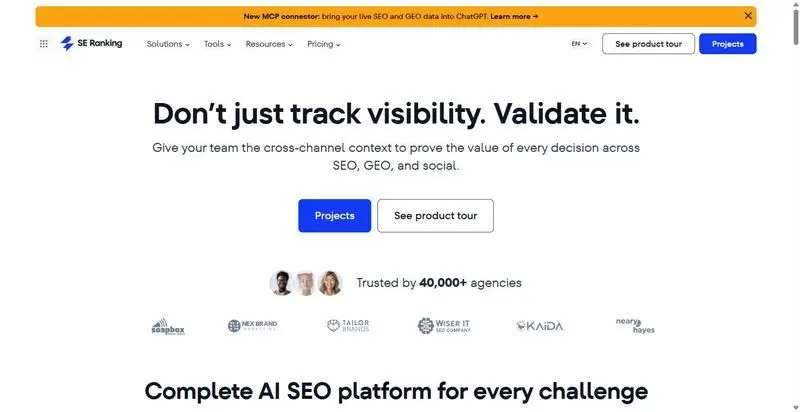
SE Ranking is an SEO and AI-search-visibility platform where rank and SERP tracking sits as one module among keyword research, audits, and backlink analysis.
Best for: Agencies and in-house teams that want fresh daily data on every keyword project without paying up to a top enterprise tier.
Standout: Daily checks run on both current plans, Core and Growth, so freshness is never gated behind an upgrade. You can also trigger an on-demand recheck across all engines or a selected subset the moment a SERP shifts, and results cover the top 100 positions with desktop and mobile tracked as separate datasets.
Pros:
Read More2. AccuRanker
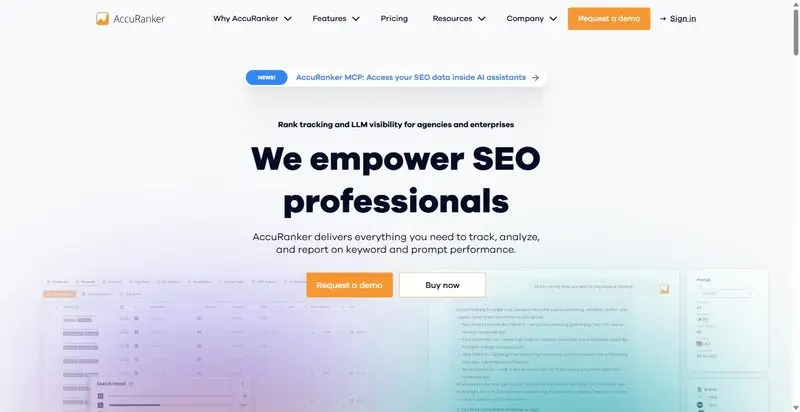
AccuRanker is a dedicated rank tracker known primarily for the speed at which it returns updated position data.
Best for: Teams whose workflow depends on re-pulling specific rankings within hours rather than waiting for the next scheduled cycle.
Standout: Tracking runs automatically each day, and on top of that you can refresh a single keyword at any moment or re-pull an entire domain on-demand every two hours. Local servers in every supported country handle the queries, and Enterprise adds raw SERP HTML plus an unlimited write API for teams building their own reporting layer.
Pros:
Read More3. Wincher
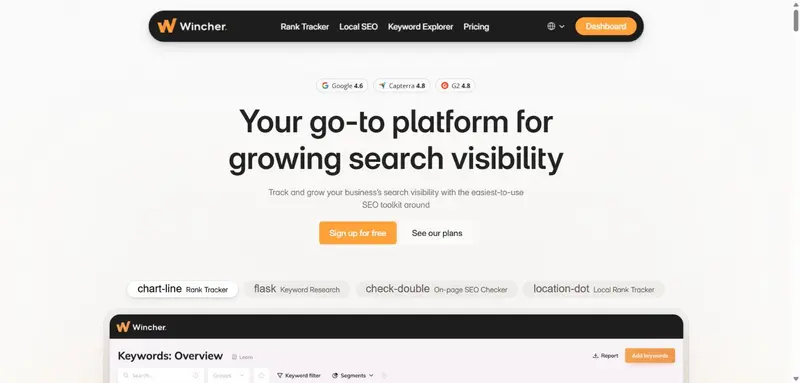
Wincher is a focused keyword and SERP tracker that keeps the feature set narrow around rank monitoring.
Best for: Teams that want daily position tracking on a defined keyword set without a wider platform around it.
Standout: Daily checks apply on every plan, so baseline freshness is consistent even at the Basic tier. On-demand updates, though, begin at Standard and above rather than Basic, and local Maps positions refresh weekly instead of daily, which matters if location results move faster than that cadence allows.
Pros:
Read More4. Nightwatch
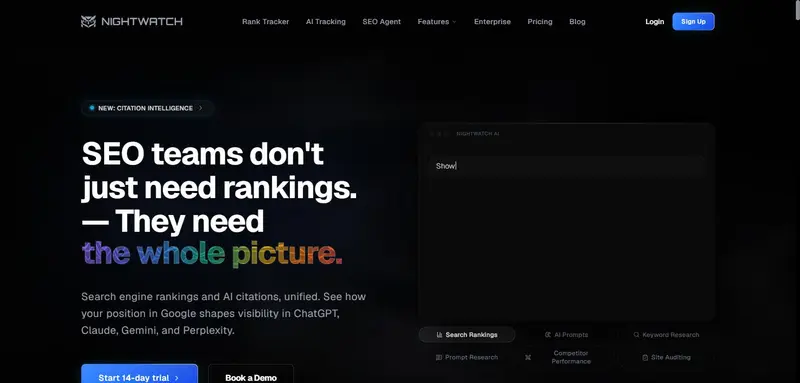
A rank tracker built around unusually granular localization, letting teams pin positions to precise geographies rather than country-level averages.
Best for: Agencies and in-house teams tracking rankings across many cities, regions, or languages under one roof.
Standout: Every plan runs daily automated checks and adds real-time on-demand refreshes, so you are never waiting on a scheduled cycle to confirm a movement. Localization reaches 107,000+ locations across 190+ countries in any language, and the platform retains three years of SERP history for each keyword, which makes cadence and geography auditable long after the fact.
Pros:
Read More5. Advanced Web Ranking (AWR)
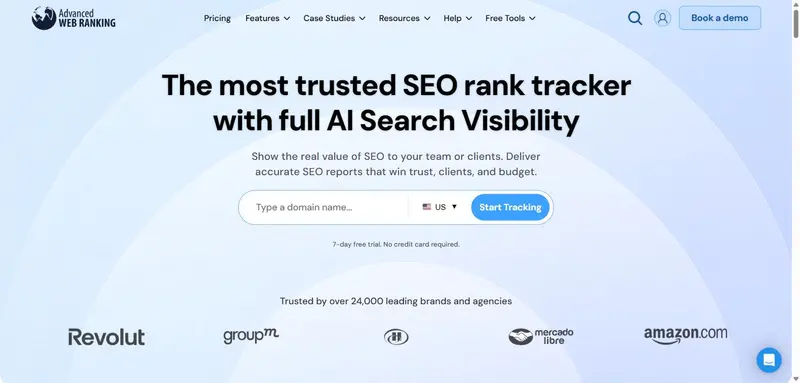
A long-standing tracker whose defining trait is user-selectable update frequency, letting you dial cadence per keyword set against your unit budget.
Best for: Agencies that want explicit control over how often each keyword group refreshes and what that costs.
Standout: Cadence is selectable across daily, weekly, bi-weekly, monthly, and on-demand, but the default is weekly and unit cost scales with frequency, so daily tracking consumes roughly seven times the units of weekly. One keyword unit covers a single weekly query on one engine and device at 50-result depth; multiple locations multiply that. Fast one-hour on-demand updates are gated to Agency and up.
Pros:
Read More6. Serpstat
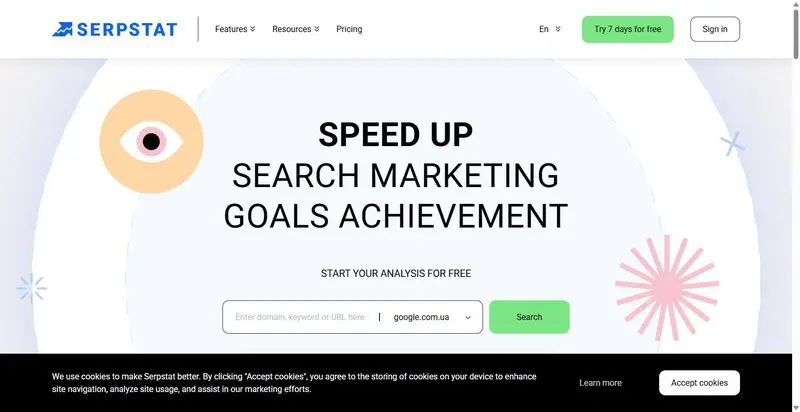
A multi-tool SEO platform that folds rank tracking in alongside keyword, backlink, and audit modules under one subscription.
Best for: Teams that want position tracking bundled with a wider toolset rather than a standalone tracker.
Standout: Daily updates are available on every plan, but they draw from a metered monthly pool of position checks, so effective cadence on a large keyword set is capped by your allotment rather than the schedule. Tracking spans organic and paid results across desktop and mobile, though the Rank Tracking API is reserved for the Team tier and up.
Pros:
Read More7. Semrush
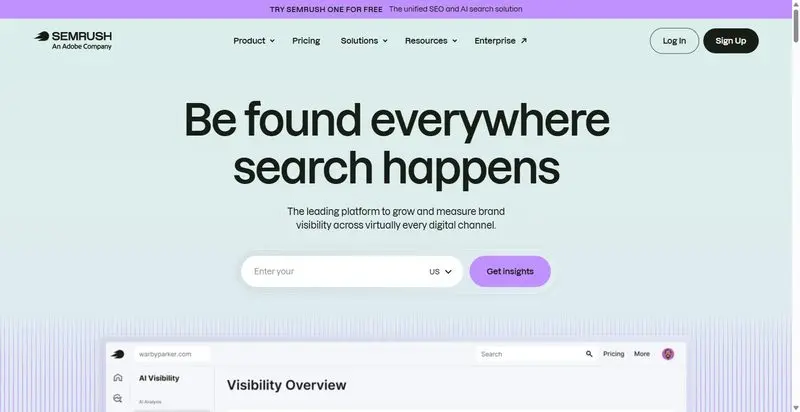
A broad SEO platform where Position Tracking is one module among many, not the core product it was built around.
Best for: Teams already running Semrush for keyword and backlink research who want rank tracking inside the same login.
Standout: Position Tracking refreshes daily on the base plan, giving you one snapshot per keyword set each day. The parts that drive local and mobile freshness, multi-location and multi-device tracking, sit behind the Pro+ tier. On-demand rechecking is not part of the model, so you wait for the next scheduled cycle rather than pulling a fresh position when something moves.
Pros:
Read More8. seoClarity
An enterprise SEO platform built around very large keyword volumes rather than per-plan pricing tiers.
Best for: Enterprise in-house teams and large agencies tracking tens of thousands of keywords across markets.
Standout: Ranking updates run daily, hourly, or on demand across desktop, mobile, and local, so you can match check frequency to how fast a given SERP actually moves. Local rankings pull from any geolocation without a stated cap, and a dedicated Rank Tracking API feeds positions straight into your own reporting stack instead of a fixed dashboard.
Pros:
- Refreshes rankings daily, hourly, or on demand
- Tracks desktop, mobile, and local as separate SERPs
- Exposes a dedicated Rank Tracking API for reporting pipelines
Cons:
Read MoreWhich SERP tracker should you run?
For most agency and in-house teams, SE Ranking stays the default. The reason is cadence coverage rather than feature count: fresh daily data on every plan, on-demand rechecks when you need a position the moment it matters, AI-answer tracking shown alongside classic results, and API plus MCP access included without a tier upgrade. That combination means a SERP position never sits in isolation from the context around it.
Skip it when your requirements point elsewhere. If you run enterprise high-frequency crawls across 25,000-plus keywords, AccuRanker or seoClarity handle that volume and cadence more directly. If your work depends on tracking across 100,000-plus locations, Nightwatch is built for that spread. And if your SERPs move slowly enough that a weekly refresh keeps pace, a weekly-default tool like AWR is fine and lighter on monthly spend. Among the best serp tracking tools here, the right pick follows your check-frequency needs, not a generic ranking.
Frequently Asked Questions
How current is the data a SERP tracker shows you?
It depends on cadence. A daily scheduler gives you a snapshot up to roughly 24 hours old, which is fine for steady tracking. On-demand rechecks close that gap to minutes. A weekly or metered cadence can lag a full ranking shift mid-rollout, so the snapshot you see may already be stale.
When is on-demand rechecking worth it over scheduled updates?
During a confirmed Google update, a site migration, or a large publish push, when waiting for the next daily cycle costs you visibility into what just changed. On-demand rechecks let you pull current positions the moment you make a move, instead of guessing until tomorrow's scheduled crawl lands.
Why do SERP positions differ by location?
A Google SERP tracker has to account for this: Google ranks results by the searcher's location and settings, so one keyword returns different pages in different places. A query tracked from Chicago can rank differently than the same query from London. City and ZIP-level tracking captures that variance; national-only averages hide it and mislead local reporting.
Should you track desktop and mobile separately?
Yes. Google serves different SERPs and different features to desktop and mobile users, so a blended average hides real gaps. A tracker that separates the two shows where you rank on each device, which matters when mobile results carry different layouts, local packs, and ad placements.
Is there a free SERP tracker?
Free SERP checkers exist, but they cap you at a few checks per day and keep no scheduled history. A free serp tracker works for a quick spot check of one keyword. It cannot log positions over time, which is where a serp checker and a real tracker part ways.