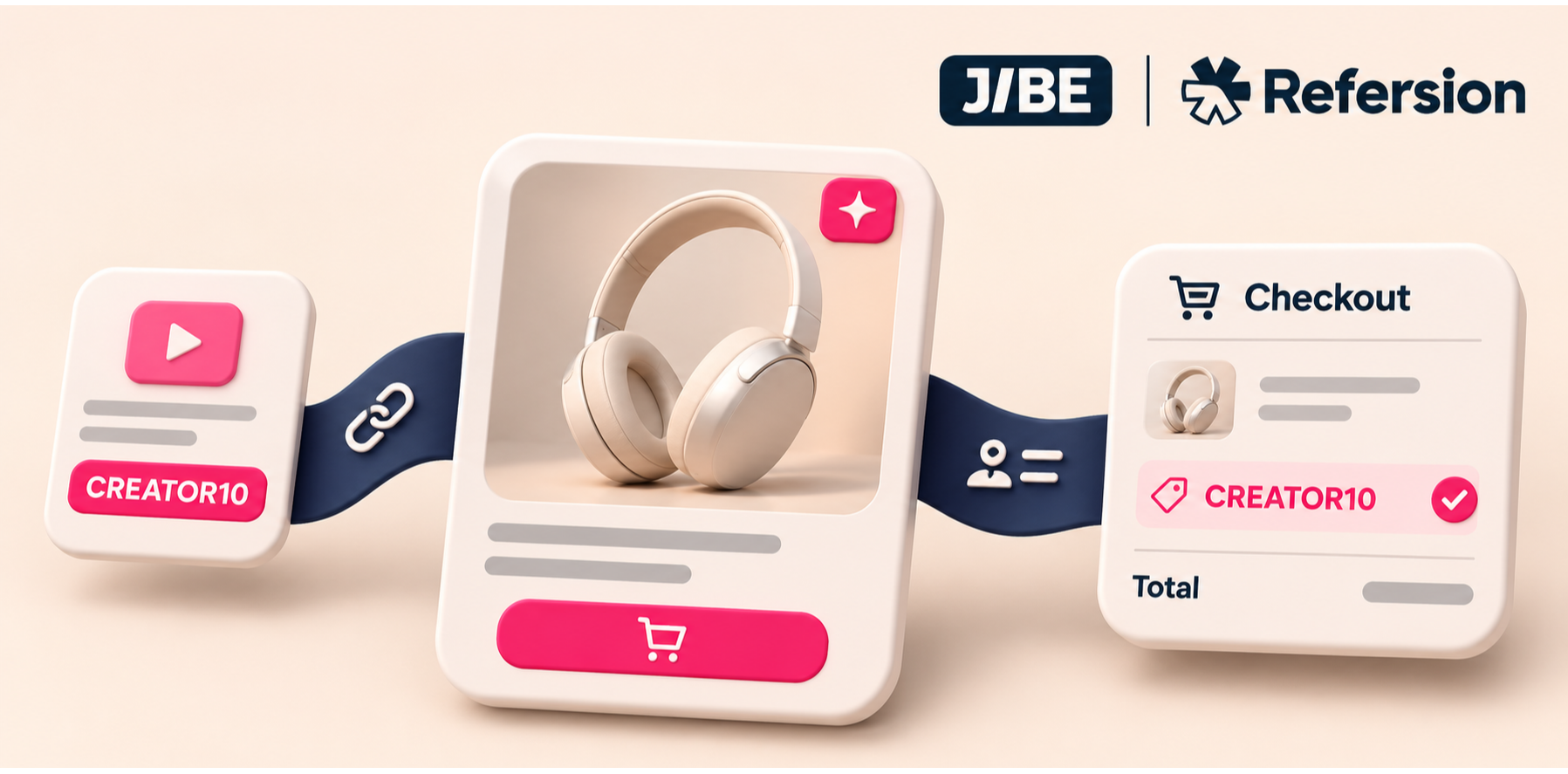

A shopper taps a creator's link. The landing page greets them with the creator's name, the product they just saw and a code that already works. Then they add to cart, and the site forgets who sent them. The cart is generic, checkout asks for the code again, the follow-up email reads like it was written for someone else, and the next time they interact with the brand it’s like the whole thing never happened.
Most teams treat the personalized landing page as the finish line. It is the starting line. If the landing page is personalized, but the PDP, cart, checkout and follow-up email are not, you have no excuse for ignoring those points of friction.
Why personalization ends at the first click
The problem is not the landing page. It is everything after it.
A creator journey runs across several systems: the creator link, the landing page, the cart, checkout, post-purchase email, the account or subscription portal, and support. Each handoff is a place where context drops. The creator, the offer, the quiz answers, the reason the customer showed up.
In our experience, integration between all of those steps is the real project. The gap is rarely the personalization tool. It is that business logic sits in page templates or in someone's spreadsheet, where nothing else in the stack can see it. If your checkout cannot read what your landing page knew, no amount of landing page polish will fix the drop-off.
The brands that get this right treat the whole journey as the campaign. We saw it first hand, helping a few brands grow past $100M with end-to-end personalized creator campaigns.
What the lost context costs you
A cart that forgets the creator code is one abandoned order. A follow-up email that ignores the creator is a weaker second purchase. Repeat that across every creator, every campaign and every month, and it becomes a quiet tax on your whole creator budget.
It also breaks the tools you use to make decisions. Attribution falls apart, so you cannot say which creators or affiliates actually drive sales. Subscribers cancel and you do not know why. Customers tell you that after the first purchase, it feels like dealing with a different company. That is usually not a service problem. It is a context problem.
Where the context usually drops
These are the handoffs we check first:
- Landing page to product page
The creator's framing and recommended products disappear the moment the shopper clicks deeper. - Cart and checkout
The code has to be re-entered, or the bundle the creator promoted shows up at a different price. - Follow-up email
The welcome flow is the same one every customer gets, with no reference to the creator who sent them or why they came. - Account and subscription
The customer manages their order in a portal that knows nothing about how they arrived. - Support
The agent cannot see the campaign, so the customer explains the offer from scratch.
Signup-to-membership, quiz-to-replenishment and gifting journeys split the same way. You know a lot about the customer up front, and none of it carries through.
A quick self-test:
- Does your cart know which creator sent the shopper?
- Does your first post-purchase email change based on the creator or campaign?
- Can your support team see how a customer arrived?
- Would you trust your attribution report enough to cut a creator's budget based on it?
If you cannot answer one of these with confidence, that is probably where to start.
Practical to-dos
Sequence the work by value, not by excitement.
- Trace the journey end to end
Follow the path from creator link to second purchase and mark every handoff where context and personalization is lost. - Fix the costliest handoff first
Pick the one gap that loses the most revenue. - Fix the data and integration before adding tools
Automation amplifies whatever it is pointed at, including a mess. Adding another tool to a broken journey usually makes a plateau worse. - Make attribution trustworthy again
Audit your GTM, GA and event-tracking tags and code. If the technical foundation is wrong, every creator report built on it is wrong too. - Do not trade speed for personalization
Resolve personalization and test data before the page renders, so shoppers never see a flicker or a slow load.
When this can wait
- Single-step, one-time purchases
If you see little repeat or referral behaviour, there is less journey to carry context across. - The real problem is somewhere else
If the issue is offer economics, creative or retention, new tech will not save you. A new platform only fixes platform problems. Diagnose before you prescribe. We walk through how in why ecommerce growth stalls and how to find what is broken. - You are pushing platform limits
If connecting the user journey end-to-end is overly painful, you may have bigger problems that need your attention first. If you are weighing a bigger move, these are the signs it is time to replatform.
Common questions
Frequently Asked Questions
Why does personalization end at the first click?
Usually because the journey spans systems that do not share context. The landing page knows the creator. The cart, checkout and email often do not.
Which handoff should we fix first?
The one that costs the most revenue. Trace the journey, estimate the loss at each handoff and start there, not with the most visible one.
How do we make attribution trustworthy again?
Start with the technical layer. Check that your GTM, GA and event-tracking tags fire correctly, and that creator or affiliate context survives through checkout.
How do we know which influencers or affiliates actually drive sales?
Not until the context carries through to the order. Once creator data reaches checkout and post-purchase, you can tie revenue and repeat orders back to the creator who started them.
Do we need new personalization software to fix this?
Usually not. Most of the gap is data and integration between the systems you already have.
Where to start
This week, follow one of your own creator links as a customer. Go all the way through checkout to the follow-up email, and write down every point where the experience stops knowing who sent you. That list is your roadmap.
If you want help mapping the journey and sequencing the fixes, our Ecommerce Strategy and Roadmapping team works on exactly this.

SUGGESTED

How to Retarget Influencer Campaign Audiences After They Don't Convert
Track creator referrals segment visitors by intent and sequence retargeting ads to...

How E-Commerce Brands Turn Influencer Traffic Into Bigger Orders
See how creator-specific landing pages relevant bundles and AOV tracking turn influencer...