
For some, the idea of artificial intelligence (AI) being used in the education industry is like oil and water. These two simply can’t mix.
Fair enough, much of this concern is linked to ethical dilemmas and academic integrity. What about students who will try to pass off AI-written texts as their own work? Will AI replace teaching staff?
As AI develops, so too will we get more clarity on these types of concerns. In the meantime, what is clear is the need to stay up to speed with the developments in AI and familiarize yourself with artificial intelligence tools.
What’s also clear is that these types of tools can save valuable time. From streamlining administrative tasks to creating personalized learning experiences, it can help in more ways than one. Here are 16 of the best tools for students and educators to get them started on their learning journey of AI-powered technologies.
- 16 of the Best AI Tools for Education:
- 1. ResumeCoach
- 2. Cognii
- 3. ChatGPT
- 4. Carnegie Learning
- 5. Grammarly
- 6. Canva
- 7. summarize.tech
- 8. QuillBot
- 9. Gradescope
- 10. Yippity
- 11. Quizlet
- 12. Wolfram|Alpha
- 13. Hello History
- 14. Curipod
- 15. SlidesAI
- 16. Education Copilot
- 17. Turnitin
- Wrapping Things Up
- Frequently Asked Questions
16 of the Best AI Tools for Education:
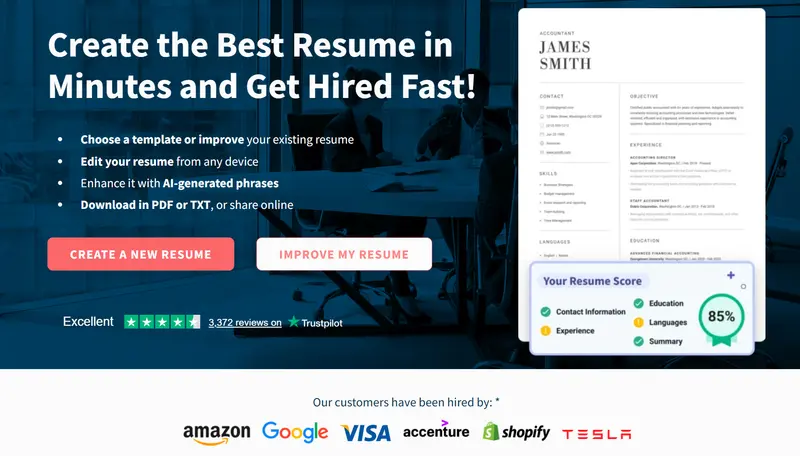
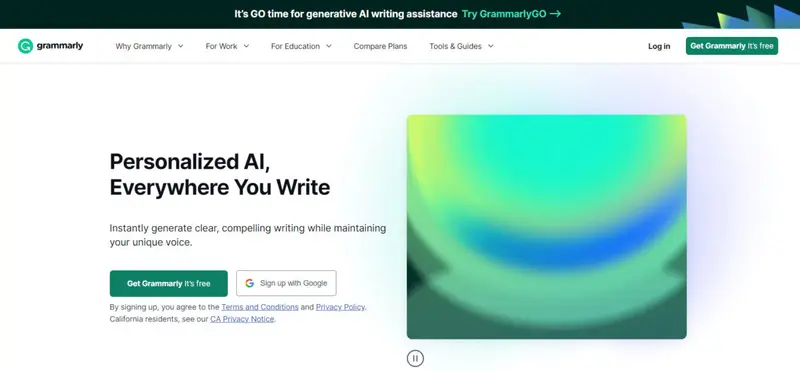
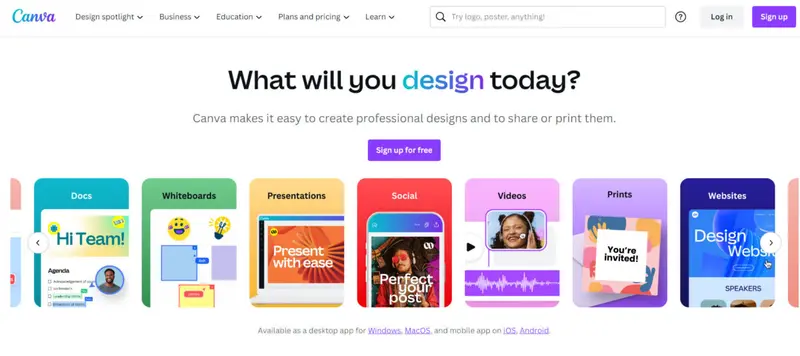
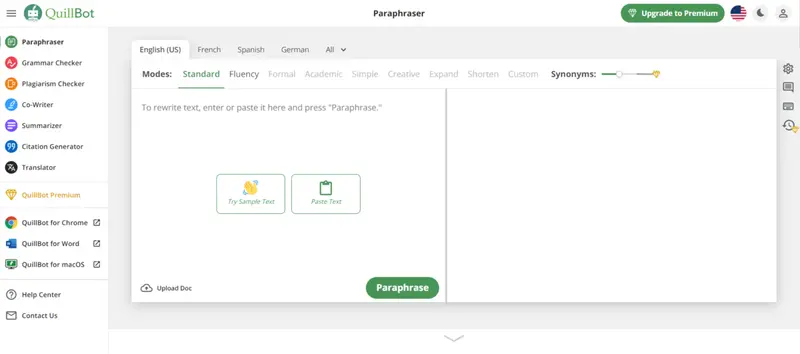
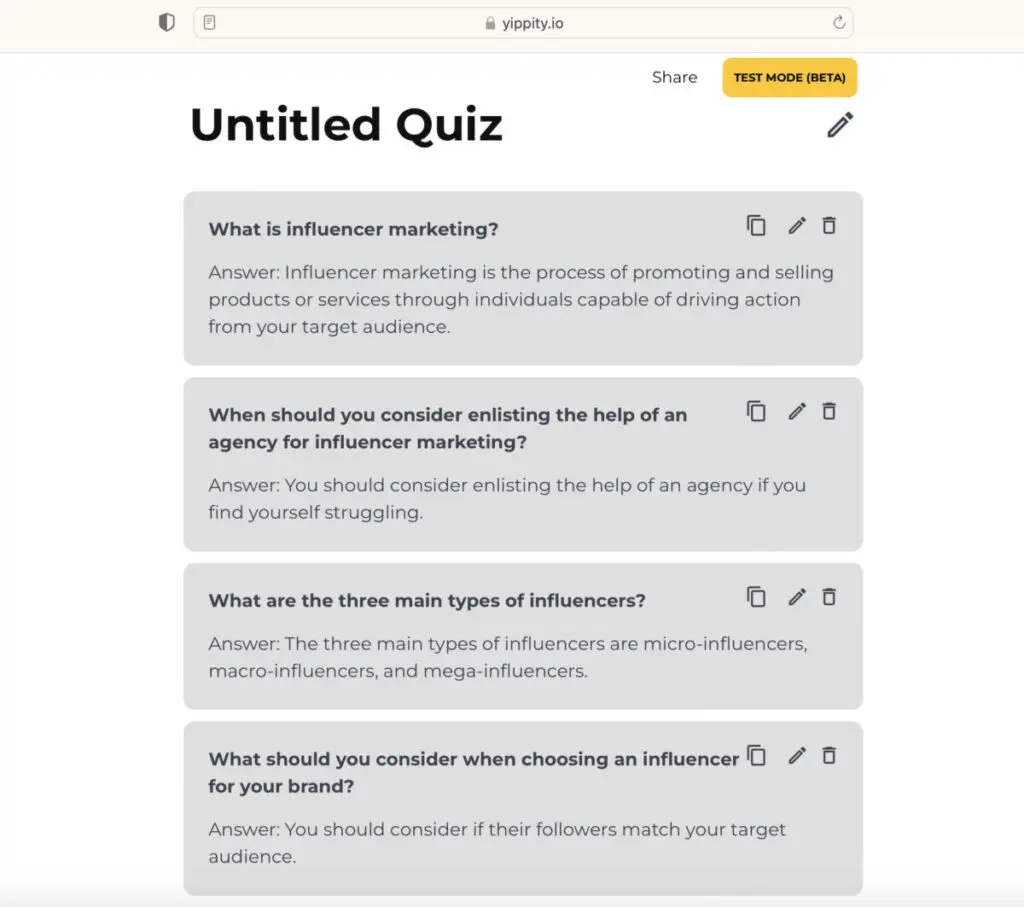
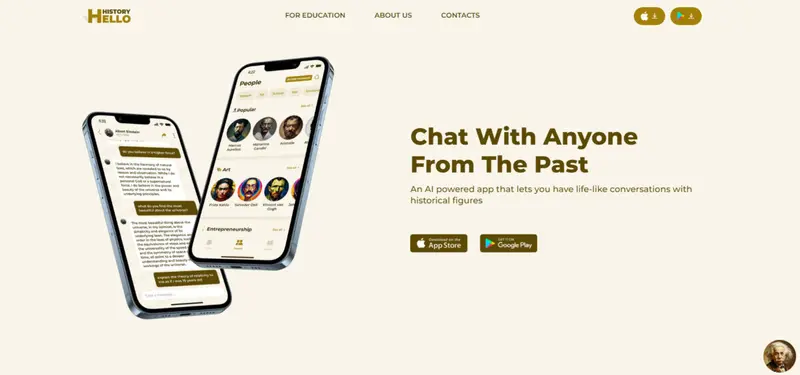
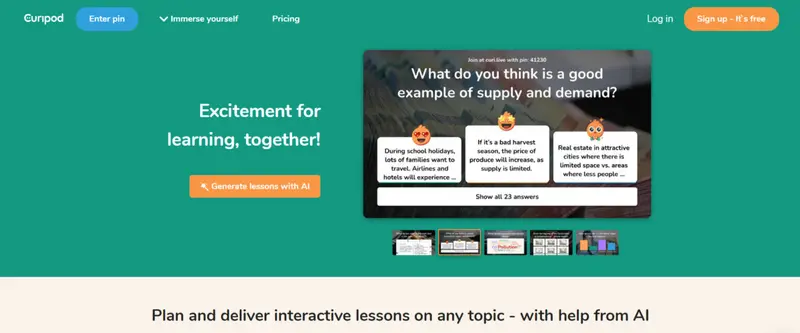
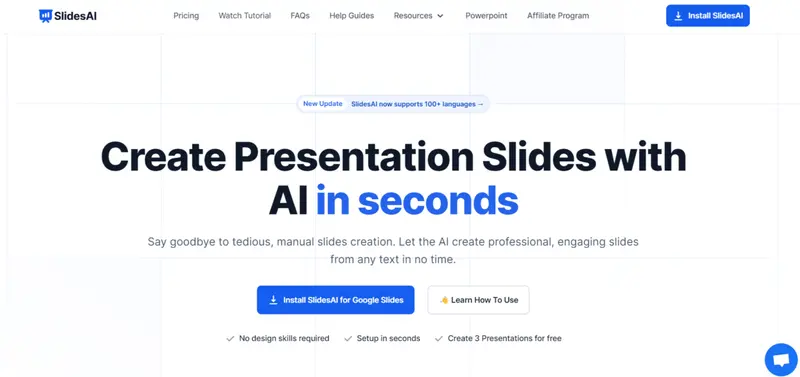
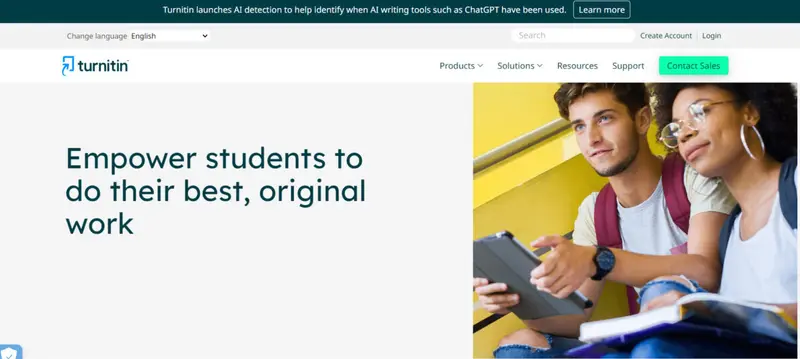
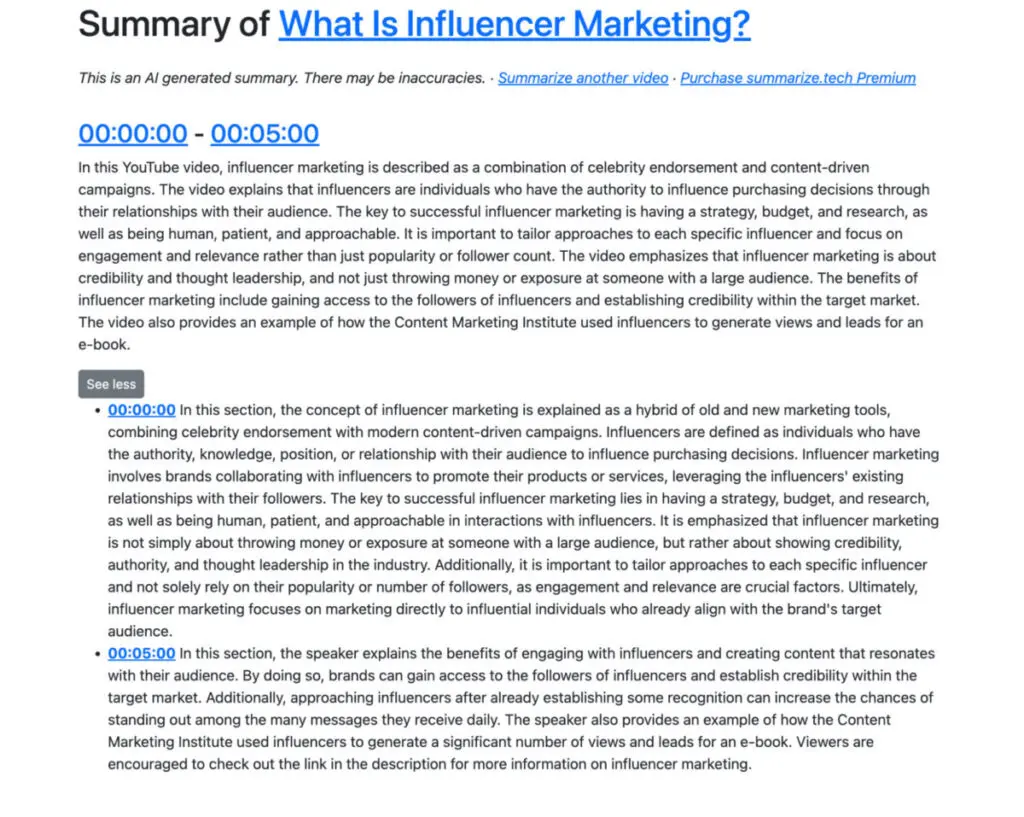
ResumeCoach is an AI-powered career platform that helps students, recent graduates, and other job seekers create ATS-friendly resumes and personalized cover letters. It combines AI-assisted writing with professionally designed templates, resume guidance, and recruiter-backed practices to make the application process easier for users who may have limited career experience. For students, the platform can help translate education into employment-ready content. Users can present coursework, academic projects, internships, volunteer experience, certifications, and transferable skills in a format that recruiters and applicant tracking systems can process more easily. Its AI Resume Builder provides writing suggestions and structured templates, while the AI Cover Letter Generator creates letters tailored to individual job applications. Cognii isn’t a single product, but rather a provider of AI-based technologies aimed at the education sector. Included in its products are various components that you can use for real-time tutoring and assessment. Educators can check out its AI-powered assessment engine that’s compatible with any subject area for grade 3 and up, for example. It offers very accurate assessment in an instant and its accuracy is comparable to scoring done by a human educator. Aside from being accurate, it can also evaluate critical thinking, digging deeper than merely superficial knowledge. Another feature that educators will find useful is its analytics and real-time insights. With the help of downloadable reports and graphical summaries, you can identify mastery and knowledge gaps. A lot has been written about ChatGPT. Created by OpenAI, its advanced language model has also caught the attention of educators and students alike. Two of its most popular features include its question-answering and text generation. Teachers can also use it for lesson planning and suggestions for activities to incorporate into a particular lesson to make the learning process more interesting and relevant. You can basically think of it as your virtual teaching assistant or tutor. Access to ChatGPT is free. To take advantage of ChatGPT Plus which includes faster response time and priority access to improvements and new features, it costs $20 per month. Like Cognii, Carnegie Learning offers a suite of solutions aimed at educational institutions. Their focus areas include mathematics, literacy, and world languages and some of their solutions have been named as the best artificial intelligence/machine learning apps. What sets them apart is that their tools help students to uncover the what and the why. With the help of data, they continuously improve their solutions so that students can develop conceptual understanding. Their high-quality content links research to reality, helping to connect the dots. Whether you’re doing the teaching or the learning, your grammar needs to be flawless. Enter Grammarly. Rated as one of the top content optimization tools, it has evolved to become much more than merely a grammar checker. Students can use it during all the phases of the writing process, from brainstorming to formatting citations to checking for plagiarism. Canva is the go-to tool for many. From graphic designers to college students to corporate teams and everyone in between can find a use for Canva. It’s mainly used for anything related to design, but it also offers an AI text generator powered by OpenAI called Magic Write that you can use for first drafts. Students and educators will also find its AI-powered text summarizer tool handy. What makes Canva such a valuable asset for the education sector is that it offers Canva for Education. This free package will give schools and districts enterprise-level deployment and integration with many classroom tools like Microsoft Teams, Blackboard, and Moodle. Whether you’re a student or on the other side of the podium, summarizing will most likely be part of your daily routine. Plus, with video content becoming more commonly used in the classroom, there’s a good chance that at some stage you’ll need to rewatch a video several times to get the gist of it. The solution — summarize.tech. Powered by ChatGPT, it creates AI-powered video summaries. You can use it for recorded lectures or YouTube videos. All you need to do is add the URL of your link to the input field and click on submit. Rated as one of the top AI writing tools for marketers, QuillBot is also popular among students. Where summarize.tech can summarize video content, QuillBot can be used for summarizing written texts. In addition to its summarizer, it also offers several other useful tools for academic writing including a citation generator, grammar checker, and plagiarism checker. For example, with the citation generator, you simply add the URL to a web page or title of the book and it will automatically create a citation using the APA, Chicago, or MLA style. Tired of late-night grading? Scope out Gradescope, one of the best AI tools for grading assignments. Brought to you by Turnitin, it’s a versatile tool that you can use for different types of assignments such as short quizzes to exams, doesn’t matter whether it’s digital or paper-based. It can also be used for various subjects including more technical fields like engineering, physics, and computer science. It can also streamline a time-consuming task by grouping answers together by content, making it easier for educators to leave feedback. Then, to help instructors analyze results, it shares stats too. Before you can mark a quiz, you first need to set a quiz and for that there’s Yippity. It offers AI tools that can automatically convert a website or text into a quiz. It’s simple, yet useful. To give you an idea of what you can expect, here are the questions it generated for one of our URLs about influencer marketing: Quizlet is another AI tool that you can check out for quiz questions. It offers a number of AI-powered study tools that you can use to create flashcards and practice tests. Plus, as it includes auto-grading, you’ll have more time for that what matters most — studying. And, to make your studying even more productive, make space in your study timetable for Spaced Repetition. This feature lets you review your work over numerous sessions spread out over time. It will send you notifications when it’s the optimal time to review your work. Wolfram|Alpha presents an alternative to Googling an answer. It uses advanced AI technology, knowledgebase, and algorithms to work out expert-level answers. Basically, you enter your query into its search field and it will share relevant, useful information. From checking today’s weather forecast to getting answers to complex questions about the past, it can be used for a wide range of fields and use cases. Teachers, for example, can use it to create lesson plans faster. From elementary math to physics to statistics, it also supports math input. It also offers a problem generator that you can use to create practice problems for grades K-12. For something completely different, there’s Hello History. It’s an AI-powered app available on the App Store and Google Play that you can use to converse with hundreds of historical figures that include the likes of Cleopatra and Einstein. To quote Hello History’s website, you can think of it as “your personal tutor in your pocket”. What makes this tutor such an awesome ally, though, is that the learning experience will become a whole lot more interactive. The one-on-one conversation encourages engagement and critical thinking. From self-help to science to math to music, there’s a wide array of topics waiting to be explored. When you download the app, you’ll get 20 messages free. Another tool that educators can use to create more interactive presentations and lessons is Curipod. Whether your goal is simply to activate prior knowledge or create a full lesson packed with slides, Curipod can help. You start by adding your topic, target audience (the grade at which it will be aimed), and the type of activity you have planned. It will then take you to its interface where you can edit your presentation. You can, for example, add elements like stickers, change the background, and other types of media. It also has a useful built-in translation tool. Love them or hate them, presentations will always be a part of education. Thanks to AI, though, we’ve moved on and PowerPoint no longer has to be the go-to tool. Meet the alternative — SlidesAI. You paste your text into its interface and its software will create a presentation for you automatically. Presentations, though, are more than simply chunks of text, and SlidesAI also includes pre-designed color and font presets. It offers a free plan and two subscription plans. Pricing starts at about $12 per month, but if you sign up for annual billing you can get two months for free. For help with lesson planning and preparation, there’s Education Copilot. Aimed at teachers working with grades 4 and up, it can be used for languages as well as more complex subjects like economics. It offers AI-generated lesson plan templates and handouts among other things. In addition to these main features, it can also be used for student reviews and project outlines. After a generous free 30-day trial, pricing starts at only $9 per month. As mentioned earlier, one of the main concerns about how AI is shaping education is the impact it will have on academic integrity. To help in this department, Turnitin has launched an AI detection feature. Designed by educators for educators, Turnitin also offers other products to help determine uniqueness. You can, for example, check out iThenticate, a plagiarism checking tool, and Similarity for generating plagiarism reports. That being said, keep in mind that the jury is still out on the accuracy of AI-detection tools. According to their website, their document false positive rate, though, is less than 1% for documents with 20%+ AI writing, while the sentence-level false positive rate is slightly higher at 4%. 1. ResumeCoach
2. Cognii

3. ChatGPT
Pricing:
4. Carnegie Learning

5. Grammarly
6. Canva
7. summarize.tech

8. QuillBot
9. Gradescope

10. Yippity
11. Quizlet
12. Wolfram|Alpha

13. Hello History
Pricing:
14. Curipod
15. SlidesAI
Pricing:
16. Education Copilot

Pricing:
17. Turnitin
Wrapping Things Up
Learning should be engaging. There’s more to it than simply reciting from an outdated textbook.
Plus, with the developments in AI, there’s no reason why lessons and studying can't be packed with custom visuals and other interesting elements.
After all, if education is all about bettering yourself by expanding your skill set and knowledge, why not try out new AI tools? Practice what you preach and learn how to use AI for educational purposes.
Frequently Asked Questions
What are some of the best online learning platforms?
If you’re interested in creating an online course, you can check out the following top online learning platforms:
- Kajabi
- Podia
- Skillshare
- Teachable
- Thinkific
- Udemy
- Learnworlds
Which tools can you use for lesson planning?
To help you with lesson planning, you can, for example, check out Canva. It includes a free lesson plan maker that’s easy to use. You simply select a lesson plan template, write your lesson plan, and customize it with the help of millions of photos, icons, and illustrations. It also includes collaboration features, making it easy to share your lesson plans with colleagues.
How can you use AI in the classroom?
Artificial intelligence (AI) can be used for various educational purposes. Some of its popular use cases include:
- Creating tutorials and quizzes
- Auto-grading quizzes
- Lesson planning
- Grammar and spelling suggestions
- Sentence rewriting
- Plagiarism detection
- Mindmapping
- Text and video summarizing
- Student insights
What are AI tools for education?
AI tools for education are software applications that utilize artificial intelligence to enhance teaching and learning experiences. They can provide personalized learning, automate administrative tasks, and improve accessibility for students with diverse needs.
How can AI tools personalize learning experiences?
AI tools can analyze student data to identify strengths and weaknesses, allowing them to tailor learning materials and instructional methods to suit individual learning paces and styles. This results in a more effective and engaging learning experience.
Are there any free AI tools available for students and teachers?
Yes, several AI tools offer free versions or are entirely free. Examples include Summarize.tech, ClassPoint AI, and Wolfram|Alpha, which provide valuable educational resources without cost.


