
One of the advantages of using a specialist eCommerce platform over a bespoke website is that they generally include eCommerce website builders. You don't have to be an expert in HTML, JSS, JavaScript, and other coding languages to build your online shop.
The different eCommerce website builders do vary in terms of complexity, however. Some make it as simple as possible to create an online store at the cost of flexibility, custom design, and uniqueness. Others give you many options and advanced features, but they can be daunting for beginners and inexperienced eCommerce operators.
Each of the eCommerce website builders we cover in this post has features that make them the most suitable for particular types of online shops. Therefore, it makes sense to look at your specific needs and select the website builder that best suits your technical skills, experience, budget, and store type you wish to build.
Pro Tip
One of the most popular website builders, WordPress, offers a range of specialized plugins for seamless eCommerce integration, allowing you to create a fully functional online store with ease. With WordPress, you can choose from various plugins that add advanced eCommerce features while maintaining flexibility and design freedom. Explore WordPress for your online store and get started here!
1. Shopify

Shopify has become one of the most popular eCommerce platforms, currently powering more than 1.2 million online stores, because it makes it relatively easy to build a customized eCommerce store that stands out from the crowd, with a wide range of features.
It includes a detailed built-in CMS where you can easily build a database of all the types of stock you wish to sell. The CMS adds links to help your data entry and to cross-reference items across your site. You enter collections of similar products that link across your site.
Read More
2. WooCommerce
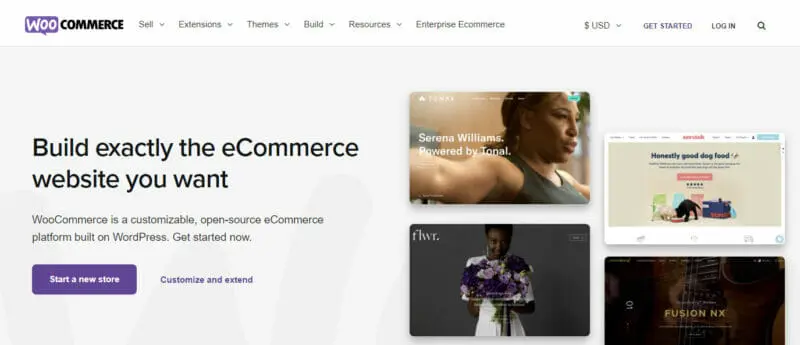
The most popular content management system is WordPress. However, the core WordPress installation doesn’t include eCommerce features. If you want to create a WordPress eCommerce site, you’re going to need to add a plugin such as WooCommerce, which is free, open-source software. You will have to pay for more advanced extensions, however.
Also, you will typically have to pay separately for the hosting of your website, as with most WordPress sites.
With WooCommerce being a WordPress plugin, you will need to begin by creating your WordPress website. You will find numerous free or paid WordPress templates. Check that your theme is compatible with WooCommerce, however. You create pages and posts just like any other WordPress site.
Read More
3. Weebly

Weebly is ideal for small to medium-sized businesses. It even offers a usable free plan in addition to three levels of paid service. However, most serious companies will need at least the middle-level Professional plan to remove Weebly’s ads from your eCommerce store.
Weebly is a drag-and-drop website builder, making it easy for non-coders to develop a site. Unlike Shopify and BigCommerce, Weebly doesn’t solely build eCommerce sites – you can create any type of website using it. It does, however, offer all the essential features you need to make your online store.
Read More4. Wix

Wix is another drag-and-drop content management system that also includes eCommerce features. They have upgraded their eCommerce functionality over time, however, making significant improvements in 2020.
They offer eight pricing plans, four of which include eCommerce capabilities.
Wix takes a different approach to the initial setup of your site than most other eCommerce website builders. You begin by designing your site and only move into the eCommerce-specific parts (like entering inventory) later in the process. When you do enter your inventory, you will find it a simple and intuitive operation.
Read More5. Squarespace

Squarespace Commerce is Squarespace’s platform for online stores. It makes building an online store a five-step process:
Read More6. Volusion
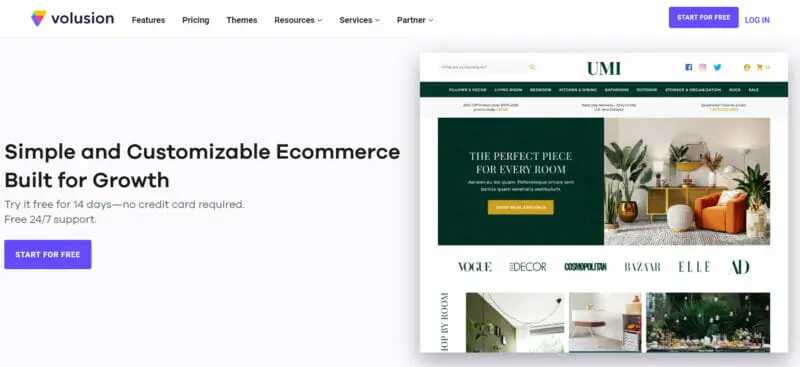
Volusion is one of the oldest eCommerce website builders, but it has recently updated to a new operating system, V2, to keep it up to date. It is more focused on data than web design, however. Creating a Volusion website is less intuitive than many of the other programs covered here. It does include 11 free and 30+ paid themes, however.
Volusion’s eCommerce-specific features are generally very good, although you can’t use them to sell digital products such as eBooks, courses, digital art, or music. You can include product videos, however, a feature that is unavailable on most other website builders.
Read More7. BigCartel

BigCartel is more straightforward than many of the other eCommerce website builders covered here, but could well be suitable for small businesses or people wanting to sell a few items. You can use it to make an online store for free.
Its free plan will appeal to those on a budget. Although it has a user-friendly interface, you will need to code if you want to make the most of its features.
It guides you through the onboarding process with helpful prompts, reminders, and tips. You can select a template, though they are basic and allow limited customization. To make much change to the templates, you need to code.
Read More8. Shift4Shop

Shift4Shop was formerly called 3DCart. You can build your site with their website builder, choosing from dozens of professionally designed, industry-specific templates. You can then customize your site using their intuitive web design tool or edit the HTML and CSS directly. It currently includes 100+ free themes.
Shift4Shop offers an unlimited plan for free to US users of its payment processing. This allows you to set up a shop with unlimited products, unlimited staff users, unlimited bandwidth, no revenue caps, and an integrated blog. Other users can select from three plans from $29/mo. to $229/mo. Shift4Shop Enterprise also offers a custom eCommerce platform for high-volume online stores.
Frequently Asked Questions
What website builder makes the best website for ecommerce businesses?
One of the advantages of using a specialist eCommerce platform over a normal website builder is that you can build a great website for ecommerce businesses. You don't have to be an expert in HTML, JSS, JavaScript, and other coding languages to build your online shop. The best ecommerce website builders for your business include Shopify, BigCommerce, Weebly, Wix, Squarespace, WooCommerce on WordPress, Square Online, Volusion, BigCartel, and Shift4Shop.
What does it cost to hire someone to build a website for your ecommerce business?
Hiring someone to build a website for your ecommerce business can be pricey, depending on the website developer. eCommerce website developers can range in price, depending on the level of expertise and the extent of the work you need done. Expect to pay anywhere from $8,000 to $500,000 depending on the size of the work. It may even cost more, if you have a lengthy and extensive website.
The top American e-commerce platforms?
Here are the most popular and most visited American e-commerce platforms:
- eBay
- Amazon
- Walmart
- Etsy
- Home Depot
- Target
- Best Buy
- Wayfair
What website can you use to build an ecommerce website?
There are multiple platforms that can help you build your ecommerce website. The best ecommerce website builders for your business include Shopify, BigCommerce, Weebly, Wix, Squarespace, WooCommerce on WordPress, Square Online, Volusion, BigCartel, and Shift4Shop. Certain platforms, like Shopify, will get you up-and-running really quickly.
What is the cheapest ecommerce website builder?
When it comes to eCommerce website builders, price matters. You don’t want to spend too much money on your website builder. Shopify offers a good balance of quality and performance with multiple free themes. Wix offers free websites, though you need to update for certain features. Weebly and Squarespace offer affordable plans as well.


