

Swavy is an AI influencer marketing platform that helps brands and agencies operate creator campaigns from a single environment. It brings together creator discovery, vetting, communication, campaign coordination, performance measurement, and payments.
Founded in 2022 by Jacques Saab and Tarek Abboud, Swavy originally began as a product-discovery app. It later evolved into a video marketplace connecting brands, creators, and consumers.
After finding that brands were particularly interested in the creator content generated through the marketplace, the founders concentrated the business on influencer marketing. That pivot produced the platform Swavy offers today.
Swavy is headquartered in Dubai and has a particularly strong focus on the Middle East. The platform supports Arabic-language campaigns, multilingual communication, regional creator searches, and sentiment analysis. Its capabilities are also suitable for brands running international creator programs.
The platform can be used for paid partnerships, product seeding, affiliate marketing, user-generated content, and brand-awareness campaigns. Swavy offers different configurations for DTC companies, agencies, and enterprise organizations.
Smaller and medium-sized businesses can use the self-service platform to operate campaigns internally. Agencies receive tools for managing several clients through separate workspaces, while enterprise customers can access additional security, integration, governance, and support features.
Swavy also offers managed campaign support and white-label implementations, although this review focuses primarily on the software platform.
Swavy states that its technology is used by more than 500 companies globally. Brands such as Pizza Hut, L’Oréal, Armani, Kérastase, OSN+, and TOD have used Swavy to run influencer campaigns. Their Middle East portfolio includes more than 100 brands.
Businesses can access the platform by registering a brand profile. Swavy also provides a separate registration option for creators interested in participating in campaigns, but this review examines the experience and capabilities offered to brands and agencies.

Swavy Pricing
Swavy does not publish a complete pricing table. Prospective customers must create a brand profile and provide information about their business before receiving a tailored proposal. Swavy contacts the organization after registration to discuss its requirements and recommend an appropriate package.
This prevents businesses from immediately comparing subscription costs, included features, credit allowances, or usage limits. Teams working with a fixed software budget will need to enter the sales process before determining whether Swavy is a viable option.
What we do know is that Swavy uses credit-based pricing for its self-service platform. Customers receive credits that can be spent on eligible activities, although we don't have a complete explanation of how much each action costs.
The company's self-service plans start at $95 per month for DTC startups. However, it does not publicly provide a full breakdown of the searches, reports, users, campaigns, or AI-assisted activities included at that level. The $95 figure should therefore be treated as a potential entry point rather than a complete estimate of the cost of using Swavy.
The final price is likely to depend on the size and complexity of the creator program. A small brand conducting a limited product-seeding campaign may require fewer credits and features than a marketing team running continuous paid partnerships across several markets.
Agency pricing is customized based on the number of client brands and the capabilities required. Agencies may need separate brand workspaces, shared credits, white-label reporting, branded client portals, cross-account insights, audit logs, and advanced access controls.
Swavy also offers white-label implementations for agencies and companies that want to integrate its technology into their own client-facing workflows. Costs for this service may depend on branding, integrations, workspace requirements, permissions, implementation support, and expected activity.
Enterprise pricing is provided through a direct quotation. The final amount may account for campaign volume, seats, operating regions, security requirements, data residency, service-level agreements, dedicated support, and custom integrations with finance, eCommerce, CRM, or analytics systems.
Swavy offers a managed service in addition to its self-service software. Under this arrangement, its team can contribute to campaign strategy, program design, and client outcomes while the platform handles much of the operational workflow.
Businesses considering this service should establish which responsibilities belong to Swavy and which remain with their internal team.
Swavy has also described an outcome-oriented approach in which some brands pay according to measurable results.
The Details
Swavy Feature Rating
- Natural Language and Image Based Creator Discovery
- Content Based Brand Fit and Vetting
- Creator Authorized First-Party Metrics
- AI Assisted Outreach and Rate Negotiation
- Briefs, Creator Submissions, and Approval Routing
- Projects Creator CRM
- Affiliate Recruitment and Commission Workflows
- Commerce Attribution and Campaign Reporting
- Multi-Brand Agency Workspaces and Client Governance
- Gulf Campaign Localization and Regional Creator Payments
Swavy provides access to a reported database of more than 200 million creator profiles. Its principal discovery pages advertise Instagram, TikTok, and YouTube coverage, while Swavy has also stated that it supports Snapchat discovery for campaigns in the Middle East.
Brands that consider Snapchat essential should confirm exactly which search, communication, and reporting functions are currently available for the platform.
Users can search with conventional filters or explain the campaign requirements in natural language. Swavy translates the written request into structured criteria and presents a ranked list of potential partners.
More than 20 filters are available, covering factors such as creator location, follower tier, engagement, language, account type, verification status, recent activity, and contact-information availability. Marketers can also search using audience characteristics, including age, gender, location, language, and credibility.
The ability to combine these criteria makes it possible to conduct highly specific searches. Rather than requesting beauty creators in the UAE, for example, a brand could narrow the results according to the audience’s location, the language used in recent content, account activity, engagement, and whether contact details are available.
Swavy assigns each potential partner a brand-fit score ranging from 0 to 100%. This score assesses how closely the creator matches the campaign brief using profile information, performance metrics, audience signals, and recent content.
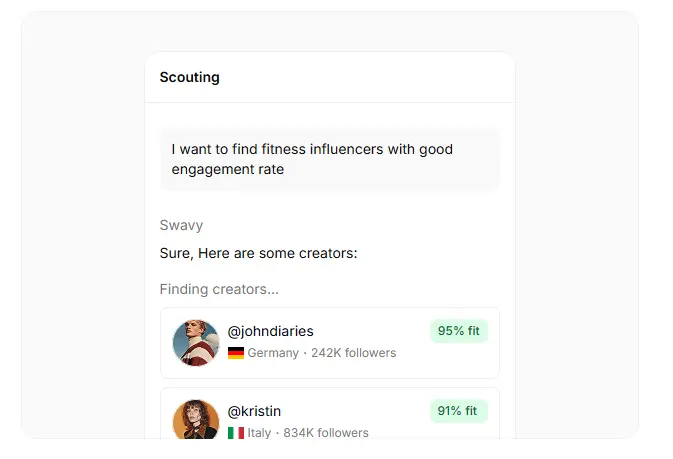
The analysis examines up to 24 recent posts and can interpret imagery, captions, hashtags, on-screen text, and visual style. Users can open individual posts to examine the reasoning behind the score. This provides a more current view of the creator than their biography or primary content category alone.
A creator may still describe their account as being focused on fitness, for example, even if their recent posts have shifted into unrelated areas. Content-level analysis helps brands identify this type of change before beginning a partnership.
Scoring criteria can be adapted for different campaigns and industries. Users can define required signals, adjust how much weight Swavy gives to recent posts, and specify content categories that automatically disqualify a creator. Restricted topics can include gambling, alcohol, political content, multilevel marketing, or any custom category established by the brand.
For large result sets, marketers can introduce acceptance and rejection thresholds. Creators above the upper score can move forward, while profiles below the minimum can be removed. The uncertain middle is sent to a human review queue with Swavy’s reasoning attached.
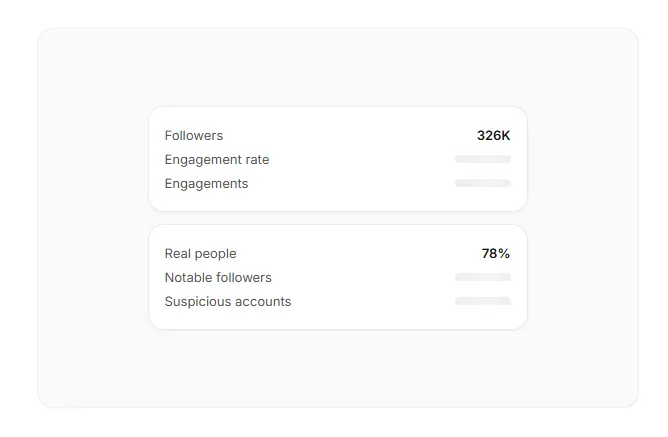
Audience credibility checks add another layer to the evaluation. Swavy looks for suspicious follower activity and growth patterns, helping teams avoid paying for reach that may not represent genuine people. These signals can be considered alongside audience demographics and engagement quality.
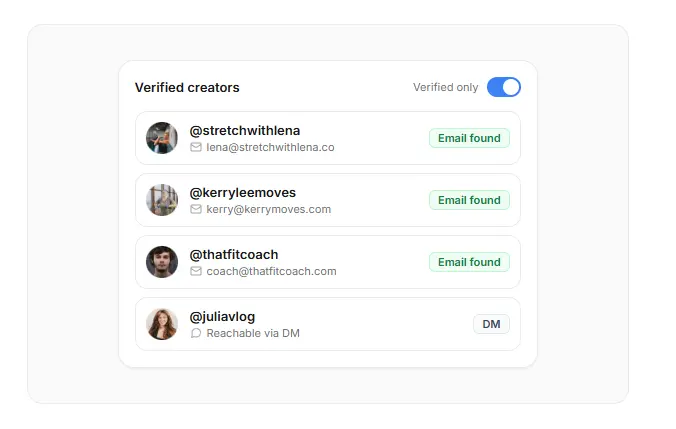
Once marketers approve a shortlist, Swavy can surface creator email addresses where available. Users can filter for profiles with contact details and send outreach from a connected Gmail account. Messages come from the brand’s own address, with incoming replies synchronized inside Swavy.
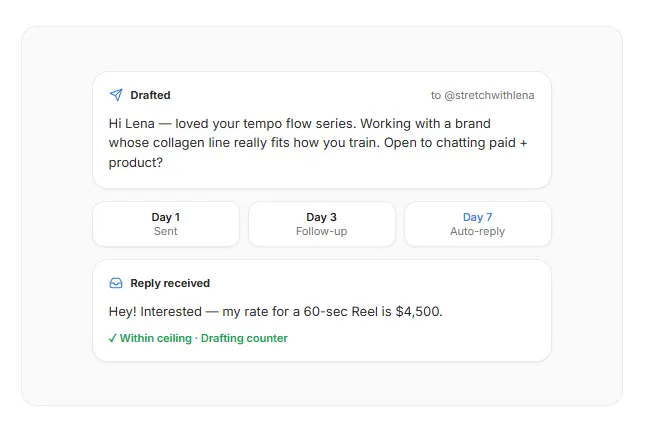
The platform personalizes outreach using information gathered during discovery. Messages can refer to a recent post, past brand work, the creator’s content focus, and the relationship between their audience and the campaign.
Brands can supply between three and five examples of previous messages to teach the AI their preferred tone, structure, and sign-off. Swavy then applies that style when preparing campaign communication.
The platform supports outreach and replies in more than 17 languages. This should be particularly useful for teams running campaigns across the GCC or coordinating international creators from a central marketing department.
Follow-up timing adapts to creator response behavior instead of applying the same cadence to every contact. Swavy also monitors bounce rates and spam complaints, controls outbound sending volume, and can pause activity when deliverability indicators deteriorate.
Teams can introduce the communication system gradually through shadow mode. In this setting, Swavy drafts each message but waits for approval before sending it. Once the brand is comfortable with the output, it can allow routine messages to be sent automatically within predetermined limits.
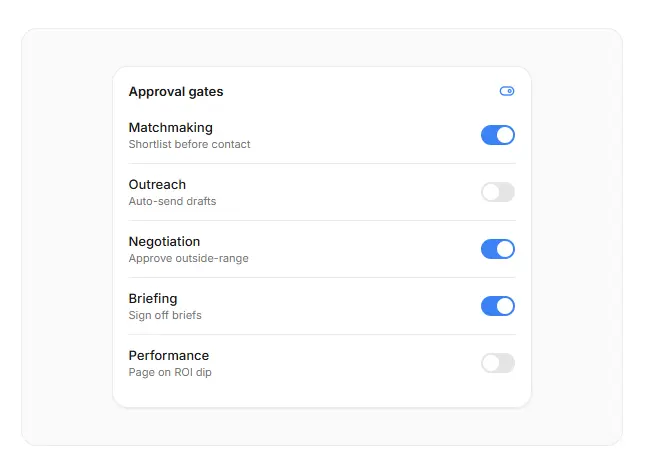
Approval requirements can vary between campaigns and creator segments. A business could permit automated follow-ups for an established product-seeding program while requiring manual approval for communication involving a high-value paid partnership.
When a creator responds, Swavy analyzes the thread and determines the appropriate next action. Routine questions can be answered using campaign information. Discussions involving rates, deliverable changes, exclusivity, or other significant decisions can move into dedicated workflows or be escalated to a campaign manager.
Incoming messages are treated as untrusted information. Instructions within an email cannot override the campaign’s established rules, and suspicious content is flagged for review. Swavy also looks for changes in tone, allowing frustrated, hesitant, or otherwise sensitive conversations to be passed to a person.
Negotiation takes place within limits established by the user. Brands can define maximum rates by platform, follower tier, and deliverable type. They can also specify acceptable content combinations, payment conditions, exclusivity premiums, CPM limits, and performance bonuses.
Swavy states that its recommendations are informed by more than 10,000 recent creator deals segmented by region, niche, audience size, and deliverable. These benchmarks help the agent prepare counteroffers while remaining inside the campaign budget.
Agreements that satisfy the approved conditions can progress automatically. Swavy escalates requests that exceed the permitted rate, change the campaign scope, introduce unexpected exclusivity terms, or require another form of human judgment.
Once an agreement is reached, the platform uses the negotiated terms to generate a creator-specific brief. This can include deliverables, content deadlines, posting dates, key messages, reference materials, hashtags, revision allowances, disclosure requirements, and payment timing.
Creators receive a mobile-friendly link through which they can read the brief, leave comments, upload drafts, and respond to revision requests. They do not need a Swavy account to access this workflow.
The platform tracks content versions and routes submissions to the relevant brand, agency, or legal reviewers. Revision rounds can be configured in advance, while reminders help both creators and internal stakeholders keep to the campaign schedule.
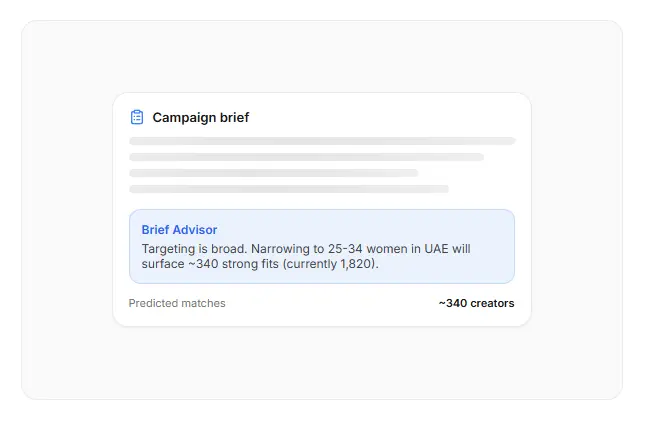
Swavy’s Brief Advisor checks the instructions before they are sent. It can flag vague deliverables, broad targeting, missing tone references, weak calls to action, absent compliance language, or deadlines that may be difficult to meet.
After approved content is published, Swavy imports available performance information from creator accounts connected through OAuth. Supported formats include Instagram feed posts, Reels, and Stories; TikTok videos, Stories, and livestreams; and YouTube long-form videos and Shorts.
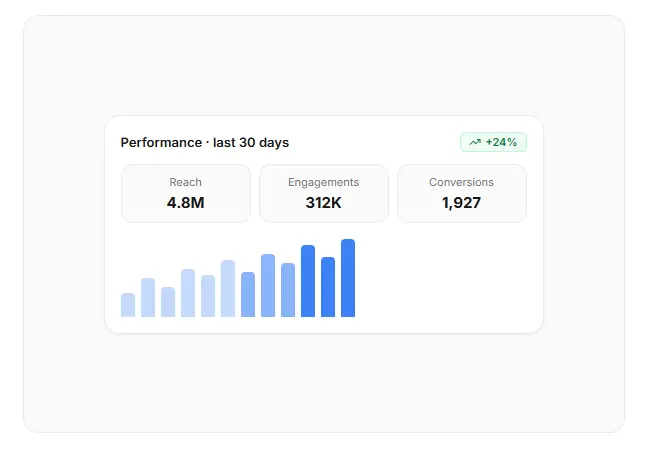
Available measurements depend on the network and format but can include reach, impressions, engagement, views, watch time, clicks, conversions, and coupon redemptions. Temporary Story data can be collected without requiring creators to send screenshots after the content expires.
Live dashboards present results at the campaign, platform, and individual creator levels. Marketers can examine cost per engagement, cost per conversion, and return on ad spend to determine which partnerships contribute most effectively to campaign objectives.
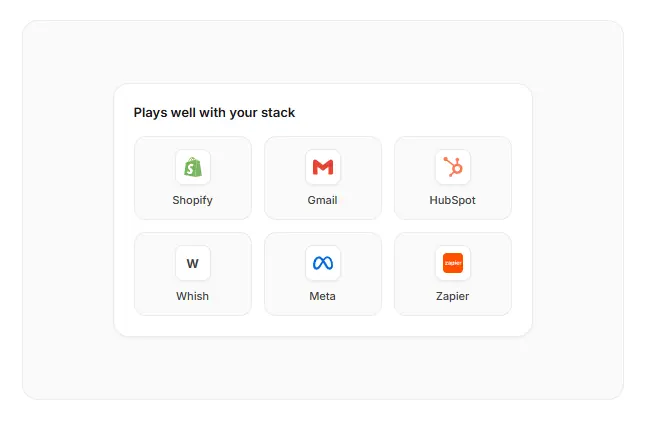
Unique links provide click information by date, country, referrer, and device. Creator-specific coupon codes connect purchases with individual partners through Shopify, WooCommerce, and Salla. Brands can configure attribution windows and consolidate results from several online stores.
Swavy also evaluates comments through multilingual sentiment analysis. Reactions can be classified as positive, neutral, or negative and grouped according to recurring subjects. Alerts notify users when negative sentiment exceeds a chosen threshold, while unusual coupon activity can be flagged as a potential fraud or misuse signal.
A past campaign illustrates how these capabilities work across a complex, multi-market campaign. A GCC tourism government entity used the platform to coordinate influencer activity across India, China, Indonesia, Malaysia, and the Middle East.
Swavy centralized creator discovery, content submissions, compliance checks, approvals, and real-time performance tracking across the organization and its agencies. The campaign activated more than 130 influencers, generated over 1,200 pieces of content, and achieved an organic CPM below $10, approximately 50% lower than the stated benchmark.
Reports can be viewed through live dashboards or exported in CSV and Excel formats. Agencies can apply their own branding to client reports and share selected campaign information through approval portals.
Payments can also be administered through the platform. Brands fund creator agreements, with the money held until the required work is delivered and approved. Payment methods include bank transfer, IBAN, SWIFT, and Whish, depending on the creator’s location. Multiple currencies are supported.
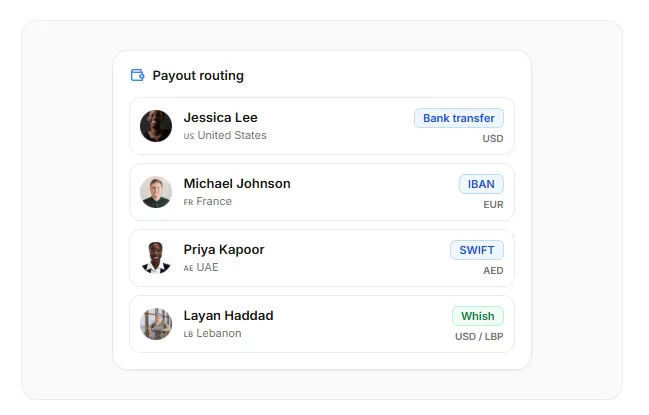
If the submitted work materially misses the agreed brief, either party can enter a dispute process. The brand and creator submit the campaign instructions, conversation history, and delivered content. Swavy can then authorize a full release, partial payment, or refund.
Agency customers receive separate environments for each client. Creator lists, briefs, campaigns, reports, users, and notes remain isolated by brand, while agency leaders can monitor activity across the complete portfolio.
Role-based and field-level permissions determine what employees and clients can access. Agencies can hide internal evaluations while giving clients the ability to review creators, approve content, and leave feedback. Shared credits, branded portals, white-label domains, audit logs, and cross-brand insights support larger agency operations.
Enterprise customers can add SSO, SAML 2.0, signed data-processing agreements, EU data residency, custom contracts, dedicated support, exportable audit trails, and integrations with existing finance, eCommerce, CRM, and analytics systems.
Conclusion
Swavy offers a broad set of capabilities for operating influencer campaigns from initial research through final payment. Its AI is applied to specific areas of campaign execution, while configurable approval controls determine which decisions remain with the marketing team.
The platform is most relevant to brands and agencies running creator partnerships frequently enough for disconnected databases, email threads, spreadsheets, approval tools, and reports to become difficult to manage. Its multilingual functionality and regional focus make it especially notable for Middle Eastern campaigns, although its creator database and workflow can support broader international programs.
Businesses cannot fully assess value for money from the public website because detailed prices, plan limits, and credit usage are provided after registration. Prospective customers should request a complete quotation based on their expected number of creators, campaigns, users, and client brands.
For organizations with sufficient campaign volume, Swavy provides a comprehensive platform for bringing creator selection, activation, measurement, and administration into a more consistent workflow.