
TikTok challenges have evolved far beyond the dance trends and hashtag campaigns that helped define the platform’s early years. For brands, they have become a way to turn audiences from passive viewers into active participants, encouraging people to recreate an idea, put their own spin on it, and spread a campaign through user-generated content.
That opportunity sits within an enormous attention economy. TikTok now reaches around 1.58 billion monthly active users worldwide, while U.S. users spend an average of 53.8 minutes per day on the platform. Getting in front of that audience is one thing. Giving people a reason to participate is where a well-designed TikTok challenge can become particularly powerful.
For marketers, that participation can support much more than video views. A challenge can introduce a product, generate creator content, expand brand awareness, encourage product trial, or even contribute directly to sales.
Our latest TikTok marketing research finds that 61.2% of marketers identify brand awareness as their primary objective on the platform, making participatory campaigns especially relevant for brands trying to increase visibility while generating content people actively engage with.
The format has changed, too. Today's campaigns can combine organic participation with creator seeding, branded effects, original sounds, paid amplification, and TikTok tools such as Branded Mission. The best campaigns aren't simply trying to manufacture a viral hashtag.
They give people a simple, recognizable idea that is easy to recreate while leaving enough room for individual creativity.
Below, we've selected seven TikTok challenge examples that show different ways brands have turned participation into measurable campaign results. We'll break down the idea behind each one, how it was launched, the results it generated, why it worked, and what marketers can learn from it. We'll then show you how to apply those lessons when planning a TikTok challenge of your own.
If you're developing a broader presence on the platform rather than a single participation campaign, our TikTok Marketing Guide covers the wider strategy, from content and creators to advertising and campaign planning.
⭐ Plan Your Own TikTok Challenge
Ready to turn these examples into a campaign of your own?
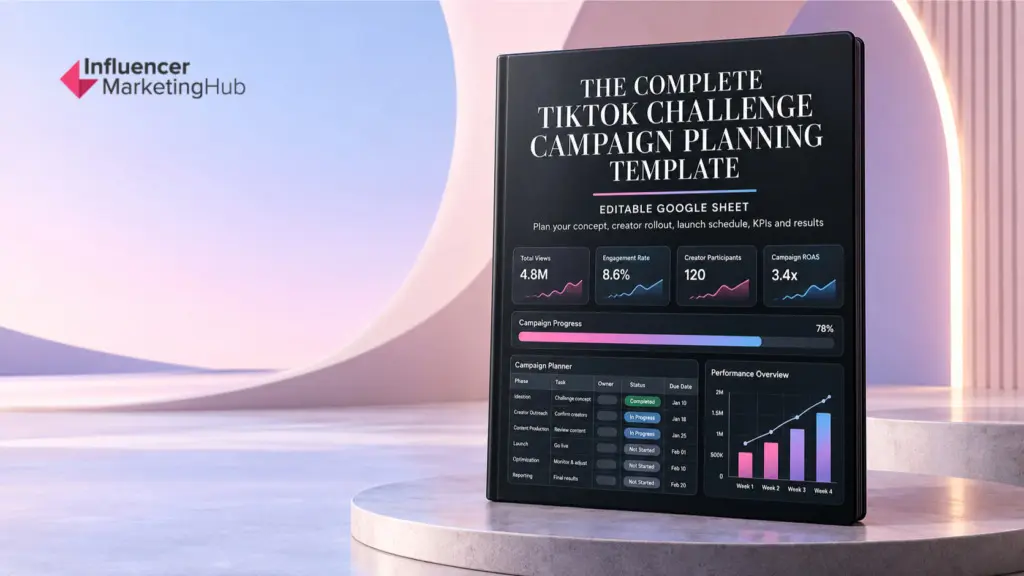
Download our TikTok Challenge Campaign Planner & Performance Tracker to map your challenge concept, creator rollout, launch schedule, amplification plan, campaign KPIs, and results in one working Google Sheet.

TikTok Followers Growth
⭐Give Your TikTok Challenge a Bigger Launch
A strong challenge gives people a reason to participate. TikTok Ads can help put it in front of the right audience, build early momentum, and turn a creative idea into a wider brand campaign. Create your TikTok Ads account and claim up to $6,000 in ad credits through this limited-time offer.
What Are TikTok Challenges?
A TikTok challenge is a participation-based content format that asks users to perform, recreate, demonstrate, or respond to a specific idea and share their own version on TikTok.
The challenge might revolve around a dance, transformation, product use case, storytelling prompt, branded effect, sound, hashtag, or simple task. What matters is that people can quickly understand what they are being invited to do and create their own version.
Some challenges grow organically from the TikTok community. Others are started by creators or deliberately developed by brands.
For marketers, the appeal is simple. Instead of publishing one piece of branded content and asking people to watch it, a challenge can encourage audiences to participate in the campaign themselves. Each new video can expand the campaign’s reach while generating additional user- or creator-generated content around the same idea.
Brands can encourage this participation organically, seed a challenge through selected creators, or support it with paid TikTok products. TikTok’s Branded Mission, for example, allows brands to issue a creative brief to eligible creators, collect participating videos, and select strong submissions to amplify as ads.
@tiktokforbusiness Put your business on a Branded Mission 🚀 to success. Collaborate with creators, crowdsource your creative and achieve bigger and better wins for your brand. Learn more about this exciting tool from @tejas!
A successful challenge therefore needs more than a catchy hashtag. The participation mechanic must be easy to understand, recognizable enough to connect each response to the campaign, and flexible enough that creators can still make the idea their own.
Brands can either build a challenge from scratch or participate in an existing trend when there is a natural connection to the brand. Our guide to using TikTok challenges for business goes deeper into when each approach makes sense and how brands can use challenge-led content to generate awareness and UGC.
Types of TikTok Challenges
TikTok challenges can take many forms, but the easiest way to understand them is to separate who starts the challenge from how people participate.
Organic Community Challenges
Organic challenges develop naturally within the TikTok community rather than being created by a brand.
They may start with a creator, sound, joke, behavior, or format that other users begin recreating. If enough people participate, the idea can spread well beyond the original video.
Brands can sometimes join these trends when there is a natural connection, but forcing a product into an unrelated community challenge can quickly feel out of place.
Creator-Led Challenges
A creator-led challenge begins with one or more creators demonstrating an idea and encouraging their audiences to join.
For brands, creators can be especially useful for seeding the first wave of participation. Instead of publishing instructions from a corporate account, the brand gives creators a format they can demonstrate in their own style.
That first group of videos helps show other users what the challenge looks like and how they can take part.
Brand-Led Challenges
Brand-led challenges are deliberately designed around a campaign objective.
A brand might ask users to demonstrate how they use a product, recreate a movement, show a transformation, answer a prompt, share a story, or participate in a recognizable creative format.
The strongest branded challenges usually make the brand relevant to the activity without making every submission feel like the same advertisement.
Paid and Crowdsourced Challenge Campaigns
Brands can also support participation using TikTok's paid tools.
Branded Mission, for example, allows a brand to issue a creative brief to eligible TikTok creators, collect their submissions, and select strong-performing videos to amplify as ads. TikTok describes the format as a way to crowdsource authentic creator content and extend its reach through paid media. Brands can combine that with other TikTok formats, including Branded Effects and branded hashtags.
How TikTok Challenge Campaigns Work Today
A TikTok challenge can still take off organically, but brands now have far more control over how they seed participation, recruit creators, identify strong content, and extend the reach of videos that perform well.
In practice, a modern challenge campaign can move through several stages.
1. Start With a Simple Participation Idea
Every challenge still needs a clear creative hook.
That could be a movement, question, transformation, product interaction, sound, effect, or other action people can understand quickly and recreate in their own way.
@delara_lavasani_kjaer 😭🤣🤪 @Aidaaa #goofy #funny #bestie #duochallenge #fyp
The goal isn't to make every video identical. The strongest concepts create a recognizable connection between submissions while giving each creator enough flexibility to make the content feel like their own.
2. Seed the Challenge With Creators
Brands don't necessarily need to wait for people to discover the challenge organically.
Creators can introduce the concept first, demonstrate how it works, and give the wider TikTok community examples to build from.
@allierosss RANDOM BUDGET SEPHORA CHALLENGE!!! How did I do?!? CREDS @MilkyDew🥛 #sephora #sephorahaul #sephorahauls
This also lets brands test how the idea translates into actual TikTok content before trying to scale participation more broadly.
3. Open the Idea Up to Wider Creator Participation
TikTok now gives brands structured ways to crowdsource creator content.
With Branded Mission, a brand can publish a creative brief and invite eligible creators to submit videos around it. The brand can then review those submissions and select high-performing creator videos to amplify as ads.
This moves the traditional hashtag challenge model closer to a creator-content pipeline. Rather than relying entirely on users discovering a hashtag and deciding to participate, the brand can actively brief creators and build a larger pool of campaign content.
TikTok's Branded Buzz offers another creator-driven option. The product is designed to generate a large volume of organic creator content around launches, announcements, and other brand moments by inviting creators to participate around a campaign brief and hashtag.
@creatoracademy Learn how to turn content into bigger opportunities and maximize your rewards potential with TikTok One's Branded Buzz 🐝 #CreatorAcademy
♬ original sound - TikTok Creator Academy - TikTok Creator Academy
4. Use Sounds, Effects, and Hashtags to Connect the Content
A challenge usually needs something that makes individual submissions feel like part of the same campaign.
That could be an official hashtag, original sound, Branded Effect, account mention, or combination of several elements. TikTok's Branded Mission tools, for example, can require creators to use official music, a campaign hashtag, or mention the brand account.
These assets shouldn't replace the creative idea. They should make the idea easier to recognize and participate in.
5. Amplify the Strongest Creator Content
Participation doesn't have to end with organic distribution.
TikTok's Spark Ads allow brands to promote existing organic TikTok posts from their own accounts or, with authorization, from creators' accounts. Engagement generated through the promotion remains attached to the original post.
This means a challenge can function almost like a testing environment. Brands can see which creator interpretations resonate organically and then put paid media behind the strongest ones.
NIVEA followed this type of model with #NIVEAGotMeLike, using Branded Mission to generate 589 additional creator videos before amplifying selected submissions. The campaign generated 44.2 million boosted impressions and a 10.6% engagement rate on the selected Branded Mission ads. More on this campaign later.
@thenostalgicweirdo @NIVEA USA #NIVEAGotMeLike book me for commercials!! I’m available! 😂 #MadewithKAContest #foryou #4you #PerfectPrideMovement #4youpage #foryoupage #4yp #fyp #viral #tiktokviral #ad
6. Turn Participation Into an Ongoing Content Asset
The value of a challenge doesn't necessarily disappear when the campaign ends.
TikTok's current Content Suite can help advertisers identify brand-relevant organic and branded content and, where appropriate, move that content into advertising workflows.
For marketers, that changes the way a TikTok challenge should be viewed. It can generate reach and participation during the campaign while also creating a library of creator content that may continue supporting paid and organic marketing afterward.
The exact setup will vary from campaign to campaign. Some brands may only need a creator-seeded organic challenge. Others may combine a hashtag, Branded Effect, Branded Mission, Spark Ads, and additional paid distribution.
What matters is that the participation mechanic comes first. TikTok's advertising tools can help scale a strong idea, but they can't make an unclear or difficult challenge appealing to users.
If you're planning to add paid amplification to your challenge, our TikTok Ads Manager Guide explains how TikTok's advertising ecosystem works, including campaign setup and Spark Ads.
7 TikTok Challenge Examples
No matter your budget, there are tons of ways you can create a fun and engaging TikTok challenge to increase brand awareness and get more followers. If you’re not sure what your TikTok challenge should look like, here are 7 of our fave TikTok challenge examples to inspire you.
1. NIVEA: #NIVEAGotMeLike
NIVEA’s #NIVEAGotMeLike campaign is a strong example of how brands can turn an existing TikTok conversation into a structured participation campaign.
The idea started after a TikTok creator described the glow from NIVEA’s Essentially Enriched Body Lotion as looking like “salad dressing.” Rather than treating that viral moment as a one-off, NIVEA built a Branded Mission around the same playful behavior and encouraged other creators to describe how the lotion made their skin look in their own exaggerated, humorous terms.
The Idea
Instead of asking creators to repeat a fixed product claim, NIVEA gave them a simple prompt: show the product’s effect and describe the resulting glow in your own way.
That flexibility produced descriptions ranging from “glazed donut” to “juicy turkey leg,” giving participants a recognizable campaign theme without forcing every video into the same script.
How It Was Launched
NIVEA first worked with nine creators to demonstrate the concept and introduce it to relevant TikTok audiences.
The brand then used TikTok’s Branded Mission format to open participation to a wider creator community. That generated 589 additional creator videos, after which selected submissions were amplified through paid advertising.
The Results
TikTok reports that the campaign generated:
- 44.2 million boosted impressions
- 589 additional creator submissions
- 10.6% engagement rate on selected Branded Mission ads
- +5.2% lift in awareness
- +5.7% lift in ad recall
- +49% week-over-week increase in search ranking for NIVEA Essentially Enriched Body Lotion
- A brand-reported sales increase 10% above its previous benchmark
TikTok also reports that the campaign achieved 300% higher relevancy than a standard Branded Hashtag Challenge, suggesting that the creator submissions were particularly well matched to the audiences seeing them.
Why It Worked
NIVEA did not invent a challenge mechanic in isolation. It started with an existing piece of organic creator behavior that was already resonating on TikTok.
The brand then gave other creators enough structure to understand the idea while leaving the most entertaining part, the description of the product’s effect, completely open to interpretation.
That balance made the campaign recognizable without making the content repetitive.
NIVEA also treated the challenge as more than an awareness play. Creator participation generated a pool of content, while paid amplification extended the reach of the strongest submissions and helped move the campaign further down the funnel.
What Marketers Can Learn
Look for behaviors your audience is already creating around the brand before inventing a challenge from scratch.
The original “salad dressing” description worked because it came naturally from TikTok culture. NIVEA’s job was not to replace that behavior with polished brand messaging. It was to give more creators a framework for joining it.
The campaign also shows why challenge performance should be measured beyond hashtag views. NIVEA tracked creator participation, engagement, awareness, ad recall, search activity, and sales, giving the brand a much fuller picture of what the challenge actually achieved.
2. Walmart: #IYWYK
Walmart’s #IYWYK campaign shows how a TikTok challenge can work without relying on choreography, transformations, or an elaborate creative gimmick.
Instead, Walmart built the campaign around something its customers already had: knowledge of the products, deals, and shopping hacks they had discovered in-store.
The Idea
The campaign adapted the familiar TikTok expression “If You Know, You Know” into “If You Walmart, You Know.”
Creators were invited to share the tips, tricks, affordable finds, and shopping habits that only regular Walmart shoppers would understand.
That made the audience’s own experience with the retailer the creative material.
How It Was Launched
Walmart worked with Day One Agency and TikTok to combine several campaign elements.
The launch began with a TopView ad featuring lifestyle creator Preston Konrad, who highlighted affordable home décor finds while introducing the #IYWYK concept.
@prestonkonradThis new Walmart furniture is crazy! Everything on my LTK btw♬ original sound - Preston Konrad
Walmart then opened a Branded Mission Hashtag Challenge, allowing other TikTok creators to submit their own interpretation of how they “Walmart.” The brand selected its favorite submissions and amplified them through paid media.
The Results
According to TikTok, #IYWYK generated:
- More than 700 creator-produced videos
- 20% engagement rate, around twice TikTok’s benchmark
- 30 million impressions
- 2 million clicks to the Hashtag Challenge page
- +6% lift in ad recall
- +9.2% lift in awareness
The campaign performed strongly enough that Walmart went on to use the same multi-part Branded Mission approach for additional seasonal and annual campaigns.
Why It Worked
Walmart gave creators a prompt that was specific enough to feel connected to the brand but broad enough to produce hundreds of different stories.
Participants didn't need to learn a routine or copy a highly produced video. They simply needed to share something they already knew, liked, or had discovered while shopping at Walmart.
That made the challenge naturally compatible with TikTok’s existing recommendation culture, where users regularly share product finds, shopping hacks, and “you need to know this” advice.
The brand also used creators to establish the tone before opening the idea to the wider community. That gave participants an example to follow without making every submission look identical.
What Marketers Can Learn
The brand itself doesn't always need to be the hero of the challenge. Sometimes the most effective idea is to make customer knowledge the content.
Walmart turned its shoppers into contributors by giving them an opportunity to demonstrate what they knew about the brand.
For marketers, the lesson is to look for behaviors, knowledge, rituals, or inside jokes that already exist among your customers. Those can create a stronger participation prompt than asking people to repeat a conventional advertising message.
#IYWYK also shows how a challenge can combine creator seeding, crowdsourced UGC, premium media placement, and paid amplification rather than depending entirely on organic virality.
3. Dove: #DoveCloudWashChallenge
Dove's #DoveCloudWashChallenge shows how a brand can turn a product characteristic into something people can actively interact with on TikTok.
Rather than simply asking creators to talk about Dove Foaming Body Wash, the campaign used an interactive branded effect to create a challenge around the product experience itself.
The Idea
Dove wanted to increase awareness of its Foaming Body Wash while making the product's distinctive qualities easy to understand.
The campaign therefore centered on a game-style Branded Effect that encouraged users to participate and create their own content around the #DoveCloudWashChallenge.
A real-time ranking element added another layer of competition, giving participants an additional reason to engage with the experience.
How It Was Launched
The campaign ran for nine days and combined several TikTok tools.
Dove used the interactive Branded Effect as the main participation mechanic, supported by Branded Mission to bring creators into the campaign and identify strong submissions.
Selected creator content could then be amplified as advertising, while Top Feed placements helped increase campaign reach and direct more users toward the challenge.
@hirokemidesu 선물 받을 수 있다면 바로 해야지🫧☁️🥰 @dove.korea #도브구름워시챌린지 #가볍게펌핑하루종일촉촉 #구름워시 #도브 #도브포밍바디워시 ♬ 도브 구름워시 챌린지 - 유니레버코리아
In total, 221 creators produced 320 Branded Mission videos as part of the campaign.
The Results
According to TikTok, the campaign generated:
- 2,767 user-generated videos
- 2,113 unique participants
- 17.8 million total video views
- 8,853 hashtag page views
- 320 Branded Mission videos from 221 creators
The volume of user-generated videos was 228% above the benchmark, while unique participation came in 245% above benchmark. Hashtag page views were more than 3,100% higher than the comparison benchmark.
Why It Worked
Dove made participation part of the product story.
Instead of relying on users to invent content around a bottle of body wash, the branded effect gave them something specific and entertaining to do. That lowered the creative barrier while still leaving space for thousands of individual submissions.
The competitive ranking element added another incentive to participate, while Branded Mission helped Dove bring creators into the campaign and then identify content worth amplifying.
Most importantly, the challenge mechanic was connected to what Dove actually wanted people to notice about the product. The entertainment wasn't separate from the marketing message.
What Marketers Can Learn
If a product has a distinctive visual, functional, or sensory characteristic, consider turning that characteristic into the participation mechanic itself.
Effects can be particularly useful when the physical product would otherwise be difficult to translate into a repeatable TikTok challenge.
Dove also shows the value of combining several participation layers. The brand didn't depend on a Branded Effect alone. It combined creator recruitment, UGC, competition, premium placement, and paid amplification to move people from seeing the campaign to actively joining it.
4. McDonald’s Malaysia: #McDDoDaDip
McDonald’s Malaysia used the #McDDoDaDip challenge to promote new Chicken McNuggets sauces while building stronger relevance with younger consumers.
The campaign centered on a simple behavior people could immediately copy: a finger dance performed with Chicken McNuggets and dipping sauces.
The Idea
Participants were asked to create a video using the #McDDoDaDip version of ALYPH’s song “SWIPE” and perform their own finger-dance interpretation with McDonald’s Chicken McNuggets and sauces.
That gave the campaign three recognizable elements at once:
- a specific sound,
- a repeatable movement,
- and the product itself.
The result was a challenge that felt native to TikTok while still keeping Chicken McNuggets at the center of every submission.
How It Was Launched
McDonald’s worked with 19 TikTok influencers popular with Gen Z audiences in Malaysia, particularly creators known for music and dance content.
Their videos helped establish the challenge format before the campaign was opened more broadly to TikTok users.
@mcdmalaysia You game? Join the #McDDoDaDipChallenge ♬ SWIPE (#McDDoDaDip Remix) - ALYPH
McDonald’s then used Spark Ads to amplify those creator posts and ran a Brand Lift Study to measure ad recall, hashtag engagement, and purchase behavior. The campaign ran from May to June 2023.
The Results
According to TikTok, the campaign generated:
- 22.2 million views across #McDDoDaDip videos
- 441 organic user submissions
- 81% increase in TikTok conversations about McDonald’s Chicken McNuggets
- 15.8% lift in ad recall
- 6% increase in Chicken McNuggets purchases among Malaysian teenagers
The campaign later won Gold in the Best Branding Campaign category at the TikTok Ad Awards Malaysia 2024.
Why It Worked
The challenge made the product part of the creative mechanic, rather than simply placing it in the background of creator content.
Participants needed Chicken McNuggets and sauces to recreate the idea properly, which naturally reinforced product visibility every time someone joined the challenge.
The campaign also matched its creators to the behavior it wanted to encourage. McDonald’s selected influencers known for music and dance, making the finger-dance concept feel much more natural than if it had been introduced by creators with little connection to that style of content.
And by amplifying those creator videos through Spark Ads, McDonald’s was able to extend the campaign beyond the creators’ existing audiences.
What Marketers Can Learn
When possible, make the product essential to the challenge rather than simply asking users to mention it.
#McDDoDaDip worked because the product, sound, and movement were all connected. People weren't just creating content around McDonald’s; they were physically interacting with the product as part of the format.
The campaign also shows why challenge measurement shouldn't stop at views or submissions. McDonald’s tracked conversation, recall, participation, and actual purchase behavior, ultimately showing a 6% increase in Chicken McNuggets purchases among the target audience.
5. Cheetos Egypt: Zigzag Dance Challenge
When Cheetos launched its new hashtag-shaped snack in Egypt, the brand wanted to do more than announce the product. It turned the product's distinctive shape into a dance challenge that TikTok users could recreate themselves.
The Idea
The campaign centered on a simple “zigzag dance” inspired by the shape of the new Cheetos product.
Creators performed the movement against a custom Cheetos Branded Effect while an original upbeat track gave every submission a recognizable sound.
@omarmokbel يلا جرب رقصة الزجزاج مع صحابك وورينا مواهبكو! أحلى رقصة وأكتر الفيديوهات تفاعل هيتثبتوا على الصفحة! #شيتوس_هاشتاج_ورقصة_الزجزاج ♬ Cheetos Hashtag Ra'set el ZigZag - Cheetos Egypt
That connected the challenge directly to the new product without requiring participants to deliver a scripted advertising message.
How It Was Launched
Cheetos used the TikTok Creator Marketplace to identify popular young creators in Egypt, focusing particularly on creators already known for music and lip-sync content.
Those creators introduced the challenge by performing the zigzag dance and encouraging their followers to recreate it using the same Branded Effect and campaign hashtag.
Cheetos then used Spark Ads to amplify the creator videos, extending the campaign beyond their existing audiences.
The full campaign ran for four weeks and targeted Gen Z TikTok users in Egypt.
The Results
According to TikTok, the campaign generated:
- 92 million video views
- More than 13,000 user-created videos
- 11.3 million unique TikTok users reached
- +8.4% lift in ad recall
- +13.3% lift in brand awareness
TikTok reports that the 92 million views were twice its benchmark for Hashtag Challenge views in Egypt, while the number of user-created videos was more than three times the benchmark for comparable campaigns.
Why It Worked
Cheetos built the campaign around one distinctive product characteristic rather than trying to communicate a long list of product benefits.
The product's zigzag shape became the movement. The movement became the dance. And the dance became something creators could easily demonstrate and audiences could recreate.
The brand also selected creators whose existing content style matched the challenge. Using music and lip-sync creators for a dance-led campaign reduced the gap between the sponsored idea and the content those audiences already expected to see.
The Branded Effect and original music then gave thousands of individual videos a consistent visual and audio identity, while Spark Ads helped extend the strongest creator content beyond organic reach.
What Marketers Can Learn
Look for a distinctive product feature that can be translated into an action rather than simply shown on screen.
Cheetos took something as simple as a snack's shape and turned it into the campaign mechanic.
The campaign also reinforces another recurring lesson from these examples: creator selection should follow the challenge behavior. If the campaign revolves around dance, work with creators who already make dance and music content. If it revolves around beauty transformations, demonstrations, or storytelling, the creator mix should change accordingly.
A strong challenge idea and the right creators should reinforce each other rather than being planned separately.
6. e.l.f. Cosmetics: #EyesLipsFace
When e.l.f. Cosmetics launched #EyesLipsFace, it didn't simply attach its name to an existing TikTok trend. It created an original song specifically for the platform and built the challenge around the brand's own name: eyes, lips, face.
That made the campaign immediately recognizable while still giving users plenty of room to interpret it in their own way.
The Idea
e.l.f. worked with creative agency Movers+Shakers, songwriter iLL Wayno, and artist Holla FyeSixWun to create an original track built around the phrase “eyes, lips, face.”
Users were encouraged to create their own videos around the sound, using movement, makeup, transitions, comedy, fashion, or whatever interpretation suited their style.
Importantly, the campaign was not limited to people demonstrating e.l.f. products. The creative brief emphasized self-expression, making the sound and phrase the participation hook rather than turning every submission into a conventional beauty ad.
How It Was Launched
The challenge launched in October 2019 with a one-day TikTok takeover and was then supported by influencers, paid media, and creator participation.
e.l.f. became the first brand to create an original piece of music specifically for a TikTok hashtag challenge, giving the campaign an asset that could spread independently from any individual creator video.
@vprincemusic @e.l.f. Cosmetics #eyeslipsface #elfcosmetics ♬ original sound - Victoria Prince
The response was strong enough that e.l.f. later expanded the short TikTok track into a full-length song.
The Results
e.l.f. reported that the campaign:
- surpassed 1 billion views shortly after launch,
- generated more than 400,000 participating videos in its early run,
- became the first paid campaign to hold TikTok's number-one trending hashtag, and
- generated enough interest for the brand to release a full-length version of the song.
Later Shorty Awards reporting put the campaign's cumulative performance even higher, at around 5 million user-generated videos and 7 billion views, with unsolicited participation from celebrities including Lizzo and Reese Witherspoon.
Why It Worked
The sound did more than accompany the campaign. It became the campaign's creative infrastructure.
Once users heard “eyes, lips, face,” they immediately had a recognizable cue connecting thousands of otherwise very different videos.
At the same time, e.l.f. avoided overprescribing what people should make. Participants could dance, transform their look, joke, lip-sync, or interpret the track in another way entirely.
That combination of strong brand recognition and loose creative rules made it easy for the challenge to scale without every submission becoming repetitive.
What Marketers Can Learn
A custom sound can give a challenge an identity that travels further than a hashtag alone.
The strongest branded audio works when it is easy to recognize, closely connected to the brand, and flexible enough to support many different types of creator content.
#EyesLipsFace also shows why brands shouldn't always insist that every participant demonstrate the product itself. Sometimes the stronger strategy is to make the brand idea culturally usable, then let creators decide how to express it.
That principle still applies to TikTok campaigns today, even though the platform's paid participation tools have evolved considerably since #EyesLipsFace launched.
7. Chipotle: #GuacDance
Chipotle launched #GuacDance around National Avocado Day, turning a promotional moment into a participatory TikTok campaign.
The idea was simple: use Dr. Jean’s well-known “Guacamole Song” as the soundtrack and invite users to show off their best avocado-inspired dance moves.
The Idea
Rather than inventing a completely new cultural reference, Chipotle built the challenge around a song that already had recognition online.
That gave the campaign an immediate sense of familiarity while the dance mechanic made participation easy to understand.
At the same time, Chipotle connected the social campaign to a concrete offer: customers could get free guacamole with an entrée ordered through the Chipotle app or website on National Avocado Day.
How It Was Launched
The campaign began on July 26, 2019, ahead of National Avocado Day on July 31.
@brentrivera When guacamole is free @chipotle when you order online/in-app on July 31st😍 #GuacDance #ad ♬ The Guacamole Song - Dr. Jean
Chipotle seeded the challenge with creators including Brent Rivera, helping demonstrate the format before encouraging wider participation. The campaign then ran for six days around the National Avocado Day promotion.
The Results
According to Chipotle, #GuacDance generated:
- More than 250,000 video submissions
- Nearly 430 million video starts
- All within a six-day campaign run
Chipotle also reported its biggest guacamole day in company history, serving more than 802,000 sides of guac on National Avocado Day.
At the time, Chipotle described #GuacDance as the highest-performing branded TikTok challenge in the U.S.
Why It Worked
#GuacDance connected several elements that reinforced one another.
The sound gave people an instantly recognizable creative cue. The dance made participation simple. National Avocado Day gave the campaign a clear reason to happen at that moment. And the free-guac offer connected the TikTok activity directly to something customers could act on.
Chipotle also seeded the idea with creators before opening it up more broadly, helping users understand the format without requiring a complicated explanation.
Most importantly, the campaign did not exist separately from the wider marketing promotion. The social challenge and the commercial offer were part of the same event.
What Marketers Can Learn
Give the challenge a reason to happen now.
A strong participation mechanic can become more effective when it is connected to a launch, holiday, cultural moment, seasonal event, or limited-time offer.
Chipotle also demonstrates that a TikTok challenge does not need a complicated concept. #GuacDance worked because users could understand the task almost instantly, while the song and National Avocado Day made the campaign easy to recognize.
The wider lesson is to connect participation, cultural timing, creator seeding, and a clear customer action rather than treating the challenge as a standalone piece of social content.
What Successful TikTok Challenges Have in Common
The seven campaigns above used different products, creators, sounds, effects, and promotional strategies. But the strongest TikTok challenges tend to share several characteristics.
The Idea Is Easy to Understand
People shouldn't need a paragraph of instructions before they can participate.
#GuacDance asked users to dance. #McDDoDaDip turned dipping McNuggets into a finger-dance routine. Cheetos translated the shape of its product into a zigzag movement.
In each case, the basic action could be understood almost immediately.
The easier a challenge is to grasp, the lower the barrier to creating a response.
There Is Room for Creativity
Simple doesn't have to mean restrictive.
NIVEA gave creators a common product experience but let them invent their own descriptions for the resulting glow. Walmart asked shoppers to share how they “Walmart,” leaving the actual tip, product, or story up to each participant.
That balance is important. A challenge needs enough structure for submissions to feel connected, but enough flexibility that creators don't feel like they're recreating the same advertisement.
The Mechanic Fits the Brand or Product
The strongest examples didn't simply add a logo to an unrelated trend.
Cheetos turned its product's zigzag shape into a movement. Dove built participation around a branded effect connected to the product experience. McDonald's made Chicken McNuggets and dipping sauces part of the challenge itself.
When the product naturally belongs in the activity, participation can reinforce the marketing message without requiring creators to repeat it explicitly.
Creators Help Establish the Format
Creators appeared early in almost every campaign we looked at.
Their role wasn't simply to provide additional reach. They showed audiences what participation was supposed to look like.
The creator mix also matched the challenge. McDonald's selected creators associated with music and dance for #McDDoDaDip, while Cheetos similarly leaned into creators already comfortable with music-led content.
That matters because the first wave of videos effectively becomes the creative brief for everyone who follows.
There Is a Recognizable Campaign Cue
Successful challenges usually have something that links otherwise different videos together.
That may be:
- a hashtag,
- an original sound,
- a song,
- a Branded Effect,
- a repeated movement,
- a visual transition,
- a phrase,
- or a combination of several elements.
For e.l.f., the “Eyes. Lips. Face.” sound became the campaign's identity. For Chipotle, the Guacamole Song immediately connected participating videos to #GuacDance.
The cue makes the challenge easier to recognize without forcing every video to look the same.
Participation Has a Reason to Happen
Some challenges give users an entertainment incentive. Others add competition, recognition, rewards, or a timely event.
Chipotle connected #GuacDance to National Avocado Day and a free-guacamole promotion. Dove introduced a ranking element. Branded Mission campaigns can give participating creators the opportunity to have selected content amplified as advertising.
The important question is: Why would someone want to join this rather than simply watch it?
The answer doesn't always need to be a prize. Creative expression, entertainment, recognition, community participation, or access to a trend can all provide motivation.
Organic Content and Paid Amplification Work Together
Several of the newer campaigns show how much the challenge model has evolved.
NIVEA, Walmart, McDonald's, Cheetos, and Dove all used some combination of creator content and paid distribution rather than depending entirely on organic reach.
TikTok's Branded Mission allows brands to crowdsource creator submissions and turn selected videos into ads, while Spark Ads can amplify existing organic creator posts.
That gives brands an important option: let creators show which interpretations resonate, then put additional media behind the strongest content.
Success Is Measured Beyond Views
A huge hashtag-view number can look impressive, but it doesn't tell the full story.
The campaigns we've covered measured outcomes including:
- creator submissions,
- unique participants,
- engagement,
- ad recall,
- brand awareness,
- search activity,
- conversation volume,
- clicks,
- and purchases.
McDonald's, for example, connected #McDDoDaDip to a reported 6% increase in Chicken McNuggets purchases among Malaysian teenagers, while NIVEA reported lifts in awareness, search ranking, and sales alongside creator participation.
The right metrics depend on the campaign objective. A challenge designed for awareness should not be judged in exactly the same way as one intended to generate product trial or sales.
The common thread across all seven examples is therefore not a particular dance, hashtag, budget, or TikTok ad format. It is a participation idea that is easy to understand, relevant to the brand, flexible enough for creators, and supported by a clear reason for people to join in.
How to Create a TikTok Challenge
The examples above make one thing clear. Successful TikTok challenges rarely start with the question “How do we make this go viral?”
They start with a simpler question: “What can we give people that they will actually want to participate in?”
From there, the planning process becomes much easier.
1. Define What You Want the Challenge to Achieve
Start with the campaign objective.
Are you trying to:
- increase brand awareness,
- launch a product,
- generate user-generated content,
- reach a particular audience,
- encourage product trial,
- drive traffic,
- or increase sales?
The objective will influence everything from the challenge mechanic to the creators you choose and the metrics you track.
NIVEA, for example, measured awareness and search activity alongside creator participation, while McDonald’s Malaysia connected its challenge to actual Chicken McNuggets purchases.
2. Find a Participation Idea That Fits the Brand
The challenge needs an action people can recreate.
Look for something connected to your product, audience, or brand behavior rather than adding your logo to a random TikTok trend.
That could mean turning:
- a product feature into a movement,
- a customer habit into a prompt,
- a transformation into a before-and-after format,
- a product use case into a demonstration,
- or a brand phrase into a sound or creative cue.
Before developing the concept, spend time looking at what your audience is already doing on TikTok.
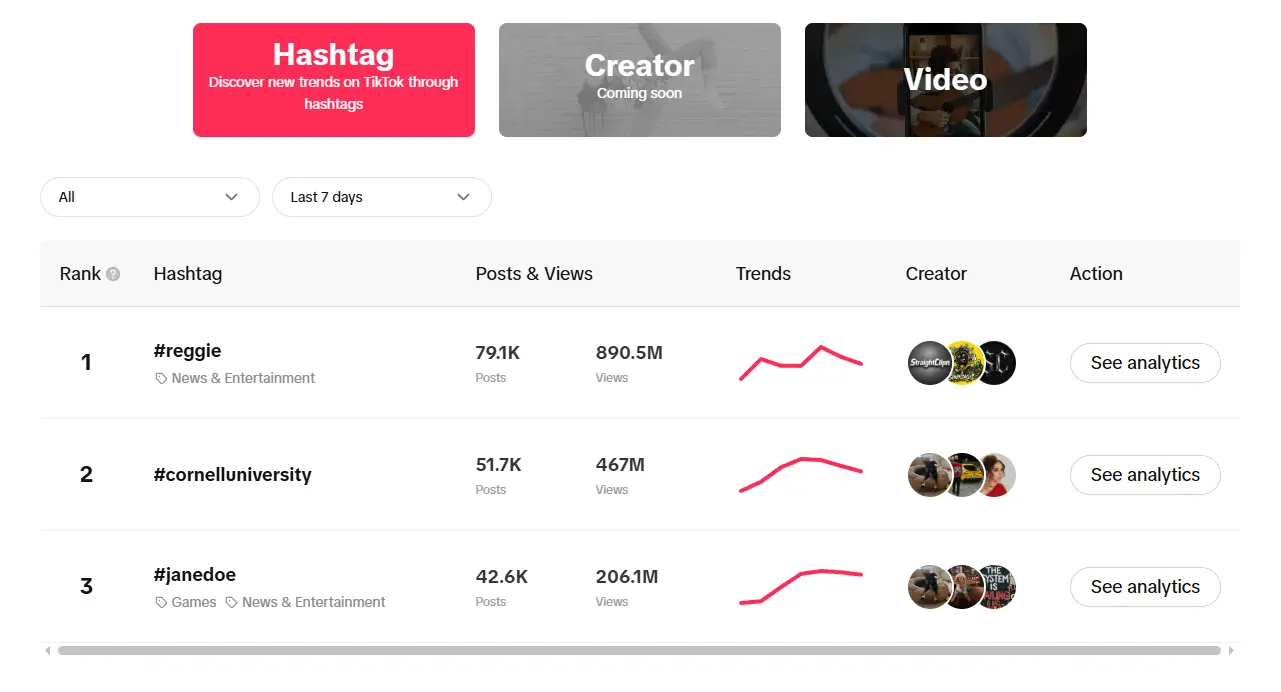
TikTok's Creative Center Trends lets marketers explore trending hashtags and filter them by industry and time period. You can also examine trendlines, related videos, audience insights, regional popularity, and related hashtags to understand whether an idea is genuinely relevant to the audience you want to reach.
3. Keep the Participation Mechanic Simple
A user should be able to watch one example and quickly understand what they are supposed to do.
If the challenge requires a long explanation, complicated choreography, specialist equipment, or several difficult steps, fewer people are likely to participate.
At the same time, avoid making the instructions so rigid that every response looks identical.
The strongest challenges create a repeatable framework rather than a fixed script.
4. Give the Challenge a Recognizable Creative Cue
Participants need something that links their videos back to the wider campaign.
That might be:
- a memorable hashtag,
- an original sound,
- an existing song,
- a repeated movement,
- a Branded Effect,
- a phrase,
- or a visual transition.
Often, the strongest campaigns combine several.
e.l.f.'s #EyesLipsFace linked its challenge through an original sound and phrase, while McDonald’s #McDDoDaDip combined a hashtag, track, movement, and product.
If you need help developing the hashtag itself, you can also use our free TikTok Hashtag Generator to generate ideas around your campaign or topic.
5. Seed the Challenge With the Right Creators
Creators can help establish what the challenge looks like before you ask the wider TikTok community to participate.
Choose them based on more than follower count.
Look for creators whose audience, content style, and existing behavior match the challenge mechanic. A dance-led campaign naturally benefits from creators already comfortable with movement and music. A product demonstration challenge may require creators known for reviews, tutorials, or category expertise.
Their first videos become examples other people can follow, so creator fit matters as much creatively as it does for reach.
6. Decide How You Will Scale Participation
Not every campaign needs a large paid budget.
A smaller brand might seed an idea with creators and customers organically. A larger campaign may use Branded Mission, Spark Ads, Branded Effects, or other paid placements to recruit more creators and amplify strong-performing content.
The newer examples in this article show why the two approaches don't need to be separate.
Brands such as NIVEA and Walmart used creator participation to generate content first, then amplified selected submissions to reach larger audiences.
The important thing is to decide this before launch rather than assuming every challenge will spread organically.
7. Decide How You Will Measure Success Before You Launch
Views are useful, but they shouldn't automatically become the only measure of a successful challenge.
Depending on the objective, you might track:
- number of creator submissions,
- unique participants,
- video views and reach,
- engagement,
- hashtag activity,
- clicks,
- brand search,
- ad recall,
- awareness lift,
- promo code use,
- conversions,
- or attributable sales.
Define the primary metric before the campaign goes live.
That makes it easier to determine whether the challenge achieved the result it was designed for rather than simply celebrating a large view count afterward.
For a deeper walkthrough of concept development, hashtags, audio, rules, creator promotion, and launch strategy, see our complete guide to Launching a TikTok Hashtag Challenge.
How to Measure a TikTok Challenge
A successful TikTok challenge can generate millions of views and still fail to achieve the result a brand actually wanted.
That is why measurement should start with the campaign objective, not the biggest number in the TikTok dashboard.
Measure Participation
If the goal is to get people actively involved, track metrics such as:
- number of creator submissions,
- unique participants,
- hashtag activity,
- videos created,
- engagement rate,
- and the volume of usable creator content generated.
These metrics show whether people did more than simply watch the campaign.
Measure Awareness
For awareness-focused campaigns, look at:
- reach,
- impressions,
- video views,
- engagement,
- branded search activity,
- ad recall,
- and awareness lift.
TikTok's Brand Lift Study can help eligible advertisers measure incremental changes in metrics such as awareness, ad recall, and purchase intent by comparing exposed and control audiences.
Measure Traffic and Conversions
If the challenge is designed to move people beyond TikTok, track what happens after they interact with the campaign.
That might include:
- website visits,
- product page views,
- sign-ups,
- add-to-cart events,
- purchases,
- promo code use,
- affiliate sales,
- or other conversion events.
TikTok Pixel and Events API can connect campaign activity with actions on a brand's website, including events such as product views, cart additions, and purchases. TikTok currently recommends using Pixel and Events API together where possible to strengthen measurement and optimization.
Google Analytics can also be part of that measurement setup. TikTok added a direct Google Analytics integration to Events Manager in 2026, allowing eligible advertisers to compare attribution and pass supported purchase data between the two systems.
Measure Incremental Business Impact
For larger campaigns, brands may also want to know whether TikTok caused additional results rather than simply receiving credit for conversions that would have happened anyway.
TikTok's Conversion Lift Study compares audiences who were exposed to advertising with a control group to estimate incremental conversions, lift, cost per incremental conversion, and incremental return on ad spend.
This is particularly useful when a challenge is tied to a product launch, promotional event, or sales campaign.
The important point is to decide what success looks like before launch.
A challenge created to generate UGC should not be judged only on purchases. A sales-focused campaign should not be declared successful simply because the hashtag accumulated views.
Choose the primary objective first, then build the measurement plan around the behavior you actually want the campaign to create.
Final Thoughts
The best TikTok challenges give people more than something to watch. They give them a clear reason and an easy way to participate.
The tools available to brands have evolved considerably since TikTok’s earliest hashtag challenges. Creator seeding, Branded Mission, Spark Ads, effects, and paid amplification can now help brands generate and scale participation more deliberately.
But the technology is still secondary to the idea.
A strong TikTok challenge starts with something people can understand, recreate, and make their own. From there, the right creators, campaign assets, amplification strategy, and measurement plan can help turn participation into meaningful marketing results.
For brands developing a wider presence on the platform, our TikTok marketing guide explains how content, creators, advertising, trends, and campaign strategy fit together beyond challenge-led campaigns.
Frequently Asked Questions
What is a TikTok challenge?
A TikTok challenge is a participation-based format that asks users to recreate, respond to, or put their own spin on a specific idea. Challenges can revolve around dances, sounds, effects, transformations, product interactions, or prompts.
How do brands create TikTok challenges?
Brands usually start with a simple participation idea, seed it with relevant creators, connect it to a hashtag, sound, or effect, and then encourage wider participation. Paid tools such as Branded Mission and Spark Ads can also help scale strong creator content.
Do TikTok challenges need a hashtag?
Not always, but hashtags make challenge content easier to identify and connect. Many successful campaigns combine a hashtag with another recognizable cue such as a sound, movement, effect, or phrase.
What makes a TikTok challenge successful?
The strongest challenges are easy to understand, easy to recreate, relevant to the brand, and flexible enough for users to add their own personality. Creator seeding and paid amplification can help extend participation.
How do you measure a TikTok challenge?
The right metrics depend on the objective. Brands may track submissions, unique participants, views, engagement, reach, awareness lift, clicks, conversions, promo-code use, or sales.
Are TikTok challenges still effective in 2026?
Yes, but the format has evolved. Modern challenge campaigns can combine organic participation with creators, Branded Mission, Branded Effects, Spark Ads, and other paid amplification rather than relying on hashtag virality alone.
Can small brands launch TikTok challenges?
Yes. A challenge does not need a large paid budget if the idea is strong and relevant to the audience. Smaller brands can start by working with a few niche creators, customers, or community members and scale the concept if participation grows.

SUGGESTED


TikTok Marketing 101: How to Market Your Brand on One of the Most Popular Social Apps
Like everything on TikTok marketers have to think outside the box when strategizing. The...

14 Tips to Create TikTok Trending Videos
Don't underestimate the importance of TikTok. If you can create TikTok trending videos...