
TikTok has grown into a major eCommerce channel where products are discovered and purchased inside TikTok. Over 1.58 billion users browse, watch, and buy without leaving the app, which creates a direct path from content to purchase.
Dropshipping fits naturally into this model. You can list products on TikTok Shop, sell them through videos and live content, and rely on a supplier to handle inventory and delivery.
Therefore, running a TikTok Shop dropshipping business requires more than listing products. Supplier speed, tracking accuracy, product selection, and content performance all affect whether you can keep selling.
This guide explains how TikTok Shop dropshipping works, how to set it up, and what you need to manage to run it successfully.
What Is TikTok Shop Dropshipping?
TikTok Shop dropshipping is a way to sell products inside TikTok Shop without holding inventory yourself. You create the listing, set the price, and drive traffic through content, while your supplier takes care of storage, packing, and shipping.
Once a customer places an order, you pass the order details to your supplier, who fulfills it on your behalf. The entire transaction stays inside TikTok, which means the customer discovers the product through short-form videos, buys it, and tracks delivery without leaving the platform.
Even though the supplier handles fulfillment, your account is still responsible for how the order is delivered and how the customer experiences the purchase. Delivery timing, tracking accuracy, and product quality all influence whether your listings continue to perform.
How TikTok Shop Dropshipping Works
TikTok Shop dropshipping connects product discovery, checkout, and fulfillment into a single flow inside the platform. A customer sees your product in a video or through the Shop tab, places an order, and your supplier ships it.
Discovery starts with content. Your product appears in videos created by you or other TikTok creators, and the platform distributes that content based on engagement and purchase activity.
Products tied to content that keeps viewers watching and clicking tend to get more exposure.
Once the customer decides to buy, the order is completed inside TikTok Shop. You receive the order details in your seller dashboard, including the product, customer information, and shipping address.
From there, you forward the order to your supplier, who prepares and ships the product. Processing speed at this stage matters because it affects how quickly tracking becomes available and how soon the package enters transit.
Tracking is then added to the order and must reflect real carrier updates. TikTok uses this information, along with delivery timing and customer feedback, to evaluate your performance and determine how often your products appear in the app.
Strong results come from aligning product selection, supplier reliability, and content that consistently drives orders.
Is Dropshipping Allowed on TikTok Shop?
You can run a dropshipping model on TikTok Shop, but your setup has to meet TikTok Shop’s current seller-shipping rules in the market where you sell.
For US sellers using Seller Shipping, regular orders must be marked In Transit within 2 business days of the order entering Awaiting Shipment status, and orders that are not updated to Awaiting Collection within 5 business days can be canceled automatically.
TikTok’s current fulfillment policy also requires regular orders to be marked Delivered within 6 business days of Awaiting Shipment.
Shipping speed is only one part of the requirement. Your tracking has to come from a real carrier and show real movement. TikTok’s tracking validation checks whether the tracking ID matches the delivery address and whether the dispatch timing matches the order timeline. Counterfeit tracking details and fulfillment failures now face stricter enforcement.
Your shipping option also has its own threshold.
In the US Seller Shipping program, Express requires delivery within 3 business days, while Standard and Free Economy require delivery within 6 business days. TikTok also says sellers need a 95% on-time delivery rate to keep eligibility for those shipping options.
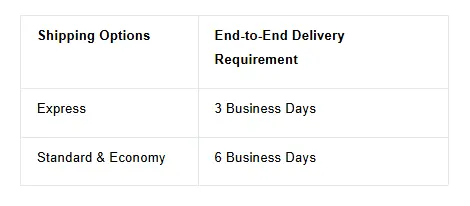
TikTok also places limits on how you fulfill orders. You may use a third-party fulfillment provider to pack and ship items, but TikTok says you must maintain ownership of the inventory. TikTok also says sellers must not purchase products from another online retailer and have the order shipped directly to a TikTok Shop customer.
That means classic retail-arbitrage style fulfillment does not fit the current US policy.
Product compliance matters just as much as shipping. Your listings must be clear, truthful, and aligned with TikTok Shop policies. TikTok’s current listing guidance says you should upload at least 5 high-resolution images, choose the correct category, and provide accurate product information.
Branded products require brand authorization, and restricted or prohibited products can trigger listing removal or enforcement action.
Customer service timelines also affect whether your operation holds up. For return and refund requests on items priced at $100 or less, sellers have 2 business days to take action. For items priced above $100, sellers have 4 business days. TikTok can auto-approve the refund when the seller does not act within that window.
To Summarize:
TikTok Shop allows dropshipping when your supplier can process orders quickly, ship through valid carriers, update tracking on time, deliver within TikTok’s deadlines, and support compliant listings. A supplier that misses any of those requirements puts your account at risk.
How to Start TikTok Shop Dropshipping
You are setting up a system that has to meet TikTok Shop’s delivery, tracking, and product standards from the start. Product choice, supplier capability, and content all connect here, so each step needs to be handled with clear intent.
Step#1: Create Your TikTok Shop Account

- Source: TikTok Shop
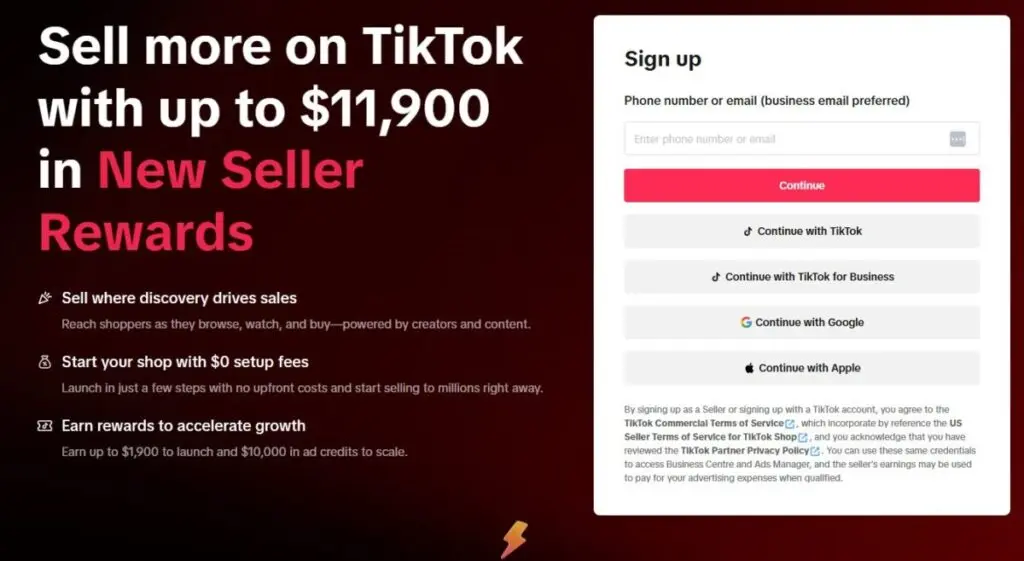
Register through TikTok Shop Seller Center and submit your identity or business verification, tax details, and payout method. Your account must be fully verified before you can list products or process orders.
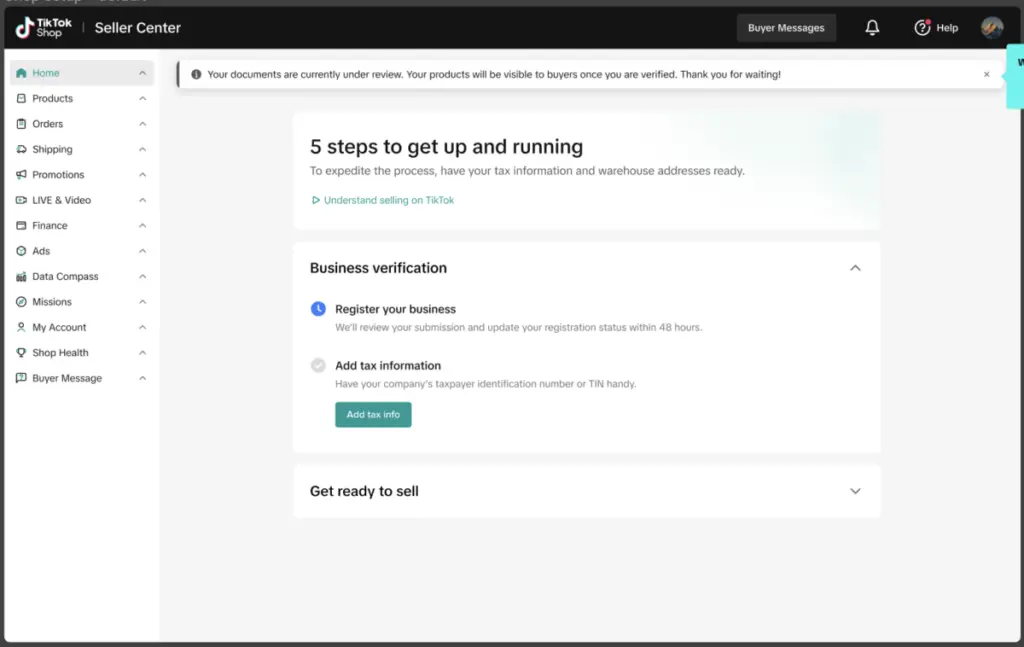
Your warehouse address must match where your supplier ships from. TikTok uses that location to evaluate dispatch timing and delivery performance, so using a placeholder address creates issues later.
Step #2: Choose a Product that Already Sells on TikTok
Nailing this step determines if your TikTok Shop dropshipping business makes or breaks. Picking the right products to dropship is the million-dollar question. Luckily, TikTok Shop already shows you what is working, so you should use that data first.
Start inside TikTok and browse TikTok Shop listings directly. Open products in categories related to your niche and look at their sales data. TikTok shows how many units each product has sold, which gives you a clear signal of demand.
A product with thousands of units sold tells you people are already buying it. A product with low or no sales tells you there is no proven demand yet. For example, let's look at the following product.
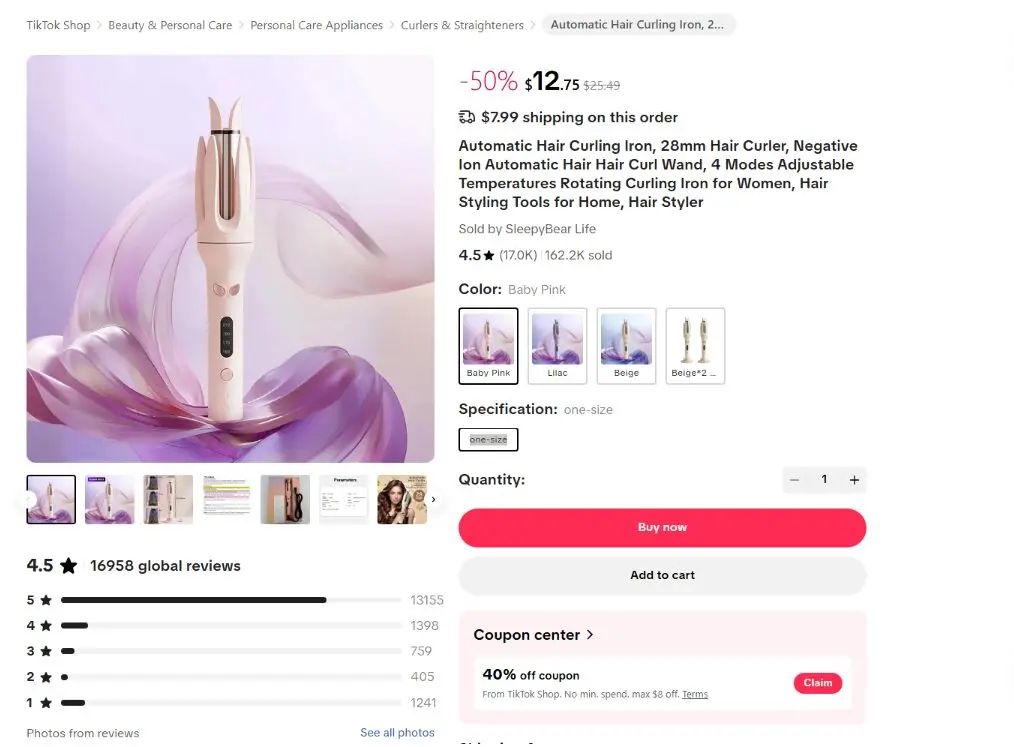
Right away, we can see that this product is quite popular, with over 17k reviews and over 162k purchases.
But sales numbers alone are not enough. You also need to check how active the product is right now. Open the product and look at recent videos linked to it. Pay attention to how often new content is being posted.
You want to see:
- Recent videos posted within the last 24 to 72 hours
- Multiple creators promoting the same product
- Consistent engagement across those videos
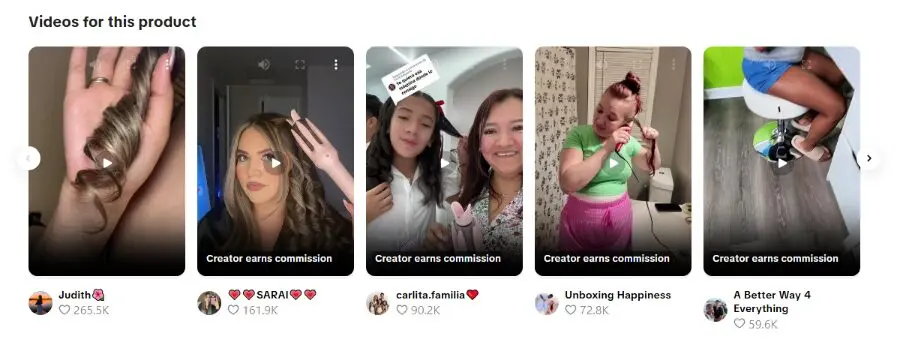
We can see that quite a lot of creators with large followings have made videos on it. A product that continues to get new content and views shows ongoing demand. A product with old content and no recent activity usually loses momentum.
Next, look at how creators are selling the product. Open several videos and watch how the product is presented. Focus on how quickly the value becomes clear.
Strong products share a few characteristics:
- The use case is obvious within the first few seconds
- The result can be shown visually
- The product solves a simple problem
Compare that with products that require explanation, technical details, or long demonstrations. Those struggle because TikTok users decide quickly whether to keep watching.
You should also check how many sellers are offering the same product. Open multiple listings for the same item and compare pricing, branding, and content quality.
A product with several active sellers can still work, but you need to see variation in how it is being marketed. If every listing looks identical, it becomes harder to stand out.
A product that already performs on TikTok gives you a clear starting point. You are not trying to create demand from scratch. You are entering an existing market where content is already driving sales.
Step #3: Choose a Supplier that Can Meet TikTok’s Requirements
Supplier selection determines whether your setup can operate once orders start coming in. Since TikTok Shop enforces strict shipping and tracking standards, your supplier needs to meet those requirements from day one.
Orders need to be processed quickly, shipped with valid tracking, and delivered within TikTok’s required timeframe. A supplier that cannot meet those conditions will create delivery delays, refunds, and performance issues on your account.
You have several supplier options, and each one changes how your operation works.
- Local or Domestic Suppliers
Local suppliers store inventory in the same country where you sell. This is the easiest way to meet TikTok’s shipping expectations.
Orders move into the delivery network quickly, which means tracking updates appear faster and delivery happens within the required timeframe. You also get more consistent product quality and fewer delays.
Higher product cost is the trade-off. You pay more per unit, but you gain reliability, which protects your account performance.
- Private Suppliers or Sourcing Agents
Private suppliers act as your fulfillment partner. They source products, hold inventory, and ship orders on your behalf.
This option gives you more control compared to open marketplaces. You can negotiate pricing, improve product quality, and adjust shipping methods based on your needs.
Most private suppliers operate with local or regional warehouses, which helps meet TikTok’s delivery requirements. This setup works well once you have a product that generates consistent orders.
- Supplier Platforms and Automation Tools
Supplier platforms connect you to multiple vendors and automate parts of the process. These tools sync your orders, send them to the supplier, and update tracking automatically.
This reduces manual work and speeds up order handling. You still need to verify the supplier behind the platform, because shipping speed and tracking quality depend on the actual vendor fulfilling the order.
This option works well during product testing because it allows you to move quickly without building a custom setup.
- Print-On-Demand Suppliers
Print-on-demand suppliers produce items after an order is placed. This works for custom products like apparel or accessories.
Production time adds to your shipping timeline, so you need to choose suppliers with local production facilities to stay within TikTok’s delivery requirements.
This option fits brand-focused products rather than trend-based items.
- Overseas Marketplace Suppliers
Overseas suppliers offer low product costs and large product selection.
Shipping times are longer, and tracking updates can be inconsistent. Meeting TikTok’s delivery and tracking requirements becomes difficult with this setup.
This option creates risk when used for TikTok Shop because delays and tracking gaps affect your account performance.
You should choose a supplier based on delivery speed, tracking reliability, and consistency.
A supplier that ships quickly with accurate tracking supports stable performance. A supplier that fails to meet these requirements creates ongoing issues once orders start coming in.
Step #4: List Your Product on TikTok Shop
Once you have a product and a supplier that can meet TikTok’s delivery requirements, the next step is getting that product live inside TikTok Shop.
You create your listing inside the TikTok Shop Seller Center. You can upload the product manually or sync it from another platform, depending on how your setup is structured. Manual uploads give you more control over how the product is presented, which matters when you are trying to match content with the listing.
Your listing needs to match exactly what your supplier will ship. Any mismatch between your product page and the delivered item leads to returns, complaints, and lower performance. You should confirm product images, variations, packaging, and specifications with your supplier before publishing.
Images come first. You need clear, high-quality images that show the product from multiple angles. Include images that demonstrate how the product is used, since TikTok users often move from a video to the product page to confirm what they saw.
Your title and description should explain what the product does in simple terms. Focus on how it is used and what result it delivers. Avoid exaggerated claims, especially in categories like health or beauty, because those create issues during review and after purchase.
You also need to set your pricing carefully. Your final price should cover your product cost, shipping, TikTok fees, and still leave a margin. Check similar listings on TikTok Shop to understand how your product compares, since customers often look at multiple options before buying.
TikTok reviews listings before and after they go live. Incorrect categories, misleading descriptions, or restricted products can lead to rejection or removal. You should double-check your category selection and make sure your product fits within TikTok’s allowed listings.
A strong listing supports conversion after your content brings in traffic. When a user clicks through from a video, your product page should confirm what they saw and make the purchase decision straightforward.
Step #5: Send Orders to Your Supplier
Once your product is live and starts generating orders, you need a reliable way to move those orders from TikTok Shop to your supplier.
Every order appears in your TikTok Shop seller dashboard with the customer’s shipping details and product information. Your job is to pass that information to your supplier as quickly as possible so they can prepare and ship the order.
In the early stages, you can handle this manually. You take the order details and place the same order with your supplier. This works when volume is low, but it becomes inefficient as orders increase.
As volume grows, you should move to an automated setup. Supplier platforms or integrations can sync your TikTok Shop orders and forward them directly to your supplier. This reduces errors and speeds up processing.
Timing matters at this stage because TikTok tracks how quickly orders move into transit. Orders need to be processed and marked as shipped within the required timeframe. Delays between order placement and supplier processing lead to late dispatch, which affects your account performance.
You also need to make sure tracking is handled correctly. Once your supplier ships the order, the tracking number must be added to TikTok Shop and should begin updating shortly after. Tracking that does not update or does not match the shipment creates issues with validation and delivery monitoring.
Order accuracy is just as important as speed. The product variant, quantity, and shipping address must match exactly. Errors at this stage lead to returns and customer complaints.
A clean order flow keeps your operation stable. Orders move quickly from purchase to shipment, tracking updates on time, and delivery happens within TikTok’s expectations.
Step #6: Create Content That Drives Orders
Once your product is listed and orders can be fulfilled correctly, your focus shifts to getting that product in front of buyers. On TikTok, content is the primary driver of traffic and sales.
Your product only sells when it appears in videos that people actually watch. TikTok distributes content based on engagement signals, so your videos need to capture attention quickly and make the product easy to understand within the first few seconds.
Start with simple product-focused videos. Show how the product is used, what problem it solves, and what result it delivers. A viewer should understand the value without needing additional explanation.
Clear demonstrations perform better than generic or overly polished content because they match how users consume videos on the platform.
If you're struggling with that, we have a full guide on coming up with TikTok content ideas.
You also have the option to work with creators. TikTok Shop includes an affiliate system where you can set a commission for your product. Creators can choose to promote your product and earn a percentage from each sale they generate. This allows you to scale content production without creating every video yourself.
Here's an example of Drink Nello's content strategy when working with UGC creators:
@renee.noe Making my husband @Drink Nello new Supercalm flavor spiced apple 😌🫶🏼🍎🍁
Volume plays a role here. A single video can generate sales, but consistent posting increases your chances of finding content that performs well. You can test different hooks, formats, and angles to see what resonates with your audience.
Product and content need to match. A product that is easy to demonstrate and understand will perform better because it fits naturally into a short-form video. Content that clearly shows the product and leads directly to the listing gives viewers a clear path from interest to purchase.
As your content starts generating orders, you can double down on what works and expand through more videos or more creators.
Step #7: Track Orders and Fix Issues Early
Once orders start coming in, your focus shifts from setup to performance. You need to monitor how orders move from placement to delivery and catch problems before they affect your account.
Start with dispatch timing. Orders need to move from “Awaiting Shipment” to “In Transit” within TikTok’s required window. If your supplier takes too long to process orders, you will see delays immediately in your dashboard, and those delays affect how your account is evaluated.
Tracking comes next. Every order needs a valid tracking number that starts updating shortly after shipment. Tracking should reflect real carrier movement and match the customer’s delivery location. Gaps in tracking or delayed updates create validation issues and increase the risk of cancellations or complaints.
Delivery speed is just as important. Orders need to reach the customer within the expected timeframe for your selected shipping method. Late deliveries lead to refunds, negative feedback, and reduced visibility across the platform.
You should also review customer feedback regularly. Returns, refund requests, and complaints point directly to issues with product quality, shipping reliability, or listing accuracy. Patterns in feedback help you identify whether the problem comes from your supplier or from how the product is presented.
Your TikTok Shop dashboard gives you access to performance metrics such as on-time dispatch rate, delivery performance, and cancellation rates. These metrics show whether your setup meets platform standards and where issues are starting to appear.
As your order volume increases, manual tracking and order handling become harder to manage, especially if you are running multiple TikTok Shop accounts or selling across different regions. Managing everything from a single device or environment can also create account-level risks on a mobile-first platform like TikTok.
Tools like GeeLark help at this stage by giving you separate mobile environments for each account and automating repetitive tasks such as order handling and activity management. This allows you to manage multiple stores, maintain consistent account behavior, and reduce the time spent on manual processes as your operation grows.
You should still focus on fixing the root cause of any issue. Replace suppliers that miss delivery targets, update listings that create confusion, and correct order handling delays as soon as they appear.
Stable performance comes from consistent execution across every order. The faster you identify and resolve problems, the easier it becomes to scale without interruptions.
TikTok Shop Dropshipping Requirements and Rules
Once your store is running, your ability to keep selling depends on how closely your operation matches TikTok Shop’s requirements. The platform tracks fulfillment, tracking, listings, and customer experience at every stage, and these signals directly affect your visibility.
You need to meet these standards consistently across every order.
5 TikTok Shop Dropshipping Requirements and Rules:
Shipping and Delivery Requirements
TikTok sets clear expectations for how quickly orders need to move through fulfillment.
Orders must be processed and marked as shipped within 2 business days of being placed. After that, delivery needs to happen within the timeframe tied to your shipping method.
Standard shipping typically requires delivery within 6 business days, while faster shipping options have shorter delivery windows.
Failure to meet these timelines leads to late shipment flags, cancellations, and reduced exposure across the platform.
Supplier choice plays a direct role here. A supplier that cannot process orders quickly or meet delivery timelines creates ongoing performance issues.
Tracking Requirements
Every order must include a valid tracking number that reflects real carrier activity.
Tracking needs to:
- Come from a recognized shipping carrier
- Start updating shortly after dispatch
- Match the shipping address and order details
Tracking that does not update, shows delays, or contains incorrect information creates validation issues. These issues lead to disputes, cancellations, and negative performance signals.
Product and Listing Requirements
Your product listings must accurately represent what the customer receives.
TikTok expects:
- Clear, high-quality product images
- Accurate product descriptions
- Correct category selection
- Proper variant setup
Listings that contain misleading claims, incorrect details, or restricted products can be removed or flagged. Branded products require authorization, and certain categories are restricted or prohibited.
Accurate listings reduce returns and support better conversion once traffic reaches your product page.
Returns, Refunds, and Customer Experience
TikTok monitors how you handle customer issues after the order is delivered.
You need to respond to return and refund requests within the platform’s required timeframe. Delayed responses can result in automatic refunds and lost revenue.
High refund rates, repeated complaints, and product mismatches affect your account performance and reduce visibility.
Product quality and delivery speed are the main drivers of customer satisfaction in a dropshipping setup.
Performance Metrics that Affect Your Account
TikTok evaluates your store using performance metrics tied to order handling and customer outcomes.
These include:
- On-time dispatch rate
- On-time delivery rate
- Cancellation rate
- Refund rate
Consistent performance across these metrics supports stable visibility. Drops in performance lead to reduced reach and potential restrictions.
Meeting these requirements is not optional. Your supplier, product, and order handling process must all align with TikTok’s standards if you want to maintain consistent sales and avoid interruptions.
Is TikTok Shop Dropshipping Worth It?
TikTok Shop dropshipping gives you access to a platform where products can gain traction quickly through content inside TikTok. You can launch without holding inventory and start testing products as soon as your store is approved.
Results depend on how well you execute across product selection, supplier performance, and content. A product that already sells on TikTok gives you a starting point, a supplier that meets shipping requirements keeps your account stable, and consistent content drives orders.
You should consider this model if you can manage fast fulfillment, maintain accurate tracking, and produce or coordinate content on a regular basis. These are not optional. Each one directly affects whether your listings continue to get visibility.
You should avoid this model if you rely on slow suppliers, inconsistent tracking, or one-off content. Those gaps show up quickly in delivery performance and customer feedback, which reduces your ability to keep selling.
TikTok Shop dropshipping works when your operation runs cleanly from order to delivery and your content consistently brings in demand. When those pieces are in place, you can generate steady sales and scale over time.
Frequently Asked Questions
How to start dropshipping on TikTok Shop?
You start by creating a TikTok Shop seller account, verifying your details, and setting up your payout method. After approval, you choose a product with proven demand, connect it to a supplier that can meet shipping requirements, and create a listing.
Once the product is live, you generate orders through content or creators and pass those orders to your supplier for fulfillment.
Can you dropship on TikTok Shop?
You can run a dropshipping model on TikTok Shop as long as your orders meet shipping, tracking, and product standards. TikTok evaluates your account based on delivery timing, tracking accuracy, and customer experience, so your supplier needs to meet those expectations consistently.
What are the best dropshipping suppliers for TikTok Shop?
The best suppliers are the ones that can process orders quickly, provide valid tracking, and deliver within TikTok’s required timeframe. Local suppliers and private agents usually perform better because they offer faster shipping and more reliable tracking compared to long-distance suppliers.
What products work best for TikTok Shop dropshipping?
Products that perform well on TikTok are easy to understand in a short video and show a clear use case. Items that demonstrate a visible result, solve a simple problem, or create immediate interest tend to convert more consistently than products that require explanation.
How do you find winning products on TikTok Shop?
You can find winning products by browsing TikTok Shop and checking listings with high units sold. You should also look at how often new content is posted around the product and how many creators are promoting it. Consistent activity and strong engagement indicate ongoing demand.
Do you need a website for TikTok Shop dropshipping?
You do not need a separate website. TikTok Shop handles the entire checkout process inside the app, which means customers can discover, purchase, and track orders without leaving the platform.
How much does TikTok Shop charge sellers?
TikTok charges a commission on each sale, along with standard transaction fees. You also need to factor in product cost, shipping, and any creator commissions when calculating your margin.
Is TikTok Shop dropshipping profitable?
Profit depends on your product margin, supplier cost, and content performance. Products with strong demand and reliable fulfillment can generate consistent orders, while weak content or slow delivery reduces profitability quickly.


