

Orbitkey products tend to explain themselves once videos start filming.
Loose keys fold into a compact stack. A pouch opens to reveal a place for every cable and charger. Dividers snap into a desk organizer around the objects their owner wants to store. The difference between the problem and the solution is visible within seconds.
That quality has helped the Melbourne company raise millions through crowdfunding, build relationships with creators and affiliates, enter retailers around the world, and expand from one key organizer into a broader range of everyday carry, work, and travel products.
Orbitkey’s story shows how much easier marketing becomes when creators can show a product solving a recognizable problem. For Orbitkey, product design provides the proof. Its marketing system gives that proof somewhere to travel.
- Orbitkey’s Origin Story Began With a Better Way to Organize Keys
- Orbitkey Used Kickstarter to Validate Demand and Fund Growth
- Product Design Made Orbitkey Products Easy to Demonstrate
- Orbitkey’s Influencer Marketing Strategy Turns Features Into Proof
- Instagram Reels and Micro-Influencers Extend Orbitkey’s Reach
- Orbitkey’s Disney and Marie Kondo Collaborations Expanded Its Audience
- Product Expansion Moved Orbitkey Beyond Key Organizers
- Orbitkey’s Product Growth Strategy Starts With Visible Proof
Orbitkey’s Origin Story Began With a Better Way to Organize Keys
Orbitkey began with an irritation that many people had experienced but few had tried to solve.
Co-founder Charles Ng was working as an industrial designer and training for a half-marathon. He disliked hearing his keys jangle while he ran, so he clamped them together using standard hardware-store screws.
The prototype stopped the noise, although it was far from a finished consumer product. When Charles showed it to his school friend Rex Kuo, then working as a pharmacist, Rex recognized a broader opportunity. He also avoided carrying his keys beside his phone or wallet because they could cause scratches.
The pair spent approximately nine months refining the idea. A soft band replaced the improvised hardware arrangement and gave the product the compact silhouette that would become recognizable as the Orbitkey Key Organiser.
Its appeal was straightforward. Consumers already understood the problem, and seeing loose keys folded into a quiet stack communicated the value faster than a long product description could.
That early design also established a principle Orbitkey would follow as it moved into other categories. The company looks for small points of friction in familiar routines, then tries to make the improvement obvious enough for customers to recognize it in use.
@shaqhossain Everyday carry essentials Part 1 #edc #everydaycarry #fyp #orbitkey
Orbitkey Used Kickstarter to Validate Demand and Fund Growth
Charles and Rex still needed to find out whether strangers would pay for their solution.
Orbitkey launched its first Kickstarter campaign in 2013, reportedly on the first day Australian creators could use the platform. The founders set a goal of AU$10,000, hoping it would help cover tooling and the minimum production order.
The campaign reached its target within approximately 16 hours and finished 30 days later with around AU$210,000 from 4,961 backers.
The result changed what had initially been a side project. Rex recalled asking Charles how much the campaign would need to raise for him to leave his job. Charles answered AU$200,000, a figure they did not expect to reach. When the total passed it, he followed through.
Rex stepped back from pharmacy more gradually, while Charles spent several months in China preparing the product for manufacturing. The first orders shipped around March 2014. Orbitkey’s early office, warehouse, assembly area, and fulfillment operation all ran from Rex’s parents’ property.
The campaign delivered more than production capital. It gave the founders evidence that customers understood the problem and valued their answer. It also brought together a community of early adopters who wanted to follow the manufacturing process, provide feedback, and participate in future launches.
Orbitkey continued using that model as it introduced new products. In a 2026 interview about its crowdfunding process, the founders said their first 12 campaigns had raised more than $7.5 million from over 65,000 backers. Rex has since referred to a thirteenth campaign.
A concentrated Kickstarter launch can also make a new product more attractive to reviewers, publishers, affiliates, and retailers. Early funding signals demand. Campaign pages provide demonstrations and technical details. Backer activity gives outside partners evidence that an unfamiliar product already has an interested market.
Orbitkey eventually built pre-launch audiences through landing pages, email, media outreach, creators, and paid social. Strong activity during the first 24 to 48 hours could then improve a campaign’s visibility inside Kickstarter itself.
Crowdfunding became part of the company’s product-development and distribution system rather than a chapter it left behind after its first success.
Product Design Made Orbitkey Products Easy to Demonstrate
The Key Organiser solved a pocket problem. Orbitkey later applied the same thinking to other parts of everyday life.
Its Nest gives technology and everyday-carry items a portable home. Tech pouches separate cables, chargers, and devices. The Desk Mat creates defined areas for frequently used objects. The new Grid Desk Organizer uses movable dividers to create compartments around what a person owns, instead of asking those objects to fit predetermined spaces.
Across the portfolio, the product often performs an action a camera can capture. It folds, separates, clips, slides, stacks, opens, or reconfigures. Those actions make the design useful and create natural material for product videos.
TikToks and Reels repeatedly follow that pattern. Creators begin with noisy keys, tangled cables, overloaded bags, loose technology, or travel clutter. They then pack, adjust, divide, or reorganize those items using an Orbitkey product.
@vinnyhale Slowly eliminating the cable disaster that follows me every time I travel for work. Gifted by Orbitkey. #gifted #Orbitkey #WorkSetup #TravelGear
“What fits inside” videos make capacity tangible. Before-and-after clips demonstrate the transformation. Everyday-carry videos place the product inside an existing routine. Comparisons help viewers understand which model or accessory fits their needs.
Orbitkey is selective about the categories it enters. Rex has said the company resisted making products such as a wallet when it could not identify enough meaningful improvement. It has also dismissed certain key attachments when their utility did not justify the additional bulk.
That discipline matters to the content strategy. A different color or shape may produce attractive imagery, but a functional improvement gives creators something to explain. Features such as detachable sections, modular dividers, quick-release mechanisms, pass-through charging, and compact storage create the product story for them.
Orbitkey’s Influencer Marketing Strategy Turns Features Into Proof
Orbitkey’s creator strategy became more structured as the company learned which partnerships produced observable value.
During a Refersion webinar about the company’s affiliate program, Rex described its early influencer seeding as a scattered effort. Orbitkey sent products to people with large followings, but the team could not see much effect on website performance.
The company began prioritizing creators, reviewers, and publishers whose content could include trackable links. YouTube became particularly useful because an unfamiliar product often needs more explanation than a short lifestyle image can provide.
A long-form reviewer can demonstrate how an organizer opens, what it holds, where it fits, and how it compares with another option. The video can continue attracting viewers through search after its original publication date. An affiliate link also gives the creator an incentive to keep it available.
Rex explained that a relationship might begin with a sponsored YouTube review. The same Orbitkey product could later appear in an everyday-carry roundup or a video about the creator’s favorite accessories, with the affiliate link still providing a route to purchase.
Those later appearances should not automatically be described as unpaid. However, the model shows why Orbitkey values creators whose content remains useful beyond a single campaign window.
Smaller creators perform a different role. A nano creator may drive fewer directly attributable sales, yet still produce thoughtful photography, short-form video, or a compelling product demonstration. With the appropriate usage rights, those assets can also support advertising.
Orbitkey has therefore moved toward more deliberate, persona-led seeding. A desk-setup creator, technology reviewer, frequent traveler, parent, or Disney fan each receives products that make sense within their existing content and audience.
The brand then evaluates activity through several layers of data. Refersion helps it monitor affiliate revenue by referrer. Triple Whale brings affiliate, Meta, and Google performance into a broader view. The team can examine daily profitability, three-day and seven-day trends, marketing efficiency, and platform return on ad spend.
Attribution remains imperfect. A customer might discover an Orbitkey product through a creator, see a paid ad later, and complete the purchase through an affiliate link or branded search. Still, the system gives Orbitkey more useful signals than indiscriminate gifting ever could.
Instagram Reels and Micro-Influencers Extend Orbitkey’s Reach
Orbitkey’s recent social footprint reflects this distributed approach.
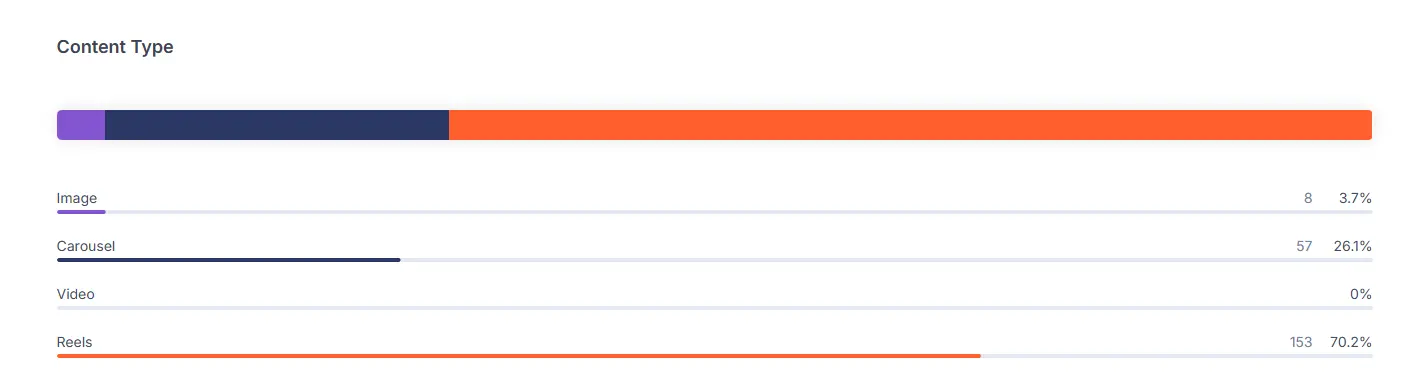
According to HypeAuditor data we used for this Brand Story, 157 accounts mentioned Orbitkey in 218 Instagram posts in the past six months. Reels accounted for 70.2% of those mentions, followed by carousels at 26.1%.
The creator mix also leaned heavily toward smaller accounts. Nano creators represented 42.2% of classified accounts, while micro creators made up another 39.6%. Mid-tier creators accounted for the remaining 18.2%, with no macro creators in the displayed tier breakdown.
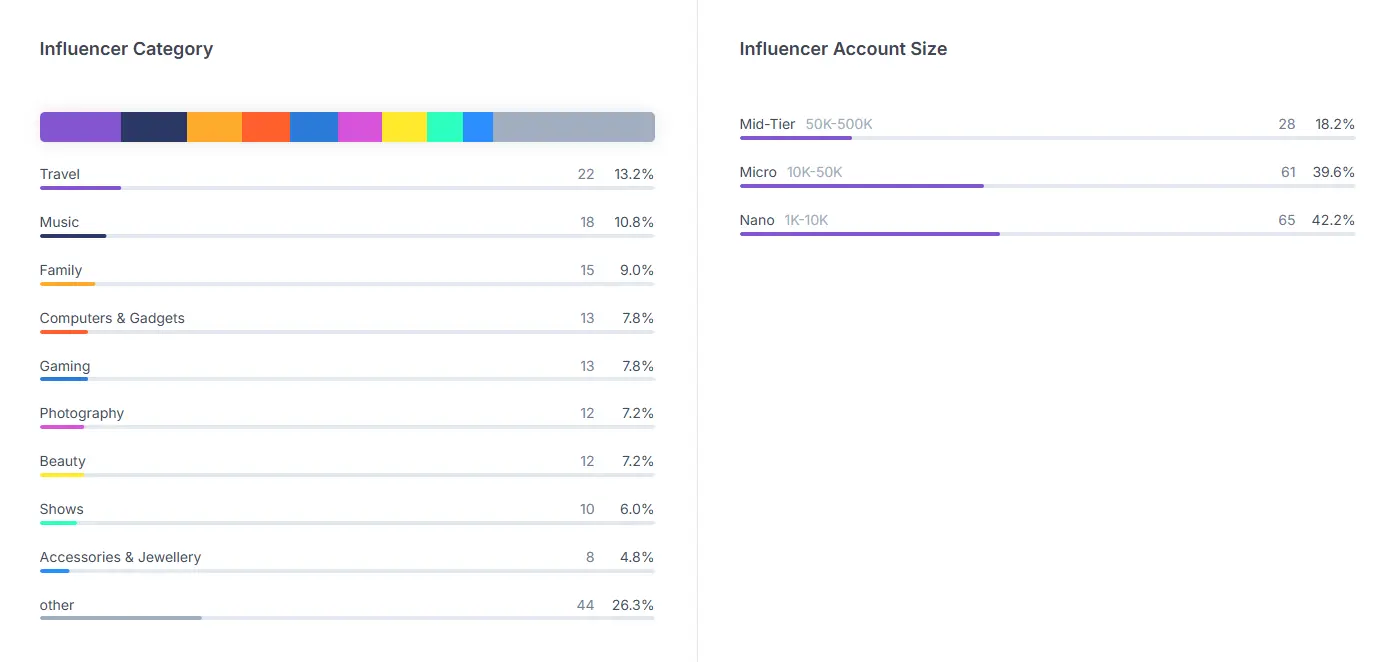
That means more than four in five classified creators sat in the nano or micro tiers.
The network crossed several interest categories. Travel was the largest identified category, but family, computers and gadgets, gaming, photography, entertainment, and accessories also appeared. That variety corresponds with a portfolio used across commutes, desks, flights, theme parks, and everyday routines.
HypeAuditor classified 35 of the 218 mentions as sponsored and another 33 as likely sponsored. Those labels are modeled estimates rather than records of Orbitkey’s commercial agreements. Posts categorized as organic could also involve gifting, affiliation, or a previous creator relationship.
The most revealing result came from tech and lifestyle creator @santienig. His Spanish-language post compared several Orbitkey products priced below 100, explaining the Key Organiser, Quick Release Ring, and Urban Loop Keychain while directing viewers to a profile link.
HypeAuditor recorded approximately 50,400 likes, 304 comments, and a 23.5% engagement rate for the post.
Its strength came from utility. The creator compared options, provided pricing context, showed how each product worked, and helped viewers decide which one suited them. Orbitkey supplied the visual proof, while the creator turned it into a buying guide.
The standout post from @santienig doesn't establish a universal formula. It does, however, give Orbitkey a format worth testing across creators, markets, and product categories.
The wider dataset also provides some caution. HypeAuditor reported an average engagement rate of 1.65%, rated as low, although approximately half of the analyzed posts performed at least as well as the creators’ usual content. Its reach, earned media value, audience quality, and sponsorship labels are modeled estimates.
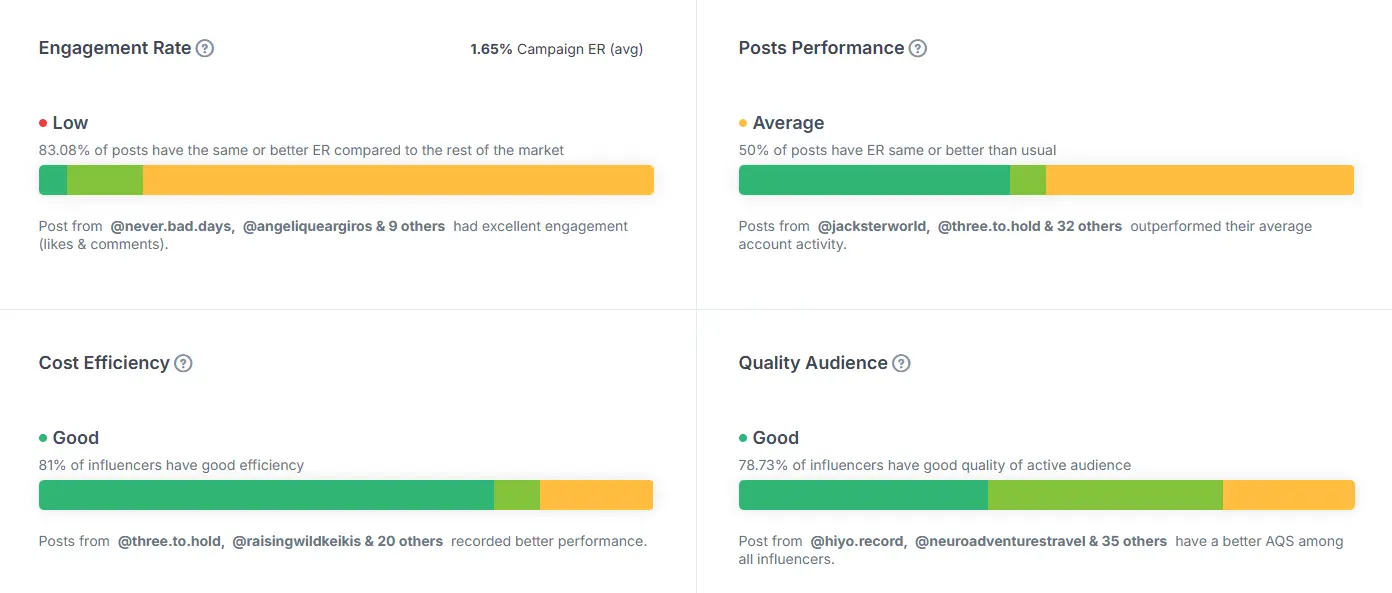
What the data can show is the shape of the network: many individual creators, a strong concentration in the nano and micro tiers, and a clear preference for video formats capable of demonstrating the products.
Orbitkey’s Disney and Marie Kondo Collaborations Expanded Its Audience
As Orbitkey expanded, it also faced a question common to brands built around a successful first product: Who should the next products serve?
The Key Organiser had broad utility, although its early everyday-carry audience skewed male. Partnerships gave Orbitkey a way to enter new communities while keeping organization at the center of the product.
Its collaboration with Marie Kondo was an especially close strategic fit. Kondo’s audience already understood organization as a way to reduce friction and create calm. Rex has also said the relationship helped Orbitkey speak to a broader female audience.
Disney introduced a different layer. The products still needed to work, but they could also carry nostalgia, fandom, and family identity.
Rex describes Disney as a personal passion. The Lion King was the first Disney film he watched, and he later spent his honeymoon at Disney World. He now shares the films and characters with his children.
Orbitkey approaches the license through subtle details, including character signatures, custom palettes, lining patterns, and hidden references. The company designs for everyday users who value function and collectors who enjoy discovering an Easter egg.
That approach gives Disney creators more to work with than a visible logo. They can show the product at a theme park, pack it for a family trip, coordinate it with an outfit, or highlight details that another fan might miss.
@meganmoves Disney Park Sling Packing Essentials! 😮🎒(NEW Orbitkey Mickey Mouse Sling) Help me pack my Disney park bag essentials in the NEW Orbitkey x Disney Mickey Mouse sling! This sling bag has many pockets and features to hold park essentials for the day! I love to pack sunglasses, lip balm, a portable charger, and snacks for my day at a Disney park! A good Disney park bag will conveniently hold your essentials throughout the day, and this sling does it all! The sling collection also includes a Donald Duck and Minnie Mouse design. What do you think of this Disney x Orbitkey Collection?! #slingbag #orbitkey #disney @Orbitkey
Other collaborations have served different roles. Monocle helped the young company establish premium design credentials. National Geographic connected material choices with nature and exploration. Nomad placed Orbitkey beside another brand familiar to technology and everyday-carry consumers.
Each partnership expands the context in which the product can appear without requiring Orbitkey to abandon its organizing proposition.
Product Expansion Moved Orbitkey Beyond Key Organizers
Orbitkey eventually moved from crowdfunding into international retail, distributors, corporate gifting, trade shows, and global fulfillment.
Rex and Charles attended trade shows across Europe, the United States, and other markets, sometimes completing more than ten in one stretch. These events gave buyers a chance to handle and test products whose features had already attracted attention online.
The company has since expanded into workspace accessories, slings, totes, travel pouches, foldable bags, phone straps, and modular desk storage. New versions, accessories, materials, colors, and licensed collections create additional reasons for an existing customer to return.
@alexkroppofficial Is this the perfect desk organizer? 🤔 Reviewing the Orbitkey Nest V2 tech organizer. If you need a premium way to organize your everyday carry tech accessories at home or on the go, this modular tech pouch is a cheat code. Plus, the wireless charging lid is top-tier. 🤯 👇 Rate this setup from 1-10 in the comments! @Orbitkey
That is particularly important for a company selling durable goods. A customer may use the same Key Organiser for years. Growth therefore depends partly on introducing complementary products for other parts of that person’s routine.
Orbitkey now describes its target audience more clearly as modern professionals and creatives who work in front of computers, commute, travel, or move between home and shared workspaces. The product range follows them through those environments.
Orbitkey’s Product Growth Strategy Starts With Visible Proof
Orbitkey’s marketing system began with a product that could prove its value on camera.
Kickstarter concentrated that proof into major launch moments. Long-form reviewers explained unfamiliar features. Smaller creators placed the products inside recognizable routines. Affiliate and advertising data helped the company identify which partners and creative ideas deserved further investment. Retail, category expansion, and collaborations carried the same organizing proposition into new markets.
The broader lesson for marketers starts before creator selection.
Products that can be demonstrated, compared, configured, packed, or transformed give creators a stronger foundation. They make the benefit easier to understand and the content more useful to a potential buyer.
Orbitkey built its global brand by solving everyday problems. Its growth came from making those solutions easy to see.

SUGGESTED

Top Travel Gear & Accessories Marketing Trends Dominating Social Media
Eco-friendly materials wellness kits and multi-functional gear—discover the trends...

Top Travel Gear & Accessories Influencer Marketing Campaigns You Need to See
Top influencer campaigns leveraging travel gear personalized content and diverse...

7 Retention Marketing Strategies Every DTC Brand Should Be Running in 2026
Fix the Klaviyo gaps hurting your DTC retention revenue from weak segmentation to...