

Animated content often gets more attention than static visuals, but finding the right production partner isn’t always easy. Some agencies specialize in SaaS product launches, while others focus on brand identity systems across social, broadcast, and out-of-home. Pricing also varies widely, from fixed project fees to monthly subscriptions.
The seven studios below take different approaches, from B2B tech and design subscriptions to motion design for broadcast. We compare their specialties, delivery times, and ideal client profiles to help you find the right fit for your project.
Ranking of the 7 Best Motion Graphics Agencies for Brands
| Agency | Core focus | Typical timeline | Key differentiator | Best for |
| Represent Studio | SaaS, AI, developer tools | 2-3 weeks | Growth-marketing DNA applied to complex product videos | Series A-B startups and B2B SaaS needing fast, conversion-focused motion |
| Yum Yum Videos | Explainer videos across healthcare, finance, SaaS | 7-9 weeks | 1,000+ videos produced since 2012, six unicorn clients | Enterprises wanting polished explainers with proven production depth |
| Duck.Design | Design-as-a-service (motion, branding, UI) | Ongoing subscription | Unlimited requests and revisions on a flat monthly fee | SMEs needing steady design and motion output without per-project billing |
| Thinkmojo | SaaS product campaigns and brand activations | n.c. | Strategic video campaigns for Salesforce, Zendesk, Square | Tech companies launching campaigns that blend product story and brand |
| Demo Duck | Animated explainers, live action, mixed media | n.c. | Multi-format versatility: animation, live action, docu-style | Brands that need several video styles under one production roof |
| Wyzowl | Animated explainer videos, all sectors | ~6 weeks | Fixed all-inclusive pricing with unlimited revisions at every stage | SMEs wanting a turnkey, no-surprise explainer video process |
| Frantic | Motion design systems, broadcast, social, OOH | n.c. | Builds brand-specific motion languages that scale across every format | Brands seeking a cohesive motion identity from broadcast to social |
1. Represent Studio
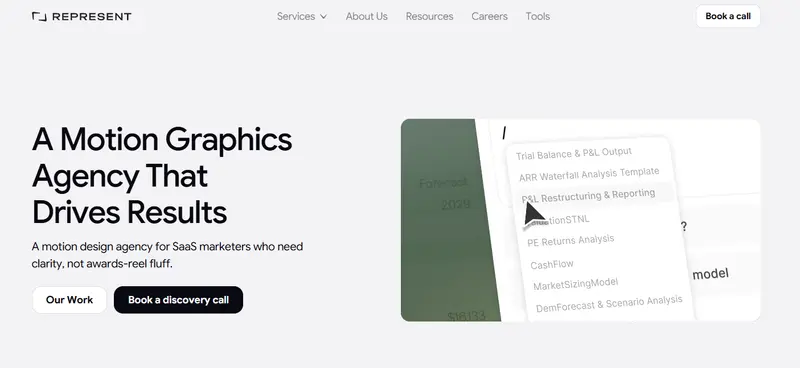
Represent Studio focuses exclusively on SaaS, AI, and developer-tool companies, giving it a particularly clear niche in SaaS motion graphics. The team comes from growth marketing rather than traditional film production, so the work is built around explaining products and supporting marketing goals, not simply creating polished animation.
That approach is reflected in the results the studio highlights. Its productions have been associated with a $6.2M seed raise, growth from zero to 200,000 users, and more than 5M views across campaigns. Projects typically take two to three weeks, with the team using Notion for scripts, Figma for wireframes, and timestamped feedback to keep production moving.
Read More2. Yum Yum Videos
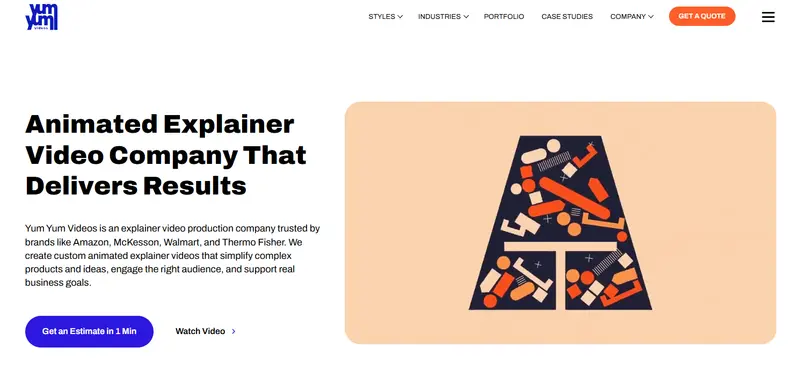
Founded in 2012, Yum Yum Videos has assembled one of the largest production portfolios in the explainer-video space: over 1,000 videos across healthcare, finance, biotech, SaaS, and education. Six of its former clients have reached unicorn status, and the roster includes Google, Amazon, DocuSign, and Walmart.
Production runs through teams in Miami and Buenos Aires. A typical project takes seven to nine weeks, roughly three to four times longer than Represent Studio’s stated turnaround, though rush production is available for tighter deadlines. Clients track progress on a real-time feedback platform, which keeps revision cycles visible without endless email threads.
Read More3. Duck.Design
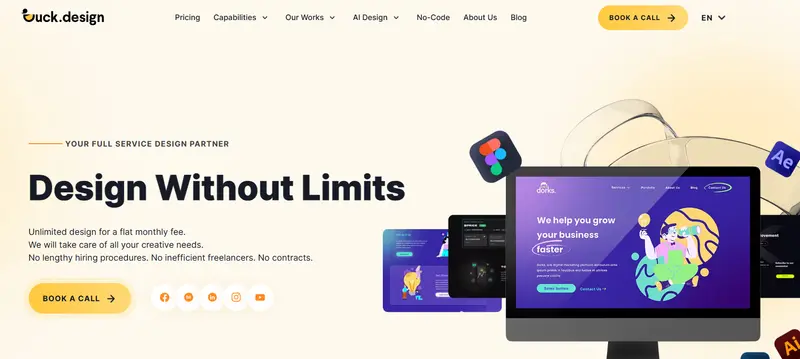
Duck.design runs on a subscription model instead of per-project pricing, the only agency in this ranking to do so. You pay a flat monthly fee for unlimited design requests and unlimited revisions, cancel anytime, and own every source file outright.
That model makes it a fundamentally different kind of partner. Rather than commissioning one motion project and negotiating scope, you fold motion work into an ongoing design pipeline that also covers brand identity, UI/UX, landing pages, and packaging. A dedicated project manager handles onboarding through Trello, and every designer is mid-level or senior with art-director supervision on every output.
Read More
Duck.Design
Your brand designs are too important to be left in the hands of unreliable freelancers or expensive creative agencies. Why not hire an experienced, full-time designer who knows you by name and your brand by heart?

50+

New York, London, Berlin, Hong Kong, Vilnius
Best for:
Small and Medium Companies
Duck.Design
Your brand designs are too important to be left in the hands of unreliable freelancers or expensive creative agencies. Why not hire an experienced, full-time designer who knows you by name and your brand by heart?
4. Thinkmojo
Thinkmojo has produced video campaigns for Salesforce, Zendesk, and Square, three names that mark its comfort zone: enterprise SaaS and fintech brands with complex products and big audiences. It works where creative direction meets commercial strategy, turning abstract product concepts into video people actually share.
Read More5. Demo Duck
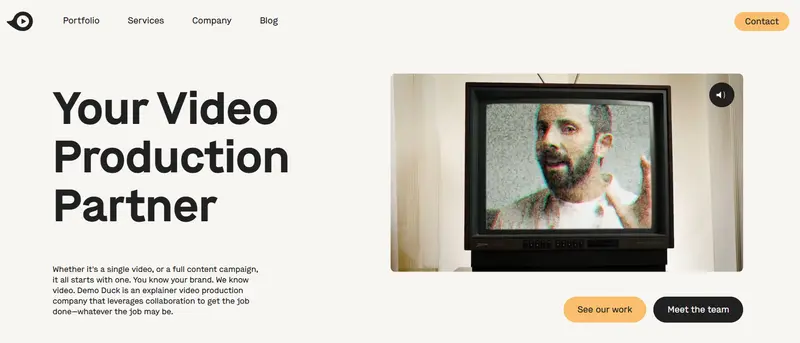
Operating since 2011, Demo Duck blends animation, live action, and mixed media under one roof. That multi-format versatility sets it apart from the studios here that commit to a single production style. A project might mix kinetic text, documentary-style interviews, and character animation depending on what the brief calls for.
The client list runs from GEICO and Google to Rippling and Northwestern Mutual, covering insurance, fintech, SaaS, and nonprofit work. Demo Duck’s designers, directors, animators, and editors collaborate around brand identity, adapting their approach instead of stamping a house style on every job.
Read More6. Wyzowl
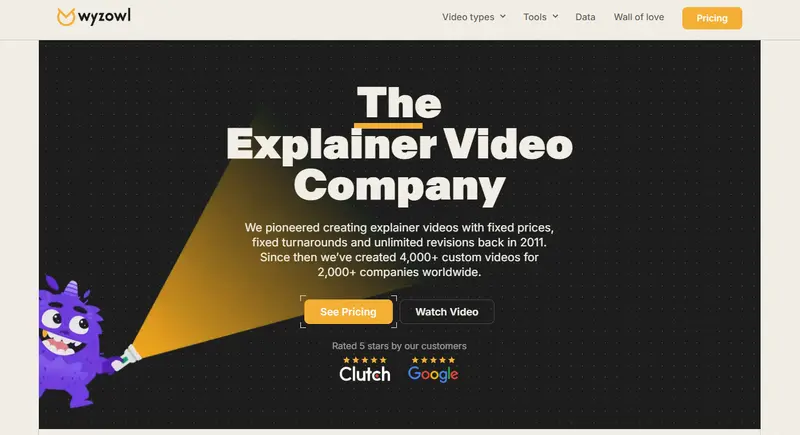
Wyzowl has produced over 4,000 animated videos in 40+ countries since 2011, a volume that dwarfs most agencies here. The model is deliberately simple: fixed all-inclusive pricing with no add-on fees for scripts, voiceover, music, or revisions.
Every project includes unlimited revisions at each stage, and the agency guarantees delivery in roughly six weeks for an explainer. A proprietary project-management tool, reportedly used by hundreds of other agencies for their own client work, handles communication and approvals. That turnkey structure appeals to teams that want a predictable process without wrangling freelancers or renegotiating scope.
Read More7. Frantic
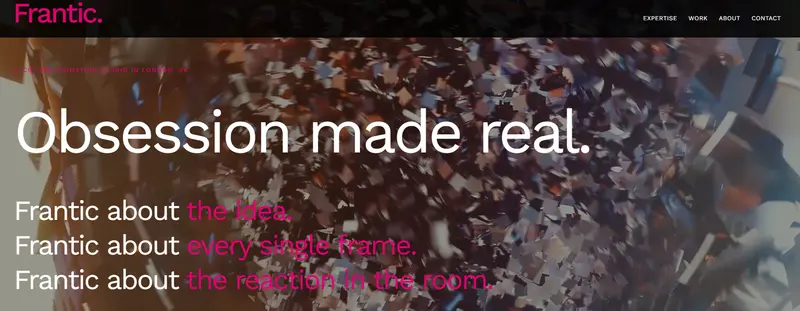
Frantic comes at motion graphics from a design-systems perspective. Based in London and Oxford, the studio builds brand-specific motion languages: visual rule sets that dictate how a brand moves across broadcast, social, digital, and out-of-home formats.
That design-first philosophy starts with art direction and composition, long before any animation begins. The payoff is a motion identity that scales. One production yields cuts for Instagram stories, TV bumpers, digital banners, and OOH screens without losing coherence. No other agency here puts this much weight on format-adaptive motion systems.
Read MoreFinal Thoughts
Choosing the right motion graphics agency starts with understanding what you want the content to achieve. A product explainer, a social media campaign, and a complete brand motion identity require different creative approaches, production capabilities, and levels of strategic involvement.
Industry experience is worth considering, particularly when communicating complex products or technical concepts. Equally important are production timelines, revision policies, pricing transparency, and the agency's ability to adapt content across different channels.
Before making a decision, review projects that closely resemble your own and request a detailed proposal outlining deliverables, deadlines, and costs. Pay attention to how the agency approaches creative development and whether its workflow fits your internal team's needs.
The strongest partnership is one that balances creative quality with practical execution, helping your brand produce motion graphics that communicate clearly, remain consistent, and support measurable marketing goals.
Frequently Asked Questions
What should I look for when choosing a motion graphics agency?
Start with sector experience. An agency that already knows your industry grasps the product faster and skips the generic visuals. Then check production timelines and revision policies, because a beautiful video delivered two weeks late still misses the launch window.
Finally, ask how they measure success. Studios with a growth-marketing background tend to tie deliverables to metrics, while design-led shops chase brand consistency. Neither approach is wrong, but one will match your goals more closely than the other.
How much do motion graphics agencies typically charge?
Prices swing enormously. A standalone explainer video can run from $5,000 to $50,000 depending on length, style, and agency reputation. Subscription models like Duck.design's charge a flat monthly fee for ongoing design work that includes motion.
Most agencies here don't publish pricing, so ask for a quote with a clear brief and timeline. Fixed-price models like Wyzowl's remove surprises. Project-based agencies may add fees for extra revisions or rush delivery windows.
How long does a typical motion graphics project take?
Timelines run from two weeks to nine weeks across this selection. Represent Studio states two to three weeks for most projects, while Yum Yum Videos averages seven to nine weeks for a standard explainer.
Scope drives the gap. A 30-second product launch clip moves faster than a full campaign with multiple cutdowns. Always confirm whether the stated timeline covers script development and revisions or only starts after creative approval.
Can a motion graphics agency also handle live-action video?
Some can, though most specialize. Demo Duck explicitly produces live action and mixed media alongside animation. Represent Studio combines motion graphics with live-action footage on certain projects.
Studios like Wyzowl and Duck.design stick to animated content only. If your content plan needs both formats, verify the live-action capability upfront. Hiring separate vendors for animation and live-action production adds real coordination overhead.
Is it better to hire a specialized or generalist motion graphics agency?
It comes down to your content volume and variety. A specialized agency (SaaS, healthcare, fintech) brings domain fluency and faster onboarding, because the team already speaks your audience's language.
A generalist agency works better when you produce content across unrelated sectors or need formats the specialist doesn't cover. The risk there is shallower strategic input. Match the choice to what you value more: deep vertical expertise or broad creative flexibility.

SUGGESTED

Top 10 Branded Video Agencies to Utilize the Power of Storytelling
Discover the top 10 branded video agencies that can help you create high-quality video...

Top 33 Video Marketing Agencies for 2026
Whether you need to start using video or need to change the way that you’re using it...

Top 11 Ad Creatives Production Agencies for High-Impact Advertising
Discover top-tier ad creatives agencies tailored to your needs. Improve your marketing...