
In their recent MozCon 2024 conference, Moz's spokesperson said that the ''search landscape has seen more turbulence this last year than in their whole history". And we agree. It's due to these changes that the usage of AI SEO tools for keyword research has increased to a great extent.
But before getting into AI keyword research tools, advanced SEO marketers should ask themselves a few questions.
How well will this tool grow with you? You want the tool to scale with you and your SEO goals. There's no point in investing in a tool that will become obsolete as your business grows.
Can the tool identify opportunities where your competitors are ranking but you're not? Simply put, it should be able to conduct gap analysis for everything from keywords and content to backlinks.
Does the tool integrate seamlessly with your current stack? It's extremely important that your AI keyword tool for SEO research integrates with your existing SEO workflow so that you can make the most out of it.
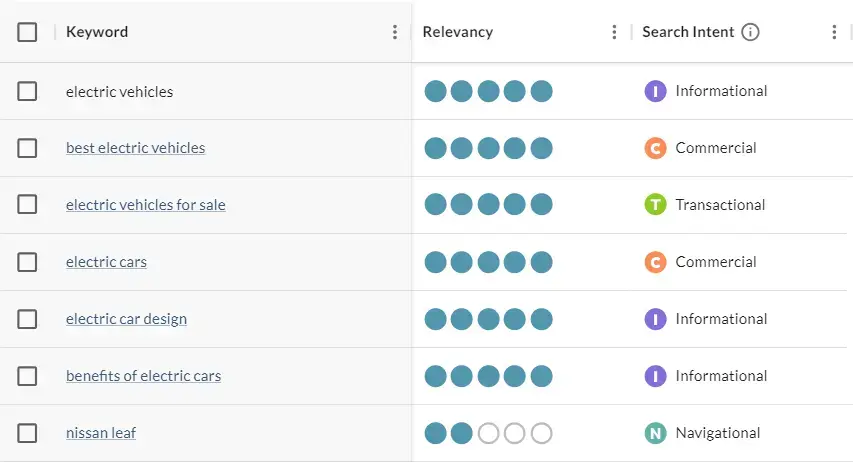
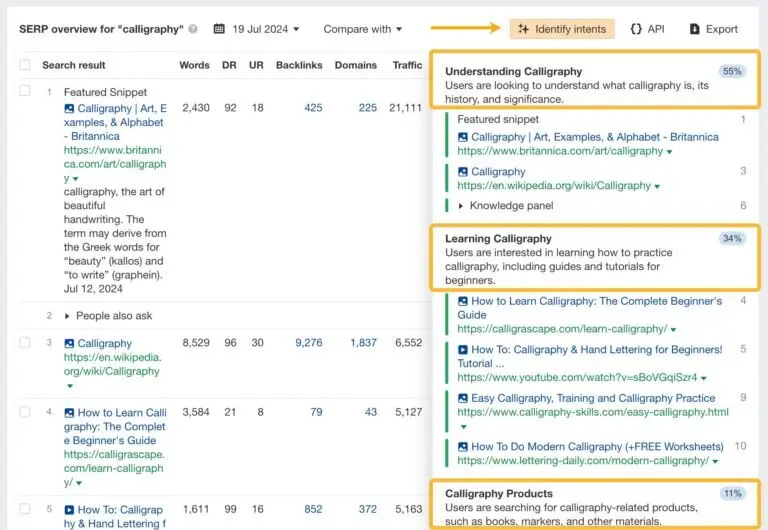
Does the AI tool grasp search intent? When we say the future of SEO is intent-driven, we mean it. The underlying intent behind a search query carries immense power. If the AI tool cannot identify and understand intent, it may lead you astray.
Does the tool have additional features to complement your SEO strategy? SEO doesn't work in a silo. It's integrated with marketing and advertising. It's best if your chosen tool has market research, content, advertising, and basic social media features.
Keep these questions in mind as you find the best AI keyword tool for SEO research from our guide below.
Improve Keyword Research With Moz Pro
Use Moz Pro to validate keyword demand, evaluate difficulty, and map intent signals before you commit to a content plan. You can also track rankings over time, audit on-page SEO, and spot technical issues that limit performance, all from one workflow.
- The Best AI Keyword Research Tools At a Glance
- How AI Technology is Changing Keyword Research
- Best AI Keyword Tools for Advanced SEO Research
- 1. Moz Pro
- 2. Ahrefs
- 3. SEMrush
- 4. SE Ranking
- 5. Scalenut
- 6. NeuralText
- Is Keyword Research Still Relevant in Today's SEO Landscape?
- Why Use AI for Keyword Research
- AI Keyword Research Strategies to Implement
- How Effective Are AI Tools Like GPT for Keyword Research, and Where Do They Hit Their Limits?
- Let AI Lead the Way to Higher Rankings
- Frequently Asked Questions
The Best AI Keyword Research Tools At a Glance
AI SEO Tools | Best For | Standout Features | AI Capabilities | Pricing |
Semrush | All SEO tasks | Domain-specific keyword insights, plugins, keyword strategy builder | Extensive (Influencer Marketing Hub uses Semrush for SEO analysis) | Pro: $139.95 per month Guru: $249.5 per month Business: $499.95 per month |
Ahrefs | Keyword suggestions | AI translations and content grading | Moderate | Lite: $129 per month Standard: $249 per month Advanced: $449 per month Enterprise: $14,490 per year |
Moz | Basic keyword research | Domain overview and AI predictions | Moderate | Starter: $49 per month Standard: $99 per month Medium: $179 per month Large: $299 per month |
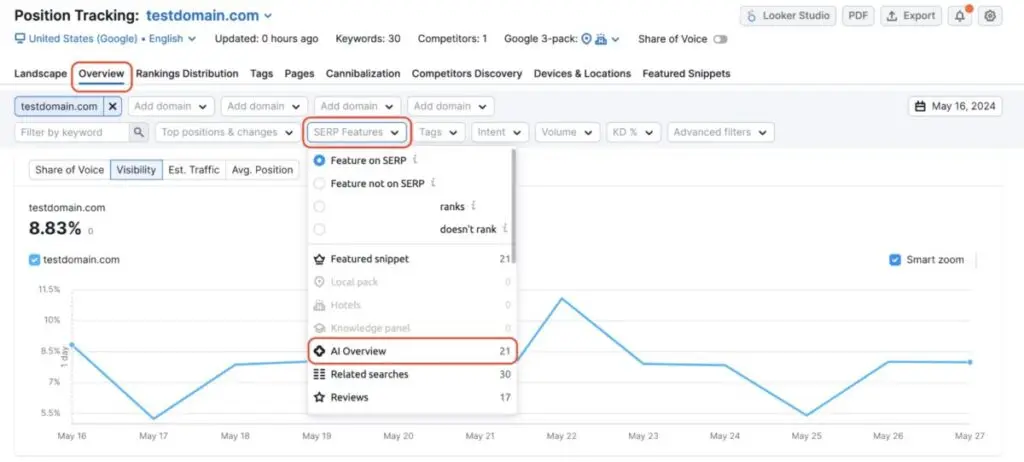
SE Ranking | Local keyword research | AI Overview tracking | Basic | Essential: $65 per month Pro: $119 per month Business: $259 per month |
Scalenut | Keyword clustering | Keyword clustering and AI content writing | Moderate | Essential: $39 per month Growth: $79 per month Pro: $149 per month |
NeuralText | Keyword clustering | Live SERP analysis and AI content writing | Moderate | Starter: 19 per month Basic: $49 per month Pro: $119 per month |
How AI Technology is Changing Keyword Research
The advent of AI has brought significant changes to how we conduct keyword research. For one, it has sped up the process immensely. AI can scour through millions of data points and provide insights in a matter of seconds, something that would have taken days for a human to do.
And this is not merely an observation but a fact. Our AI Marketing Benchmark Report found that 70.6% of marketers believe AI has the ability to outperform humans in marketing tasks. This is why almost 20% of our survey respondents have allocated over 40% of their marketing budget to AI-assisted campaigns.
When it comes to the actual outcome of using AI in marketing operations, there have been more positive experiences than negative ones. Over 34% of marketers told us that they have seen positive outcomes from AI use, compared to 17.5% who have had to deal with negative outcomes.
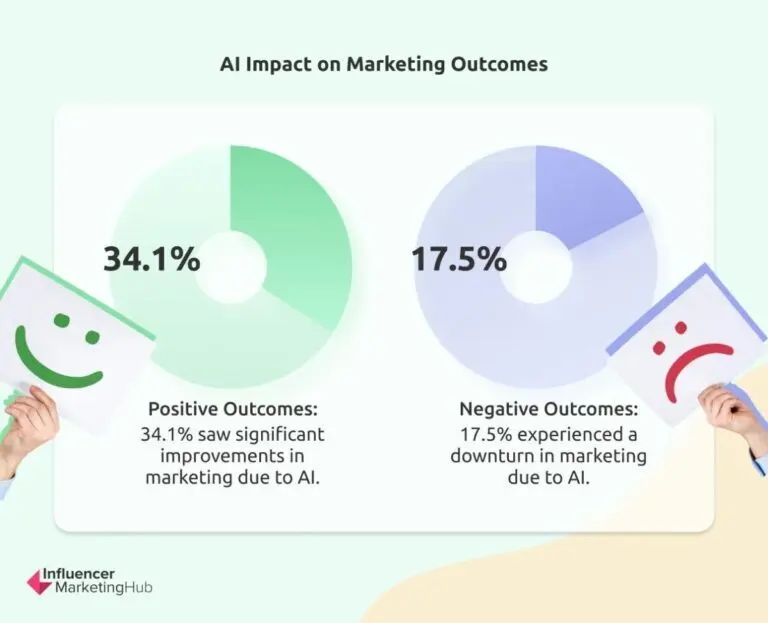
- AI impact on marketing outcomes
Some of the positive outcomes that AI can bring in keyword research are more accuracy, intent-based keyword suggestions, and the ability to track trends and changes in search behavior. However, that's not to say humans can step away completely from keyword research. Just as our report found, over 32% of respondents believe that high-level strategy will remain a human domain.
Based on this, we'd say that AI has streamlined keyword research and not completely taken over it. Since advanced SEO is all about high-level strategies, human input is a non-negotiable part of the process.
Best AI Keyword Tools for Advanced SEO Research
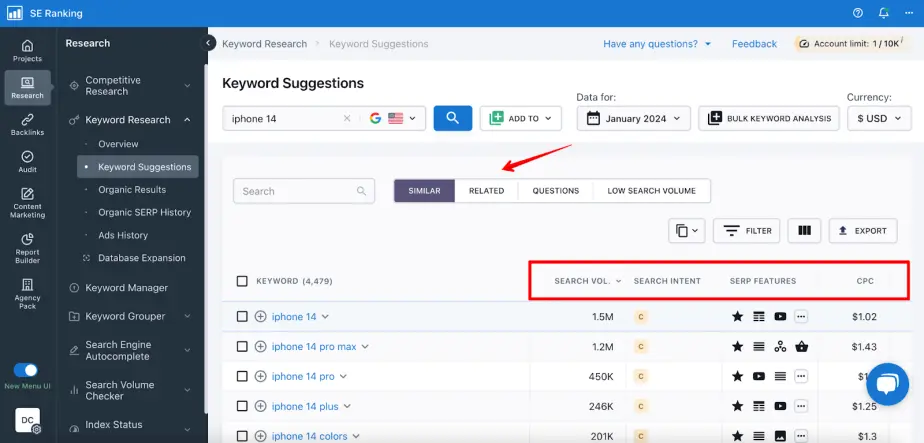
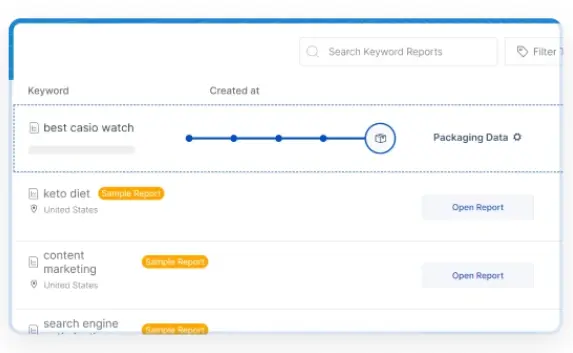
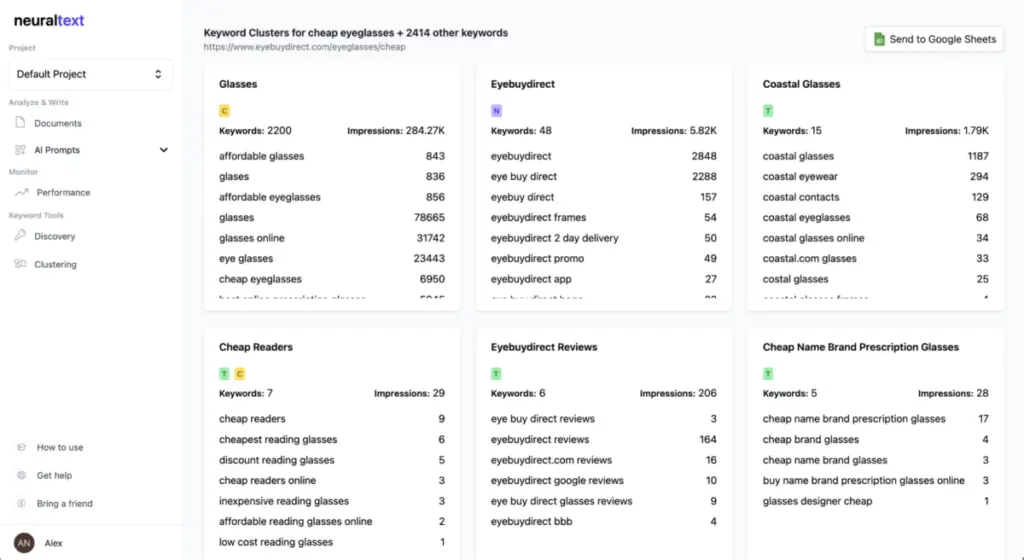
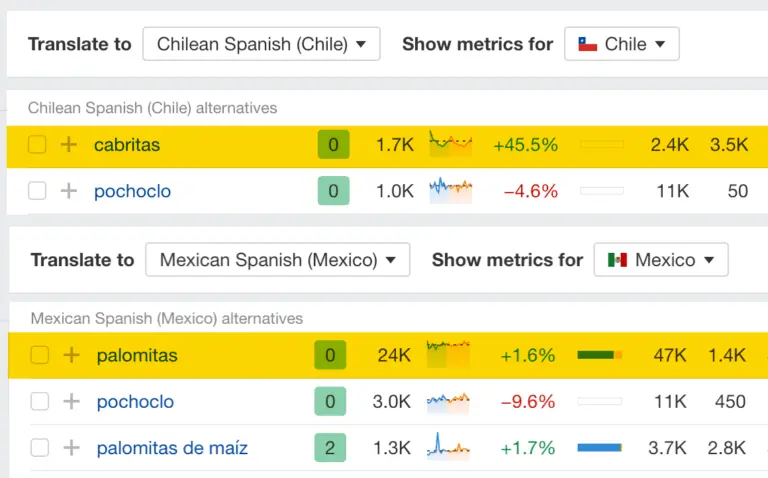
Moz is the third SEO tool in the holy trinity of SEO. Its SEO suite isn’t as comprehensive as Semrush or Ahrefs, but it has its own unique features that make it a worthy competitor. In response to a community forum question, Moz responded that their Pro data comes from their own database and a third party, Similarweb. For the Keyword Explorer, they also get information from its database of millions of keywords. Moz’s database is smaller than the other two competitors, including 1.25 billion keyword suggestions. Just like Ahrefs, Moz collects new keyword data on a monthly basis. Ahrefs is another well-known SEO tool that offers a wide range of features to help businesses grow their online presence. It’s known for its backlink analysis, site audit, keyword research, and content explorer tools. Recently, the tool has introduced a ton of AI features such as AI suggestions, translation, search intent, and content creation. Ahrefs database contains over 28.7 billion keywords, with 2 billion in the US alone. Just like Semrush, international SEO won’t be an issue with Ahrefs since the tool provides keyword suggestions in 217 locations. Semrush is among the best SEO tools in the market, comparable to other top contenders like Moz and Ahrefs. However, where the tool shines in its AI adoption and scalability, which has advanced much quicker than the other two top players. What started as a keyword research tool has evolved to include a comprehensive suite of features, including but not limited to on-page SEO, competitor analysis, content marketing, local SEO, social media management, link building, and market analysis. Semrush has introduced AI features in all these tools, primarily in keyword research, content marketing, and market analysis. SE Ranking is an SEO tool with features similar to those of the tools mentioned above, although its functionality is not as advanced. The tool uses an AI-based formula to measure organic traffic for keywords. Its machine-learning methods also analyze SERP features, search intent, and keyword position fluctuations. The tool also has AI-powered insights for local businesses. They can use these local SEO-focused insights to target customers in a particular area. Additionally, SE Ranking offers keyword suggestions and content optimization recommendations to improve website rankings on search engines. Hailing itself as an AI-powered SEO and content marketing platform, Scalenut has basic keyword research features that you might find in other tools, too. However, it’s the tool’s AI-powered keyword cluster reporting that sets it apart from competitors. Scalenut uses AI to create clusters of relevant keywords and phrases that are related to your primary keyword. You can then find secondary keywords for your content within this cluster. The tool also creates a multiple-keyword SEO report based on your selected clusters. The built-in AI content writing tool lets you import your keyword clusters and create content using platform-given insights. As a result, the whole content creation process becomes a breeze. NeuralText is another AI keyword clustering tool that optimizes your content strategy by clustering millions of keywords in minutes. For each keyword cluster, you can see the total impressions and search volume for the cluster as a whole and its individual keywords. NeuralText’s underlying AI algorithm forms these clusters based on search intent so you can easily identify and target the right keywords for your content. The tool also provides a Live SERP analysis to give you a better understanding of your keyword’s competition and ranking potential. Additionally, NeuralText offers an AI content writer that uses its keyword clusters to generate high-quality content ideas for your website or blog posts.1. Moz Pro

Data Quality and Accuracy
2. Ahrefs

Data Quality and Accuracy
3. SEMrush
4. SE Ranking
5. Scalenut
6. NeuralText
Is Keyword Research Still Relevant in Today's SEO Landscape?
The short answer is Yes.
Keyword research will be relevant as long as search engines exist.
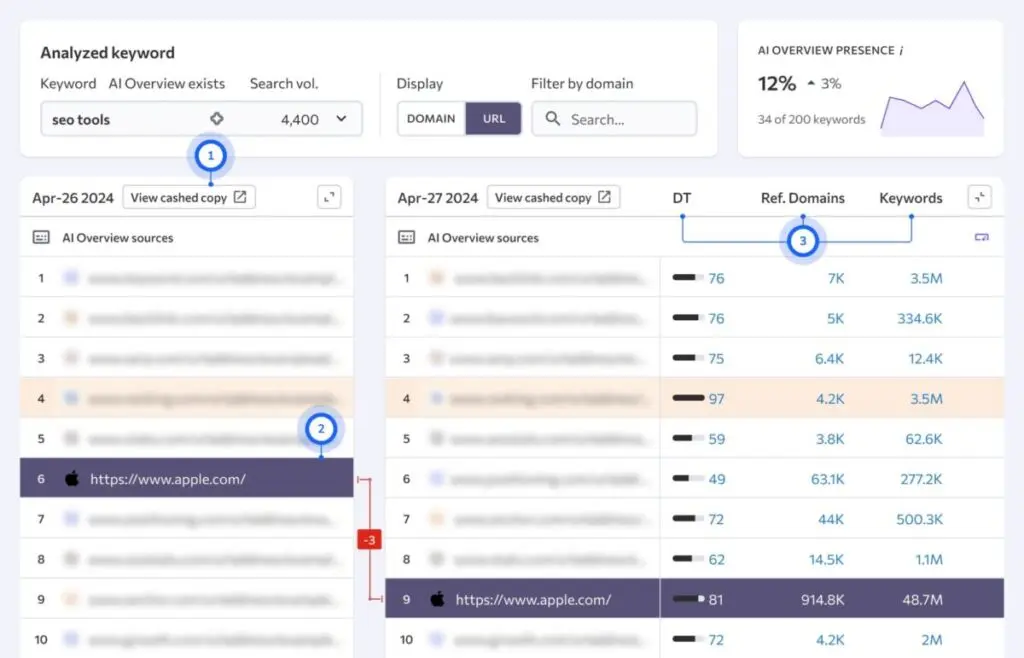
However, the way we approach keyword research has changed due to changes in search engine algorithms. For example, Google has now introduced AI Overviews, which appear as AI snippets above the organic SERPs. So, your keyword research has to be more holistic and smarter to rank in those snippets.
AI Overviews are going to dominate Google.
Your SEO needs to include AIO (AI Optimisation).
Google is rolling out AI Overviews as we speak, replacing featured snippets and taking up prime real estate.
Here's how to optimise for AI Overviews: pic.twitter.com/YZ16Q0bTf7
— Jake Ward (@jakezward) September 18, 2024
Since Google is now integrating ads into AI Overviews, it’s obvious that the snippet is not going away. In fact, it will only become more prevalent in the future. That's why many of the tools we've reviewed above now have AI Overview tracking features.
Besides Google's changing algorithm, user intents also impact the necessity of keyword research. People are now using voice search more frequently, and it often involves natural language queries rather than specific keywords. This means that keyword research needs to account for not only individual keywords but also long-tail phrases and variations.
However, this is not to say that keyword research is all that SEO is. It's just one part of the larger machinery that gets you to rank higher on Google. Combine keyword research with broader SEO strategies like content marketing, link building, topic mapping, and technical optimization to get the best results.
Why Use AI for Keyword Research
Around 42% of enterprises use AI in their business operations, and the most common use of AI is in marketing and advertising. So, it makes sense for you to use AI in keyword research. Here are some reasons to convince you.
AI's Ability to Predict Emerging Trends and Search Behavior
Human-powered keyword research is based on past data, which may not necessarily reflect current or future trends. But, AI can provide a comprehensive view of past, present, and future data.
So, AI is able to identify and predict future trends to quite some extent. With the consistent use of AI keyword research tools, you can stay informed of emerging search trends before they become mainstream. Besides seasonal trends, AI can also predict consumer behavior changes and search patterns that may impact your business.
Enhanced Understanding of User Intent and Context
As we've discussed in the reviews. AI keyword research tools like Semrush and Moz focus heavily on user intent analysis. AI algorithms use NLP to decipher the context of a search query and understand what users are looking for. They not only look at the keywords but also analyze the situational and behavioral factors that impact a user's search intent.
Some AI keyword research tools, such as NeuralText and Scalenut, further put keywords into clusters based on the user intent. This way, you have a reservoir of keywords for your content strategy.
Data-Driven Topic Clustering and Semantic Keyword Suggestions
Speaking of keyword clustering, AI keyword research tools offer highly accurate semantic keyword suggestions. These tools analyze millions of content pieces on your niche and provide you with clusters of topically relevant keywords for each seed term. These semantic keywords are not just synonyms or variants of the seed term, but they actually make up a cluster that covers all aspects and subtopics of the main keyword.
When you cover all these related keywords in your content, it not only boosts your SEO but also makes you a topical authority in that category. Some AI tools, such as Semrush, even create a comprehensive keyword strategy for you based on your searches.
For example, we used the seed term ''AI content writing tools,'' and Semrush provided us with a keyword strategy that included pillar pages and associated keywords.
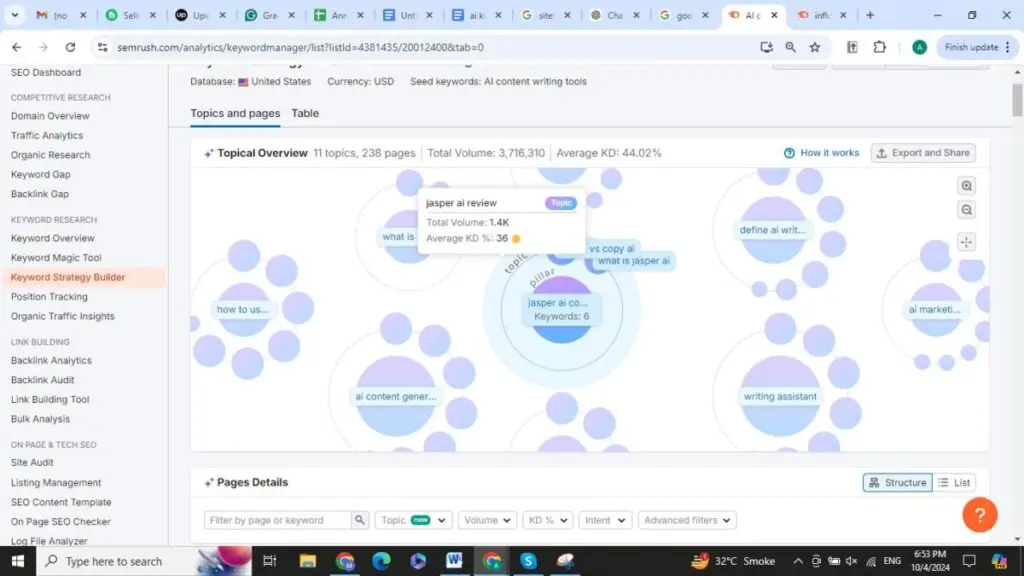
- Keyword strategy builder
Real-Time Analysis and Competitor Benchmarking
With AI tools like Semrush that update every day, you get real-time data not only for your website but also for your competitors. You can monitor how your competitors' keyword rankings change on SERPs and take measures accordingly.
Similarly, AI identifies content gaps between you and your competitors so that you can bridge them by creating content on those topics. For example, we used the Semrush Keyword Gap tool to find missing keywords on our website around ''content writing tools'' that Backlinko was using. The tool took less than a minute to show us the list.
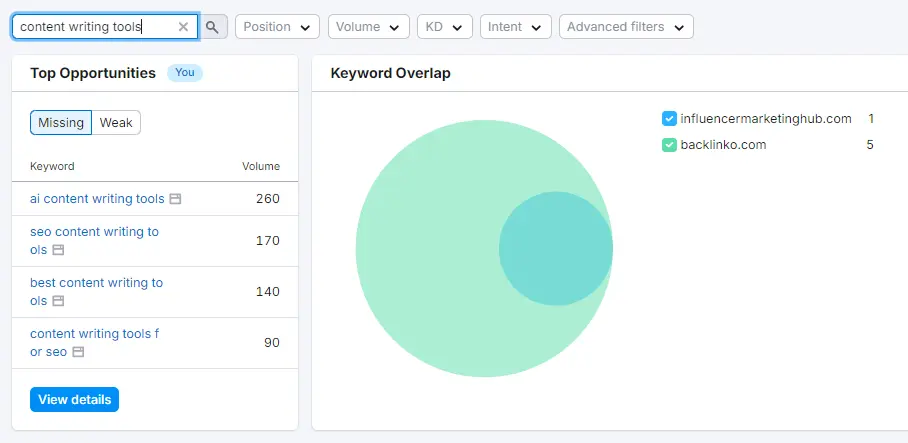
- Semrush Keyword Gap tool results
Efficiency in Automating Repetitive SEO Tasks
Part of the reason enterprises and SEO agencies use AI is that it automates repetitive SEO tasks like keyword audits, SERP analysis, position tracking, and search volume forecasting. You can even set up alerts to notify you when a metric shifts for your website.
Since everything is happening in real time and without your intervention, you save a lot of time. Besides, the accuracy and consistency with which AI tools perform these tasks are unparalleled compared to manual work.
AI Keyword Research Strategies to Implement
The following AI keyword research strategies can help you make the most out of your AI SEO tools.
Leverage AI for Question-Based Keyword Research
Creating content around question-based keywords is a great way to appear in featured snippets and AI Overview. It also lets you target the People Also Ask question and increase your website's chances of being clicked on even if it's not the first in the search results.
For example, Semrush lets you filter keywords by Questions. In the Keyword Overview tab, you can see two main things about your search terms:
- Keyword variations
- Questions
Pick questions from here and add them to your content.
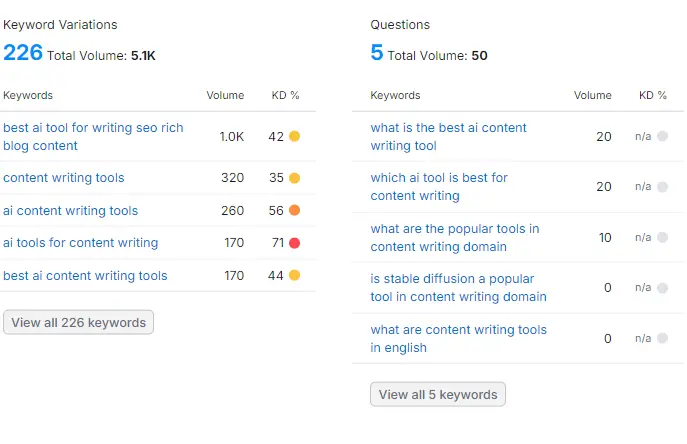
- Semrush Questions keywords
Implement Semantic Search and Topic Modeling
What you want is to be seen as an authority on the topic you're covering in your content. For that, you should create topic clusters and incorporate all of them into your content. Basically, leave no base unturned.
Since AI tools like Scalenut create these clusters based on user intent, you're covering all the bases. You'll be serving content that an AI thinks is most relevant to a particular user's search query. This means you can rank for multiple keywords within one piece of content as long as they are all related to the same topic.
While you're at it, don't forget to look at what your competitors are doing. Use the gap analysis feature from Semrush, as we've explained earlier, to find the topics that are missing on your website. Then, create content around them.
Track Competitors with AI-Based Competitive Analysis
Make sure you're looking at your competitors' online presence just as much as your own. After all, you can only beat them if you know what they're up to.
With AI tools, you can keep a continuous eye on your rivals' SEO strategies, their keyword rankings, and the traffic to their website. For example, we use Semrush to monitor our competitors, including SproutSocial and Grin.
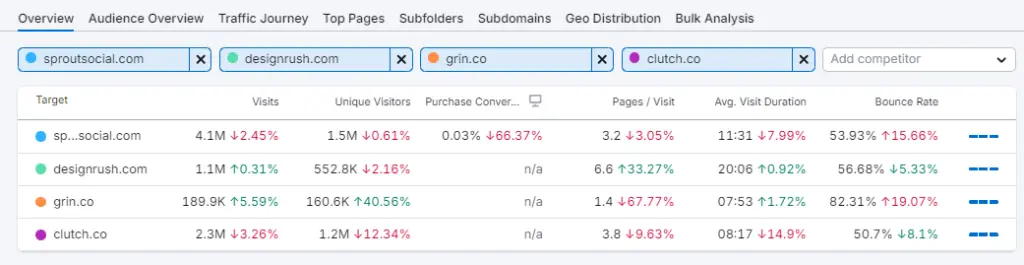
- Semrush competitor analytics
We can check their top pages and audience overview to get an idea of their content strategy and target audience. This helps us adjust our own SEO tactics to better compete with them.
Automate Keyword Gap and Content Gap Analysis
Just like you're constantly updating your content, so are your competitors. So, automate content gap analysis through Semrush to identify which keywords they are ranking for, but you're missing on your website. These data-backed content maps can help you create relevant content to fill any gaps in your website's content.
For example, we found the keyword gap for the term ''SEO tools'' with two of our competitors, SproutSocial and Hootsuite. Semrush gave us a list of keywords and their search volume that our competitors were using in their content but we weren't.
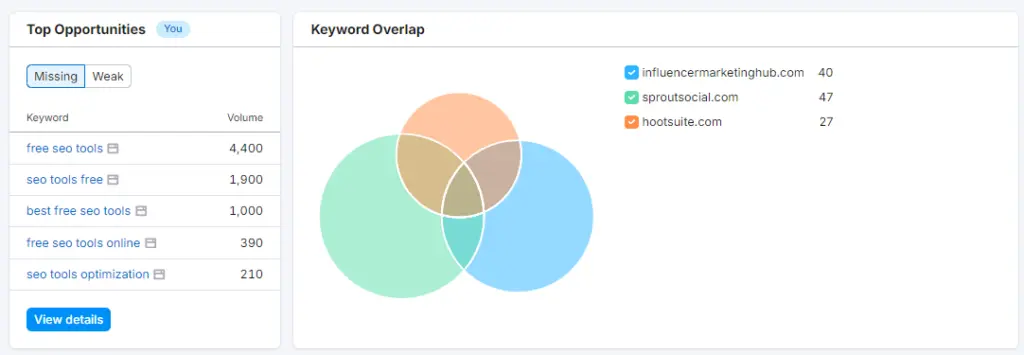
- Keyword Gap analysis
This insight provided us with a great opportunity to create new content around those keywords and increase our chances of ranking higher on search engines.
AI-Enhanced Local and International SEO
AI search tools also help refine your geographical SEO strategies, whether they're international or local. For example, Ahrefs supports keyword research in over 40 languages, and its AI technology shows you the keyword variation that captures the most relevant nuance for your target location.
Similarly, Semrush has a Listings Management feature that provides you with a report on your local business's visibility in seconds. It also shows you the directories in which you should list your business to increase your local reach.
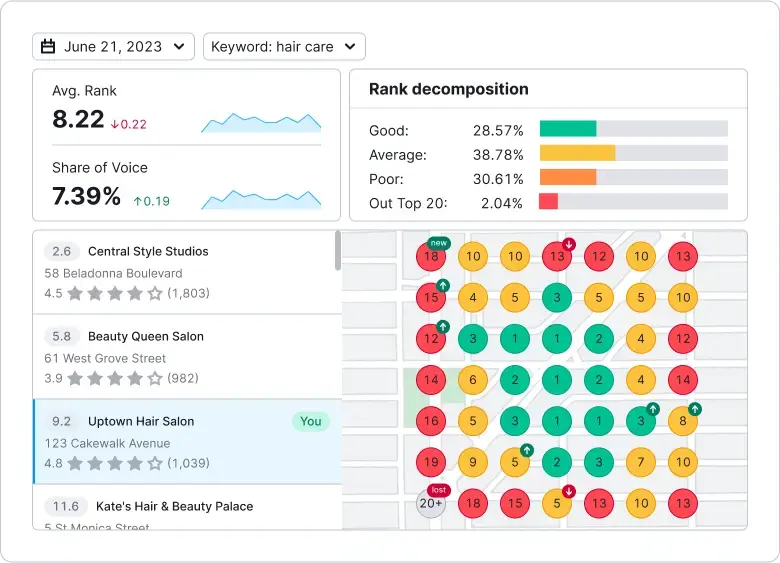
- Semrush local SEO
How Effective Are AI Tools Like GPT for Keyword Research, and Where Do They Hit Their Limits?
In our article about ChatGPT sorting keywords into clusters, we mentioned that even though ChatGPT can help conduct keyword research and clustering for smaller websites, it's not effective for larger websites with a significant amount of data.
Just like free AI marketing tools, GPT and Gemini are suitable for basic keyword research. They can help expand seed keywords into long-tail keywords and provide suggestions for related keywords. We have covered more of ChatGPT's use cases in our article on ChatGPT SEO.
However, these AI tools have quite a few limitations. First, they can't process large amounts of data like a specialized tool like Semrush can. We've already talked about how Semrush's database has billions of keywords. It's not the same for ChatGPT.
Secondly, GPT can't conduct competitive analysis. It won't tell you which keywords your competitors are targeting and how they're ranking for them.
More importantly, Semrush updates daily, while ChatGPT's last update came in 2023. A lot has happened since then, especially with the new Google Core update. While Semrush is on top of these new trends and updates, ChatGPT is not.
However, AI tools like GPT and Gemini can still be useful in certain situations. For example, they can help with brainstorming new keywords or identifying long-tail keyword opportunities. They can also assist in finding new topic clusters or content ideas based on trending topics. But, their lack of continuous updates and data sources as extensive as Semrush or similar AI keyword research tools for SEO make them less reliable for in-depth SEO research and analysis.
Let AI Lead the Way to Higher Rankings
From AI trend analysis tools to keyword clustering tools, there's so much potential in AI SEO tools for businesses that want to keep leading in the new digital world. The AI tools we've mentioned in this guide, such as Semrush, Moz, and Ahrefs, serve as repositories for keyword data. Not only that, they take keyword research a step further with competitor insights, AI-built strategies, AI content writing, gap analysis, and personalized recommendations.
When using these tools, make the most out of their features. Often, a single feature won't give you all the information you need. Instead, combine different features for a more comprehensive overview.
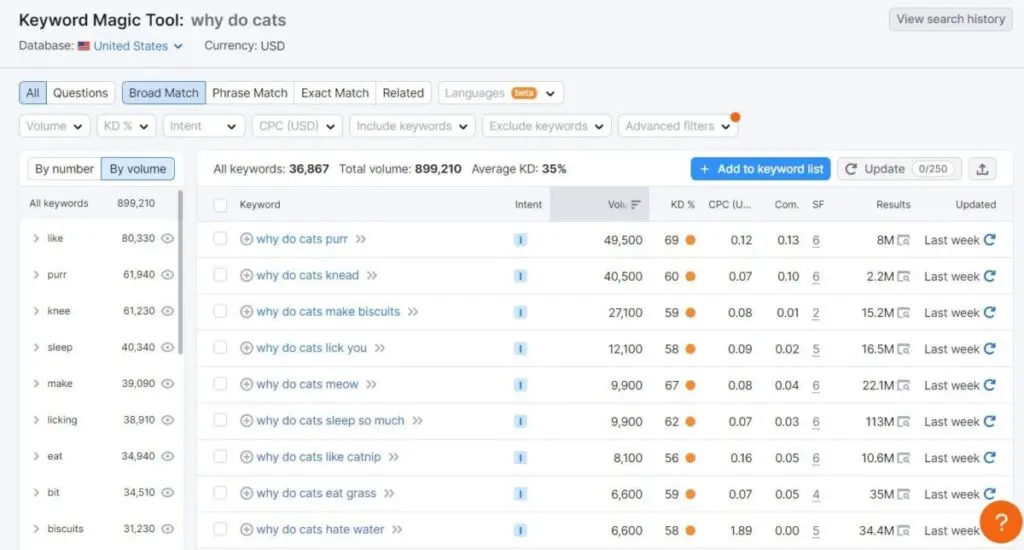
For example, we use the Keyword Magic Tool to find keywords and then go to the Keyword Overview tab to see its keyword difficulty % for our website. If it's low, we can then use the Strategy Builder to create a content plan.
See how strategic this is? Now, you try.
Frequently Asked Questions
What are some of the best AI tools for keyword research?
Here are some of the best AI tools for keyword research:
- Semrush
- Ahrefs
- Moz
- ChatGPT
- SE Ranking
Can I use free AI tools for effective keyword research?
Free keyword research tools can be helpful, but they may not provide the same level of accuracy and functionality as paid AI tools. You can use them for smaller websites or simple keyword research. But if you want deeper insights, such as gap analysis and competitor research, it's best to use a paid AI tool.
How do AI SEO tools help with search intent?
AI SEO tools use NLP to analyze the underlying intent behind a search query. They get an insight into the situation and behavior that led to the search query, providing you with the right content angle to take when using those keywords. Some AI SEO tools can further place keywords into clusters based on the search intent.
How do AI SEO tools differ from traditional keyword research tools?
Traditional keyword research tools provide basic data like search volume and competition. AI SEO tools go beyond that by predicting future trends, analyzing user intent, conducting competitive gap analysis, and offering automated insights to optimize content for better search rankings. Some AI SEO tools also come with AI content writers, so they can use the keywords they have researched to create high-quality, optimized content.


