
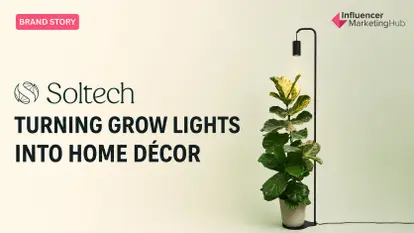
Most grow lights begin with the needs of the plant. Soltech also considered the room around it.
The company built its early position around a simple tension. Houseplants need sufficient light, but conventional grow lights often look too industrial for the living rooms, bedrooms, and offices where customers want to put them. Soltech addressed both sides with warm, design-conscious fixtures that could support plants while contributing to the appearance of a home.
That decision also made the products well suited to creator content. Plant educators could show new growth and explain light placement, while home and lifestyle creators could demonstrate how the fixtures changed a room.
In this Brand Story, we examine how Soltech developed that position, how its creator relationships expanded from sponsored reviews into content production and product curation, and what our HypeAuditor analysis reveals about the commercial questions still unanswered.
- How Soltech Found a Gap Between Plant Care and Interior Design
- The Aspect Grow Light Made Plant Lighting Part of Home Décor
- How Soltech’s Grow Light Range Created More Reasons to Buy
- Soltech Built Its Plant Creator Strategy Around Demonstration and Trust
- What Our HypeAuditor Analysis Reveals About Soltech’s Creator Network
- How the Aura Grow Light Expanded Soltech’s Design Credibility
- How Rapid Growth Exposed Gaps in Soltech’s Financial Planning
- Why Soltech’s Creator-Led Growth Strategy Works
How Soltech Found a Gap Between Plant Care and Interior Design
Michael Planer, Paul Hodges, and Chris Clark founded Soltech in 2014. The company initially explored conventional horticultural lighting and sustainable indoor-growing applications. As houseplants attracted a wider consumer audience, the founders saw an opening for a grow light designed around the home.
They moved to Bethlehem, Pennsylvania, in 2016 and committed themselves to the business. Early Aspect prototypes came from a 3D printer in the basement of a local business incubator. The city gave the founders affordable space, startup resources, workforce support, and a community willing to help an unfamiliar company get established.
The first major test arrived through Kickstarter later that year. Soltech raised $17,277 from 120 backers against a $9,500 goal for the Aspect, its pendant-style LED grow light. The campaign demonstrated that customers would pay a premium for plant lighting that also looked intentional.
Demand became harder to sustain once Soltech left Kickstarter’s discovery environment. The founders returned to outside work and, at one stage, considered selling the company for $50,000. Encouragement from advisers helped them recommit. Sales returned gradually, giving Soltech enough room to keep refining the product and building the category around it.
The Aspect Grow Light Made Plant Lighting Part of Home Décor
Aspect solved a problem creators could show immediately. A pendant light could turn a dim corner into a plant display without introducing the purple tones, exposed hardware, or agricultural appearance associated with many grow lights.
The functional evidence took longer, so creators followed plants over time. Creators point to renewed orchid blooms, fresh leaves, stronger coloration, new pitchers, and plants recovering after being moved under a Soltech light.
@mikesgarden
Others compare the light’s heat, coverage, color, and appearance with cheaper bulbs.
@everythingplantsofficial why aren't my plants growing? right now in fall there is less light compared to in summer so plants slow their growth. adding a @Soltech Solutions grow light can help that plant get more light to grow. use 'everything15' for 15% off your Soltech order! #growlight #growlights #houseplants #plants #plantsoftiktok #indoorplants
The recurring content structure is consistent. A creator begins with winter, a dark home, or a struggling plant. They install or reposition the light, explain the relevant features, and show the plants growing beneath it. The light becomes both the tutorial and the visual proof.
The home remains part of the demonstration. Creators describe the warm light as an ambient feature, show it above desks and sofas, and explain why its black, white, or wood finishes fit their décor. Plant performance makes the product credible. The room transformation makes it desirable.
How Soltech’s Grow Light Range Created More Reasons to Buy
Soltech extended that positioning into products for different spaces. Vita fits existing lamps. Grove serves shelves, cabinets, kitchens, and compact plant displays. Aspect works as an overhead statement light, while Highland brings the same idea into track lighting and commercial installations. Aura functions as a tabletop ambient lamp, and Versa adds another freestanding option.
This range addresses the repeat-purchase problem faced by a durable-goods company. Customers may not need to replace a light frequently, but every new shelf, plant grouping, or dark corner creates another use case. Mounts, stands, connectors, bundles, gift sets, and refurbished products expand the system further.
Grove provides the clearest evidence that another format could find demand. Soltech reported $1 million in Grove sales around the product’s second anniversary. Product Development and Operations Manager Justin Jacobs described it as his first Soltech innovation, while Growth Marketing Manager Zachary Kostantewicz said he led the rollout strategy.
Soltech Built Its Plant Creator Strategy Around Demonstration and Trust
Grow lights require more education than their familiar shape suggests. Buyers need to understand light distance, beam width, daily runtime, installation, plant requirements, and whether the fixture will overwhelm the room. Soltech’s strongest creators answer those questions inside homes filled with real plants.
Nick Pileggi shows how one relationship can perform several jobs. The Philadelphia plant creator had used Aspect for three years when he published a sponsored YouTube review. He disclosed the sponsorship, walked viewers through plant placement and installation, and supported his recommendation with growth he had observed across two homes.
His role later expanded. Pileggi said he worked for Soltech as its content creator, producing the company’s TikToks and Instagram Reels. On his own channels, he continued explaining the full product line while earning commission through an affiliate link and discount code.

That structure gives Soltech more than borrowed reach. Pileggi supplies plant expertise, long-term product familiarity, owned social production, personal-channel distribution, and a direct conversion path. In videos where Soltech is not the subject, its lights remain visible within his normal plant-care environment.
Repeated exposure makes the product part of the creator’s home rather than a temporary campaign prop.
Soltech has taken a different route with Pacific Northwest plant stylist Fern Morrissette, known as @wildfern. A named Wildfern Collection moves her role from recommendation into merchandising. The limited-edition collection contains products and bundles she selected for customers who want plants and lighting to work together aesthetically.
The distinction is useful. Pileggi translates product knowledge into content. Wildfern applies styling authority to product selection and the ecommerce experience. Both connect the brand to a recognizable creator point of view, but they influence different parts of the customer journey.
Plant-community events extend the system further. At the Northwest Flower & Garden Festival, Soltech supplied lighting for a Costa Farms display and sponsored Houseplant Happy Hour sessions featuring indoor-plant educators. The arrangement placed the products inside an established community and gave visitors a physical demonstration.
What Our HypeAuditor Analysis Reveals About Soltech’s Creator Network
To examine how this strategy extends beyond Soltech’s named contributors, we used HypeAuditor to analyze the company's social mentions.
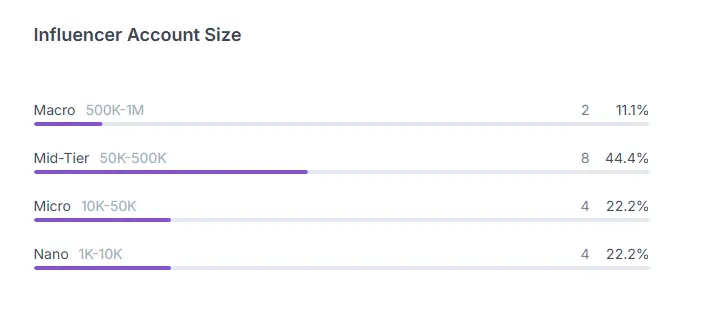
HypeAuditor tracked 26 mentions from 18 accounts. Mid-tier creators formed the largest group, with eight accounts, while the network also included two macro, four micro, and four nano accounts. The structure gives Soltech a mixture of larger distribution and more specialized plant, home, design, and lifestyle contexts.
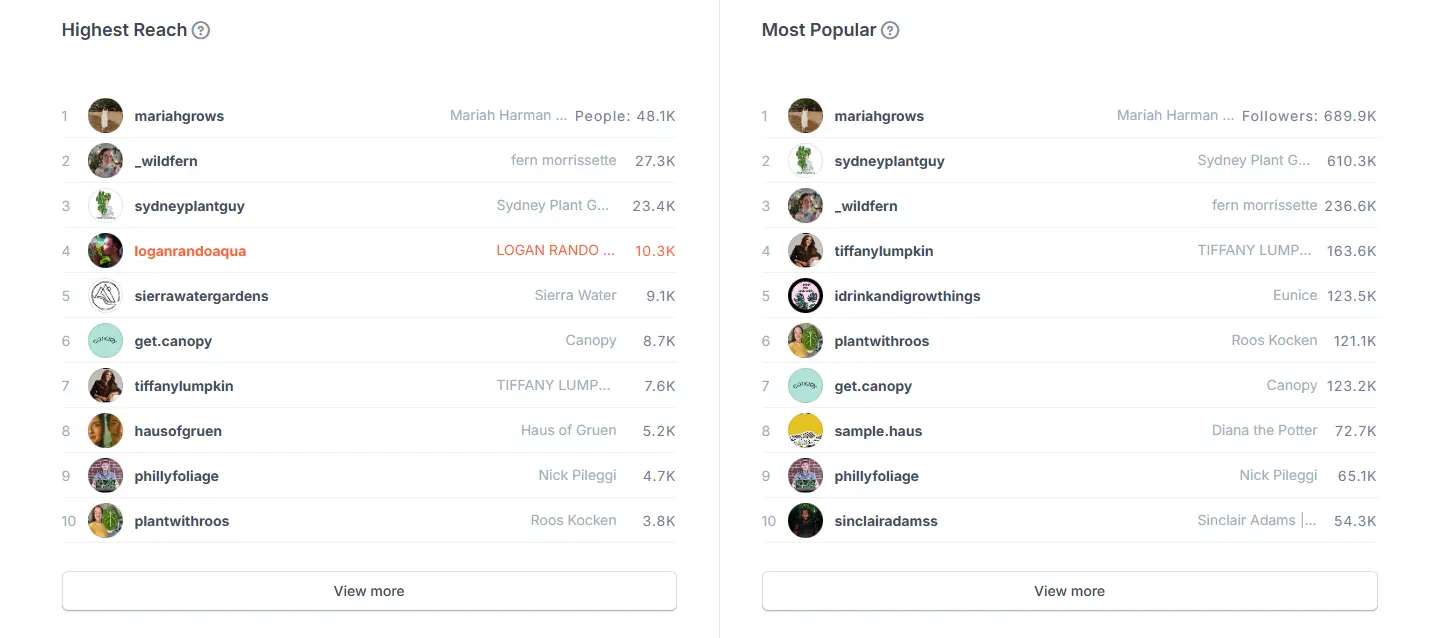
Visibility was still concentrated. Mariah Harman, Fern Morrissette, and Sydney Plant Guy supplied approximately 61% of the report’s modeled reach. Harman appeared five times, making her the most active account in the period. Her use of a discount code also connects repeated plant education to an affiliate conversion mechanism.
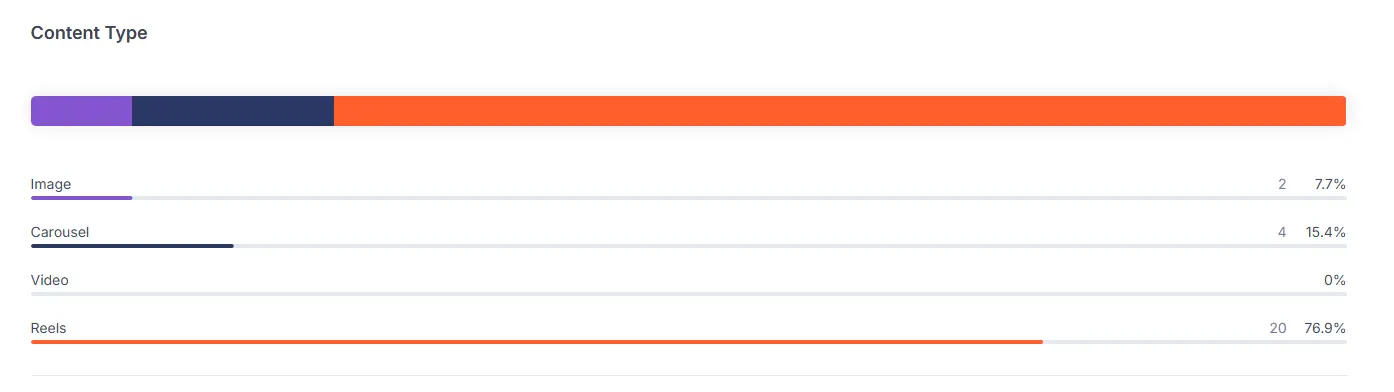
Reels represented 76.9% of the tracked content. That dominance fits the product. Short-form video can move from a dark corner to the light installation, then close on the plants growing beneath it. The format carries problem, explanation, and proof within a single post.
The classifications require care. HypeAuditor labeled 22 mentions organic, two sponsored, and two likely sponsored. Pileggi is a confirmed Soltech content creator, while Harman’s caption contains an affiliate code.
The pattern shows a compact network combining recurring educators, affiliates, employee-created content, creator merchandising, and wider advocacy. What it cannot show is how many viewers purchased, which relationships acquired customers efficiently, or whether those customers returned for additional lights.
How the Aura Grow Light Expanded Soltech’s Design Credibility
Aura brought Soltech closer to the conventional home-lighting category. Designed by Matteo Ragni Design Studio and crafted in Turin, the dimmable wooden lamp provides ambient light for people alongside full-spectrum light for nearby plants.
The first batch sold out within 48 hours and later, Soltech hand-packed more than 300 preorders. Design Milk and Apartment Therapy covered Aura, while the lamp appeared in a TODAY segment with plant stylist Hilton Carter. WIRED later included Aura in The Future of Home, an editorial collaboration with Architectural Digest.
Aura received a 2026 iF Design Award, giving Soltech third-party recognition for the aesthetic position it had pursued since Aspect. Plant creators establish whether the lights work in lived-in environments. Design coverage and awards help establish whether the products belong in the premium lighting conversation.
Commercial projects add another layer of authority. Soltech supplies plant-lighting designs, laboratory-informed photometric reporting, and fixtures for living walls and other large installations.
Jonah A.’s work with architects, interiorscapers, and Green Plants for Green Buildings takes the company into professional specification, where performance and architectural alignment must operate together.
How Rapid Growth Exposed Gaps in Soltech’s Financial Planning
Product and marketing growth also created pressure behind the scenes. In a later interview, Hodges said Soltech was generating approximately $4 million in revenue but ended the year without a profit. The founders had overhired, overspent, and lost visibility into the company’s financial position.
Inventory intensified the problem. A large order could suddenly require a six-figure payment, pushing the company toward a sale or additional lending. Forecasting and fractional CFO support helped the founders plan purchasing and marketing with greater confidence.
Creator visibility, product launches, and new distribution can accelerate demand, while a physical-product business still needs enough cash and operational control to supply it profitably.
Why Soltech’s Creator-Led Growth Strategy Works
Soltech’s system begins with product behavior. Warm, decorative fixtures open more of the home to plants. Creators translate that benefit into rooms, routines, and visible growth. Long-term partners add trust, affiliate links connect education to conversion, and creator curation carries influence into merchandising.
New formats give existing customers reasons to illuminate another corner, while design media and commercial projects reinforce the premium position. The components support one another because they keep returning to the same promise: people can help plants thrive without surrendering the way their homes look.
Soltech now has evidence of demand, creator visibility, product expansion, and design recognition. Connecting those relationships to customer acquisition, repeat purchases, and profitable growth is the next measurement task.

SUGGESTED


Influencer Marketing Hub Brand Stories
Explore brand stories on influencer campaigns creative strategies and the results behind...