How to Choose the Right Influencer Marketing Platform in 2026

Influencer marketing has moved far beyond experimental campaigns and one-off partnerships. Today, it is a core growth channel for brands across ecommerce, B2B, and enterprise marketing. In fact, over 80% of marketers affirm influencer marketing as a highly effective strategy, which explains why budgets, expectations, and scrutiny continue to rise year after year.

But with that growth comes complexity. Hundreds of influencer marketing platforms now promise better discovery, smoother workflows, deeper analytics, or clearer ROI. Choosing the wrong one can leave you paying for features you never use or struggling to scale campaigns that should be straightforward.

So how do you decide which platform actually fits your needs? Do you need an end-to-end solution, or would a focused discovery or analytics tool be enough? And how do you separate real capability from polished sales messaging?

This guide is designed to help you answer those questions.

By focusing on how platforms are used in real marketing teams, not just how they are positioned, you can make a confident, informed decision that supports both your current campaigns and your long-term influencer strategy.


How to Choose the Right Influencer Marketing Platform:


What Type of Influencer Marketing Platform Do You Actually Need

Before you start comparing features or booking demos, you need to get clear on what kind of platform actually fits how you work. One of the biggest mistakes brands make is evaluating enterprise platforms when they only need discovery, or choosing a marketplace when they want long-term creator relationships.

Think of influencer marketing platforms as falling into a few clear categories. Your job is not to find the best platform overall, but the best platform for your use case.

End-to-End Influencer Marketing Platforms

End-to-end platforms are designed to support the entire influencer lifecycle. Discovery, outreach, campaign execution, payments, and reporting all live in one system.

These platforms typically make sense if you are running influencer campaigns regularly, managing multiple creators at once, or planning to scale.

What they usually cover:

  • Influencer discovery and audience analysis
  • Outreach and relationship management
  • Campaign workflows and content tracking
  • Performance reporting and dashboards

Examples you can verify include CreatorIQ, Upfluence, and Aspire.

Suggestion:

If you are considering an end to end platform, ask during demos which features are native and which rely on integrations. Some platforms appear all in one on the surface but depend heavily on external tools.

Influencer Discovery and Vetting Tools

Discovery-focused platforms specialize in helping you find and evaluate influencers, rather than manage campaigns.

These tools are a good fit if you already handle outreach, contracts, and content tracking internally, or if you are an agency sourcing creators for multiple clients.

What they usually focus on:

  • Large influencer databases
  • Advanced search filters
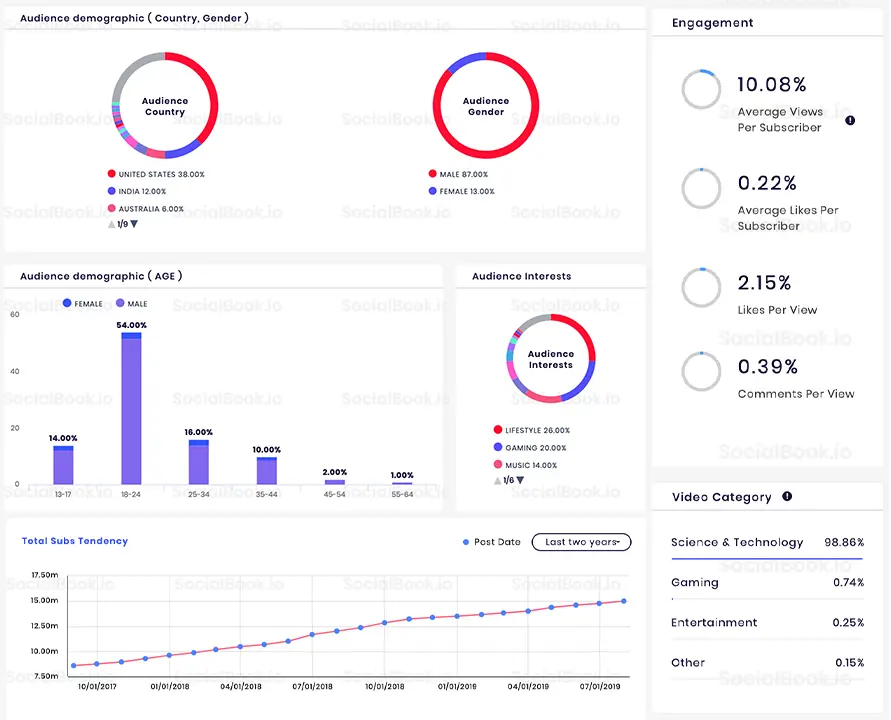
  • Audience demographics and authenticity signals
  • Engagement quality analysis

Well-known examples include Modash and HypeAuditor.

Suggestion:

When evaluating discovery tools, test how easy it is to exclude creators with inflated metrics. Look for transparent audience breakdowns and engagement quality indicators rather than follower counts alone.

Campaign and Relationship Management Platforms

Some platforms assume you already know who you want to work with and focus instead on execution and organization.

These are useful if you have a stable creator roster and want better workflows without paying for discovery features you rarely use.

Typical capabilities include:

  • Creator CRM functionality
  • Campaign timelines and approvals
  • Content and asset management
  • Performance tracking for known creators

These tools are commonly used by in-house teams running always-on programs.

Suggestion:

If you fall into this category, confirm whether the platform allows easy importing of existing creators and historical performance data. Migration friction is often overlooked until it becomes a problem.

Influencer Marketplaces

Influencer marketplaces connect brands and creators through open campaigns where influencers apply or bid to participate.

They prioritize speed and accessibility, which can be useful for short-term activations or user-generated content volume. Modash, as well as Brandwatch, also fall into this category.

Common characteristics:

  • Pre-vetted creator pools
  • Project-based collaborations
  • Simplified pricing and payouts
  • Less control over creator selection

Examples include Collabstr and #paid.

Suggestion:

Marketplaces work best when you value turnaround speed over deep brand alignment. If creative control or long-term partnerships matter to you, treat marketplaces as a supplement rather than your core system.

Analytics and Measurement Tools

Analytics-focused platforms specialize in measuring influencer performance, often independently of campaign execution.

Brands and agencies typically use these alongside other platforms to validate results or audit influencer quality.

What they usually provide:

  • Influencer performance benchmarking
  • Historical content analysis
  • Audience overlap and credibility scoring

These tools are especially common in regulated industries or high-spend campaigns. Notable examples include InfluencerMarketingAI and Brandwatch.

Suggestion:

If measurement is your priority, check how frequently data is refreshed and which platforms are supported. Gaps in platform coverage can skew performance comparisons.

At this point, you should be able to narrow your options to one or two platform categories. In the next section, you will dig into the specific features that actually matter when comparing tools within the same category.

Read also:

Core Features You Should Evaluate Before Choosing a Platform

Once you know which type of platform you need, the real work begins. Platforms in the same category can look very similar on the surface, but the details are where long-term value or frustration shows up.

Instead of asking whether a platform has a feature, you should focus on how well it actually supports your workflow.

Influencer Discovery and Search Quality

If discovery is part of your decision, this is where most platforms either shine or fall apart.

What to look for:

  • Granular filters for audience demographics, location, language, interests, and platforms
  • Keyword and content-based search, not just follower metrics
  • Coverage across the social networks you actually use

For example, Modash focuses heavily on creator search and vetting, offering detailed audience demographics, location filters, historical performance data, and clear indicators around audience credibility across Instagram, TikTok, and YouTube.

If the platform offers, ask for a trial. During it, try to recreate a real campaign search you have run before. If you struggle to surface relevant creators quickly, that friction will multiply once you scale.

Influencer Vetting and Authenticity Signals

Vetting is no longer optional. Fake followers, engagement pods, and misaligned audiences can derail performance fast.

Strong platforms provide:

  • Engagement rate trends over time
  • Audience credibility indicators
  • Suspicious follower growth alerts
  • Comment quality signals

Some platforms are purpose-built for this layer of analysis. For example, HypeAuditor is widely used for its audience credibility analysis, fraud detection signals, and breakdowns of follower quality, engagement authenticity, and growth patterns across major social platforms.

Pro Tip:

Avoid tools that rely on a single authenticity score without explaining how it is calculated. Transparency matters more than a neat number.

Outreach and Relationship Management

Finding influencers is only half the job. Managing communication at scale is where many teams feel the strain.

Key capabilities include:

  • Centralized creator contact history
  • Email or in-platform messaging
  • Creator tagging and segmentation
  • Notes and collaboration visibility across teams

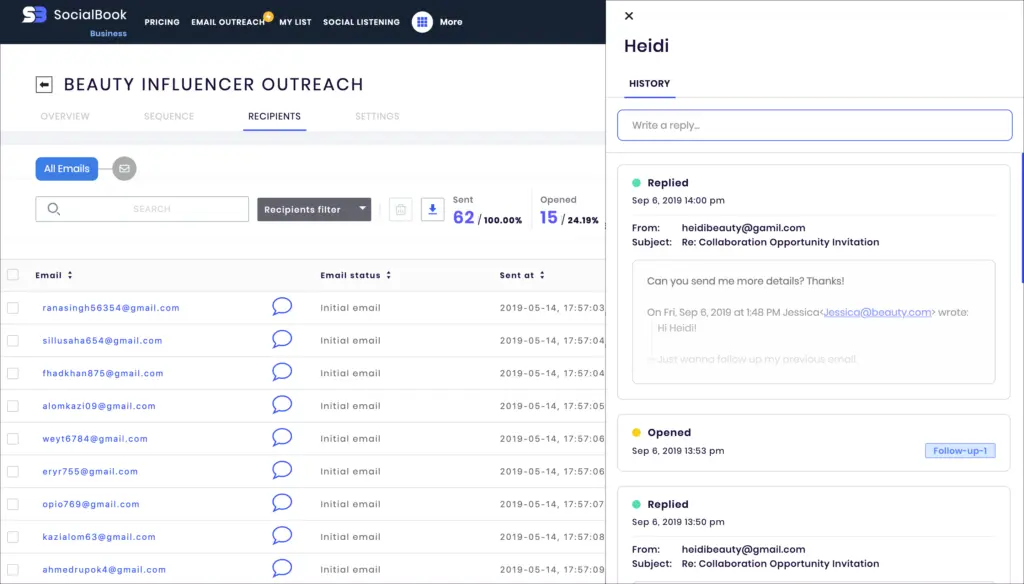
Some platforms go beyond basic messaging and include built-in relationship management tools. For example, Upfluence provides integrated CRM and outreach workflows that let you send emails directly from the platform, manage follow-ups, and track all communications in one central hub.

It also supports customizable email templates and automated follow-up sequences, helping you keep conversations organized and consistent across campaigns.

Pro Tip:

Before committing, test how the platform handles follow-ups and conversation history. If you cannot quickly see who contacted a creator, when, and in which campaign, coordination issues will appear as soon as multiple team members get involved.

Campaign Management and Workflow

As soon as you run more than a few campaigns at once, workflow matters more than features.

Look for support around:

  • Campaign timelines and milestones
  • Content submission and approval flows
  • Asset storage and organization
  • Clear campaign-level reporting

Some platforms are designed specifically around structured campaign execution. For example, Aspire offers end-to-end campaign management tools that support creator briefing, content submission, approval workflows, timelines, and asset organization in one place.

Teams can track each creator’s status across campaigns and keep all deliverables tied to specific objectives and deadlines.

Pro Tip:

If approvals are part of your process, test how flexible the workflow is. Rigid approval steps can slow campaigns down, especially when multiple stakeholders need to review content quickly.

Analytics Reporting and ROI Measurement

This is where platforms differ most in depth and usefulness.

At a minimum, you should expect:

  • Post-level performance metrics
  • Aggregated campaign reporting
  • Exportable reports for stakeholders
  • More advanced platforms may also support
  • Conversion tracking
  • Ecommerce integrations
  • Custom reporting views

Some platforms are built with measurement as a core strength. For example, CreatorIQ is known for its advanced analytics and reporting capabilities, including campaign-level performance tracking, cross-channel measurement, and integrations with ecommerce and analytics tools to support ROI analysis.

It is commonly used by larger brands that need standardized reporting across multiple teams and markets.

Pro Tip:

Decide upfront which metrics actually influence your decisions. Platforms that surface every possible data point can overwhelm teams without improving campaign outcomes.

Payments, Contracts, and Compliance

Operational features often get ignored until finance or legal steps in. But handling payments, contracts, and compliance smoothly can save time, reduce risk, and help maintain strong creator relationships.

Depending on your needs, a platform may support:

  • Creator payments and invoicing
  • Contract storage or templates
  • Disclosure reminders and compliance checks

Some platforms include robust capabilities in this area. For example, Upfluence offers Upfluence Pay, which lets brands manage influencer payments directly through the platform. This includes workflows for issuing payments, tracking payment status, and simplifying payout logistics for creators.

Built-in contract support and compliance checks also help ensure that creators are onboarded with proper agreements and disclosures in place.

Pro Tip:

If you work internationally, confirm how payouts and tax compliance are handled across regions. Limitations in payout methods or missing compliance support often surface late in negotiations with creators.

By the end of this section, you should have a short list of features that truly matter to your team. In the next section, you will map those features to your business type and goals, which helps narrow your shortlist even further.


Matching Platform Capabilities to Your Business Type and Goals

Even the best platform can be a poor fit if it does not align with how your business operates. This is where many brands get stuck. They choose tools based on feature lists rather than how those features support their actual goals.

Use this section to sanity check whether a platform is built for the kind of campaigns you are running today and the ones you plan to run next.

Ecommerce and Direct-to-Consumer Brands

If your primary goal is driving sales, your platform needs to connect influencer activity to commercial outcomes.

Platforms that work well for ecommerce brands typically support:

A good example is, again, Upfluence, which supports eCommerce-focused workflows such as product seeding, promo code tracking, and integrations with platforms like Shopify. This makes it easier to evaluate how influencer activity contributes to downstream sales.

Suggestion:

Before committing, verify how attribution is handled. Ask whether conversions are tracked through links, discount codes, integrations, or a combination of methods. Each approach has limitations, and knowing them upfront prevents misaligned expectations.

B2B and SaaS Companies

B2B influencer marketing is less about immediate purchases and more about trust, reach within niche audiences, and long-term influence.

Platforms that suit B2B teams usually emphasize:

  • Creator relevance and subject matter expertise
  • Content quality over follower volume
  • Engagement signals tied to credibility
  • Reporting that supports internal stakeholders

Traackr is often used by B2B and enterprise brands because of its strong creator vetting, audience credibility analysis, and reporting tools that help measure influence beyond direct sales.

Suggestion:

If you run B2B campaigns, test how easily you can identify creators by expertise, industry focus, and content themes. Follower count alone is rarely meaningful in this context.

Agencies Managing Multiple Clients

Agencies need platforms that support scale, consistency, and client visibility without creating operational drag.

Agency-friendly platforms usually include:

  • Multi-client or multi-account management
  • Clear permission and access controls
  • Reusable workflows across brands
  • Exportable or white-label reporting

Aspire is commonly used by agencies because it supports structured campaign workflows, collaboration across teams, and reporting that can be adapted for different client needs.

Suggestion:

Pay close attention to pricing models if you are an agency. Per-client or per-seat pricing can significantly impact margins as you scale.

Enterprise and Global Brands

Enterprise organizations often operate across regions, teams, and product lines. Control, governance, and consistency matter just as much as execution speed.

Platforms built for enterprise use typically provide:

  • Role-based permissions and access control
  • Regional or market-level reporting
  • Data security and compliance standards
  • Dedicated onboarding and support

CreatorIQ is widely used by global brands because it supports standardized reporting, integrations with broader marketing stacks, and governance features needed for large distributed teams.

Suggestion:

If you are evaluating enterprise platforms, involve procurement, legal, and IT early. Security requirements and data policies often influence platform approval more than marketing features.

When you align platform capabilities with your business model and goals, your shortlist becomes much clearer. Next, you will evaluate pricing models and commercial considerations, which often become the final deciding factor.


Pricing Models and Commercial Considerations

Once you have narrowed your shortlist, pricing and commercial terms usually become the deciding factor. This is also where many teams get surprised after the demo, when they realize that the features they assumed were included are actually gated behind higher tiers.

Understanding how influencer marketing platforms price their products helps you avoid mismatches between cost and value.

Subscription-Based Pricing

This is the most common model. You pay a recurring monthly or annual fee for access to the platform, often tied to feature tiers, user seats, or usage limits. Subscription pricing works best for brands running influencer campaigns consistently, because costs are predictable and budgeting is easier.

However, higher tiers often unlock critical features such as advanced analytics, integrations, or additional users, which can significantly increase total spend.

Usage-Based Pricing

With usage-based pricing, costs scale according to activity. This might include the number of influencers contacted, profiles analyzed, campaigns launched, or reports generated. This model can be attractive if your influencer marketing efforts are seasonal or experimental, since you only pay for what you use.

The downside is that costs can rise quickly as programs grow, making long-term forecasting more difficult.

Marketplace or Commission-Based Pricing

Marketplaces often charge per collaboration or take a percentage of creator payments. Instead of paying for software access, you effectively pay per campaign. This lowers upfront commitment and can be useful for short-term activations or user-generated content campaigns.

However, fees are baked into each collaboration, which can make this model more expensive over time compared to a subscription if influencer marketing becomes a core channel.

Key Takeaway:

When comparing pricing models, map them against your expected campaign volume over the next 6 to 12 months. A cheaper option today can become costly once influencer marketing moves from testing to scale.

What Pricing Usually Includes and Excludes

Platform pricing pages rarely tell the full story. Even within the same tier, inclusions can vary significantly.

Pricing often includes:

  • Access to the influencer database
  • Core search and filtering
  • Basic reporting dashboards

Common exclusions include:

  • Advanced analytics or custom reporting
  • Ecommerce integrations
  • Additional user seats
  • Managed services or strategic support

Pro Tip:

During demos, request a sample contract or pricing sheet. This helps you see which features are considered add-ons rather than core functionality.

Trials, Demos, and Onboarding

Not all platforms offer free trials, especially at the enterprise level. Instead, many rely on guided demos and proof-of-concept periods.

What to evaluate during this stage:

  • How intuitive the interface feels without training
  • Whether data depth matches what was shown in the demo
  • How responsive the support team is during onboarding

Some platforms, such as Upfluence, offer guided onboarding and structured demos that walk teams through real campaign workflows.

Suggestion:

Prepare a short list of real campaign scenarios before your demo. Asking vendors to show those exact workflows reveals more than generic feature walkthroughs.

With pricing and commercial terms clarified, the final consideration is whether the platform will remain usable and scalable over time.


A Practical Influencer Marketing Platform Evaluation Checklist

By the time you reach this stage, you should have a shortlist of platforms that seem capable on paper. This checklist is designed to help you pressure test those options in demos, trials, and internal reviews, so you can make a decision based on fit, not marketing claims.

Use it as a scoring framework or a discussion guide when comparing platforms side by side.

Discovery and Creator Fit

  • Can you filter creators by audience demographics, location, language, and interests?
  • Does the platform support the social networks you actually plan to use?
  • Are search results transparent and easy to refine, or do you need multiple steps to surface relevant creators?

Tip:

Run the same discovery query across all shortlisted platforms. The quality and relevance of the results often differ more than feature lists suggest.

Vetting, Authenticity, and Brand Safety

  • Does the platform surface engagement trends and audience credibility indicators?
  • Can you identify suspicious follower growth or engagement anomalies?
  • Are brand safety signals visible and easy to interpret?

Tip:

Ask vendors to explain how authenticity metrics are calculated. Platforms that cannot clearly explain their methodology should raise concerns.

Outreach and Relationship Management

  • Can you manage all creator communications in one place?
  • Is conversation history visible across campaigns and team members?
  • Does the platform support templates, follow-ups, or segmentation?

Tip:

Test outreach workflows with multiple team members. If collaboration feels clunky during a demo, it will not improve under real campaign pressure.

Campaign Execution and Workflow

  • Can you manage briefs, approvals, and timelines without workarounds?
  • Are creator deliverables clearly tied to campaign goals?
  • Is asset storage and organization built into the workflow?

Tip:

Ask to see how a campaign looks mid-flight, not just at setup. Execution clarity matters more than onboarding polish.

Analytics, Reporting, and ROI

  • Are performance metrics available at post and campaign level?
  • Can reports be exported or customized for stakeholders?
  • Does the platform support conversion or sales attribution if needed?

Tip:

Identify which metrics influence your decisions before comparing dashboards. More data does not always mean better insight.

Payments, Contracts, and Compliance

  • Does the platform support creator payments and invoicing?
  • Are contracts, disclosures, and compliance workflows included or manual?
  • How are international payments and tax requirements handled?

Tip:

Bring finance or legal into at least one demo. Operational gaps are easier to address before contracts are signed.

Usability, Support, and Scalability

  • Is the platform intuitive for day-to-day users?
  • What onboarding and support resources are provided?
  • Can the platform scale with more campaigns, creators, or markets?

Tip:

Ask current customers or references how long adoption took. Ease of use is best validated outside a demo environment.

A strong platform will not check every box equally well. The goal is to choose the tool that best supports your strategy, team structure, and growth plans, not the one with the longest feature list.


Choosing a Platform That Grows With Your Influencer Strategy

Choosing the right influencer marketing platform is less about finding the most advanced tool and more about finding the one that fits how you actually work. The best platform for your business is the one that supports your goals, scales with your campaigns, and removes friction rather than adding it.

Before making a final decision, step back and evaluate your needs across discovery, execution, measurement, and operations. A platform that excels at creator discovery may fall short in reporting.

Another may offer powerful analytics but lack workflow flexibility. Neither is wrong if it aligns with your priorities.

Treat demos and trials as real-world tests, not sales presentations. Ask vendors to show how the platform handles your actual campaigns, not ideal scenarios. When your platform supports your strategy instead of dictating it, influencer marketing becomes easier to scale, easier to measure, and easier to sustain over time.

The right choice today should still make sense a year from now.

Frequently Asked Questions

How do platform needs differ between B2B and consumer influencer campaigns?

B2B influencer programs prioritize credibility, subject-matter expertise, and long-term influence over reach, which is why many teams look specifically at B2B influencer marketing platforms that emphasize audience relevance, content depth, and reporting suited for internal stakeholders.

Are influencer marketing platforms suitable for small businesses with limited budgets?

Yes, many tools are designed with affordability and simplicity in mind, and influencer marketing platforms for small businesses often focus on streamlined discovery, basic campaign management, and predictable pricing without enterprise complexity.

What is the difference between influencer marketing platforms and influencer marketing software?

The terms are often used interchangeably, but influencer marketing software typically refers to broader systems that include analytics, workflow, and integrations beyond discovery alone, making them suitable for more structured programs.

Why do agencies need different influencer platforms than brands?

Agencies manage multiple clients, campaigns, and reporting needs simultaneously, which is why influencer marketing platforms for agencies usually include multi-account management, permissions, and client-ready reporting features.

Are micro-influencers easier to manage through specialized platforms?

Yes, platforms built around micro-influencer discovery often make it easier to identify niche creators and manage volume efficiently, which is the core focus of many micro-influencer platform solutions.

Do any influencer marketing platforms cater directly to creators, not just brands?

Some platforms are designed to support creator-side workflows like collaboration management and monetization, which is why influencer marketing platforms for creators exist alongside brand-focused tools.

Are Instagram-focused influencer tools still relevant in multi-platform strategies?

They are, especially for brands where Instagram remains a primary channel, and many teams rely on Instagram influencer marketing tools that offer platform-specific insights while complementing broader influencer stacks.

What role do influencer tracking platforms play if you already use another tool?

Tracking tools are often layered on top of existing systems to validate performance and monitor results independently, which is the main value of dedicated influencer tracking platforms in larger or higher-risk campaigns.

About the Author
Kalin Anastasov plays a pivotal role as an content manager and editor at Influencer Marketing Hub. He expertly applies his SEO and content writing experience to enhance each piece, ensuring it aligns with our guidelines and delivers unmatched quality to our readers.