
The original promise of influencer marketing was an affordable alternative to traditional means of advertising in both print and digital. An influencer ad was far less expensive than a celebrity endorsement, sometimes with a bigger reach. It didn’t take long for influencer marketing to become an industry on its own, with the price of entry going up with each passing year.
This is why small businesses face more challenges when venturing into the realm of influencer marketing. Unlike their larger counterparts, small businesses often operate with limited budgets and smaller teams, which can significantly hinder their ability to engage in effective influencer campaigns.
This financial constraint means that small businesses must be strategic in their approach, often necessitating the use of specialized software to maximize their efforts while keeping costs manageable. But what about using software as a replacement for a full marketing department?
That’s an entirely different issue: the cost associated with influencer marketing. Large companies can afford to invest in comprehensive influencer marketing software that offers a wide array of features.
These sophisticated platforms often include capabilities for in-depth analytics, extensive influencer databases, automated campaign management, and detailed reporting. While these features are incredibly beneficial for any business, they often come with a hefty price tag—so we’ll give you three guesses as to who tends to use them.
Small businesses aren’t necessarily shut out entirely. Having lower budgets just forces them to do their homework, because there are affordable platforms that serve their needs. The trick is identifying something you need vs. something you want.
For a small business, these features are where the focus should be: influencer discovery/management, campaign management, and performance analytics. With these three, you get the core of every part of a campaign lifecycle.
It’s easy to be tempted by more bells and whistles, but many other features can likely be handled by other software you already have—or they just don’t add any value to the actual marketing.
It’s nice to customize the platform and all the communications to make it look like your own software, but none of that helps a post reach the right audience. Comprehensive CRM integrations add a deeper dimension to influencer relations, but small businesses can easily do that with a spreadsheet.
Things like automation and integrated budgeting tools are great if you can afford them—but you can absolutely do without them if needed.
Still, even armed with the knowledge of what you need, finding the right solution can be exhausting. The good news is, for most small businesses, the answer is right here in this blog post. These five platforms all offer something unique, and they all offer reasonably priced access to their tools:
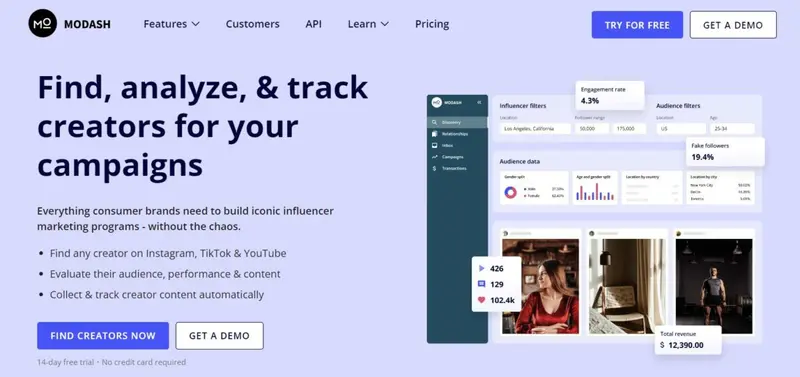
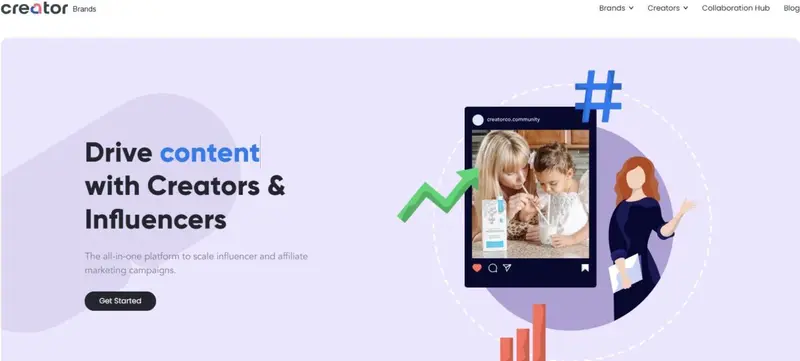
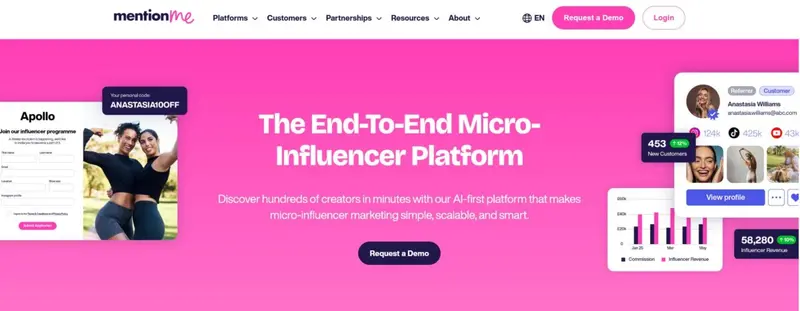
Modash offers in-depth insights, the better to go deep into its massive influencer database with. Add a streamlined payment processing function, and you’ve got a small business winner. Modash was founded in 2018 with a mission to support content creators in getting paid for their work. Designed by founders Avery Schrader and Hendry Sadrak, Modash offers a comprehensive influencer marketing platform tailored to meet the needs of both brands and influencers. Key Features: Campaign Management, Influencer Discovery, Influencer Analytics, Influencer Campaign Monitoring, Influencer Management, Beginning its life as an influencer marketplace, Creator.co evolved to become one of the best end-to-end platforms on the market—now, with affiliate marketing built-in. Creator.co was founded to bridge the gap between brands and influencers, particularly focusing on the power of micro-influencers. The platform has continuously adapted, adding features like affiliate marketing to leverage its network of 175,000 registered creators. Key Features: Search/Discovery, Automated Recruiting, Influencer Relationship Management, Influencer Marketplace, Content Review, Content Library, Campaign Management, Campaign Reporting, Influencer Analysis, Audience Analysis, E-commerce Tools, Product/Gifting Tools, Fake Follower/Fraud Detection, Payment Processing, Social Listening, Competitor Research, Creator Marketplace, Channels: Instagram, YouTube, TikTok, Tiktok Shop Mention Me takes a different angle from most small‑business influencer platforms. Instead of starting with a huge cold database, it uses first‑party referral and customer data to uncover high‑intent micro‑influencers who already buy from and believe in your brand. From there, its AI-first engine helps you find net-new creators, manage relationships, and track real revenue impact in a way that feels built for lean teams, not enterprise departments. Key Features: Influencer Search & Discovery, Relationship Management, Campaign Management, Influencer Content Amplification, Influencer Outreach and Engagement, Data/Analytics, Influencer Lifecycle Management, Content Review, Campaign Management, Campaign Reporting, Forms and Compliance, Payment Processing, Competitor Research, Automated Commissions/Payment, First-Party Tracking, Channels: Instagram, Youtube, Tiktok, Facebook1. Modash
Summary:
Pricing Plans:
Dive Deeper:
2. Creator.co Review
Summary:
Pricing Plans:
The Self-Serve plan gets you full access to the platform. While Creator.co offers higher levels of service, these just come with increasing levels of involvement from Creator.co; the platform remains the same.Diver Deeper:
3. Mention Me
What Are the Top Features of an Influencer Marketing Platform for Small Businesses?
There are countless influencer marketing platforms out there, each catering to different niches. You can find platforms tailored to:
- Influencer marketing platform for fitness influencers
- Influencer marketing platforms for sports influencers
- Influencer marketing platforms for agencies
- Influencer marketing platforms for creators
- Influencer marketing platforms in the US
- Influencer marketing platforms in the UK
These platforms help businesses expand their reach, tap into new markets, and build trust with customers, turning them into loyal advocates. To get the most out of your investment, your platform of choice should at least offer:
- Influencer Discovery: Find influencers that align with your brand values.
- CRM Tools: Streamline communication with influencers.
- Reporting & Tracking: Monitor campaign progress and performance.
Most platforms offer these standard tools, but to truly maximize your campaign, it's worth looking for features that provide distinct advantages. Let's dive into those.
Fraud Detection & Authenticity Verification
Fraudulent influencer activity has become a growing concern, with almost 50% of Instagram engagement suspected to be fake. For small businesses, this can lead to wasted time, money, and effort.
Look for platforms that provide fraud detection and authenticity verification. These features ensure you're working with real influencers who can deliver genuine results.
For example, Influencity uses AI and machine learning to detect fake followers and inflated engagement. Their ‘Followers Quality’ metric evaluates factors like follower count, bio details, and profile pictures to verify authenticity. Influencers scoring above 80 on this metric are generally considered trustworthy.
Neoreach also excels in fraud detection. Just provide the influencer’s social profile or URL, and Neoreach will generate a detailed report. It’s a handy tool for ensuring the influencers you work with are legitimate, both before and after a campaign.
Benchmarking
Roughly half of the brands using this marketing strategy find it hard to know if their campaigns are working. Benchmarking makes this easier by allowing businesses to compare their campaign results with industry standards and competitors, showing what works best and where they can improve.
Small businesses can use Traackr to compare their influencer marketing campaigns with those of their competitors. It tracks factors like engagement rates, reach, and content performance over different time periods and platforms.
The platform also offers tools to visualize data, making it easy to spot trends and gain insights quickly. Businesses can zoom in on specific groups of influencers, analyze markets in different areas, and study competitors' strategies in detail. By discovering who the top performers are and understanding impactful trends, small businesses can improve their influencer strategies and set clear, measurable goals.

- Traackr reports
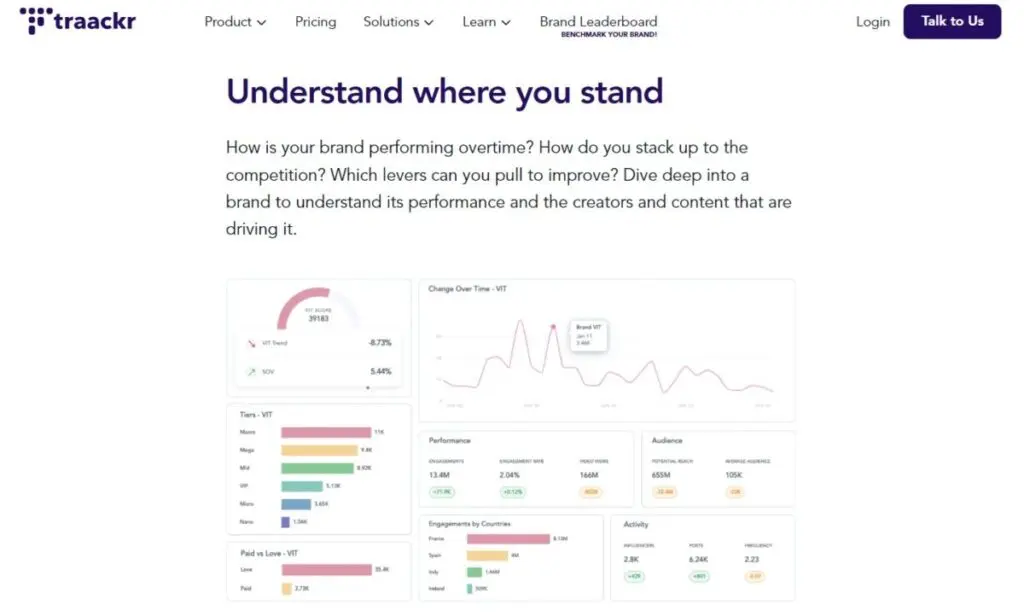
Traackr also provides detailed reports that show where the business stands in terms of social media presence, influencer partnerships, and audience engagement. By understanding these benchmarks, you can identify successful strategies used by competitors and adapt their approach to get better results.
Content Management
Content is the backbone of any influencer marketing campaign. With 97% of marketers reporting success in content marketing in 2023, having a platform that integrates content management can streamline the entire process.
A good content management system (CMS) acts as a central hub for campaign planning, influencer communications, and content scheduling. It helps you stay organized, so you don’t have to dig through scattered emails and documents. You can manage workflows, store marketing assets securely, and even schedule posts to go live at the perfect time.

- Aspire.io content management
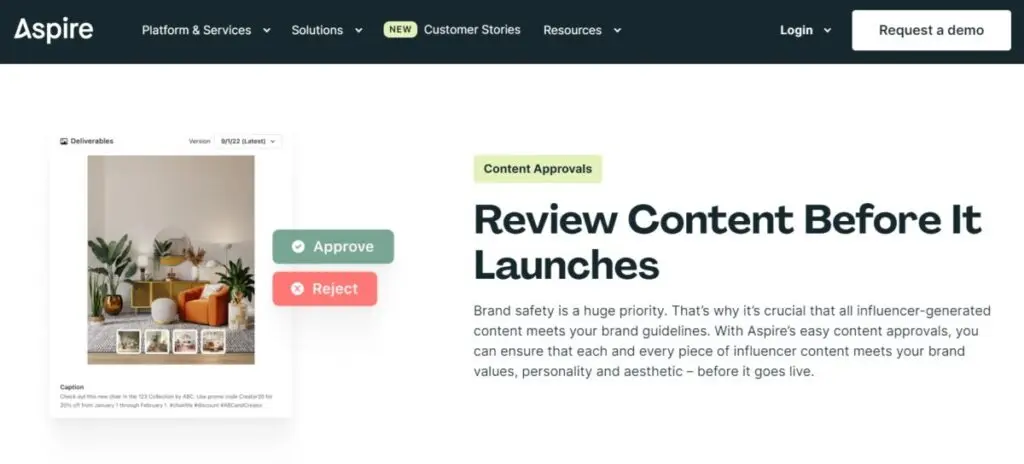
Aspire.io is an excellent example. This platform allows small businesses to plan, schedule, and track content across various platforms in real time. If a post is performing well, Aspire.io can boost it or convert it into an ad to expand its reach.
Wrapping Up
Influencer marketing can be an incredibly powerful tool for small businesses—if you know where to look and what you truly need. While it’s easy to be tempted by platforms with every feature under the sun, it’s more important to focus on the essentials: influencer discovery, campaign management, and performance analytics.
These five platforms offer a solid foundation for businesses looking to make a meaningful impact without breaking the bank. With the right strategy and the right tools, even the smallest brands can stand out in a crowded market.


