
As big as influencer marketing is, managing and monitoring influencer campaigns can be just as daunting a task, especially for enterprises with large-scale needs. From granular campaign tracking to enhanced reporting, enterprises have to be on top of every aspect of their influencer marketing campaigns to get the most out of them.
- 1. Brandwatch Influencer Marketing Software
- 2. Upfluence
- 3. Modash
- 4. Viral Nation Secure™
- All-in-One Solutions for Influencer Discovery and Campaign Management
- Scaling Enterprise Campaigns with Advanced Analytics and ROI Tracking
- Streamlining Workflows with AI-Driven Automation
- How Top Platforms Meet the Unique Needs of eCommerce Enterprises
- The Future of Influencer Marketing Software: Trends Enterprises Can't Afford to Miss
- Scale Enterprise Influencer Campaigns With Utmost Efficiency
- Frequently Asked Questions
Luckily, there are several influencer marketing software for enterprises that facilitate the management of multi-influencer campaigns and provide in-depth analytics. Since over 54% of marketers also favor AI adoption, the developers behind these tools have integrated AI-driven features for automating and streamlining tasks.
Not only that, these tools also integrate with existing martech stacks, whether CRM or CMS, to capture and repurpose influencer-generated content. So, they fit right in with the enterprise workflows. Let's discuss some of these tools in detail.
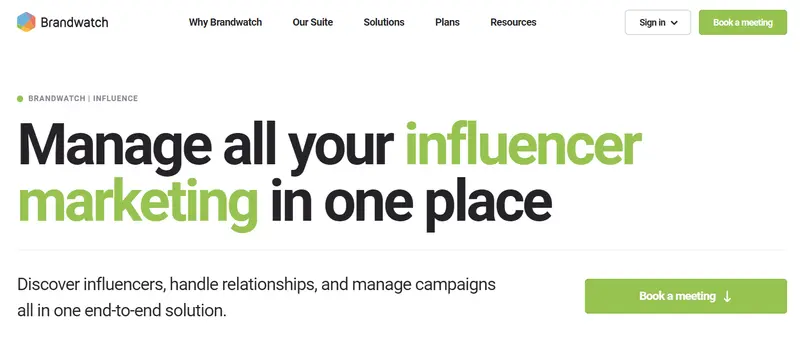
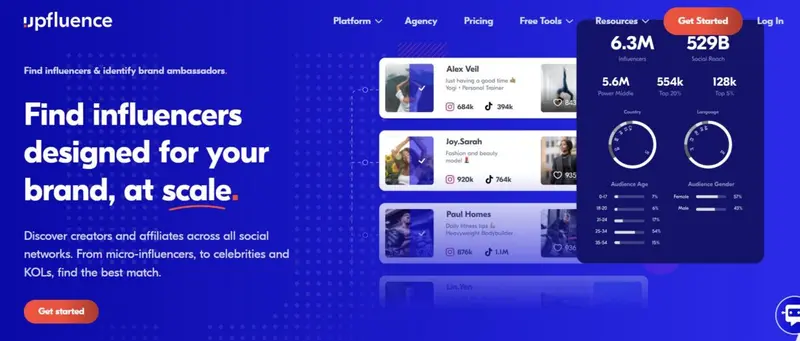
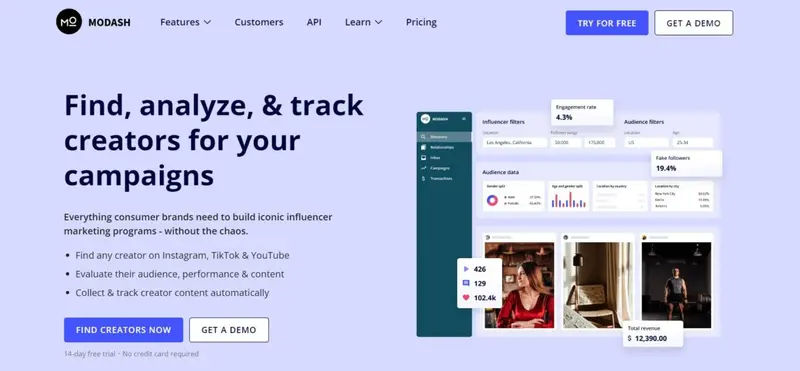
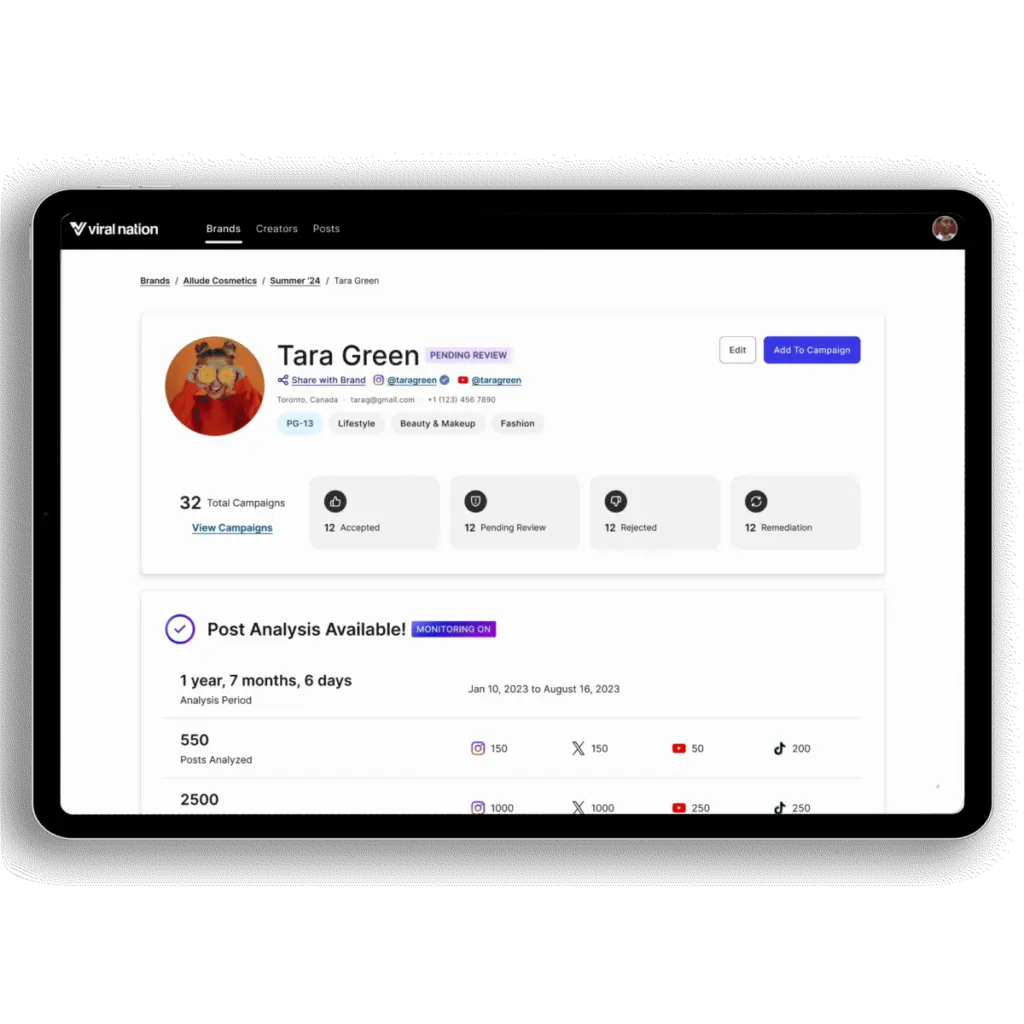
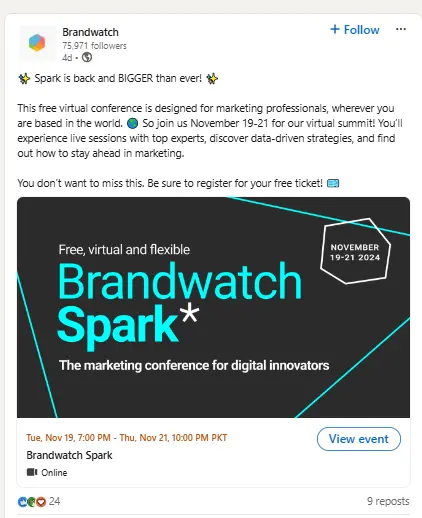
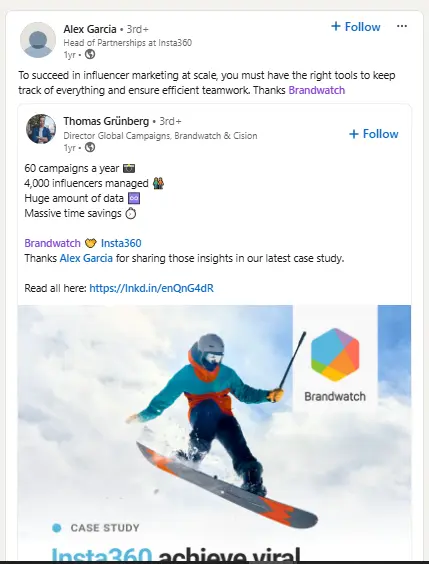
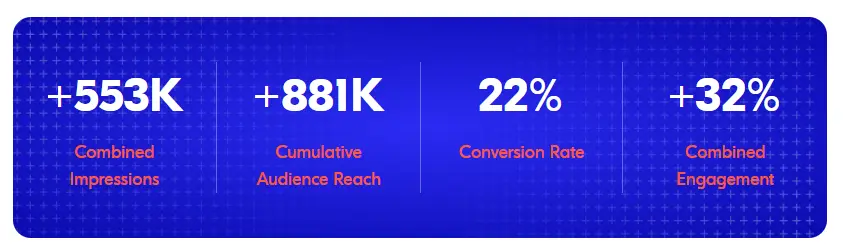
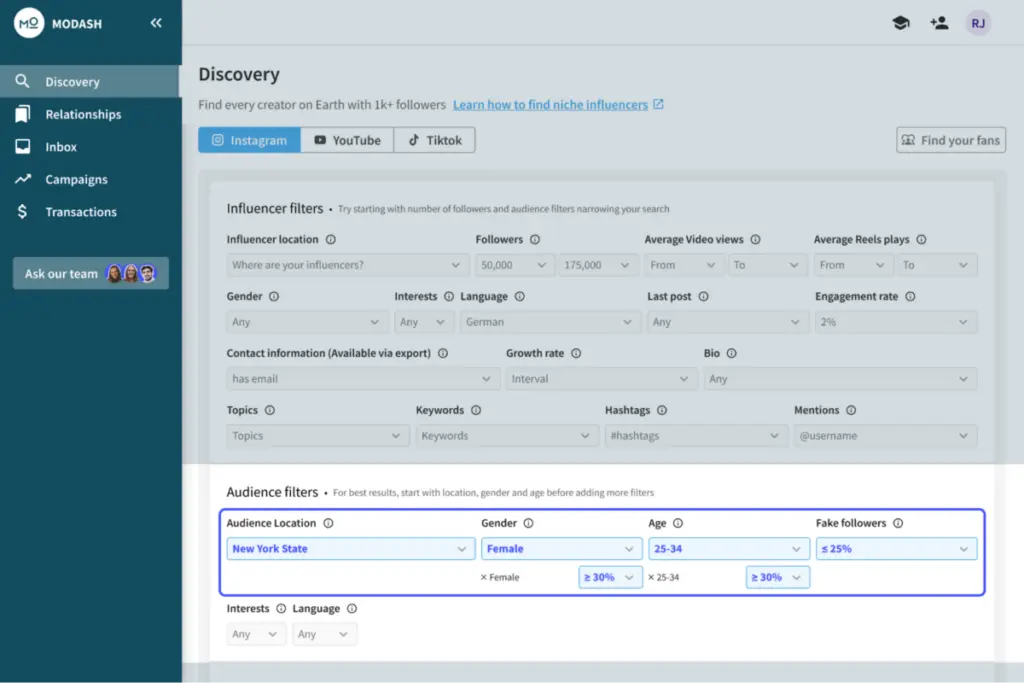
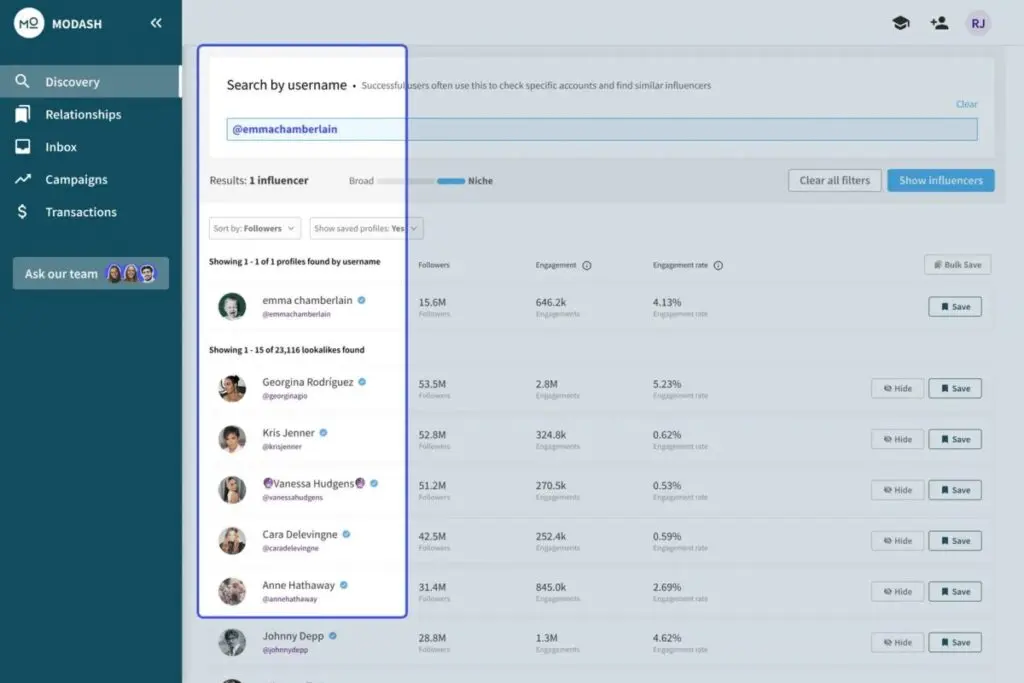
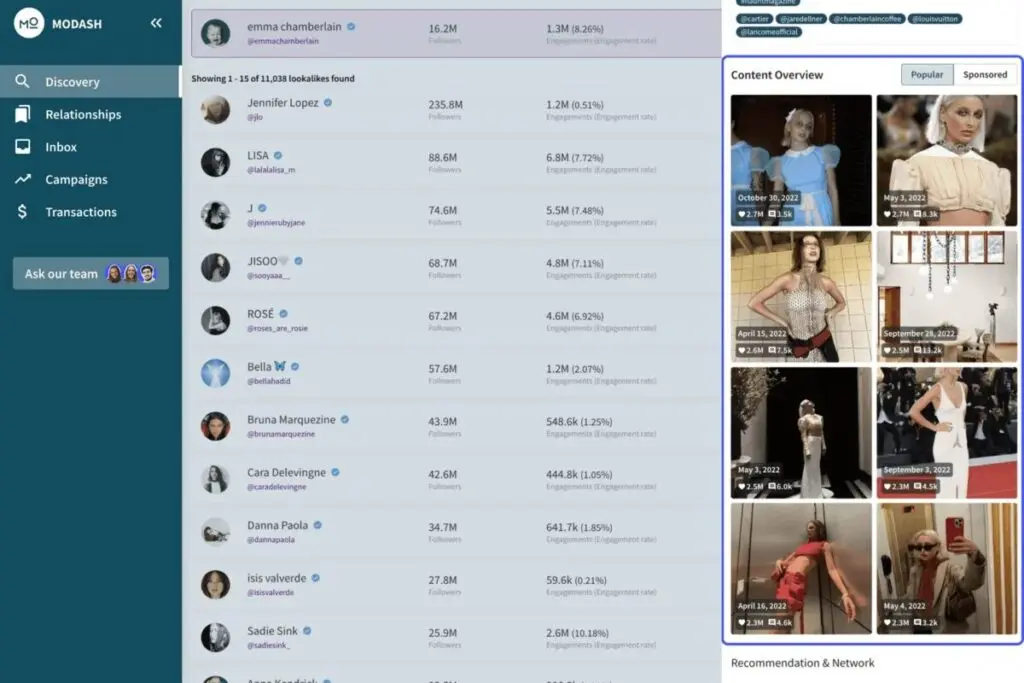
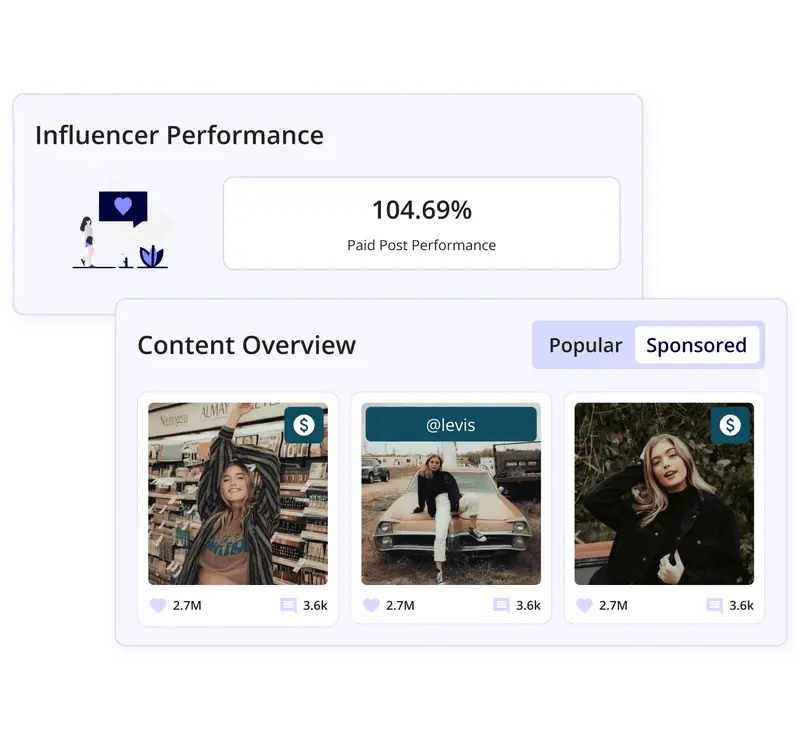
Best For: Retail and Entertainment enterprises Notable Clients: Unilever, Nestle, TUI, Toyota, GSK, Henkel As an influencer marketing tool trusted by two-thirds of the companies on the Forbes list of 100 most valuable brands, Brandwatch is a complete consumer intelligence solution that lets you understand your market and brand while engaging with customers through social media and influencer campaigns. The tool allows you to run influencer campaigns across a range of social media platforms, including Facebook, Instagram, YouTube, X, TikTok, LinkedIn, Reddit, and more. Key Features: Global Influencer Payment, Influencer Discovery, Influencer directory management, Creation of private influencer network, Campaign management and reporting, Broad platform coverage, Automated reporting, Channels: YouTube, Facebook, Instagram, Twitter, Twitch, TikTok, Shopify Best For: eCommerce enterprises Notable Clients: Marriott Bonvoy, Farfetch, Beauty Lab, Universal Upfluence is an all-in-one marketing platform where enterprises can manage their influencer, creator, user-generated, and affiliate campaigns in one place. What’s especially interesting is that Upfluence connects you with influencers who are already fans of your brand and have been talking about it before. This way, when you launch a campaign, you’re benefiting from the trust and credibility that these influencers have already established with their audience. The good news is that all your campaigns don’t become a messy portfolio. The platform’s intuitive interface lets you customize and automate workflows for multiple campaigns at once. Key Features: Influencer Search & Discovery, Relationship Management, Campaign Management, Third Party Analytics, Automated Recruiting, Influencer Lifecycle Management, Team Collaboration Tools, Content Review, Campaign Reporting, Audience Analysis, E-commerce Tools, Product/Gifting Tools, Payment Processing, Social Listening, Affiliate Management, Affiliate Campaigns, Channels: Instagram, Youtube, Facebook, Twitch, Tiktok, Twitter, Pinterest, Blogs Location: Tallinn, Estonia Year Founded: 2018 Notable Clients: Google, Mont Blanc, Bolt, Victoria’s Secret Modash offers a robust solution for enterprises looking to manage influencer marketing campaigns with a high level of control and precision. The platform’s standout feature is its vast influencer database, encompassing over 250 million profiles across Instagram, YouTube, and TikTok. With this scale, Modash makes it possible to find creators in nearly any niche, including fashion, health and wellness, and technology, Moreover, Modash lets you search by location or follower count, ensuring brands can find the exact right fit influencers for their unique needs. Key Features: Campaign Management, Influencer Discovery, Influencer Analytics, Influencer Campaign Monitoring, Influencer Management, Location: Toronto, Ontario Year Founded: 2014 Notable Clients: e.l.f. Cosmetics, Audible, A24, The Coca-Cola Company, MGM Resorts International, Microsoft, Meta VN Secure by Viral Nation is an advanced, AI-powered software designed for enterprises focused on brand safety and reputation management in influencer marketing. Built with precision and scale in mind, VN Secure leverages Google Gemini’s AI to vet creators, identifying the right brand-fit influencers and ensuring alignment with brand values across multiple content types and languages. VN Secure Post Analysis For brands seeking a proactive approach to influencer marketing, VN Secure offers extensive capabilities that minimize risk and maximize impact through rigorous, real-time creator vetting. Key Features: Influencer Analysis, Moderation Tolerance Feature, Channels: TikTok, Instagram, Facebook, X (Formerly Twitter)1. Brandwatch Influencer Marketing Software
2. Upfluence
3. Modash

4. Viral Nation Secure™
All-in-One Solutions for Influencer Discovery and Campaign Management
Having both influencer discovery and campaign management tools under one roof is a massive win for any marketing team. Imagine trying to juggle a search tool for influencers in one tab, spreadsheets for tracking in another, and a separate platform for messaging and campaign monitoring. It's clunky, time-consuming, and easy to make mistakes or lose data along the way.
You’d also need enterprise content management software and one for payments. However, with all these features in the same tool, everything is more streamlined and hassle-free.
You can find influencers, vet them, reach out, track progress, and measure impact without switching platforms. This streamlined approach saves time, reduces costs from multiple subscriptions, and lets teams focus on the strategic side instead of constant tool-jumping.
On top of that, tools like Upfluence and Creator IQ let you customize workflows, which is another plus, especially for enterprises that have to manage multiple influencers and campaigns across different regions.
Each campaign has unique needs; maybe you're working with influencers in Europe for one product launch and a different set in North America for another. The Nestle case study is an example of this. A tool that lets you tailor workflows means you can set up custom approval processes, budget allocations, and regional requirements without reinventing the wheel each time.
With this flexibility, it's possible to keep things organized, regardless of their complexity. Also, you get to meet campaign milestones on time since everyone is on the same page, thanks to the custom workflows and messaging features in one platform.
Scaling Enterprise Campaigns with Advanced Analytics and ROI Tracking
Whether it's enterprise marketing agencies or businesses themselves handling influencer campaigns, analytics aren't something to ignore. They can help enterprises scale their campaigns across countries, niches, and objectives.
Take the example of a global brand launching a new product in the U.S., Europe, and Asia simultaneously. They'll need tools that can handle large volumes of influencers, track campaigns in real time, and manage regional nuances, all without crashing. That's what LTK managed to do in the MATCHES case study we mentioned above.
With the built-in segmentation and localization features of enterprise influencer marketing software, teams can tweak campaigns by location without duplicating effort. Similarly, proprietary payment tools like Upfluence Pay make it easy for enterprises to manage multiple currencies and tax regulations.
It's not just about managing the campaign logistics, though. Analytics help enterprises keep track of their influencer ROI and benchmark performance across campaigns or regions.
This real-time insight lets teams see which influencers are really moving the needle and where adjustments might be needed. Plus, as tools like Creator IQ introduce AI features (which they're planning to), predictive analytics will also become more commonplace.
As a result, enterprises won't just be reacting. They will be proactively optimizing campaigns to hit KPIs and maximize ROI. For high-stakes campaigns, this kind of agility can make all the difference.
Streamlining Workflows with AI-Driven Automation
AI is doing some pretty cool stuff in influencer marketing, making life a lot easier for teams by handling all the repetitive, time-consuming parts of the job. Many platforms now offer features like automatic influencer selection, where the AI scans for influencers that fit your brand's vibe and audience criteria.
For example, Creator IQ gives you recommendations on the influencers you can choose. So, instead of humans spending hours searching through profiles, AI can deliver a list of vetted candidates in minutes.
Similarly, Brandwatch's automated email tracking makes communications more swift and organized. You can just click to view all the email exchanges between your team and an influencer rather than scrolling through a busy inbox to find them.
Meanwhile, Upfluence's ChatGPT integration allows auto-replies to be generated for influencer inquiries, freeing up time for your team to focus on more important tasks. For brands managing dozens or even hundreds of influencers, these features are pretty helpful. They remove all the back-and-forth of sending briefs, collecting content, tracking deliverables, and measuring outcomes across campaigns.
With automated workflows, you're also reducing the chances of human error, like missing deadlines or mixing up briefs, which is easy to do with big teams and multiple influencers. You can then reinvest all this saved time in more creative tasks and strategic planning to get better results in the future.
How Top Platforms Meet the Unique Needs of eCommerce Enterprises
To grow an eCommerce business with influencer marketing, influencer platforms need to be fine-tuned to track actual sales impact, not just likes and shares. That's why enterprise-centric tools offer sales-specific features to help brands get real, revenue-focused results. For example, NeoReach lets you measure ROI, CPE, and CPM for your campaigns, and not just engagement metrics.
Similarly, software like LTK has shoppable links that allow influencers to directly drive sales from their followers through the platform. Then, there are other features like commission tracking and affiliate marketing options, such as those in Upfluence, which let you incentivize influencers based on sales generated.
You can also target specific audiences through custom segmentation features. For example, LTK reports that their consumers are early adopters and the early majority, which means that they not only share creator posts but also take recommendations from them. So, when you specifically target such groups, ROI is likely to be higher.
The table highlights the eCommerce features the tools we have discussed offer.
Enterprise Influencer Marketing Tool | CRM Integration | Shoppable Links | Custom Audiences | Influencer Gifting | Amazon Sales Attribution |
Brandwatch | ✔ | x | ✔ | x | x |
LTK | x | ✔ | ✔ | ✔ | x |
NeoReach | ✔ | x | ✔ | ✔ | x |
Upfluence | ✔ | x | ✔ | ✔ | ✔ |
Creator IQ | ✔ | x | ✔ | ✔ | x |
The Future of Influencer Marketing Software: Trends Enterprises Can't Afford to Miss
As influencer marketing tools and software advance, we can expect to see the following trends becoming more prominent in the near future.
The Role of AI in Future Campaign Optimization
To no one's surprise, AI is one of those trends that we're seeing everywhere, from marketing to manufacturing. In influencer marketing, it's not just about recommending influencers based on keywords anymore.
Modern platforms can use predictive analytics to anticipate how well a particular influencer will perform based on past campaigns and seasonal trends.
There are already tools that suggest the best time to post on social media platforms. Combine them with predictive analytics, and you have a recipe for optimized campaign success.
Plus, real-time content recommendations may also become a thing. Imagine an AI telling you mid-campaign that a certain type of content (like video vs. carousel) is performing better. You can then tell influencers to focus on that, increasing engagement and conversions.
Hyper-Targeted Audience Insights
Audience insights are getting insanely detailed, which is a huge win for brands. Instead of relying on generic demographics, platforms are now breaking audiences down into ultra-specific segments. For example, the demographic won't just be "moms" but "boy moms with an income of 100k+ living in urban areas."
This allows brands to better target their messaging and influencer selection. Say a beauty brand finds out that a segment of an influencer's audience is interested in vegan products. They can then angle messaging for that group specifically.
Influencer marketing software like NeoReach (with over 40 filters) doesn't limit you to age or location-based targeting. You can also look at other factors like purchase behaviors and values to really make sure the influencer and audience are connected closely.
Advanced Fraud Detection and Authenticity Verification
Since enterprises sometimes even work with hundreds of influencers per campaign, it's possible to miss fraud now and then. However, software like NeoReach makes sure this doesn't happen.
Platforms are catching up with some solid fraud-detection features. They offer advanced authenticity checks that look at things like follower growth patterns, engagement consistency, and comment quality to spot red flags.
Weeding out these frauds is not only important to save money but also to maintain your reputation. The last thing you want as a global enterprise is a PR disaster because you unknowingly partnered with a fraudulent influencer or a creator with a history of problematic behaviors.
Cross-Platform Campaign Integration
Thanks to enterprise influencer marketing platforms, instead of running separate campaigns for Instagram, TikTok, YouTube, and so on, brands can now run integrated campaigns that maintain consistent messaging across channels.
They can also analyze the performance of influencer campaigns individually on every platform and compare it with others. This helps enterprises understand which channels work best for them so that they can use them more in the future.
Enterprises with a global presence often have multiple social media accounts for all their locations. So, they need a centralized system where all campaigns can be viewed together, whether they're run in the local office or a subsidiary in another country.
This really helps brands understand how well their influencer marketing efforts are doing worldwide and if there are any trends or patterns that can be identified across regions.
Scale Enterprise Influencer Campaigns With Utmost Efficiency
While enterprise digital marketing agencies can take influencer marketing off your plate, it may not always be the top choice for businesses that want to take a hands-on approach. For such enterprises, specialized influencer marketing software are the way to go, not just for local campaigns and audiences but also for international ones.
These software let you handle everything from influencer discovery to payments, and that too with additional help from AI capabilities and integrations. The same software can be used by your team in America and Asia to keep track of multiple campaigns running simultaneously across the globe. What makes these software truly special is the level of customization they offer. Every campaign can truly be made for your specific audience.
Reporting is also top-notch. You get custom dashboards for each campaign, real-time analytics, AI recommendations, and so much more to ultra-organize and refine every aspect of your influencer campaigns.
Frequently Asked Questions
Comparing marketing agencies for businesses
We’ve compiled a list of the top marketing agencies for different businesses. Here’s a selection:
Comparing the best influencer marketing agencies
Here’s our selection of the best influencer marketing agencies for businesses in different industries.
- Top Beauty Influencer Marketing Agencies
- Leading Fashion Influencer Marketing Agencies
- Best Reels Influencer Marketing Agencies
- Top Micro-Influencer Agencies
- Top 9 Multicultural Influencer Marketing Agencies
- Top Female-Led Influencer Marketing Agencies
- Top 9 Gaming Influencer Agencies
- Best Global Influencer Marketing Agencies
What are the best enterprise influencer marketing software?
At Influencer Marketing Hub, we have compared the top enterprise influencer marketing software. Here’s a brief view of these platforms.
| Enterprise Influencer Marketing Tool | Location | Year Founded | Notable Clients | Best For |
| Brandwatch | Brighton, UK | 2007 | Unilever, GSK, Nestle, McDonalds | Retail enterprises |
| LTK | Dallas, TX | 2011 | Walmart, Abercrombie & Fitch, Dyson Airwrap | Fashion enterprises |
| NeoReach | San Francisco | 2014 | FIFA, TikTok, Netflix, Nvidia | Tech enterprises |
| Upfluence | New York | 2011 | Marriott Bonvoy, Farfetch, Beauty Lab, Universal | eCommerce enterprises |
| Creator IQ | West Hollywood | 2014 | Disney, Estee Lauder, Red Bull, H&M, Google | Global enterprises |
What features should enterprises prioritize in influencer marketing software?
When looking for an influencer marketing software, you should look at the features mentioned in the table below. We’ve provided an overview of which of these features the tools we have mentioned contain.
| Enterprise Influencer Marketing Tool | Social Listening | Influencer Gifting | Affiliate Marketing | Fraud Detection | Built-in Payments |
| Brandwatch | ✔ | x | x | x | ✔ |
| LTK | ✔ | ✔ | ✔ | x | ✔ |
| NeoReach | x | ✔ | x | ✔ | ✔ |
| Upfluence | x | ✔ | ✔ | ✔ | ✔ |
| Creator IQ | x | ✔ | ✔ | x | ✔ |
How can AI improve influencer marketing for enterprises?
AI can enhance influencer marketing for enterprises by helping them find the right influencers faster with tools that analyze social metrics and audience engagement in real time. It also streamlines content creation and personalization so campaigns hit the right notes with target audiences. AI communication features like ChatGPT integration and automated emailing also save marketers time. Plus, AI-driven analytics give insights on ROI and performance that can be used for quick strategy adjustments.
What are some of the best influencer marketing platforms for large companies?
Here are some of the best influencer marketing platforms for enterprises:
- NeoReach
- Brandwatch
- Upfluence
- Creator IQ
- LTK
What is the best influencer marketing platform for B2B?
CreatorIQ is one of the top influencer marketing platforms for B2B. It's designed for enterprises, so it has powerful tools for discovering niche influencers, managing relationships, and tracking ROI in detail. The platform also offers advanced analytics, helping B2B brands see which influencers genuinely impact their target market. Its integrations with other marketing tools further let businesses align influencer efforts with broader marketing goals.
How do you select an influencer marketing platform for a global enterprise?
First off, the tool should be able to handle large-scale campaigns across multiple regions and languages. Its influencer database should also include creators from all over the world. More importantly, it should let you customize communication for influencers so that there's a sense of personalization despite regional barriers. The tool must also have AI features to speed up the influencer discovery process and provide detailed analytics and reporting for a global campaign's success.
Are there influencer platforms specifically designed for large e-commerce businesses?
Platforms like Upfluence and LTK are specifically made for large eCommerce businesses. That's why most of their success stories come from these brands. These platforms have exclusive eCommerce features to help you simplify the entire influencer marketing process. For example, Upfluence comes with Amazon sales attribution and affiliate integration for influencer tracking and ROI calculation. Similarly, LTK lets influencer audiences shop for a brand's product from right within the platform itself. Some other eCommerce-specific features in these software are automated payments, shoppable links, and influencer gifting.


![Best Influencer Marketing Software For 2026 [Updated]](https://s.influencermarketinghub.com/imaginary/resize?width=400&height=200&type=webp&url=https://influencermarketinghub.com/wp-content/uploads/2017/01/cc6c722e-34-best-influencer-marketing-software-for-2026.jpg)
