
If you are searching for new ways to generate some extra money, selling your own merch online is a great avenue to explore in the new year. Not only can it be an outlet for your creativity, but it also lets you create merch that your followers want.
A merch store can mean two very different things: a place where fans buy licensed products, or a platform that lets creators, ecommerce brands, and businesses design, sell, and fulfill their own merchandise. For ecommerce sellers in 2026, the best merch stores are the platforms that match your business model — print-on-demand for low-risk launches, creator storefronts for audience monetization, branded merchandise suppliers for company swag, and marketplaces when you need built-in demand.
There is a lot more than merely branded content that you can sell. Some of the most creative merch ideas include creating a T-shirt to promote a charity or cause, or selling other clothing items in response to a current event. All things considered, selling merchandise is the ideal way to make the most of the popularity that you have gained on social media and increase your brand awareness even further.
The easiest way to get started is to sign up with a merch store that will virtually take care of everything for you. With most of these stores, all that you have to do is come up with a few designs and do some promotion.
- What Is a Merch Store?
- Best Merch Stores at a Glance:
- 1. Gelato
- 2. Merch By Amazon
- 3. Bonfire
- 4. Spreadshop
- 5. Printify
- 6. Zazzle
- 7. Big Cartel
- 8. TeeSpring
- 9. CafePress
- 10. Printful
- 11. Redbubble
- Best Merch Stores for Creators, Influencers, YouTubers, and Streamers
- Best Merch Stores for Branded and Corporate Merchandise
- Best Merch Stores for Bands, Artists, and Fan Communities
- Best Merch Stores for Different Product Types
- How to Choose the Best Merch Store for Your Business Model
- Wrapping Up
- Frequently Asked Questions
What Is a Merch Store?
A fan merch retailer where customers buy licensed band, anime, sports, movie, or creator products.
A print-on-demand merch platform where sellers upload designs and products are printed after each order.
A creator storefront where influencers, YouTubers, streamers, musicians, or educators sell directly to their audience.
A branded merchandise supplier where companies order logo apparel, employee gifts, event giveaways, or client merchandise.
An ecommerce storefront builder where the seller manages the store and connects fulfillment separately.
Best Merch Stores at a Glance:
Best overall for global ecommerce merch: Gelato
Best for creators and YouTubers: Bonfire
Best for marketplace exposure: Merch by Amazon
Best for Shopify and ecommerce store owners: Printful
Best for comparing print providers: Printify
Best for creator storefront simplicity: Spreadshop
Best for artists and independent sellers: Redbubble
Best for small creator stores with existing inventory: Big Cartel
Best for corporate/branded merchandise: Merchology or UpMerch
Best for bands and music merch operations: Hello Merch
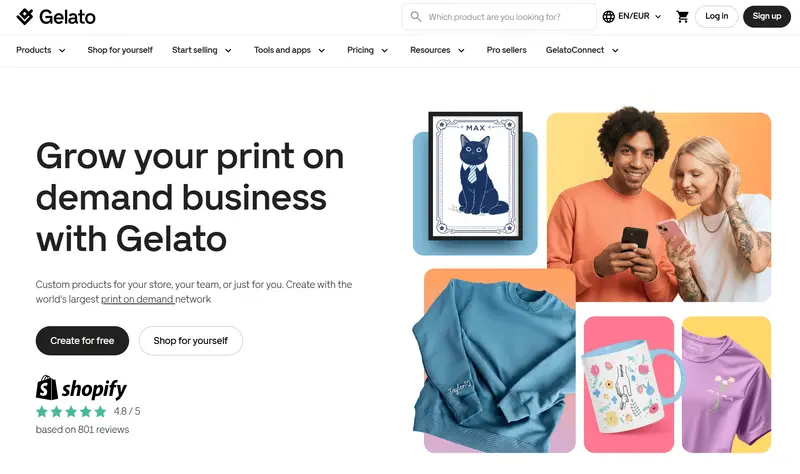
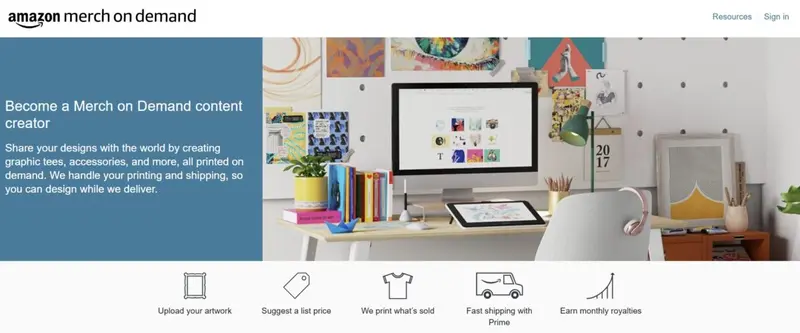
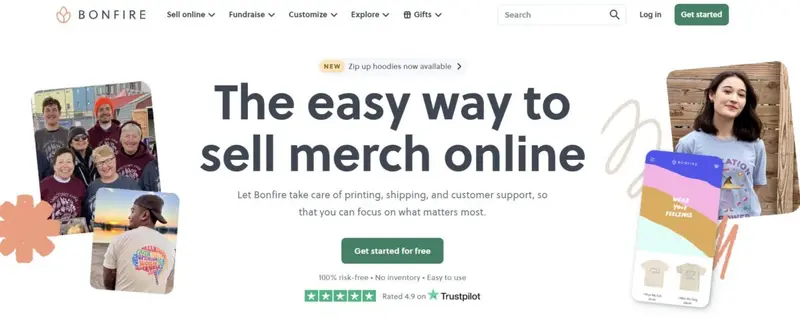
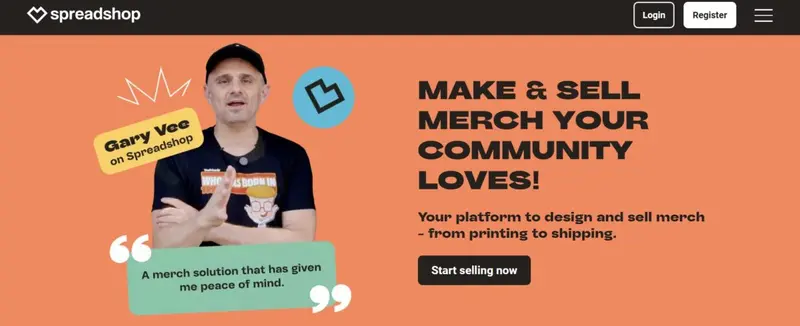
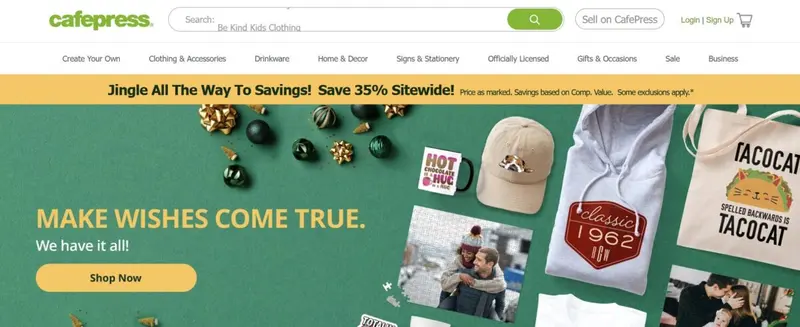
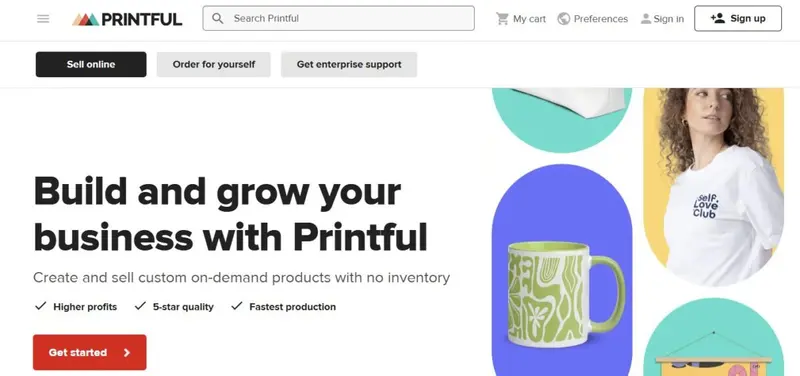
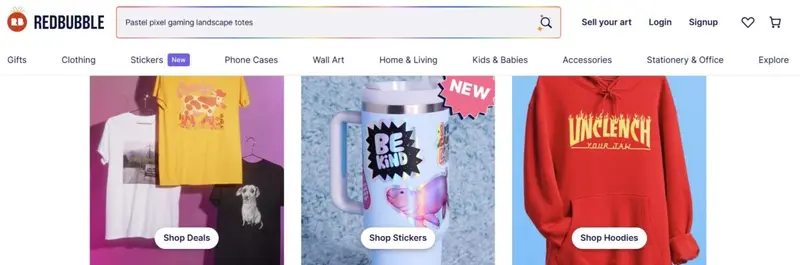
Gelato has positioned itself as one of the more infrastructure-focused merch platforms in the print-on-demand market, especially for ecommerce brands selling internationally. Instead of relying on centralized fulfillment, Gelato routes production through a distributed network of local print partners, which helps reduce delivery times and shipping complexity for stores targeting multiple regions. For merch sellers running Shopify, Etsy, WooCommerce, or Amazon storefronts, that localization model can make scaling considerably easier without adding operational overhead. Amazon also offers its own merch features. Though, it is by invite only and you will first have to apply to find out if you qualify for their program. It’s pretty straightforward to use: you upload your art, decide on the price and Amazon will then sell your artwork as your own. It’s really convenient as they will take care of printing and shipping and you will also be able to use their shipping rates. One of the biggest advantages is that you will be able to access their whole customer network. Considering that millions of people visit Amazon on a monthly basis, this is a big perk. Launched in 2012, Bonfire is a free online platform that you can use to create, sell, or purchase custom products. As the platform takes care of payment processing, order fulfillment and even customer service, you can concentrate on other things like growing your follower count and connecting with them. So, it makes sense why many YouTube influencers use Bonfire for their merch. From tote bags to mugs, influencers, individuals and non-profits have used the platform to generate a steady stream of income. If you want to do as little as possible, Spreadshop could be the answer. It offers an e-commerce platform that has all the features you require for creating and selling merch online. In addition, they will also print products on demand and will take care of payments, order fulfillment and shipping. It’s also very easy to use. You choose the retail pricing and they will then subtract the base price of the product when you have sold one of your products. The profit you have made will be paid to you on a monthly basis. If you like Bonfire, you will probably also like what Printify has to offer. It is one of the most well-known print-on-demand networks and tries to make it easier to source and create the best prices. Their base prices are in line with what other merch stores charge. All you have to do is add your margin to the product’s base price. This means that you remain in complete control of your profits. Zazzle has been in the business for 19 years already. During this time, they have made more than 500 brand partners that include big names like Getty Images and Disney. They offer high-quality merchandise and a big collection of designs. Social media influencers who already have some printed merch that they would like to sell can also check out Big Cartel. Unlike many of the others listed in this article, it’s not a print-on-demand platform per se. Instead, it is more of an e-commerce builder aimed at artists and creators. Big Cartel allows you to create an online store, upload products, and set your own pricing. You can then also view your orders and analytics. You will, however, have to take care of your own printing. So, if you prefer the convenience offered by some of the other print-on-demand platforms mentioned in this article, this will be quite a big con. Teespring is one of the most powerful social commerce platforms. It offers print-on-demand products making it simple to create and sell a wide range of products (and not just T-shirts as suggested by its name) online. It offers its own marketplace. This means that you won’t be selling merch in your own store and you won’t have to deal with payments. One of the major benefits of this feature is that you will be able to reach a bigger group of potential customers as your merch will be shown to existing customers of Teespring too. As a matter of fact, they will advertise your merch for you by means of remarketing and other techniques. CafePress offers two options: Seller Shops and Design & List. The latter is the easiest approach as you only have to upload a design. CafePress will then automatically select a product that will work best with your design and begin to sell your product via their website. Printful is a great merch store if you want to focus on selling T-shirts. They provide a print-on-demand order fulfillment service. In addition to clothing, they can also fulfill and ship other products that include home decor, accessories and other lifestyle items (the selection, however, is not that big). As they only print on demand and have no minimum order requirements, you will not have to worry about any leftover merch. They also do not charge set-up or monthly fees and give you complete control over your pricing. You decide on the price for all your products and then simply pay the production costs after someone has bought your products. Redbubble is a popular merch site as it offers you complete control over your profit margin. Here you can sell a wide range of products (there are more than 60 unique products) that include stickers, posters. T-shirts and device cases. They will basically take care of everything for you – printing, collecting money, and delivery. The only things that you need to take care of are uploading your designs and selecting your products. As it offers a low payment threshold, it’s a great way to make some extra money. All the products have a base fee and then you can choose how much profit you want to make per product. However, one thing to keep in mind is that all 1. Gelato
2. Merch By Amazon
3. Bonfire
4. Spreadshop
5. Printify
6. Zazzle
7. Big Cartel
8. TeeSpring
9. CafePress
10. Printful
11. Redbubble
Best Merch Stores for Creators, Influencers, YouTubers, and Streamers
Creators should choose a merch store based on audience behavior, not platform popularity. A YouTuber selling a limited hoodie drop has different needs from a streamer building a year-round shop or an influencer testing product bundles with sponsors.
Bonfire is a strong fit for simple creator drops because it handles printing, shipping, and customer support. It is especially useful for YouTubers, fundraisers, communities, and creators who want to launch merch without managing the backend.
Spring is built around creator commerce. It works well for influencers, YouTubers, streamers, and social-first creators who want to sell physical products, digital products, and fan merch from a simple storefront.
Spreadshop is useful when creators want a free shop, product variety, and control over margins. It is a practical option for creators who want something easy to launch but more flexible than a one-product campaign.
Printify is better for creators who want product range and supplier choice. It gives more room to test different items, prices, and print providers, but it works best when the creator is comfortable connecting it to a store or marketplace.
Printful is stronger for creators who are turning merch into a real ecommerce brand. It fits sellers who want better control over product pages, branding, integrations, and repeat purchases.
Gelato is a good choice for creators with international audiences. Local production can make a major difference when followers are spread across several countries.
Redbubble works best for artists and design-led creators who want marketplace discovery. It is easier to start, but the creator gives up more control over the customer relationship.
Big Cartel is ideal for independent creators with a small, curated catalog. It works well for artists, bands, illustrators, and makers who want a lightweight owned shop.
The main decision is whether the creator wants speed or ownership. Bonfire, Spring, and Spreadshop reduce friction. Printful, Printify, Gelato, and Big Cartel give more control. Redbubble helps with discovery when the creator does not want to drive every sale alone.
Best Merch Stores for Branded and Corporate Merchandise
Corporate merch is a different buying decision. A creator can test a hoodie and move on if it does not sell. A company sending onboarding boxes, event gifts, or client merch needs the product to arrive on time, look consistent, and represent the brand properly.
Merchology is a strong fit for custom logo apparel and corporate gifts. It works well for companies that need polished branded products, employee apparel, client gifts, and deadline-sensitive orders.
UpMerch is better for companies that need a full merch operation. It supports company merch stores, warehousing, kitting, employee gifting, customer gifting, storage, and bulk orders. This is useful when merch is recurring rather than a one-time purchase.
Sock Club is a good specialized option for custom socks. It works well for event swag, team gifts, conference merch, and branded apparel accessories where the product needs to feel more intentional than a basic giveaway.
Printful can work for ecommerce-led branded merch. It is a good fit when a company wants to sell branded products through its own store without holding inventory.
Gelato is useful for global branded merch because of its local production network. It is a practical option for companies with distributed customers, employees, or regional audiences.
Printify is best when supplier comparison matters. Companies can test different products, providers, price points, and fulfillment options before committing to larger merch programs.
For corporate buyers, the best merch store is usually the one that reduces operational risk. Product quality, logo execution, shipping reliability, packaging, and reorder workflows matter more than having the trendiest creator storefront.
Best Merch Stores for Bands, Artists, and Fan Communities
Music and fan merch carry a different kind of demand. A band t-shirt, tour hoodie, poster, sticker, or limited drop works because it gives fans a way to show belonging. That is why this category sits between ecommerce, creator monetization, and fan culture.
Hello Merch is one of the strongest options for bands and musicians because it supports web stores, fulfillment, screen printing, drop shipping, and artist merch operations. It is better for serious music merch than a basic POD storefront.
Merchbar is more useful for buyers than sellers, but it matters for this topic because many people searching for “best merch stores” want places to buy official band and music merch. It should be treated as a fan-merch retailer, not a platform for launching a custom merch business.
Bonfire works well for bands, artists, and communities launching simple merch campaigns. It is useful for limited drops, community shirts, cause-based merch, and small fan-led projects.
Big Cartel is a strong choice for artists and bands that want their own lightweight shop. It works especially well for limited catalogs, prints, physical products, zines, small-batch merch, and independent releases.
Redbubble is better for artists who want marketplace discovery. It suits illustrators, designers, and niche fan-style creators who want their artwork available across multiple product types without handling fulfillment.
Printful is useful when artists or bands want to build a branded ecommerce store but outsource production and shipping.
Shopify with a POD provider is the most controlled setup. It takes more work, but it gives bands and artists ownership over product pages, customer data, email marketing, bundles, and future drops.
For bands and artists, the cleanest split is this: Hello Merch and Shopify/POD setups are better for official artist stores, Bonfire is better for quick drops, Redbubble is better for artist discovery, and Merchbar is mainly where fans go to buy existing official merch.
Best Merch Stores for Different Product Types
The right merch store also depends on what you are selling. A platform that works well for t-shirts may not be the best choice for embroidered hats, corporate gifts, posters, stickers, or international orders.
Best for T-Shirts and Hoodies
Printful, Printify, Gelato, Bonfire, Spreadshop, and Spring are the strongest fits. Use Bonfire, Spring, or Spreadshop for simple creator drops. Use Printful, Printify, or Gelato when you want more ecommerce control, broader product testing, or international fulfillment.
Best for Mugs and Small Accessories
Gelato, Printify, Printful, Zazzle, and Redbubble work well here. These products are useful for creators, artists, and brands that want lower-friction items beyond apparel. Marketplace options are better for discovery, while POD platforms are better for owned stores.
Best for Stickers and Posters
Redbubble, Gelato, Printify, Printful, and Big Cartel are the better options. Stickers and posters work especially well for artists, illustrators, fan communities, musicians, and creators with visual branding.
Best for Hats and Embroidered Products
Printful, Printify, Merchology, and branded merchandise suppliers are stronger choices. Embroidery needs more quality control than a basic printed shirt, so samples matter. For corporate buyers, consistency should matter more than the lowest base cost.
Best for Premium Corporate Gifts
Merchology, UpMerch, Sock Club, Printful, and Gelato are the better fit. Corporate gifts need to feel polished, arrive on time, and carry the logo cleanly. This is where packaging, product quality, and delivery reliability matter more than a massive catalog.
Best for Artist-Led Products
Redbubble, Big Cartel, Printful, Printify, and Gelato are the most relevant options. Redbubble helps with discovery, Big Cartel gives artists a simple owned shop, and POD providers help artists sell through their own ecommerce setup.
Best for International Shipping
Gelato, Printful, Printify, and Redbubble are the most useful options. For international audiences, production location matters as much as product price. Local or regional fulfillment can reduce delivery friction and improve the buyer experience.
Best for Low-Risk Product Testing
Printify, Printful, Gelato, Bonfire, Spring, and Spreadshop are the best fit. Print-on-demand lets sellers test designs, products, and pricing before committing to inventory. Once a product proves demand, the seller can keep it on POD, move it into bulk production, or build a larger merch line around it.
How to Choose the Best Merch Store for Your Business Model
Merchandise generates over $500 million in annual revenue for creators alone, and the global print-on-demand market is on track to cross $57 billion by 2033. The demand is massive. But grabbing your share requires more than just uploading a logo. Stop looking at base prices first and choose the platform built for how you actually plan to operate.
The TL;DR: Match Your Model to the Platform
Stop looking at base prices first. Your choice comes down to how you actually plan to sell.
| Your Starting Point | The Strategy | Top Platforms |
| You already have an audience | Creator-first platforms: Fast setup, they handle the printing, shipping, and customer support. | Bonfire, Spring, Spreadshop |
| You need traffic & discovery | Marketplaces: Tap into built-in demand. The tradeoff is higher fees and less brand control. | Amazon Merch, Etsy, Redbubble |
| You want to own the customer | Owned storefronts: Best for capturing emails, retargeting, and controlling the entire brand experience. | Shopify, WooCommerce, Big Cartel |
| You want zero inventory risk | Print-on-Demand (POD): Test designs with zero upfront costs. Items are only printed when ordered. | Gelato, Printful, Printify |
| You need corporate swag | Bulk suppliers: Prioritize brand consistency, warehousing, and quality control over rapid testing. | Merchology, UpMerch |
The Make-or-Break Details
Once you pick a model, filter your options using these four reality checks:
- Check the Tech Connections: A platform is useless if it doesn't talk to your sales channels. Printful is excellent for syncing with TikTok Shop, Bonfire links smoothly to the YouTube Merch Shelf, and Printify plugs directly into Shopify.
- Map the Shipping Geography: Keep production close to your buyers to avoid massive shipping delays. If you sell globally, Gelato is a powerhouse because it prints locally across 32 countries.
- Calculate the Real Margins: A cheap blank t-shirt means nothing if hidden costs eat your profit. Always factor in platform subscriptions, payment processing, shipping fees, and marketplace cuts (like Etsy’s listing and transaction fees) before setting your retail price.
- Decide Who Handles the Headaches: If you hate dealing with lost packages and return requests, choose a managed platform. Bonfire, Spring, and Spreadshop handle the entire post-purchase customer experience so you can focus on marketing.
Wrapping Up
Merch can be a fun way to take advantage of your following on social media and grow it even further. Even if you do not boast millions of followers (yet), you can still make a pretty penny by selling merch. It might take a bit more time to market your merch, but as most of these merch stores do most of the work for you, it is definitely something worthwhile to explore. With the right merch store, all that you will have to do is design and promote (which, let’s face it, is probably what got you interested in this venture in the first place).
Frequently Asked Questions
What is the best merch store for ecommerce sellers?
The best merch store for ecommerce sellers depends on how much control you want over your store, fulfillment, pricing, and customer data. Gelato, Printful, and Printify are strong options for ecommerce sellers who want print-on-demand fulfillment, while Bonfire, Spring, and Spreadshop are better suited to creators who want a simpler storefront.
What is the best merch store for creators?
Bonfire, Spring, and Spreadshop are among the best merch store options for creators because they reduce the need to manage inventory, printing, payment processing, and fulfillment manually. Creators with larger ecommerce operations may prefer Printful, Printify, or Gelato because they offer more control over products, integrations, and fulfillment workflows.
What is the difference between a merch store and a print-on-demand platform?
A merch store is where customers buy the product. A print-on-demand platform is the system that produces and ships the product after someone places an order. Some companies offer both the storefront and the fulfillment system, while others only handle production and require you to connect them to your own ecommerce store.
Can you start a merch store with no inventory?
Yes, you can start a merch store with no inventory by using a print-on-demand platform, like Gelato. With this model, products are only printed after a customer places an order, which helps sellers avoid upfront stock costs, storage, and unsold inventory.
What is the best merch store for YouTubers?
Bonfire, Spring, Spreadshop, Printify, Printful, and Gelato are strong options for YouTubers, depending on the level of control they want. Smaller creators may prefer a simple no-inventory storefront, while larger YouTubers may want deeper ecommerce integrations, more product variety, and stronger fulfillment control.
What is the best merch store for streamers?
Streamers should look for merch stores that support creator-focused selling, fast product setup, and social promotion. Spring, Bonfire, Spreadshop, Printify, and Printful are all relevant options, especially when paired with Twitch, YouTube, Instagram, TikTok, or a creator-owned website.


