
Amazon Online Arbitrage Tools have become essential for sellers looking to compete in one of the most crowded and fast-moving eCommerce ecosystems in the world.
What started in 1994 as a small online bookstore founded by Jeff Bezos has evolved into the largest online retailer globally. In Q5 2025 alone, Amazon generated $213 billion in revenue, highlighting the sheer scale of opportunity available to sellers.
For entrepreneurs aiming to diversify their income streams, Amazon remains one of the most accessible entry points into eCommerce.
With over 200 million Prime members worldwide, the platform offers built-in demand that few marketplaces can match. At the same time, competition is intense. Of the roughly 6 million sellers on Amazon, about 2 million are active, and only a fraction break into meaningful revenue tiers, with around 10% reaching $100,000 in annual sales.
So how do you carve out a profitable position in such a saturated market?
While models like private label, wholesale, and dropshipping remain popular, many sellers turn to online arbitrage for its lower barrier to entry and faster cash flow cycles. Instead of creating products, arbitrage sellers source discounted or underpriced items and resell them on Amazon for a margin.
- Best Amazon Online Arbitrage Tools
- 1. SmartScout
- 2. ProfitPath
- 3. Sellerboard
- 4. PriceBlink
- 5. Rakuten
- 6. Tactical Arbitrage
- 7. IP Alert
- 8. BuyBotPro
- 9. RevSeller
- 10. Keepa
- 11. SourceMogul
- What is Online Arbitrage?
- The Benefits of Online Arbitrage
- Online Arbitrage Tools You Can Use
- Benefits of Using Online Arbitrage Tools
- Factors to Consider in Starting Online Arbitrage
- Beginning Online Arbitrage for Your Amazon Business
- Final Thoughts
Best Amazon Online Arbitrage Tools
1. SmartScout
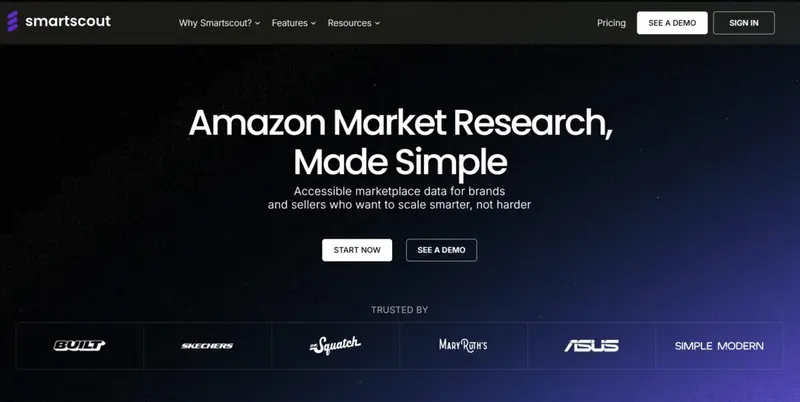
SmartScout works best for online arbitrage sellers who want to move faster than tab-hopping and gut checks. Its Chrome extension is built for the exact moment OA decisions happen: you’re on a product page and need to know whether it’s worth buying, whether the Buy Box is stable, and whether the offer environment is getting worse. You can jump straight into profitability math with a detailed cost stack, then sanity-check risk signals through built-in history charts that surface price movement, Buy Box behavior, offer count shifts, rating trends, and category rank patterns.
Read More
2. ProfitPath
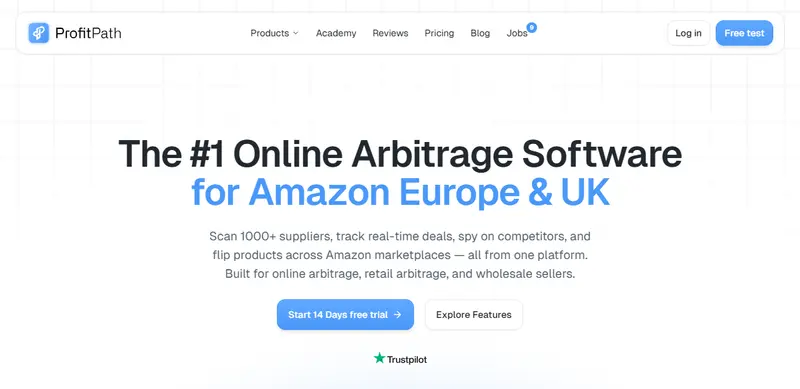
Online arbitrage doesn’t break at checkout; it breaks at sourcing. ProfitPath is built around that reality, using a massive data pipeline that processes over 200 million products daily to surface deals before they get saturated.
Instead of relying on manual storefront checks or fragmented tools, ProfitPath continuously scans hundreds of suppliers and marketplaces to identify pricing gaps in real time.
Where it separates itself is in how it turns data into strategy. Its Supplier Search and Amazon-to-Amazon (A2A) modules uncover cross-marketplace arbitrage opportunities, while Spy Search lets you reverse-engineer competitor sourcing patterns.
That means you’re not just reacting to deals, you’re identifying repeatable buying strategies based on what’s already working in the market.
Read More3. Sellerboard
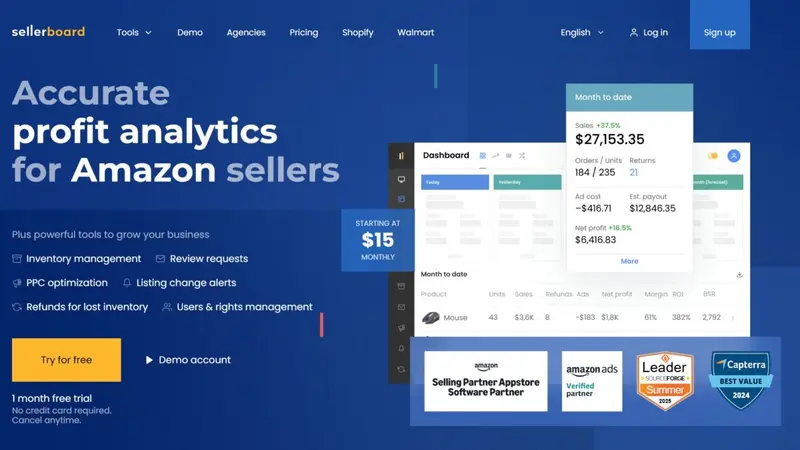
Arbitrage lives or dies on penny-level accuracy. sellerboard’s strength is razor-accurate profit analytics that factor 100+ Amazon fees and shifting COGS by batch, period, or marketplace. That means you can vet flips and replenish winners with confidence instead of guessing margin after the payout hits.
Inside the real-time profit dashboard, you see sales, units, refunds, ad spend, FBA/FBM shipping, Amazon fees, gross and net profit—down to the product and order. The returns analytics section breaks out refundable vs. non-refundable fees, refund commissions, and lost COGS for unsellable returns, so you stop bleeding on problem SKUs. A trend dashboard surfaces KPI movements early (impressions, conversion rate, profitability), helping arbitrage sellers catch seasonality and price pressure fast.
Read More4. PriceBlink
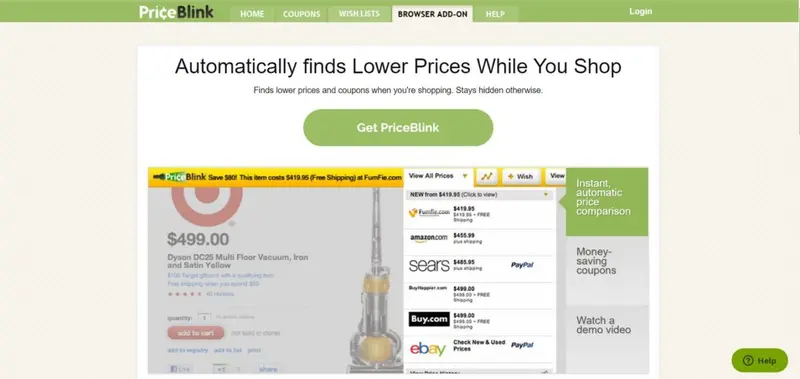
PriceBlink is a browser add-on that lets you find the lowest prices and coupons, allowing you to save. It works by scanning over 4 thousand merchants to find deals with the best prices. You’d also have access to alerts for free shipping and discount coupons.
5. Rakuten

Rakuten is a discount site that offers a downloadable browser extension and makes comparing prices more convenient. It works on a commission structure, where stores allow customers, through Rakuten, to obtain discounts in the form of cash back, whether through PayPal or check.
This is great if you’re looking to browse for lower-priced items that you can add to your Amazon store and sell for a profit. With Rakuten, you’d be able to compare cash back rates on the search engine that you’re using, whether it’s Google, Yahoo, or Bing.
6. Tactical Arbitrage

Tactical Arbitrage is an Amazon arbitrage software that’s easy to use and offers plenty of robust features. It makes online arbitrage more accessible by enabling users to search up to 1 thousand stores and their respective categories to compare rates and find products to sell.
It also has added features that let you filter products, so you can optimize your search for items that perform well. Other features let you conduct a wholesale search, examine multiple data points, and do a reverse lookup. Tactical Arbitrage also offers dynamic data analysis and provides you with a product’s historical Buy Box price and sales rank data.
Read More7. IP Alert

Intellectual property infringements is a serious issue faced by new and experienced sellers. IP complaints can lead to the suspension of a seller’s account. IP Alert notifies you if you’re browsing a page for a brand that has filed an intellectual property complaint.
It’s currently offered as a browser extension and has two payment options available: $99 for annual protection and $199 for the lifetime version.
8. BuyBotPro
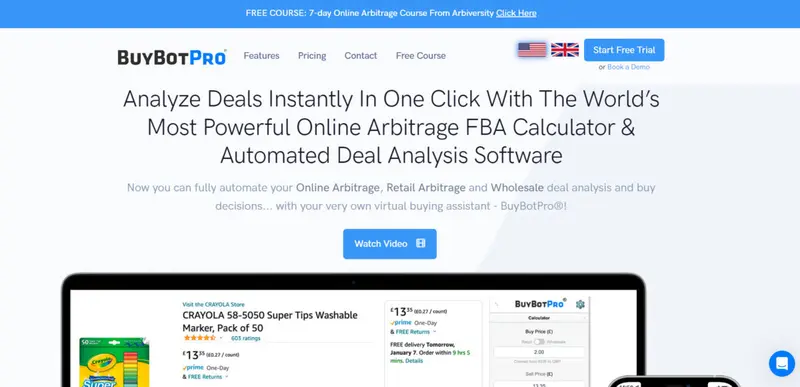
BuyBotPro is a software that acts as a virtual buying assistant. It’s a versatile and feature-rich tool that fully automates online arbitrage, retail arbitrage, and wholesale deal analysis. Its other features include:
- An ROI and profit checker
- A BSR checker
- Competition analyzer
- IP radar
- VAT calculator
- Profit margin auto-calculator
It also has a mobile app version that lets you conduct online arbitrage even when you’re on the go. The app is capable of conducting a fast barcode scan and search and can offer rapid full analysis to help you make more informed decisions.
BuyBotPro offers two paid plans: BuyBotPro without Suspension Safeguard for $39.95 per month and BuyBotPro with Suspension Safeguard for $54.95 per month.
9. RevSeller
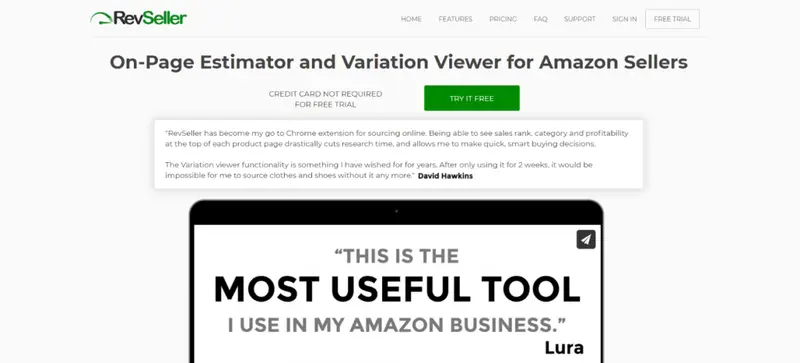
RevSeller is a Chrome extension that’s designed to help you make faster and more informed decisions. It showcases an on-page, real-time calculator and lets you see ROI and profit margins. With it, you’d also be able to access the number of FBA and MFN sellers, allowing you to take stock of your competition and see if the market is promising or saturated.
You can try it for free for 30 days. After the trial, the tool requires an annual subscription fee of $99.99.
10. Keepa
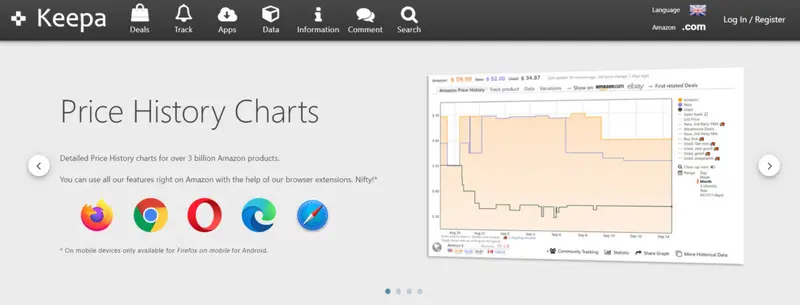
It lets you access Amazon’s bestseller and top seller lists, as well as track any increase in price by setting up alerts. To fully enjoy Keepa’s Data features, you need to subscribe monthly for 19€ (approx. $21).
11. SourceMogul
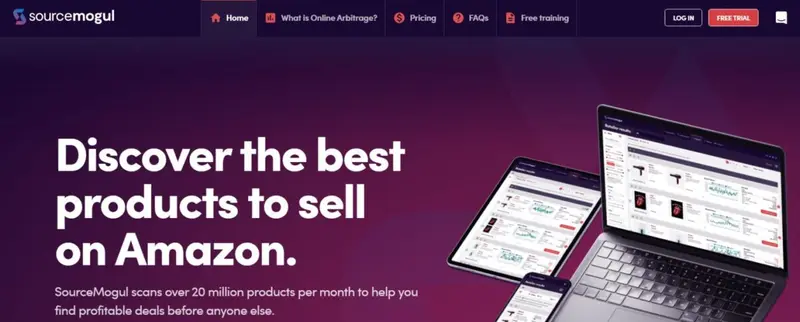
SourceMogul makes it easy for entrepreneurs to find the products that they want to sell. It’s basically a specialized search engine for online arbitrage on Amazon that regularly scans over 20 million products so you can get the best and most profitable deals first. It also provides you with real-time analysis of a product’s sales performance and rank on Amazon.
Moreover, you can add coupon codes and shipping fees to your searches so you can get accurate profit calculations. If you have a lot of products in mind, you’d find its wish list feature useful. This functionality lets you add the products that you want so you can check on their availability regularly.
Read MoreWhat is Online Arbitrage?
To get a better understanding of what online arbitrage is, let’s look at its predecessor, which is retail arbitrage.
Retail arbitrage is a relatively simple concept that involves purchasing a product from a retail outlet at a relatively low price then “flipping” it or selling it to a new marketplace for a profit. This can be a viable business model for entrepreneurs because:
✅ There’s a lower cost of entry.
✅ It doesn’t require suppliers or manufacturers.
✅ There are no production lead time concerns.
With the rise of e-commerce, the practice of arbitrage has transitioned online. Retail arbitrage now entails finding relatively low-priced items from brick-and-mortar establishments and reselling them for a profit online.
In many cases, retail and online arbitrage share some similarities, particularly when it comes to basic business rules and processes. Their greatest difference lies in their scale and execution. In online arbitrage, you’ll:
- Look for a product that you can purchase for a lower price than how much it’s offered for on Amazon or on other online marketplaces
- Purchase it from a supplier and have it delivered to an FBA warehouse—you can sign up for the Amazon FBA program, which doesn’t require any special license
- Add the product to your listing and mark up its price to get a healthy profit margin.
Amazon FBA and How It Can Help You Grow

When it comes to online arbitrage, Amazon FBA is an invaluable asset. Fulfillment by Amazon (FBA) saves you time while helping you grow your business. With it, you’d be free to focus on other aspects of your business, as Amazon would take care of storing, packing, and shipping your orders. Additionally, Amazon FBA also handles customer service, as well as returns and exchanges of your products.
Amazon FBA also enables first-time users to scale their business through free sponsored ads (up to $200), promotional clicks, and discounts on their shipments to Amazon’s fulfillment centers. New users are also eligible for free monthly storage (90 days) and removals (180 days).
The Benefits of Online Arbitrage
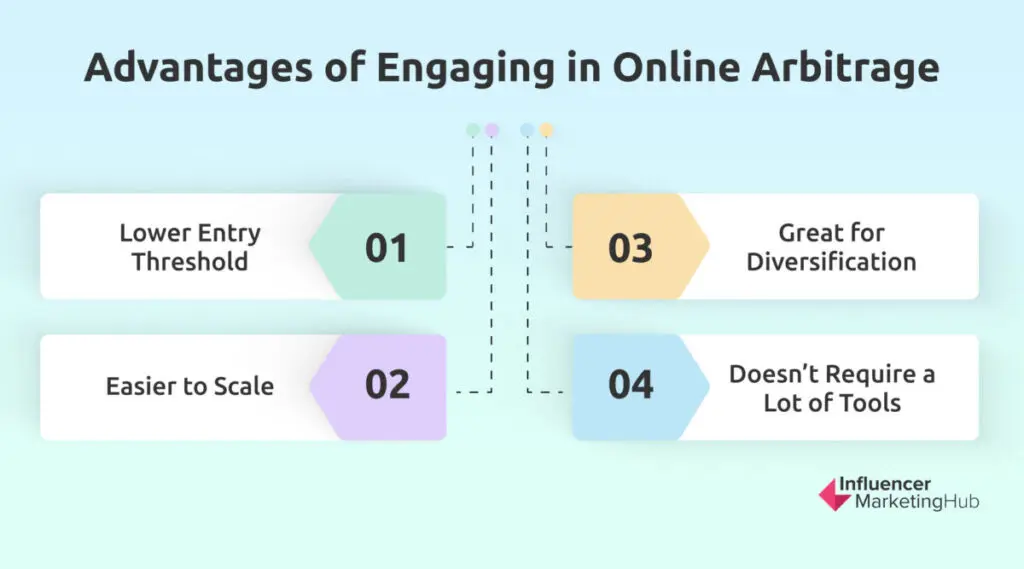
Lower Entry Threshold
As previously mentioned, online arbitrage has a lower entry threshold. This means it’s more accessible compared to other business models. You’d get to devote a bulk of your capital to your products and their procurement. You can start with a relatively small capital. Some entrepreneurs on Amazon started their business with only $500.
Easier to Scale
With Amazon FBA and other tools, it’s much easier to scale online arbitrage. There would be no need for you to manually scour marketplaces, sellers, or suppliers. You can order as much inventory as you want without having to worry about storage and logistics.
Great for Diversification
Online arbitrage gives entrepreneurs enough room for diversification. For example, if you make a product selection error, it will only affect a small part of your business.
Doesn’t Require a Lot of Tools or Hardware
Online arbitrage makes it relatively easier for you to start selling. Plus, you won’t need a lot of things to get started. 36% of sellers were able to launch their business in less than 6 weeks, while 68% were able to set up and run their business within 3 months.
There’s also no need for you to purchase new hardware. If you have a computer or a laptop, an Amazon seller account, seed money, and an internet connection, you’re pretty much good to go.
Online Arbitrage Tools You Can Use
There are several types of online arbitrage tools:
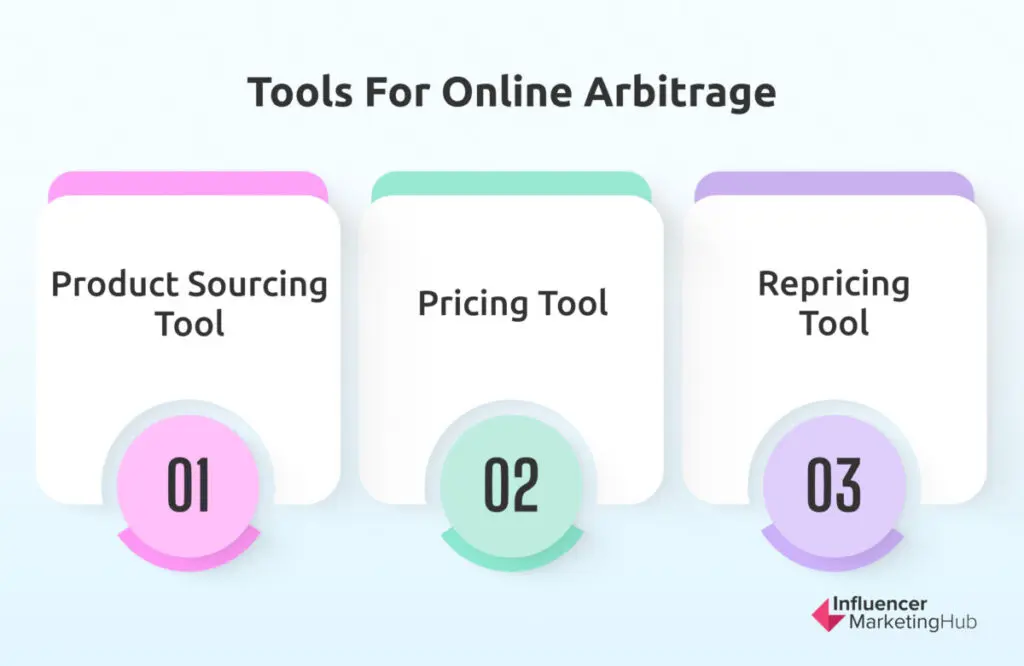
Product Sourcing Tool
You can go with a product sourcing tool if you’re searching for products to sell. This type of online arbitrage tool scans suppliers and marketplaces to help you find the right products for your business. Product sourcing tools are also equipped with filters that enable you to optimize your search. You can search for products based on price, demand, profit margin, and more.
Pricing Tool
Pricing tools can help you determine a product’s profitability and whether or not your competitors are selling similar products. Pricing tools are also great to have if you’re looking for a viable product niche.
Repricing Tool
How do you determine a product’s resale price? Repricing tools enable you to automatically reprice your items. They allow you to adjust their parameters so you can keep up with price fluctuations and your competitors’ rates.
Benefits of Using Online Arbitrage Tools
While online arbitrage tools are not absolutely necessary and you can still run your Amazon business without using them, they do offer a number of benefits.
Strengthening Competitive Edge
Keeping up with the competition can get tricky, especially if they’re already using online arbitrage tools. You can optimize your searches better and find out which product has the most potential. Online arbitrage software can also help you search for better or more profitable niches.
Moreover, given that online arbitrage has a relatively lower cost of entry, it’s no surprise that you’ll end up having a lot of competitors. With online arbitrage tools, you’d be able to find and list your products quickly, giving you an advantage over the competition.
By utilizing online arbitrage tools, you can automate some of your tasks, get accurate insights, make informed purchase decisions, and, as a result, scale up your business faster.
Saving Time and Money
Many online arbitrage tools can provide you with solutions or analytics quickly. They can also reduce the time you have to spend searching for the right product to sell. Moreover, you’ll be spared the steep costs that come with trial and error when purchasing products. By having access to reliable real-time data, you’d be able to buy products that you can sell quickly at a profit with little to no risks.
Factors to Consider in Starting Online Arbitrage
There are a few things you need to know before adopting online arbitrage for your business. These include:
Costs
You need to factor in all relevant costs before getting started on online arbitrage, such as your initial investment (capital for inventory), Amazon fees, shipping costs, and the item’s selling price on your preferred marketplace.
Buying criteria
While it may be tempting to source each affordable product you see, it helps if you set a buying criteria so you can narrow down your product options. Consider the categories you want to explore. Make sure that these are profitable categories. Check their sales ranking on Amazon and use online arbitrage tools to determine the profit margin and the minimum price point.
Beginning Online Arbitrage for Your Amazon Business
If you’re ready to begin your Amazon online arbitrage journey, here’s what you need to do in a nutshell:
1. Create an Amazon Seller account by going to the Amazon Seller Central page and registering. From there, you can choose if you’d like to open an Individual seller account or a Professional account. Note that these come with a respective fee, which is $0.99 per unit sold (Individual) and $39.99 per month for the Professional plan.
2. Download the Amazon Seller app. This is a helpful tool if you’re looking for products to sell. It has a barcode scanning and an identification capability that lets you know how much a certain product costs on Amazon. The app also reflects the corresponding selling fees for your selected item.
3. While you can always conduct your product research online, you also have the option to visit your local brick-and-mortar retail stores to source your items. You can shop around for deals from stores, such as:
- Target
- Walmart
- Sam’s Club
- Home Depot
- Costco
- Bed Bath and Beyond
- Lowe’s
You can use the Amazon Seller app while you’re visiting your local retailers to scan products that are on sale or clearance.
- Identify products that have a good potential for turning a profit. You can use online arbitrage tools to help you determine which products have a good profit potential. You must set a minimum profit threshold and proceed to calculate your potential ROI.
- Once you’ve laid the groundwork, you can begin listing your products and selling them on Amazon. Again, you can use online arbitrage tools, such as Helium 10, to help optimize your listings and to enable you to track your product’s performance, as well as your competitors’ prices.
Final Thoughts
The Amazon Marketplace is continuously expanding. This, in turn, leads to more earning opportunities for entrepreneurs. Whether you’re a beginner or a seasoned e-commerce seller, online arbitrage is a great way for you to gain selling experience on Amazon. When partnered with Amazon FBA and online arbitrage tools, it becomes a more viable business model that can help you scale your business within a relatively shorter amount of time.