
Luxury social media marketing requires more than polished product photography and recognizable faces. The strongest campaigns give audiences a reason to stop, participate, share, and remember the product long after the first impression.
The examples below show how luxury brands use creator partnerships, cinematic storytelling, community participation, paid media, and bold creative concepts to build attention without losing their premium positioning.
Our standout campaign comes from Heaven Mayhem, whose founder-led Icon Watch launch introduced a category that represented 20% of the brand’s sales about a year later. As you explore each example, consider which campaign mechanics best fit your audience, objectives, available platforms, and budget.
- 1. Standout Campaign: Heaven Mayhem’s Icon Watch Launch Turned a New Category Into 20% of Sales
- 2. Gucci's #GucciGram: Where High Fashion Meets High Art (and the Internet Loved It)
- 3. Chanel’s Iconic Handbag Campaign: A Cinematic Masterclass in Luxury Marketing
- 4. Dior's 'Rouge Dior' Campaign: A Red Carpet-Worthy Social Media Success
- 5. Burberry’s 'London in Love' Campaign: Romance, Weather, and Viral Magic
- 6. Clash de Cartier: Luxury Meets Rebellion in a Social Media Revolution
- 7. Fendi’s AI-Driven Fashion Revolution: When Luxury Meets Smarter Shopping
- 8. Balenciaga’s Shockvertising: When Controversy Turns into Conversation
- The Power of Creativity in Luxury Marketing – Seven Campaigns That Redefined the Game
- Frequently Asked Questions
1. Standout Campaign: Heaven Mayhem’s Icon Watch Launch Turned a New Category Into 20% of Sales
Heaven Mayhem had already built an audience around vintage-inspired statement jewelry. The next challenge was convincing that audience to see the brand as a destination for more than earrings and necklaces.
For its first watch launch back in July 2024, Heaven Mayhem avoided the predictable product-reveal format. Founder and Creative Director Pia Mance teased a “secret category” for several months, gradually releasing clues and inviting followers to join a guessing game through Instagram Stories.
The eventual reveal centered on the Icon Watch, a gold-plated rectangular timepiece with four interchangeable straps. Each strap drew inspiration from a recognizable style icon, including Marilyn Monroe, Princess Diana, Grace Kelly, and Carla Bruni.
Versatility shaped the campaign creative. Instead of showing the watch exclusively on the wrist, the campaign styled its straps as belts, waist chains, and anklets. Tabatha Turner styled the Australian shoot, while Jamie Heath handled the photography.
This gave Heaven Mayhem more content angles from one product while reinforcing the idea that the watch could change with the wearer’s outfit. It also made the launch feel native to social media, where an unexpected styling idea often travels further than a standard product image.
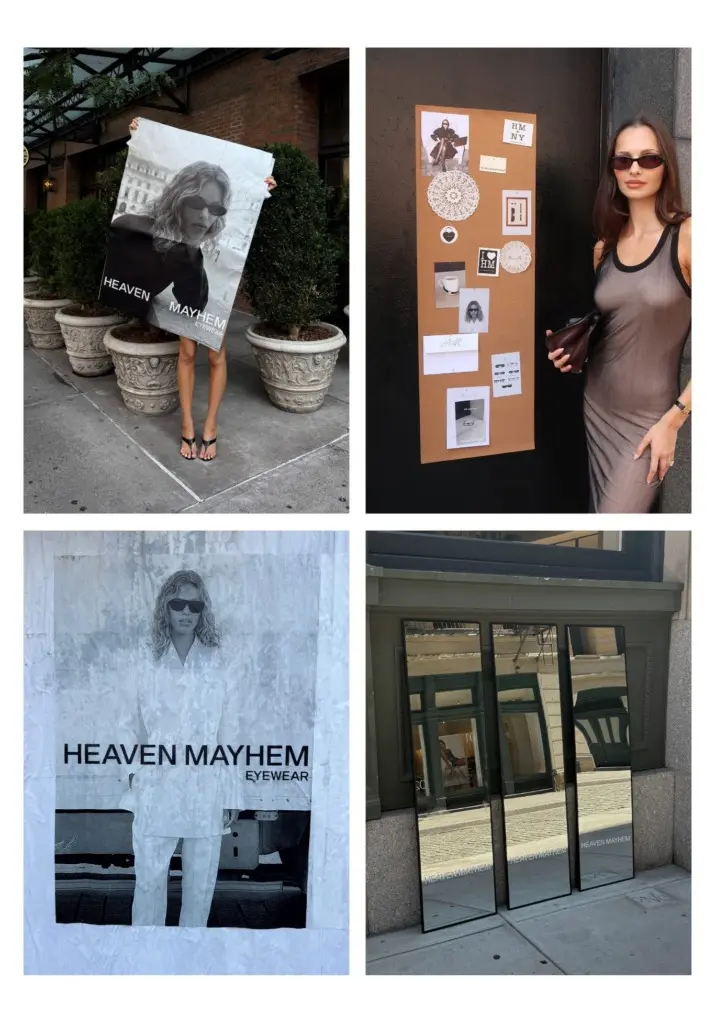
The Instagram rollout was supported by “Heaven Mayhem Worldwide” paste-up posters across Sydney, Los Angeles, New York, and London. Editorial coverage added another layer of credibility, including a WWD exclusive and a Who What Wear feature in which editors tested the watch as part of their regular wardrobes.

- Source: Pia Mance Substack
Results & Analysis
The brand has not released impressions, engagement rates, or campaign-attributed conversion data. However, its reported sales mix shows that the category gained meaningful traction:
- Watches represented 20% of Heaven Mayhem’s sales by August 2025, approximately one year after the launch.
- Heaven Mayhem grew into a US$10 million-plus accessories business by late 2025, although that wider growth cannot be credited solely to the watch campaign.
- The launch generated earned editorial exposure, including coverage and product testing from major fashion publications.
- The watch became Heaven Mayhem’s second-largest reported product category after earrings, which accounted for 50% of sales.
The strongest part of the campaign was its sequencing. Heaven Mayhem built curiosity before showing the product, gave followers a role in the reveal, and then stretched the launch across social content, unconventional styling, outdoor placements, and editorial validation.
Key Takeaway
When introducing a new luxury product category, make the reveal a process rather than a single post. Use teasers to build curiosity, invite the audience to participate, and develop several styling stories around the same product. This can make a category expansion feel like a natural evolution of the brand rather than an unrelated sales push.
2. Gucci's #GucciGram: Where High Fashion Meets High Art (and the Internet Loved It)
Gucci's #GucciGram campaign wasn't just a collection of pretty pictures—it was a bold intersection of high fashion and art, a spectacle that grabbed attention and held it. By inviting both established and emerging artists to reinterpret its iconic designs, Gucci created a campaign that was not only visually stunning but intellectually engaging. It wasn't about just promoting luxury; it was about pushing cultural boundaries.
What really set this campaign apart was Gucci’s innovative approach to influencer partnerships. Rather than relying solely on fashion influencers, the brand collaborated with artists like Ryder Ripps and Kamilla Filippi, turning its clothing into a canvas for modern art.
The campaign quickly became more than just a series of Instagram posts—it sparked a conversation about the role of fashion in contemporary art. And for those who might have thought it was just another influencer collaboration, the integration of micro-influencers and artists ensured that the campaign felt both exclusive and accessible.
As we move from Gucci’s art-meets-fashion revolution, let’s shift gears into another campaign that skillfully blended high culture with something equally captivating—Hollywood stardom. That’s where Chanel’s Iconic Handbag campaign enters the scene.
3. Chanel’s Iconic Handbag Campaign: A Cinematic Masterclass in Luxury Marketing
In Chanel's case, luxury met nostalgia with their Iconic Handbag campaign. Like Gucci, Chanel leveraged star power—this time, Brad Pitt and Penélope Cruz— to create a campaign that didn't just sell a handbag; it sold an experience rooted in the magic of classic cinema. It wasn’t about presenting the product in the typical fashion-forward way; instead, it was about weaving a cinematic narrative that evoked a sense of timeless elegance.
The campaign's use of Hollywood legends did more than just create buzz—it brought an immediate sense of prestige, making the handbag feel like an icon in itself. But the real brilliance came in how Chanel paid homage to its deep ties with cinema.
Inspired by A Man and A Woman (1966), the campaign recreated the film’s most intimate moments, with Penélope Cruz and Brad Pitt stepping into the roles of lovers caught in a fleeting, yet electric, connection.
The iconic handbag wasn’t just a fashion statement—it became part of the story, a symbol of longing, elegance, and quiet confidence. Chanel didn’t just sell a product; they turned it into a narrative device, something that carries not just essentials, but emotions, history, and personal reinvention.
Much like Gucci, Chanel’s campaign wasn’t just seen—it was felt, reaching deep into the cultural zeitgeist. But, speaking of campaigns that merge high fashion with personal interpretation, Dior’s Rouge Dior campaign brought a similar sense of power through beauty, blending celebrity influence with authentic storytelling.
4. Dior's 'Rouge Dior' Campaign: A Red Carpet-Worthy Social Media Success
Where Chanel evoked cinematic nostalgia, Dior took the classic allure of red lipstick and gave it a fresh, modern spin in their Rouge Dior campaign. The star-studded cast, including Yara Shahidi, Rachel Zegler, and Anya Taylor-Joy, embodied a sense of empowerment that resonated deeply with Dior’s audience. The campaign wasn't just about promoting a product—it was about showcasing the strength and significance of wearing that iconic red.
@daniellemarcan the @Dior beauty Rouge Dior iconic shades come in a new packaging with a new formula and finishes. i love the closing sound 🖤_🖤 #makeup #beauty #rougedior #diorbeautylovers ♬ original sound - DANIELLE
What made this campaign truly resonate was its personal connection. Each influencer didn’t just wear the lipstick—they told their own stories. For example, Shahidi shared her personal connection with the color red, while Zegler explored the emotional depth it represents. This was more than just makeup—it was a declaration. And it wasn't just the A-list celebrities who drove engagement. the campaign sparked a wave of conversation that spread across social media. The buzz was impossible to ignore—Dior had successfully transformed a single product into a cultural statement, proving that the right shade of red could be more than just makeup; it could be a movement.
Dior proved once again that when luxury blends with authenticity, it creates a powerful impact. But moving from beauty to fashion, let’s now take a look at how Burberry tapped into its own brand of timeless elegance, mixing it with a little romance for a campaign that captured hearts—and feeds—across the globe.
5. Burberry’s 'London in Love' Campaign: Romance, Weather, and Viral Magic
Burberry’s 'London in Love' campaign brought an unmistakable blend of British charm, romance, and nostalgia. Much like Dior, Burberry invited familiar faces—Naomi Campbell, Kate Winslet, and Richard E. Grant—to embody its iconic trench coats and scarves, but this time, the focus was on capturing the essence of London itself.
It wasn't just about the clothes; it was about telling a love story with the city at the center, one that perfectly combined fashion with social media virality.
The real brilliance of Burberry’s campaign, however, was its balance of star power and relatable, everyday moments. While Naomi Campbell zoomed around on a scooter, fans across the world were able to join in, showing off how they wore Burberry through the #ItsAlwaysBurberryWeather hashtag.
The brand managed to create an experience that felt both exclusive and universally relatable, leading to widespread user-generated content.
Burberry's celebration of both tradition and modernity ties beautifully into a brand like Cartier, which took a more rebellious approach to luxury in its Clash de Cartier campaign. Let’s dive into how Cartier’s bold choice pushed the envelope in the world of luxury jewelry.
6. Clash de Cartier: Luxury Meets Rebellion in a Social Media Revolution
Cartier's Clash de Cartier campaign wasn't just about jewelry—it was about creating a new kind of luxury. Much like Burberry, which embraced nostalgia, Cartier took a bold step into rebellion, injecting its classic luxury with modern, edgy elements. The campaign's star, Lily Collins, was the perfect embodiment of this juxtaposition: chic and punk in equal measure.
Clash de Cartier shines twice as brightly with a double central row of studs. #ClashdeCartier https://t.co/j3JHXlMXBy pic.twitter.com/4Rq2RQeoQz
— Cartier (@Cartier) May 15, 2023
The campaign’s success didn’t just come from the star power but from its innovative use of micro-influencers within the fashion and punk subcultures, helping Cartier reach a younger audience that values self-expression over aristocratic exclusivity.
The success of the campaign, propelled by its duality theme, proved the power of social media engagement. Influencers and fans alike flooded TikTok and Instagram with videos that showcased how Cartier’s luxury could seamlessly transition from day to night.
Cartier's campaign didn’t just resonate with fans—it sparked a cultural conversation about the evolution of luxury, much like how Fendi took another giant leap forward with AI-driven marketing in their Meta Advantage+ Shopping campaign.
7. Fendi’s AI-Driven Fashion Revolution: When Luxury Meets Smarter Shopping
Fendi’s Meta Advantage+ Shopping campaign blended the traditional with the futuristic. While Cartier looked to push boundaries within fashion, Fendi pushed the limits of technology to redefine how luxury marketing could be done in the modern age. By harnessing the power of Meta’s AI, Fendi not only reached consumers with precision but also increased purchases and optimized ad placement in ways that other luxury brands hadn’t done before.
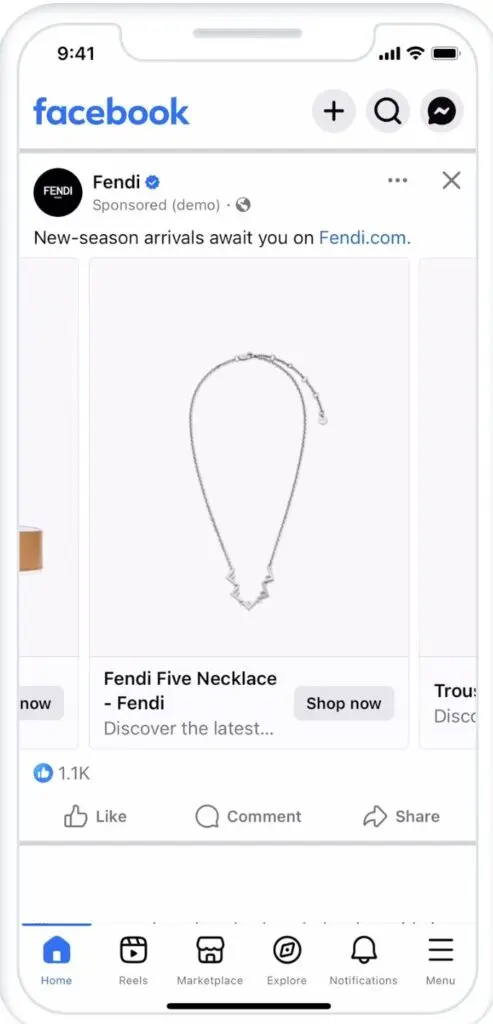
This wasn’t just about showcasing products—it was about creating a personalized shopping experience that felt exclusive to each consumer. Much like how Gucci's #GucciGram used art to provoke thought, Fendi’s integration of AI changed the way people engaged with luxury online, creating an entirely new form of consumer interaction.
As we transition from AI-driven precision to the unexpected, let’s now look at Balenciaga’s daring dive into shockvertising. No campaign has blurred the lines between controversy and marketing quite like this one.
8. Balenciaga’s Shockvertising: When Controversy Turns into Conversation
Balenciaga's latest campaign exemplifies the power of shockvertising—using controversy to spark a conversation and fuel viral success. While Gucci, Chanel, and Fendi leveraged art, cinema, and AI to create polished, engaging campaigns, Balenciaga threw caution to the wind by presenting unsettling imagery that generated an immediate reaction.
The backlash was swift and intense, but that only fueled the conversation, with Kim Kardashian adding to the drama by publicly defending the campaign.
Balenciaga's foray into controversial marketing didn’t just get people talking—it forced them to confront uncomfortable issues. The campaign’s ability to stay in the public conversation, despite the backlash, is a testament to how well controversy can serve as a viral strategy.
Whether you agree or disagree with the campaign, Balenciaga proved that in the world of luxury marketing, sometimes it’s the boldest moves that make the biggest impact.
The Power of Creativity in Luxury Marketing – Seven Campaigns That Redefined the Game
In today’s luxury marketing world, creativity is king. From Gucci’s art-infused #GucciGram to Balenciaga’s shocking campaign that had everyone talking, these seven brands have shown us that thinking outside the box—whether through influencer partnerships, AI tech, or even controversy—can drive both engagement and sales.
Each campaign tells a unique story, blending tradition with modernity, and proving that in the competitive world of luxury, it’s bold, innovative ideas that make the lasting impression. The key takeaway? Don’t be afraid to break the mold and embrace new, exciting ways to capture your audience’s attention.
Frequently Asked Questions
How can AI be used in luxury brand marketing?
AI is revolutionizing luxury marketing by helping brands craft hyper-personalized experiences for their customers. By analyzing large datasets, AI can uncover consumer insights and predict future actions, allowing brands to create tailored experiences at every touchpoint. These AI-driven experiences can include personalized content, product recommendations, and targeted social media campaigns that resonate deeply with the brand’s high-end clientele.
Which social media platforms are best for luxury brands?
When choosing the right platform, luxury brands typically prioritize those that align with their target demographic's behavior and interests. These platforms offer the highest potential for visual storytelling and exclusivity, which are central to luxury branding.
- Instagram: Best for visual content, brand storytelling, and influencer collaborations.
- Facebook: Strong for community engagement and brand visibility.
- TikTok: Rising platform for younger luxury consumers, focusing on viral, creative content.
- Pinterest: Ideal for showcasing aspirational, high-end products and lifestyle imagery.
How does personalization impact luxury brand marketing?
Personalization is crucial in luxury marketing, as it helps brands create an emotional connection with their customers. Through data-driven insights, luxury brands can tailor content, recommendations, and even pricing to the individual needs and desires of their clientele, enhancing the brand experience and fostering loyalty.
What makes a successful luxury brand social media campaign?
A successful campaign blends exclusivity, creativity, and emotional appeal. Brands need to maintain a balance between traditional elegance and modern, relatable content. Here are some of the core components that ensure success:
- Clear brand identity: Staying true to the brand’s values and aesthetics.
- Emotional storytelling: Evoking feelings that resonate with the audience.
- Influencer partnerships: Collaborating with influencers who share the brand’s luxurious image.
- Exclusive offers: Providing VIP access, invites, or early product releases.
How do luxury brands use influencers in social media campaigns?
Influencers are an essential part of luxury marketing, as they help convey the brand’s message to a larger, more targeted audience. Luxury brands often partner with influencers who align with their values and image to build credibility and trust. The influencer's content—be it styled photos, videos, or behind-the-scenes access—creates an aspirational connection with potential customers.
How can luxury brands measure the success of their social media campaigns?
Measuring success in luxury marketing goes beyond simple engagement rates. While metrics like likes and comments are valuable, it’s equally important to track qualitative results, such as customer sentiment and brand perception. Tools like Google Analytics, social media insights, and direct sales tracking can give luxury brands a comprehensive view of their campaign’s performance.


