One huge change from the pre-internet age is the vast quantity of information about you that is publicly accessible. Once something goes online, it is usually there forever. This makes it vital that you keep track of your online reputation and do what you can to minimize any harmful statements about you or your business. There are quite a few online reputation tools you can use to help you both understand your reputation and then to improve it, and minimize the dangers of more harmful references.
- 1. Brandwatch Consumer Intelligence
- 2. Brand24
- 3. ReputationStacker
- 4. YouScan
- 5. BuzzSumo
- 6. Private: Mention
- 7. Your Web Browser
- 8. Google Alerts
- 9. The Brand Grader
- 10. SimilarWeb
- 11. Socialmention.net
- 12. Review Push
- 13. Reputology
- 14. GatherUp
- 15. Reputation
- 16. BrandYourself
- 17. SentiOne
- 18. Meltwater
- 19. PromoRepublic
- When You Need Done-For-You Help: Hire a Reputation Management Agency
- Frequently Asked Questions
Online reputation management is the process you need to go through when you highlight positive items about you online, de-emphasize negative sentiment about you on the internet.
In some cases, online reputation management can take a considerable amount of effort. Luckily, there is a range of paid and free tools that can make your efforts easier.
The practices of online reputation management are the same, whether you are looking at your own name online, or whether you are focusing on your business reputation. As we recently discussed, personal branding is just as important online as corporate branding. Potential employers Google job candidates’ names to see what the internet can tell them.
And you might have parts of your past you would prefer to disappear. Even your social accounts may be a problem, particularly if you treated them too “socially” in your youth.
1. Brandwatch Consumer Intelligence
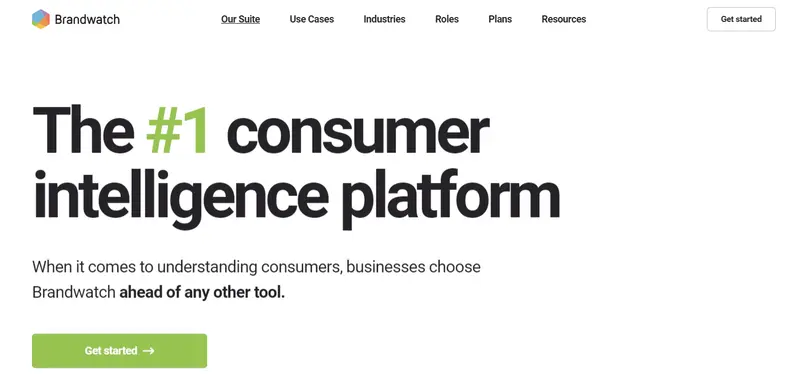
Although we classify Brandwatch as a social media marketing platform, it is, in reality, much more. It solves critical problems for brands who want to lead on social media. This includes keeping track of your firm’s reputation online, along with strategies to deal with any issues.
It features a customizable, intuitive interface. Brandwatch’s search, filtering, labeling, and tracking capabilities are also a highlight.
Read More
2. Brand24
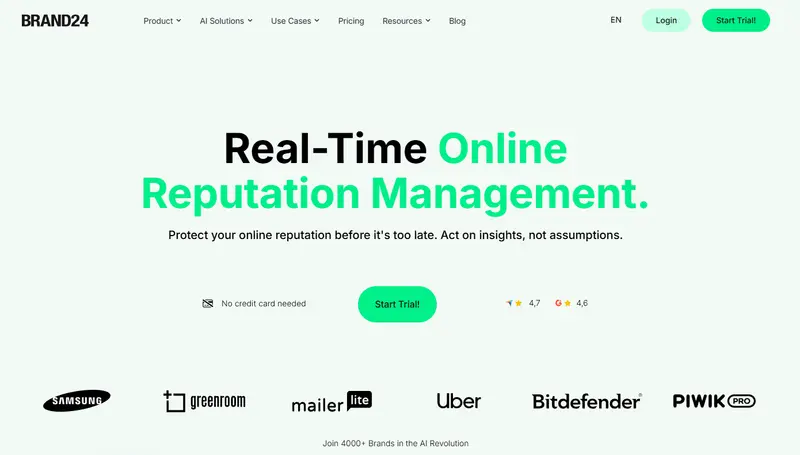
Brand24 is an AI-powered social listening platform built for proactive online reputation management. It helps brands find public conversations before they develop into larger opportunities or risks. Users can monitor company names, products, executives, campaigns, competitors, and other relevant keywords.
The platform gathers mentions from more than 25 million online sources. Coverage includes social media, news outlets, blogs, forums, review sites, newsletters, podcasts, and videos. This breadth helps teams find discussions that do not tag or link to the brand directly.
Real-time monitoring allows PR and communications teams to react quickly. Configurable notifications can be delivered through email, Slack, Microsoft Teams, mobile push notifications, or the Brand24 dashboard. Storm Alerts highlight unusual increases in mention volume or reach.
Read More
3. ReputationStacker
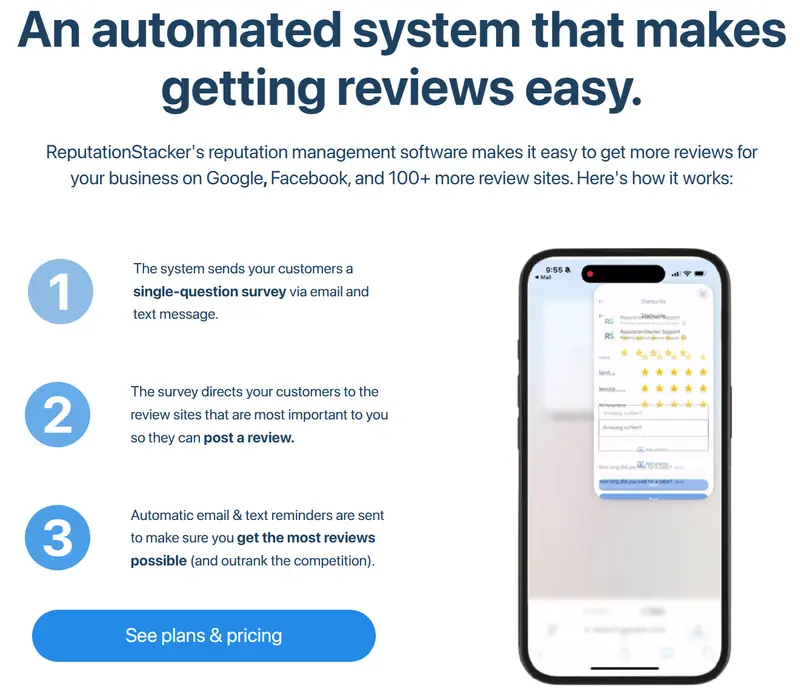
ReputationStacker is an online reputation management platform designed to help businesses generate more reviews, manage customer feedback, and improve their reputation across one or many locations. It automates review requests by email and SMS, monitors reviews across Google, Facebook, and 100+ major and industry-specific review sites, and brings reputation data into one centralized dashboard.
The platform goes beyond review generation by helping businesses understand what customers are saying and where improvements are needed. ReputationStacker combines review data and direct customer feedback with sentiment analysis and AI Insights that identify recurring themes, trends, complaints, and opportunities across large volumes of reviews and feedback. Teams can also use AI-generated review responses to reply faster while maintaining a natural, consistent brand voice.
Read More4. YouScan
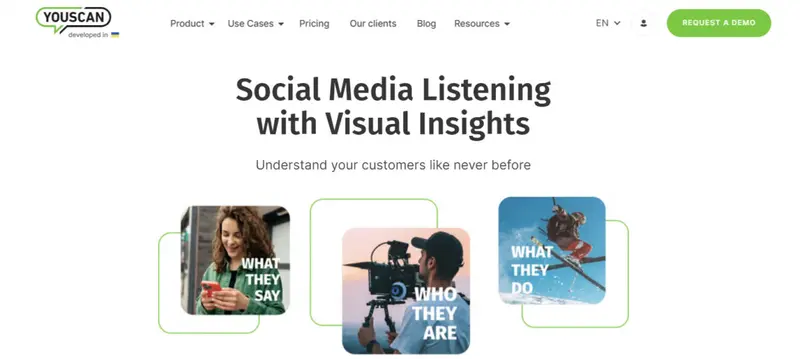
At its most basic, YouScan is a listening tool, able to scan social media and the rest of the web for brand mentions, and then analyze those mentions for its broader social impact. It finds billions of data points you can sift through, along with a host of ways to analyze that data. Its real gem is its image recognition features, which allows users to get remarkably specific in their visual searches.
Read More
5. BuzzSumo
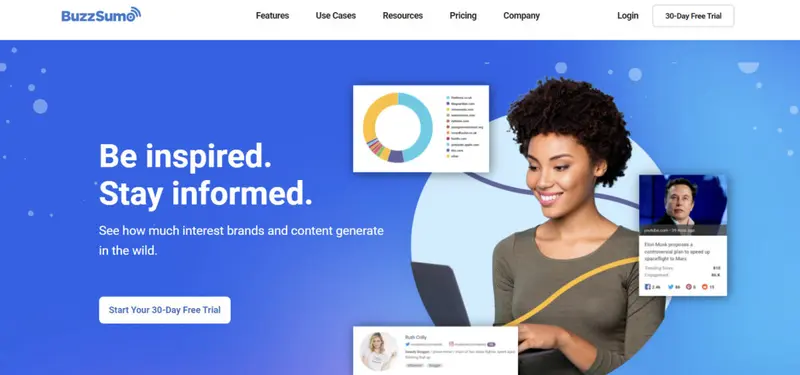
BuzzSumo takes a somewhat different take on things compared to the other tools in this list. It allows you to comb the web for any content that includes your search term. Its key distinction though, is including the amount of engagement associated with each search result.
You can perform searches using the following filters:
- Date
- B2B Publishers
- Country
- Language
- Domain
- Content-type
- Word count
- Publisher size
BuzzSumo provides engagement figures for Facebook, Twitter, Pinterest, and Reddit. It provides a total number of links each search result has received.
BuzzSumo provides a content analysis report. This show detailed graphs predominantly relating to engagement on articles about your topic of choice.
Read More
6. Private: Mention
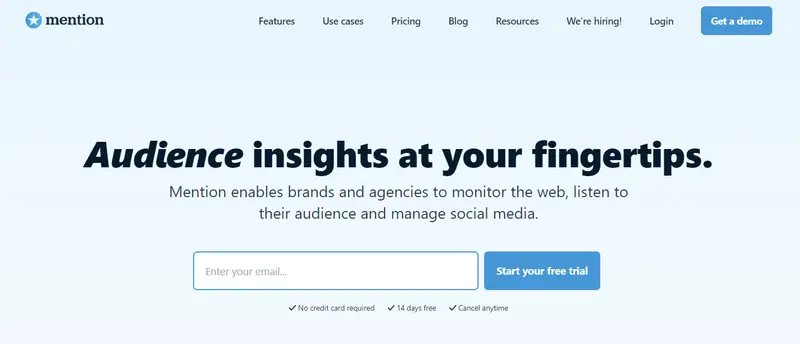
Mention allows brands to monitor social media and find any mentions of themselves in online conversations. You can easily monitor over 1 billion sources daily, including social media, forums, blogs, and the rest of the web. As with some of the other products here, you can use Boolean alerts to help you zero in on your brand, competitors, and customers for precise market research.
Read More
7. Your Web Browser
If you are actively wanting to improve your online management, then the first tool of defense is your web browser (Chrome, Firefox, Safari or whatever you prefer). Type in your name and look at the first few pages of the search results. The first page is the most important, though, as few people click through to the second or subsequent pages in a search.
It might be best if you carry out an incognito search, as sometimes the browsers have a habit of customizing your searches, which would give an untrue set of results for your name. It is essential that you don’t do a Google search while you are signed in as yourself or your company.
Read More8. Google Alerts
The internet is always changing. That means that somebody might post something that references you any day. You can set up a Google Alert for your name (either your personal name or your business).
Google will alert you with an email when it picks up a new mention of your name. This will make it easier for you to take action, should it not be complimentary.
9. The Brand Grader
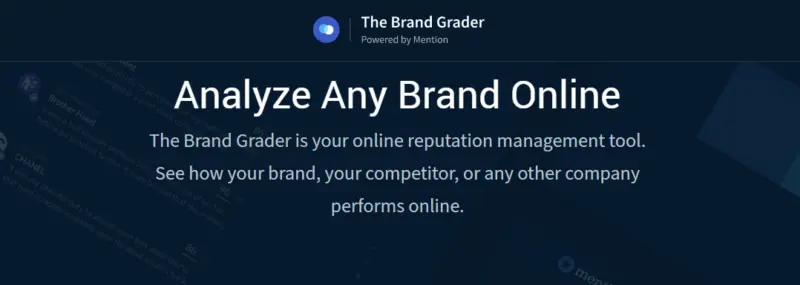
If you are checking out your business reputation, then The Brand Grader can provide you with useful information about how your brand performs online.
It is free and straightforward to use. All you have to do is to enter the name of your brand and provide an email account.
The Brand Grader sends you a report on your company. It provides a quick overview of the brand’s online presence. The report includes details from the last seven days relating to:
Read More10. SimilarWeb
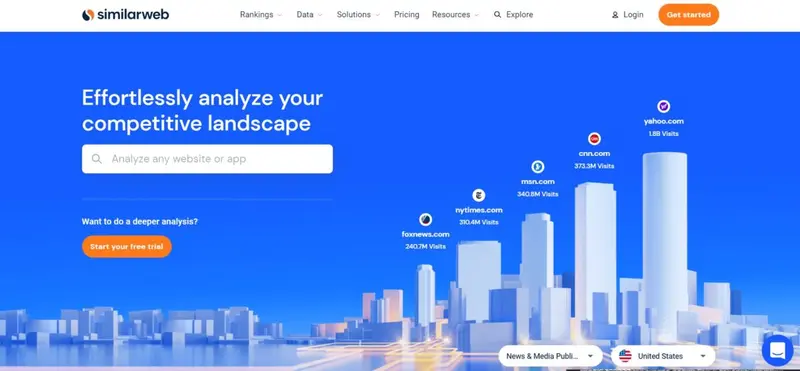
SimilarWeb provides a comprehensive analysis for any website or app. It gives you are a wealth of insights about your site – the main client face for most businesses.
It also provides you with information about your competitors’ sites. This gives you an easy way to compare your website with your competitors. It shows you insights into your industry, and these provide an indication of how well your brand is respected within your niche.
11. Socialmention.net
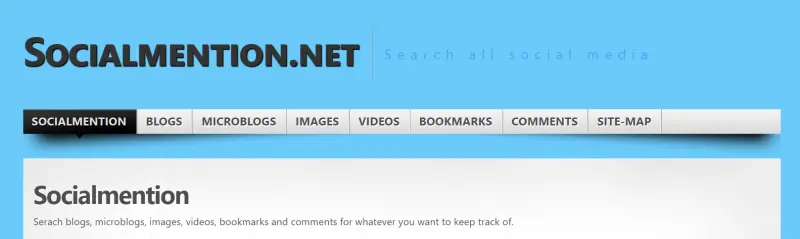
Socialmention.net monitors the web and picks up real-time social media search and analysis. You enter your brand name, select from Blogs, Microblogs, Bookmarks, Images, Videos, Questions, or All, and then press Search.
It brings up your mentions from the last day, with a guide to the sentiment of each mention. It also summarises the sentiment into positive, negative, and neutral mentions, as well as lists your top keywords, hashtags, users, and sources.
Socialmention.net gives overall stats about you, with scores for strength, sentiment, passion, and reach.
12. Review Push
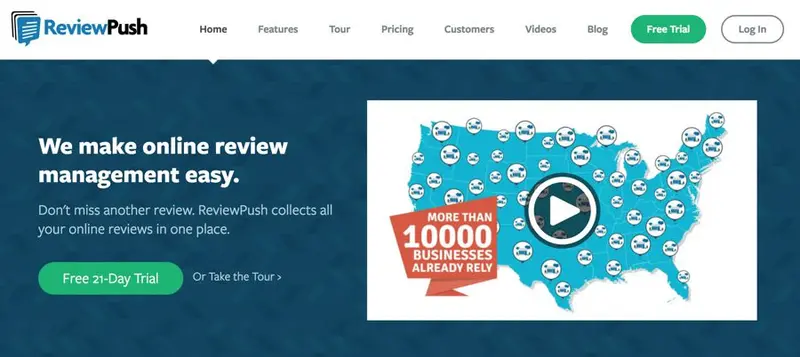
You can use Review Push to collect all your online reviews in one place. It offers multi-site monitoring and unlimited locations. This makes it particularly useful for firms with branches in different areas.
Also useful for multi-site businesses is the ability to compare how your stores rank against each other.
Whenever your business receives a new review, Review Push notifies you via email. The email gives you the option to respond to your online reviews.
13. Reputology
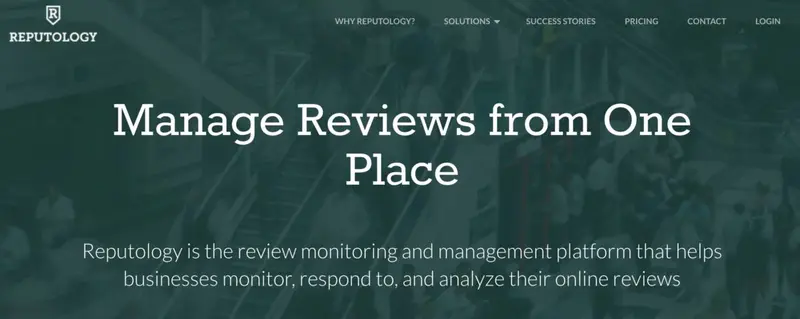
Reputology is a review monitoring and management platform that helps businesses monitor, respond to, and analyze online reviews.
It is a tool which both allows you to find reviews of your business and then respond in an appropriate way to any negative sentiment your find.
This is especially useful for businesses that rely on online reviews on Yelp, TripAdvisor, Facebook, and other major review sites.
Reputology is location specific, which is particularly important for firms who sell to a local market.
You can use Reputology to track reviews written about your locations, products, and services.
Read More14. GatherUp
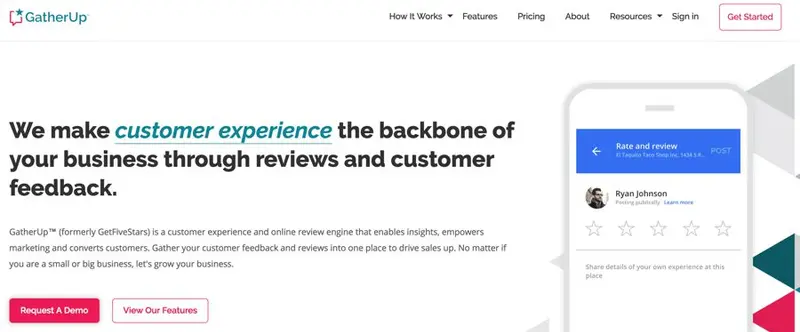
Any business that sells knows the value of five-star reviews. The more five-star reviews you have, the more trustworthy you look to potential customers.
That is all very well, but it can be challenging to encourage customers to leave reviews – no matter how excellent your service is.
Good businesses find it even harder to get reviews than lousy companies do. People are far more inclined to go online and complain than they are to compliment.
GatherUp used to blatantly go by the name GetFiveStars. The new name sound more ethical.
Read More15. Reputation
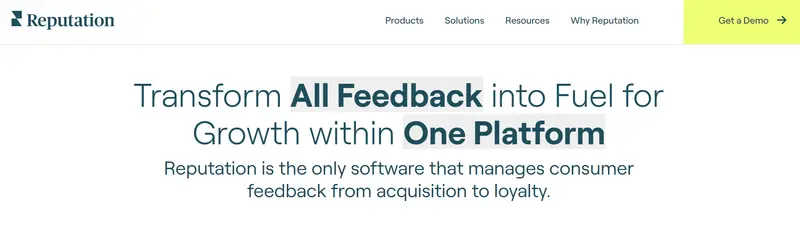
Reputation is an Online Reputation Management (ORM) tool, designed more for large businesses and enterprises. They help large enterprises monitor, manage, and maximize their online reputation through a comprehensive suite of solutions.
Their services include:
Read More16. BrandYourself
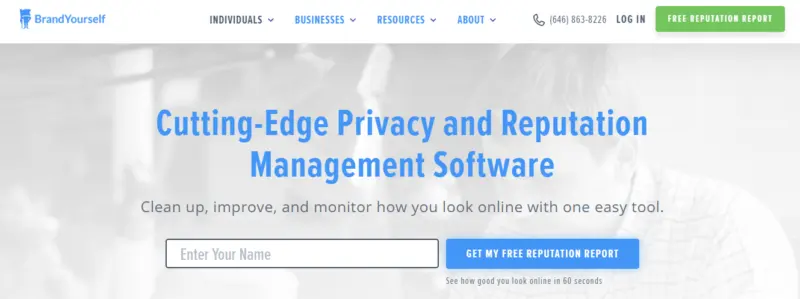
BrandYourself is online reputation management software for individuals and businesses. BrandYourself builds a free reputation report so you can see how you look online. It calculates your score, which will put you somewhere at a level between Very Poor and Excellent.
Your report explains to you how you can improve your Reputation Score. It also highlights your risk factors – flagged social results, flagged social posts, and flagged images. It also looks at your personal brand and the properties that affect that.
You can work through an action plan to improve your scores.
Read More17. SentiOne

Founded in 2011, SentiOne uses AI technology to help brands with customer service automation. It basically has two main platforms: Listen and Automate.
With the Listen platform, you can keep track of online conversations that are important to your brand helping you to take control of your brand’s online image. Trusted by brands like Nivea, you can use it to collect opinions from millions of sources, including Facebook, Twitter, YouTube, Instagram, blogs, Google Reviews, and TripAdvisor.
Read More18. Meltwater
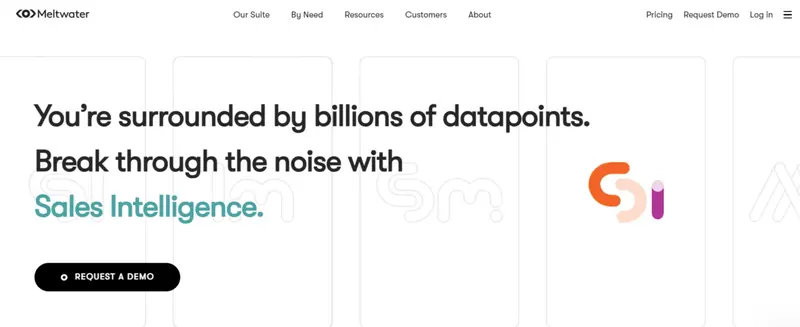
Founded in 2001, Meltwater was the world’s first online media monitoring tool. Fast-forward two decades and today they’re viewed as one of the top brand monitoring tools that can help you to manage your online reputation.
In short, Meltwater lets you monitor mentions of your brand, its campaigns (including linked hashtags), and executive team in real time across social media and news sites. When there’s a crisis, you’ll receive real-time notifications empowering you to respond as fast as possible to the situation.
Read More19. PromoRepublic
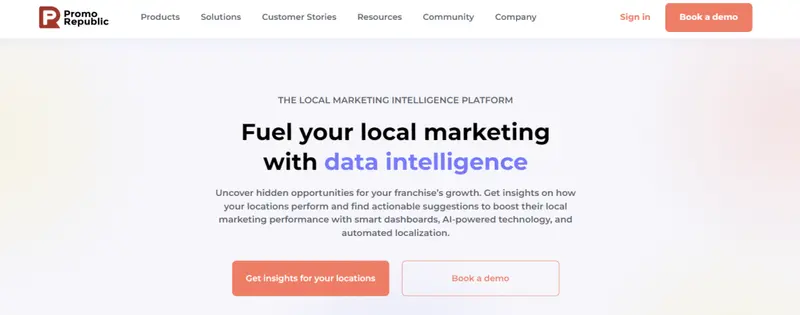
PromoRepublic is one of the top insight-driven marketing platforms. It makes it easier for users to manage their marketing and win local customers. With regards to online reputation management specifically, it can help you with various tasks.
Read MoreWhen You Need Done-For-You Help: Hire a Reputation Management Agency
While this guide focuses on tools, not every brand has the time, team, or expertise to manage online reputation in-house. Dashboards and alerts are powerful, but they still require someone on your side to interpret the data, prioritize risks, and actually fix what’s already hurting you in search results. That’s where done-for-you reputation management agencies come in – and Erase.com is a good example of how that support works in practice.
Erase.com is a dedicated online reputation management agency that steps in when the problems go beyond monitoring mentions. Instead of simply surfacing negative content, they focus on getting harmful items removed or minimized wherever possible. That includes things like fake or misleading reviews, damaging news articles, blog posts, images, social media content, and people-search listings that rank for your brand or key executives. Their team handles the research, outreach, and negotiation needed to address those links at the source, and then works on reshaping what appears on page one of search engines.
For brands and leaders in high-trust categories—finance, healthcare, legal, real estate, and local services in particular—this can be the difference between “we know there’s a problem” and “we’ve actually fixed it.” Tools will tell you when sentiment dips or a new negative thread appears; an agency like Erase.com takes the next step and actively works to remove harmful links and rebuild a more accurate, trust-building search profile, plus, they pay for their own tools.
They also combine content removal with longer-term reputation strategy. Once the most damaging results are handled, Erase.com helps brands strengthen their presence with more authoritative, positive assets: better-optimized websites, profiles, articles, and other content that reflect who you are now, not the worst chapter in your history. In that sense, they operate less like a software vendor and more like an extension of your marketing, PR, and legal teams.
If you’re already using several of the tools in this list but still see the same negative pages ranking for your brand, bringing in a specialist agency such as Erase.com can be a useful next step. The tools help you monitor and respond; the agency gives you extra muscle to remove or neutralize the issues that software alone can’t solve.
Frequently Asked Questions
What is a reputation management tool?
Reputation management software tools will assist your business in monitoring the web with reviews, brand awareness, and articles, among others. Your online image is so important, and reputation management software will help you maintain a strong and positive online perception.
What is the best reputation management software?
The best reputation management software for 2025 includes:
- Brandwatc
- Digimind
- Brand24
- YouScan
- BrandMentions
- BuzzSumo
- Mention
- Your Web Browser
- Google Alerts
- The Brand Grader
What is online reputation management tool?
Online reputation management tools are digital platforms that people can use to monitor what is being said about their brand. Online reputation management tools include monitoring through customer review portals, social networks, and online maps, among others.
What is an example of reputation management?
Reputation management PR will often include handling negative articles about a brand, responding to customer reviews, and influencer marketing to build positive brand awareness. Corporate brand management, reputation PR and communication.


![22 Social Media Monitoring Tools for 2025 [Tools to Monitor Brand Mentions]](https://s.influencermarketinghub.com/imaginary/resize?width=400&height=200&type=webp&url=https://influencermarketinghub.com/wp-content/uploads/2019/02/Social-Media-Monitoring-Tools.png)