
You can plan your social media content calendar to the second, quite literally. This, however, isn’t the case with social media crises. They usually pop up when you least expect them and when you’re the least prepared. And, if you’re thinking that you’re too small for causing a social media scene, that’s no defense. All companies, irrespective of their size, can find themselves in the middle of a controversy.
To help your social media team deal better with negative comments and upset customers, you can check out one of the following 12 social media crisis management tools. Many of these tools include some form of automation that will help you to get a headstart.
You’ll still need human intervention, but you’ll want to tackle online mentions that place you in a bad light as soon as possible before they snowball into an avalanche that can bring down your entire brand.
- Best Social Media Crisis Communication Tools
- 1. Brandwatch Social Media Management
- 2. Brand24
- 3. YouScan
- 4. Private: Mention
- 5. Hootsuite
- 6. Synthesio
- 7. Factal
- 8. Konnect Insights
- 9. Zendesk Support
- What Is Social Media Crisis Management?
- When a Social Media Crisis Becomes a Search Problem: Where Reputation Management Agencies Fit In
- How to Manage a Social Media Crisis
- Wrapping Things Up
Best Social Media Crisis Communication Tools
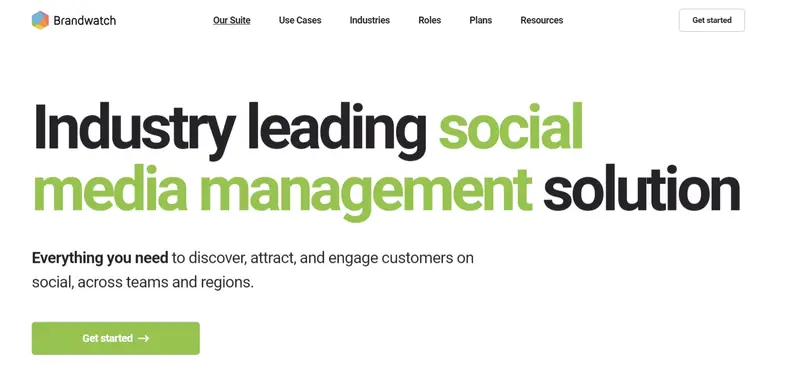
1. Brandwatch Social Media Management
Best for: Large enterprises, agencies, and marketers
Included in Brandwatch’s wide variety of use cases is crisis management. Not only will it help to ensure that you catch all important brand mentions, but it also provides the tools needed to deal with negative comments should they happen.
If there’s any unusual activity, you’ll be alerted and the relevant team member will automatically get notified. It takes it further by also empowering you to gauge sentiment. So, if there’s a negative vibe surrounding your name, you’ll pick it up.
Read More
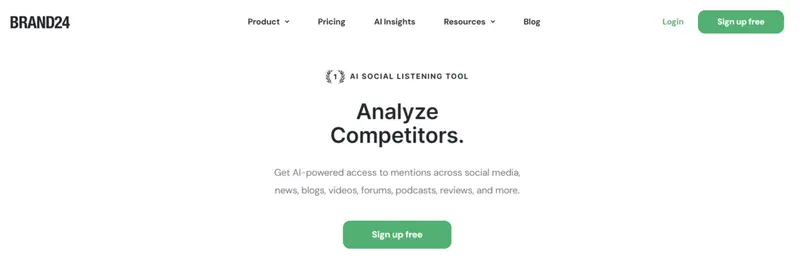
2. Brand24
Best for: Agencies, SMBs, and growing brands
Not to be confused with Brandwatch, Brand24 is another leading tool that you can use to track and engage with social media users interested in your brand. This AI-powered social listening tool offers a wide range of features to help you with social media monitoring.
Read More
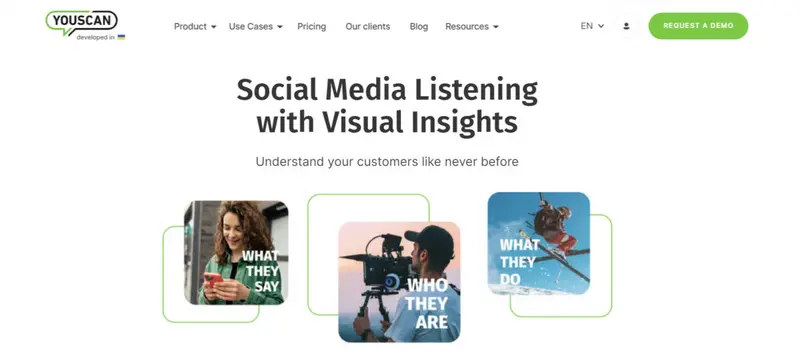
3. YouScan
Best for: Marketing professionals, digital marketing agencies, PR teams, SMBs, startups, and consumer brands
YouScan is a highly-rated tool that you can use to keep tabs on online conversations, be prepared for important events, and reply to threats. What makes it such a useful tool for crisis management is that in addition to social networks, it can also gather text and visuals that mention your brand across hundreds of thousands of other data sources such as forums and review sites. You also get real-time notifications, alerting you of any negative conversation around your brand. Furthermore, YouScan is capable of monitoring sentiment changes, helping you identify new opportunities, or addressing events that might affect your brand’s reputation.
Read More
4. Private: Mention
Best for: Agencies and large enterprises
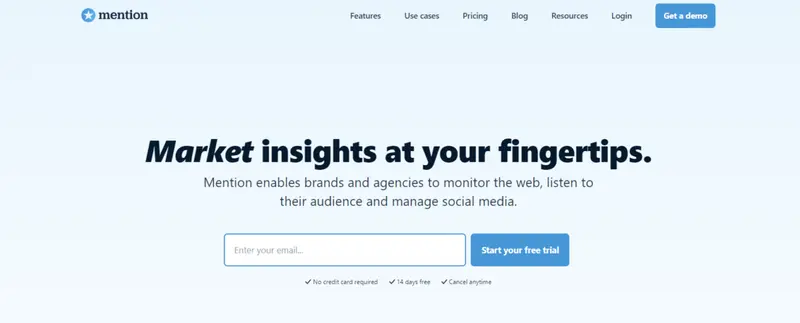
Mention makes it easier to find those critical conversations with the help of media monitoring and social listening. It integrates with Instagram, Facebook, and Twitter which means that you can respond directly using your accounts for these platforms. If you need more help responding to comments, you can share pulse alerts with other team members and assign them to specific tasks. In fact, it’s better suited for agencies and it has helped a number of leading agencies like Ogilvy and McCann. If you need more social proof than client names like these, it boasts hundreds of positive reviews on online sites like G2 and Capterra.
Read More
5. Hootsuite
Best for: SMBs and large enterprises
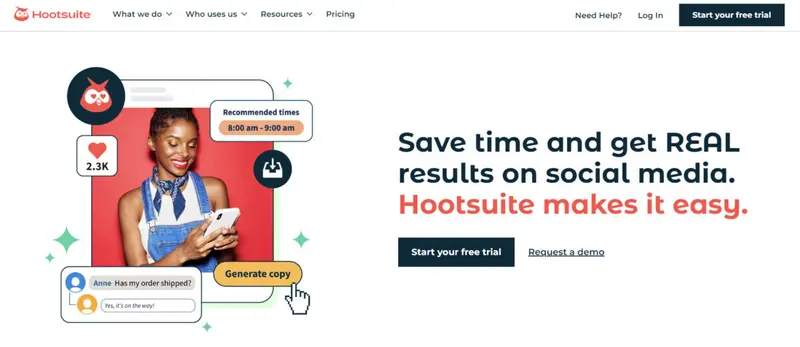
Regular readers of yours truly would be very familiar with Hootsuite and its suite of powerful social media scheduling tools. One use case that you might not have explored yet is social media crisis management.
You can also use it for tracking brand mentions and measuring brand sentiment, functionality included in Hootsuite Insights, that’s powered by Brandwatch. What makes this feature even more useful is that you can set it up in such a way that you’ll get alerted when brand sentiment changes. This way, you can possibly prevent a crisis or at least be one of the first responders (quite literally).
Read More
6. Synthesio
Best for: Global brands, large enterprises, and SMBs
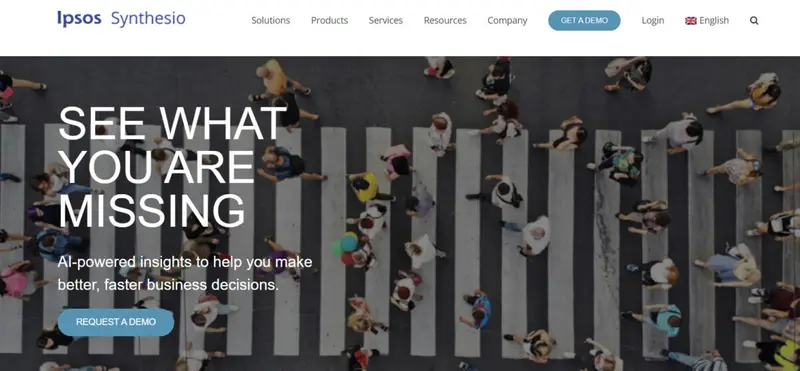
For an alternative to Brandwatch, you can try Synthesio. It’s a social intelligence suite that can be used for various purposes like market research, customer sentiment, and crisis management. When used for crisis management, its social listening platform can be used for monitoring changing sentiment and post-event analysis. Plus, it can identify negative mentions in real-time, allowing you to expedite resolution and keep your audience happy. You can also use Synthesio to uncover issues with specific products to make more informed decisions for product optimization.
Read More7. Factal
Best for: Global organizations, global security operations centers, select government departments, analyst teams, NGOs, and large enterprises
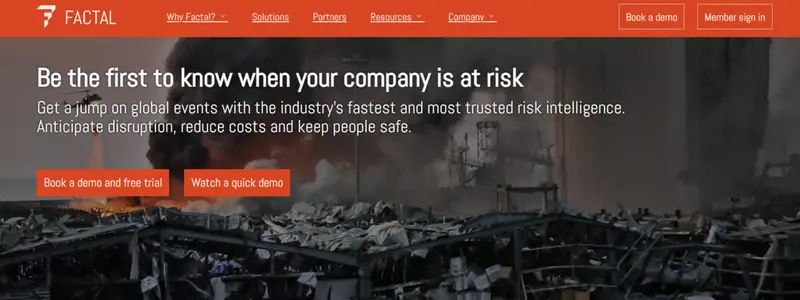
For something a bit different, you can also check out Factal. It’s a risk intelligence and breaking news platform that gives you real-time facts to minimize disruptions. It does that by merging the power of machine learning and seasoned journalists. This way, you’re presented with verified info helping you to respond faster. As a matter of fact, according to their website, their platform can speed up your average response time by as much as 28 minutes. Differently put, it’s like adding two and a half extra employees to your team.
Read More8. Konnect Insights
Best for: Global brands, large enterprises, marketing communications agencies, and advertising agencies
Konnect Insights is one of the top 10 incident and crisis management software solutions that can help you to listen to conversations on social media as well as the rest of the web. It describes itself as an omni-channel customer experience management platform that’s used by global names like Volkswagen, Honda, and Decathlon.
Read More9. Zendesk Support
Best for: Brands and businesses of all sizes and startups
Customer service and social media crises are often intrinsically linked. Improve your customer service and fewer people will feel the need to resort to social media to air their grievances.
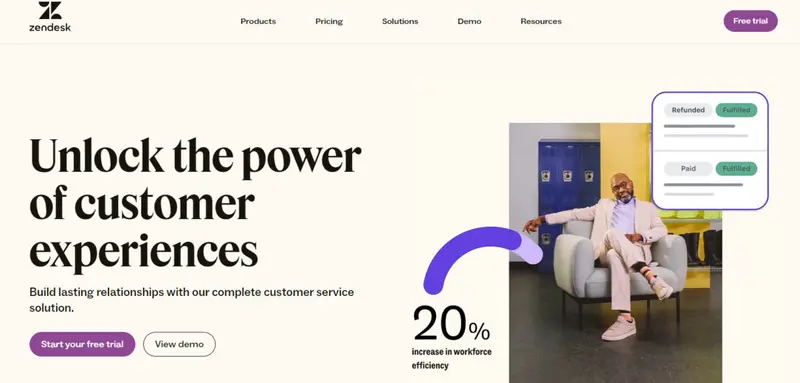
To help you in this area, there’s Zendesk. Its comprehensive customer service solution is one of the most popular marketing tools for eCommerce and a great choice for brands with bigger teams. Trusted by names like Uber and Cotton On, it can help you provide conversational support on the platforms where your customers are the most active.
Read MoreWhat Is Social Media Crisis Management?
Social media crises can strike anytime, and when left unaddressed, these can adversely impact your brand’s reputation. Many online activities may spark a social crisis, such as posting or sharing content deemed insensitive or out of touch or showing employee misconduct. You might get a wave of backlash amplified as more people see or share such posts. This is why having a social media crisis management strategy is vital to protect your brand reputation. Aside from being documented, your strategy must define three key aspects: when it should be used, what you need to do to address a crisis, and who the people involved are, also known as your crisis response team.
However, only 49% of companies have a formal, documented crisis communication plan. According to the same Capterra survey, of those organizations that have implemented their program, 77% noted that their crisis communication plans were very effective.
Social media crisis management allows you to strategically and quickly respond to issues before they become a full-blown crisis, speak directly to your audience and protect your brand’s reputation, and maintain your audience’s positive perception of your brand. In the event of a full-blown crisis, social media crisis management can help you minimize the negative impact on your company.
For instance, by utilizing social listening tools, you’ll uncover conversations around your brand, both positive and negative, as well as identify any changes in audience sentiment. However, before jumping the gun, it’s vital that you identify the different levels of changes in sentiment and which ones should be considered as a potential crisis, such as negative comments that exceed the pre-defined threshold or minimum criteria defined in your social media crisis management strategy. For example, if you see a 30% rise in negative comments or sentiments, you might want to implement your crisis response measures.
When a Social Media Crisis Becomes a Search Problem: Where Reputation Management Agencies Fit In
Most social media crises don’t stay on social. A misjudged post or a viral thread can quickly spill into Google search results, news articles, Reddit threads, review platforms, and people-search sites. Your internal team and the tools in this list are designed to manage the conversation in real time. What they’re not built for is cleaning up the long-term digital footprint once screenshots, blog posts, and media coverage are ranking for your brand name or executive team.
This is where a specialist reputation management agency, such as Erase.com, enters the picture. Instead of just flagging spikes in negative sentiment, Erase.com focuses on removing or neutralizing harmful content and rebuilding what shows up when people search for you. Their work typically begins once you can see that a social incident has turned into a broader reputational issue: negative articles on page one, Google reviews being brigaded, or search suggestions tying your brand to words like “scam,” “lawsuit,” or “controversy.”
A typical engagement during or after a social media crisis follows a structured workflow:
- Reputation footprint audit
While your social team is handling inbound comments and publishing statements, a reputation agency maps the damage across search engines, reviews, news, forums, and people-search sites. The goal is to identify which URLs are actually driving reputational risk and revenue loss, not just volume of chatter. - Content removal and risk mitigation
Where content breaks platform policies or crosses legal lines (defamation, doxxing, false allegations), the agency pursues removal: working directly with publishers, review platforms, and site owners to get those URLs taken down or de-indexed. This is slow, process-driven work that most social teams don’t have bandwidth or expertise to manage. The earlier this happens, the less time those pages have to gain authority in search. - Suppression and rebuild of page one
Not everything can be removed. In those cases, Erase.com leans on search-engine optimization and content strategy: publishing and optimizing positive, accurate assets (owned articles, press coverage, executive profiles, case studies) designed to outrank legacy crisis content over time. The objective is not to erase history, but to ensure that your most visible results reflect your current reality and values, not a single worst moment. - Long-term resilience and “reputation buffer”
After the initial crisis is contained, agencies help brands build a stronger baseline: more high-quality branded content, better review portfolios, and ongoing monitoring of critical keywords and executives’ names. That “reputation buffer” means the next spike in negative attention has to fight against an existing ecosystem of strong, positive assets to gain traction in search.
From a social media manager’s perspective, the distinction is simple:
- Crisis tools help you see the storm early, coordinate responses, and manage live conversations.
- A reputation management agency helps you deal with the debris that’s left behind—especially on Google, in reviews, and in high-visibility third-party articles.
If your dashboards show that sentiment has tanked, your branded keywords are pulling in hostile coverage, and critical decision-makers (investors, regulators, enterprise buyers) are likely to Google you, it’s worth involving a partner like Erase.com alongside your internal crisis team. The tools keep you fast and coordinated in the moment; the agency makes sure you’re not still paying for the same incident every time someone types your name into a search bar months or years later.
How to Manage a Social Media Crisis
Tackling a social media crisis can seem like an uphill battle, but the good news is that you can take measures to address and even mitigate such risks. Below are some actionable tips to help you manage a social media crisis:
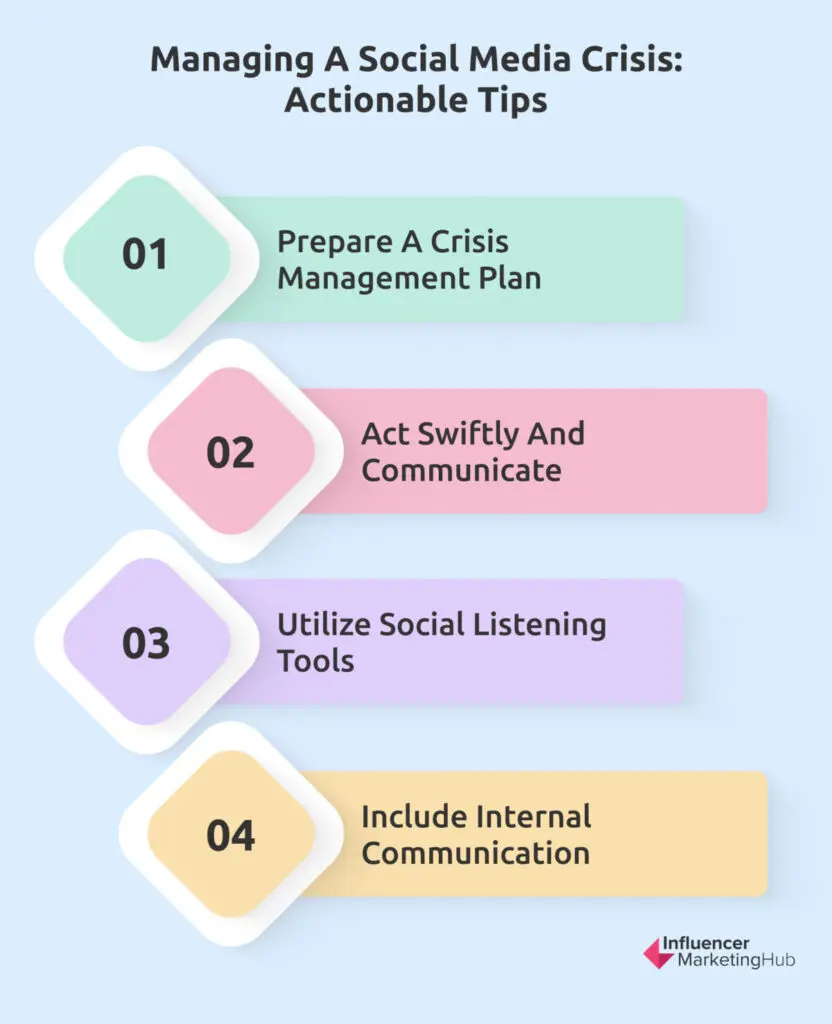
- Prepare a social media crisis management plan and document it. Make sure you cover different crisis scenarios and train your team to tackle each one effectively.
- Don’t ignore the problem. Take swift action, such as deleting the post and issuing an apology. Make sure you prepare a plan for communicating with your audience following a crisis. You can create messaging templates ahead of time, which you can customize later on according to the crisis scenario, its severity, and who the relevant audiences are.
- Leverage social listening and monitoring tools to stay on top of audience sentiment. Knowing the conversations around your brand and what your audience thinks or feels about you can help you identify potential issues and address them quickly before things escalate.
- Your crisis communication plan should also include internal communications. This helps everyone on the team stay on the same page and keeps them informed of what they should and shouldn’t do during a social media crisis. Make sure that all employees receive timely updates.
Wrapping Things Up
When you’re crafting your social media crisis communication plan, make sure to include which tool you’re going to use to implement it too. Sure, you’ll want to create personalized messages for fear of making the situation worse (after all, the last thing an angry customer wants is an automated reply), but speed is also of the essence. For this reason, it’s best to merge human intervention with crisis management tools.
If you already have social media management software in your MarTech stack (which we highly recommend you do), it probably already has some features like a unified inbox to help you in times of crisis. If not, use it as an opportunity to explore alternatives and upgrade to a more comprehensive solution.


