

Fishing apparel has to earn credibility in places where conditions expose every product claim. Shirts face hours of heat and sun. Outerwear encounters spray and sudden weather. Footwear gets tested on wet decks, muddy banks, and boat ramps.
Huk built its influencer strategy around people who already understood those conditions. Professional anglers, captains, fishing personalities, tournament properties, publishers, and everyday customers became part of a connected system that demonstrated the products inside real fishing culture.
That approach remains visible in Huk’s current creator footprint. Our analysis using HypeAuditor data found a concentrated group of recurring fishing accounts surrounded by a much larger community of smaller creators. On TikTok, product reviewers carry those recommendations closer to purchase through demonstrations, sizing advice, promotions, and shopping links.
In this Brand Story, we examine how Huk built its influencer strategy around fishing insiders, expanded it through ambassadors and media partnerships, and now uses Instagram and TikTok creators to connect product credibility with discovery and sales.
- How Huk Identified a Gap in Performance Fishing Apparel
- How Huk Used Professional Anglers to Build Brand Credibility
- How Product Performance Shaped Huk’s Creator Content
- How Huk Expanded Its Influencer Marketing Partnerships
- What HypeAuditor Data Reveals About Huk’s Instagram Influencer Strategy
- How TikTok UGC Supports Huk’s Social Commerce Strategy
- What Marketers Can Learn From Huk’s Influencer Marketing Strategy
How Huk Identified a Gap in Performance Fishing Apparel
Huk emerged from a category insight developed by founders Ben Verner, Josh Reed, Jason Hart, and Doc Reed during their time in the performance apparel industry.
Fishing was often treated as a seasonal opportunity, with marketing and retail activity concentrated into part of the year. The founders saw a wider market. Saltwater anglers, freshwater fishermen, bass competitors, guides, and recreational participants were active across seasons and climates.
They developed the concept for several years before launching Huk through Marolina Outdoor in 2014. Their previous experience also gave the business relationships with major retailers and independent dealers. Cabela’s placed Huk’s first order, while connections with Bass Pro Shops, Dick’s Sporting Goods, tournament organizations, and professional anglers helped the brand enter established fishing channels.
Huk initially expected graphic T-shirts to play a major role in demand. Performance apparel became the stronger proposition. One of its early shirts combined polyester and spandex with sun protection, stretch, and a ventilated mesh back. These features addressed conditions anglers experienced directly.
The brand also discovered the commercial value of a visible identity. A black camouflage design reportedly outsold other styles by a wide margin. Its patterns could be recognized from across the water, helping Huk clothing function as performance equipment and a signal of belonging.
Huk entered the market with people who already understood both the product category and the relationships that moved it.
The company’s subsequent expansion included a $37.5 million growth investment in 2018. A broader redesign and movement into footwear followed, giving creators more products and use cases to demonstrate.
How Huk Used Professional Anglers to Build Brand Credibility
Fishing insiders formed part of Huk’s strategy before influencer marketing became a standardized line in many brand budgets.
The founders met with professional anglers, captains, tournament organizers, and retailers as they prepared to launch. These people brought specialized knowledge and access to communities where recommendations carried weight.
A captain wearing Huk on the water could show how a shirt performed after hours in the sun. A competitive angler could demonstrate freedom of movement under pressure. A guide could speak about weather protection after using the product across an entire season.
@palmettotidecharters Skip the sunscreen get you some Huk gear!! #fishing #sc #charleston #fishinglife #fishingcharter
This gave Huk a form of credibility rooted in participation. The brand appeared alongside people whose expertise came from repeated experience rather than a single campaign shoot. It illustrates a fundamental part of building an influencer marketing strategy: selecting creators around the audience, campaign purpose, and authority they hold within a relevant community.
Customers also contributed. Huk encouraged people to submit fishing content and sometimes rewarded strong contributions with gear. That early customer advocacy resembles what brands now formalize through a user-generated content campaign, where customers help document how products fit into real experiences.
Youth tournaments extended the relationship to families and younger anglers, while fishing events placed the brand inside the experiences its audience already valued.
Even the founders became part of the content. Money Fish, an early founder-led content series, followed them as they entered competitions, often with more enthusiasm than tournament success. Their willingness to appear as imperfect participants made the brand feel closer to the fishing community.
Huk’s early strategy offers an important distinction for marketers. Category influence can come from expertise, proximity, and community standing. Audience size represents one component of that value.
How Product Performance Shaped Huk’s Creator Content
Performance apparel gives creators something concrete to prove. Huk’s product strategy created a growing library of visible demonstrations.
Its shirts could be shown handling heat, movement, and long periods outdoors. Outerwear could be worn through wind and rain. Footwear introduced grip, waterproofing, drainage, and easy cleaning as immediate content ideas.
@jenniferdean41 For the man in your life. A gift he will actually love AND use! @Huk Gear #boots #fishingboots #deckboots #waterproof
Distinctive designs added recognition. When an angler wore a Huk pattern in a tournament, on a boat, or in a social video, the product remained identifiable even when the content focused on the catch rather than the clothing.
That balance matters. Fishing remains the story, while the product becomes part of the action.
Collaborations with marine artist KC Scott strengthened this visual system. Artwork and patterns inspired by game fish connected product design with the species and environments anglers cared about. The collaboration also gave Huk another type of insider, one who shaped how fishing culture looked as well as how its apparel performed.
Product expansion created further storytelling opportunities. The Rogue Wave boot could appear in content about wet decks, bad weather, gardening, or outdoor chores. Collections such as Waypoint, Airweight, A1A Pro, Watershed, and women’s apparel gave creators different combinations of technical performance, sustainability messaging, and lifestyle versatility.
@frankbrooks8 These @Huk Gear rogue wave are the ultimate outdoor boots! #huk #fishinggear #deckboots #waterproofboots #outdoors
Each feature supplied a potential creator narrative. Sun protection became a long day on the water. Slip resistance became confidence on a wet surface. Quick-drying fabric became comfort after spray or rain. Product specifications gained meaning through use.
How Huk Expanded Its Influencer Marketing Partnerships
As Huk grew, its partnership portfolio expanded beyond professional fishing while retaining a connection to outdoor culture.
The brand’s partners served different strategic purposes.
Hannah Barron brought a sizable social audience and established credibility across fishing, hunting, and hands-on outdoor content. Her 2022 partnership included digital promotion, appearances, and retailer activity, connecting online influence with physical points of sale.
Tia Clark, founder of Casual Crabbing with Tia, contributed local authority in Huk’s Charleston community. Her work focuses on education, accessibility, conservation, and helping people experience the water. That partnership positioned Huk inside a participatory form of outdoor culture.
Basketball player Keon Johnson offered access to a younger sports audience. His personal interest in fishing gave the partnership a relevant foundation while expanding Huk’s cultural reach.
Huk’s relationship with Richard Childress Racing and Austin Dillon created another crossover. Branded race cars, campaign activations, and recurring paint schemes connected fishing with motorsports, family audiences, and the broader outdoor lifestyle.
Media properties added continuous visibility. Huk became title sponsor of Science of Fishing and presenting sponsor of the Sport Fishing Championship’s Carrier Cup. These relationships placed the brand within instructional and competitive programming rather than isolating it in short campaign appearances.
Together, the partnerships formed a layered portfolio:
- Professional anglers and captains supplied technical credibility.
- Fishing creators and educators made the category accessible.
- Athletes and motorsports partners introduced adjacent audiences.
- Artists made the products culturally recognizable.
- Tournaments and media properties generated recurring exposure.
- Retail appearances connected creator attention with distribution.
This structure resembles a broad brand ambassador program in which different participants represent the brand through social content, events, education, product use, and community involvement.
Huk’s model shows how a brand can expand its audience while giving each partnership a clear function.
What HypeAuditor Data Reveals About Huk’s Instagram Influencer Strategy
Huk’s social media activity still reflects the insider-led structure that shaped its early growth.
We analyzed Huk's socials using HypeAuditor data covering worldwide mentions of the brand in the past six months. During that period, 197 accounts produced 486 mentions. HypeAuditor modeled their combined audience at 11.7 million and estimated 1.2 million in reach.
Smaller creators made up most of the network. Nano and micro creators represented approximately 74% of classified creators. These accounts can carry Huk into specialist, regional, and closely connected fishing communities where relevance matters more than mass reach. Their role reflects the strength of micro-influencer marketing in categories organized around focused interests and specialist knowledge.
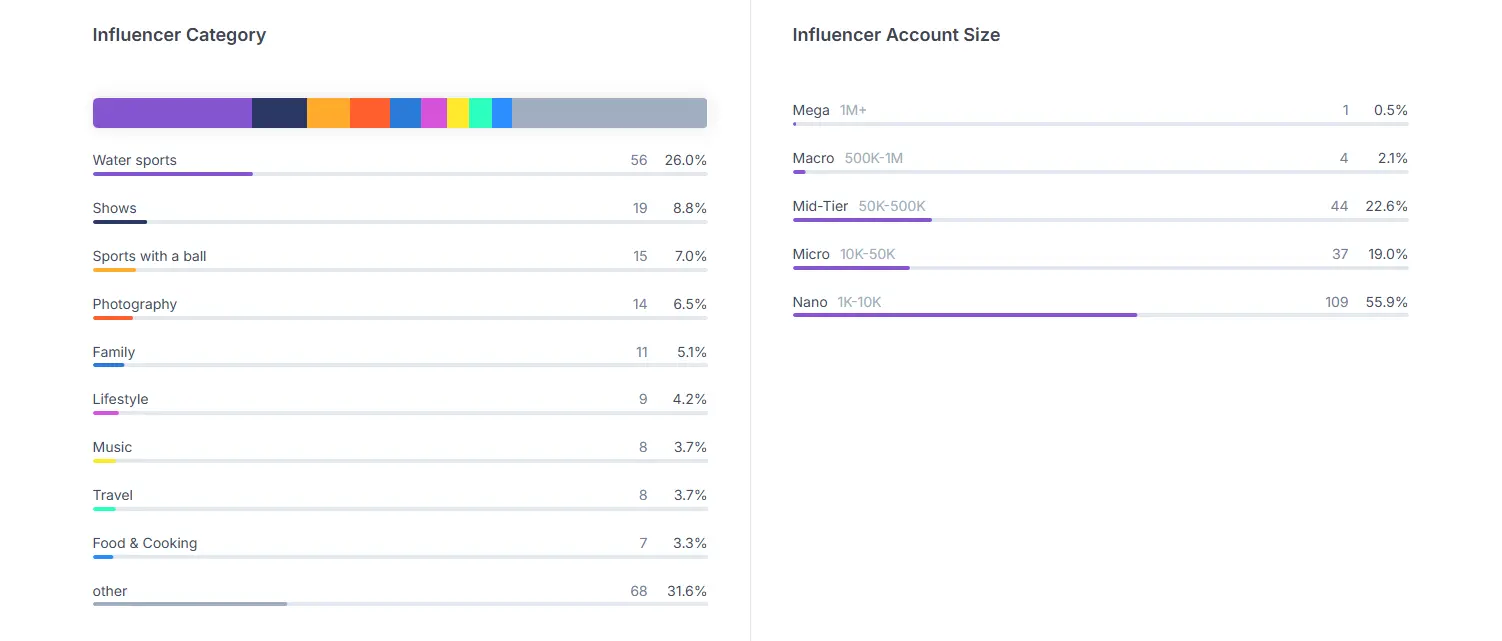
The activity also had a recognizable core. Fly Rod Chronicles, Reel Adventures with Matty B, Sport Fishing Championship, Saltwater Experience, and Science of Fishing generated 128 mentions collectively, equal to 26.3% of the dataset.
That concentration gives Huk continuity. A relatively small group keeps the brand present through recurring programs and fishing content, while a longer tail of creators expands the number of voices and communities involved.
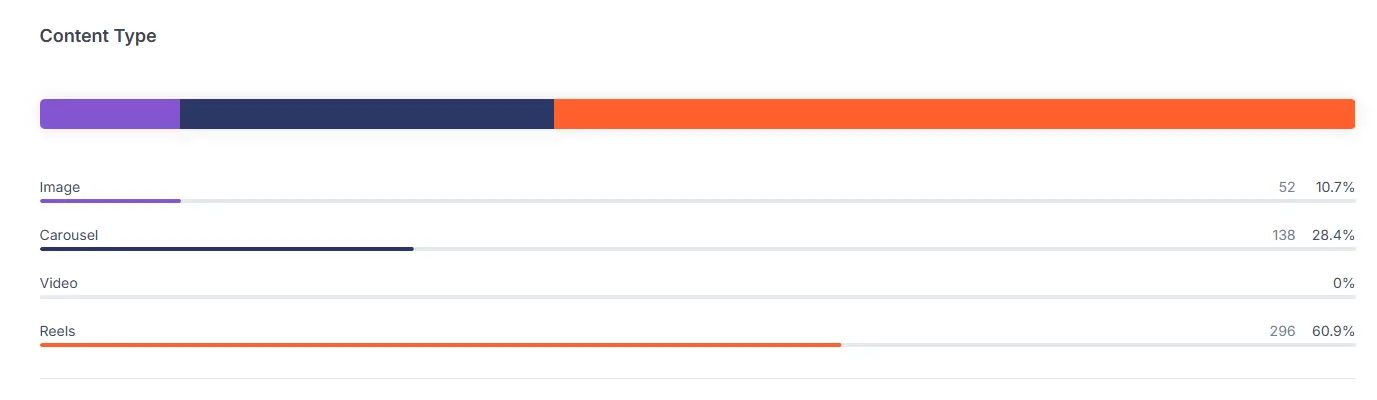
Content formats support the same pattern. Reels accounted for 60.9% of tracked mentions, and carousels represented another 28.4%. The emphasis on Instagram Reels suits fishing’s movement and visual payoff, from casting and catches to product demonstrations and trip recaps.
One high-performing example came from Captain Brad Solis. The post generated approximately 11,200 likes and 105 comments. HypeAuditor reported an engagement rate of 309.02%, making it an extreme outlier that should be considered separately from the broader program.
Other posts performed different jobs. A SIONYX giveaway featuring a Huk shopping spree generated 836 comments, supported by the type of follow-and-tag participation commonly used in social media giveaways. An OutdoorHub review of the Storm Jacket 2.0 produced very little engagement but offered product advantages and limitations that could help customers during consideration.
HypeAuditor reported a campaign-level engagement rate of 0.76%. It also modeled 457 mentions as organic and 29 as likely sponsored, with zero confirmed sponsored posts. These classifications describe the platform’s estimates. They do not establish whether products, affiliate arrangements, event relationships, or other commercial connections were involved.
The broader lesson is that Huk’s network contains several types of value. Recurring visibility, technical explanation, community credibility, contest participation, and high-performing entertainment each require different measures of success.
How TikTok UGC Supports Huk’s Social Commerce Strategy
TikTok carries Huk’s insider credibility into a more conversion-focused content environment.
Boots dominate most product reviews. Creators discuss waterproofing, grip, comfort, easy cleaning, durability, and slip-on construction while wearing the products during fishing trips, boat work, gardening, and everyday outdoor tasks.
These demonstrations reduce the distance between a technical claim and a recognizable problem. A viewer can see why traction matters on a wet deck or why an easy-to-clean boot is useful after a muddy trip.
@jenniferdean41 A gift he will actually use! In dark shadow. @Huk Gear #deckboots #mensboots #fisherman #outdoorsy
Apparel videos follow a similar structure. Creators highlight UPF protection, moisture management, lightweight materials, stretch, fit, quick-drying fabric, and ventilation. Women’s products appear in fishing and boating content as well as swimming, travel, and casual outdoor use.
@outdoornia The HUK Airweight Hoodie delivers lightweight comfort, breathable performance, UPF 40+ sun protection, quick-drying fabric, and unrestricted stretch. #HUK #FishingGear #FishingApparel #SunProtection #OutdoorGear
TikTok Shop creators then add conversion information. They mention available sizes, colors, measurements, promotions, stock levels, and the shopping link. That structure reflects how the TikTok Shop marketplace brings product discovery, creator recommendations, and checkout into one social environment.
@omnimomjordan @Huk Gear is finally on TikTok Shop, and this shirt is perfect for all your fun in the sun—from fishing, to the beach, and everything in between. #SummerVibes #beach #huk #hukgear #fishing
Gift buyers also appear frequently, especially women recommending Huk products for husbands or partners.
Some boot videos use very similar language and product points. The repetition suggests that creators may be drawing from consistent brand messaging, although the transcripts alone cannot confirm whether they received a shared brief.
Consistency can help viewers understand the product, but rigid repetition can make creator content feel interchangeable. A stronger influencer campaign brief would establish shared proof points while giving each creator room to connect them with a distinct audience problem or personal use case.
The content also includes criticism. One creator described the boots as expensive and uncomfortable at first, while suggesting they might require a break-in period. Including that experience gives prospective customers a fuller picture and highlights the importance of fit guidance.
@gabbb121
TikTok UGC therefore performs two connected roles for Huk. It places products inside ordinary use cases and supplies the practical details that can move viewers toward purchase.
What Marketers Can Learn From Huk’s Influencer Marketing Strategy
Huk’s influencer strategy grew from category participation. The brand built relationships with anglers, captains, tournaments, retailers, and customers before expanding into larger ambassadors, adjacent sports, entertainment properties, and social commerce.
Its strongest creator content also begins with products that can be demonstrated. Performance features give people specific experiences to show, while recognizable designs help the brand remain visible when fishing stays at the center of the story.
The structure offers several lessons for marketers.
Start with people who already carry authority inside the category. Give each partnership a defined role, whether that role involves credibility, education, reach, entertainment, retail activation, or conversion. Combine recurring partners with a long tail of smaller voices. Measure each piece of content against the job it was designed to perform.
Clearer tracking could make Huk’s system easier to evaluate. Separating paid sponsorships, gifted products, affiliate activity, event partnerships, organic mentions, and attributable sales would reveal which parts of the network create the greatest commercial value. Establishing those objectives and creator-level tracking methods at the planning stage is also central to measuring influencer campaign ROI.
Huk’s experience shows how an influencer strategy can become part of a brand’s operating model. Fishing insiders helped validate the products, creators turned features into visible proof, and social commerce shortened the path from recommendation to purchase. The result is a creator network shaped around the culture that gave the brand its original opportunity.