
Caraway is now stocked by major retailers and discussed by hundreds of creators. Its current social footprint can make the launch look more established than it was. In 2019, Caraway had four people, one cookware set, and, according to founder Jordan Nathan, 16 customers on its first day.
The early playbook centered on a few clear decisions. Caraway made the product visually distinctive, placed it with creators outside traditional food media, and repeated the messages customers understood quickly. Celebrity partnerships, major retail distribution, and large campaigns came later.
Seven years later, our six-month social media analysis, powered by HypeAuditor, looked at how Caraway used influencer marketing to reach an estimated 25 million customers across socials. The route from four people to that network shows how an influencer strategy can develop alongside the business it supports.
- Using Influencers to Launch a New Kind of Cookware Brand
- Lifestyle Creators Helped Caraway Reach Beyond Food Audiences
- Caraway Combined Visual Appeal With a Reason to Upgrade
- Product Seeding Became a Repeatable Ambassador Program
- Caraway Built Scale Without Relying on Celebrity Creators
- Simple UGC Formats Help Caraway Turn Attention Into Sales
- Product Launches Give Creators New Stories to Tell
- Retail Expansion Captures Demand Created by Influencer Content
- Caraway's Influencer Strategy Depends on Trust
Using Influencers to Launch a New Kind of Cookware Brand
Founder Jordan Nathan already understood eCommerce cookware before starting Caraway. At Mohawk Group (now Aterian), he worked on kitchen brand Vremi and learned about sourcing, forecasting, Amazon advertising, and product development. He also saw how color could distinguish practical products.
The idea for Caraway came from a personal experience. Nathan says he left a traditional nonstick pan on a burner for around 45 minutes, filled his apartment with fumes, and became nauseated and lightheaded. The incident prompted him to investigate cookware materials and develop an alternative built around ceramic coating and clearer material information.
Nathan left Mohawk in 2018 and spent roughly ten months raising money while developing the product and brand. Caraway launched on November 2019 with one cookware set. Before sales opened, it built a waitlist of more than 100,000 people through referrals, giveaways, development updates, and collaborations with complementary brands.
Caraway used development as content, exchanged access to complementary audiences with other brands, and gave potential customers a reason to follow before they could buy. Those moves concentrated attention before the company had a broad catalog or an established reputation.
Lifestyle Creators Helped Caraway Reach Beyond Food Audiences
Creators were involved before Caraway had much brand awareness. The company seeded products with people in home, lifestyle, interiors, wellness, and parenting, alongside more conventional food voices. Hundreds of creator placements supported the broader launch period.
That mix changed the context in which consumers encountered the cookware. A food creator could demonstrate how a pan performed. An interiors creator could show how it changed a kitchen. A parenting or wellness creator could connect it with family routines and decisions about household materials.
Caraway's product design made those placements easier. Coordinated colors, gold-toned handles, magnetic racks, and a canvas lid holder gave creators something visually recognizable before cooking started. Early photography treated the pans like sculptural home objects, often without food competing for attention.
Caraway widened its creator pool instead of copying established cookware advertising. The brand could then appear in conversations about design, organization, gifting, moving, weddings, parenting, and personal wellbeing.
Caraway Combined Visual Appeal With a Reason to Upgrade
A beautiful pan can stop someone scrolling, but appearance alone rarely explains a premium purchase. Caraway paired its design with a replacement message. The brand markets its ceramic coating as made without PFAS, PFOA, and PTFE, while creators translate that technical proposition into a familiar moment involving an old or scratched pan.
The rest of the sales argument is practical. Food releases from the surface, cookware moves into the oven, messes wipe clean, and organizers reduce clutter. Each benefit can be demonstrated without a lengthy script.
Creators move from concern to aspiration and proof. They introduce a reason to replace existing cookware, place Caraway in a real kitchen, and demonstrate its performance.
Color also gives the brand a repeatable way to create urgency. Caraway's first Butter Yellow Mixing Bowl Set reportedly sold out within 48 hours. The product did not need a new functional claim. A limited color supplied a fresh creative prompt and a deadline for customers who already understood the brand.
Product Seeding Became a Repeatable Ambassador Program
The pandemic arrived months after launch and accelerated demand. It also created operational pressure. Nathan has described backorders lasting six to ten weeks and inventory decisions being made 12 to 15 months ahead.
Caraway widened its assortment as the business grew. Bakeware became its second-largest category, followed by food storage, prep tools, mixing bowls, and barware. Each addition gave successful creators something new to discuss.
Nathan has described working with around 3,000 ambassadors during some periods. Larger partners might receive a complete set, while smaller creators could begin with one pan. Early relationships leaned on gifting and affiliate commissions, with flat fees becoming more common as the program matured.
A creator who performed well with cookware could return for bakeware, a new color, or a seasonal launch. Over time, familiarity accumulated across several posts instead of being purchased once.
Taylor Garaventa, Caraway's senior influencer manager for its ambassador program, has described the priority as activation rather than recruitment. A large creator database has limited value if people receive one package and disappear. Caraway's product calendar gives its team reasons to bring productive partners back.
Caraway Built Scale Without Relying on Celebrity Creators
Caraway's current influencer network reflects that emphasis. Our brand analysis identified thousands of participating creators. Using HypeAuditor, we identified that the majority, 89.9%, were nano, micro, or mid-tier accounts. Mega creators represented only 3.8% of the creators Caraway works with.
Mid-tier creators provide reach without concentrating the program around a few names. Nano and micro creators contribute personal recommendations, niche audiences, affiliate sales, and reusable footage. Individual accounts represented 97.9% of the network, keeping the conversation centered on people and their homes.
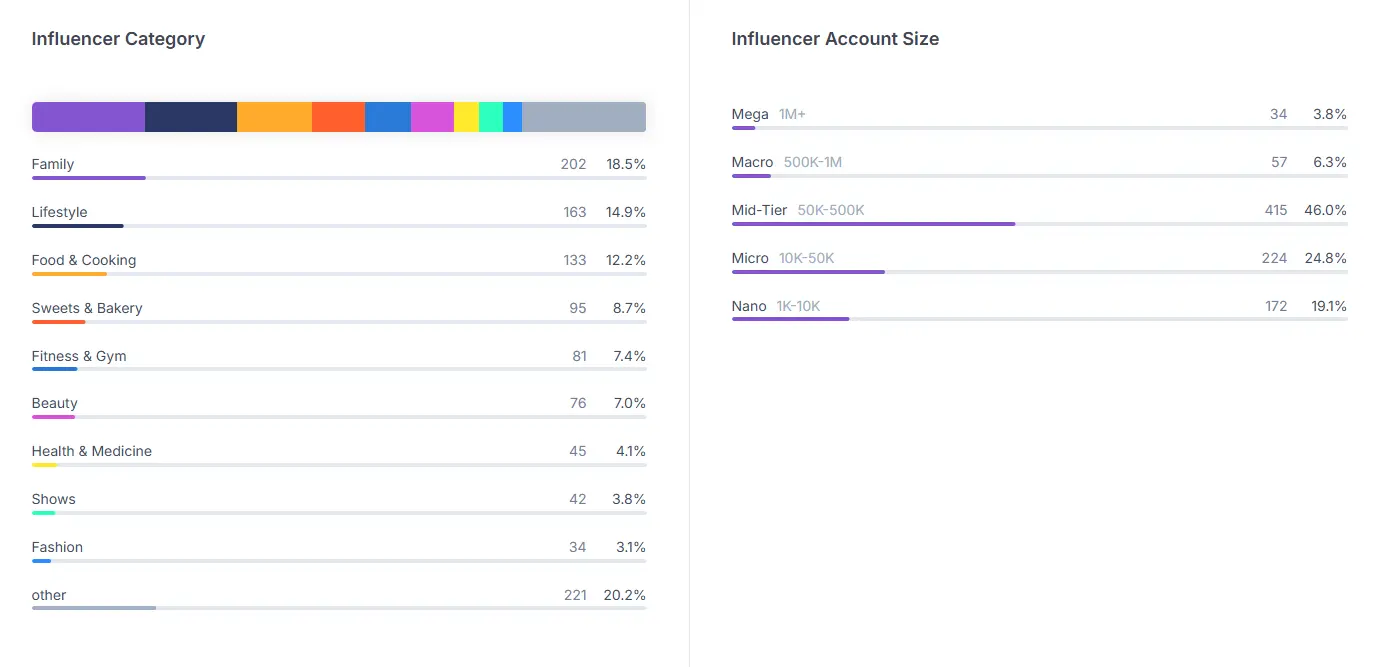
Family and lifestyle creators made up 33.4% of the network, compared with 20.9% for food, cooking, sweets, and bakery accounts. The launch strategy remains visible at scale. Caraway still sells the life around the product as much as the cooking itself.
Paid partnerships appear more concentrated around likely buyers. Caraway's advertises to a mostly female audience (82.6%), aged 25 to 34 (47.4%) , and based in the United States (50.6%). The wider network creates familiarity, while paid activity sharpens the demographic focus.
Despite the overwhelming use of mid-tier and smaller creators, Caraway still uses famous partners for large-scale campaigns. One such was Alix Earle, who created a concentrated moment through the Serving in Heels Thanksgiving activation. Everyday coverage comes from a much broader group, allowing celebrity moments to create peaks without carrying the entire program.
Simple UGC Formats Help Caraway Turn Attention Into Sales
Our Caraway TikTok analysis concluded that creators return to a similar structure. TikTok UGC videos open by challenging a behavior, price assumption, or identity. One asks whether viewers are still using certain cookware. Another says they thought someone had to be rich to own Caraway. References to crunchy or bougie moms identify the intended audience.
@promocodepal finally caraway daily cooking bundle set is here #caraway #fryingpan #carawaypan #kitchenessentials #qvc
Next comes visual proof. Eggs slide from a pan. Cookies lift without cooking spray. A creator wipes the surface clean or reorganizes a cabinet. These scenes can be filmed in a normal kitchen with a phone. Their value comes from clarity rather than production scale.
Offers address the price objection. TikTok Shop pricing, QVC promotions, affiliate codes, free shipping, bundles, gifts, and limited colors encourage action. Caraway's DTC presentation creates aspiration, while creators and retail offers make the purchase feel reachable.
@lindsforthegirls I’ve used my @Caraway Home set for 2+ years and I’m obsessed!! My mom has wanted one of these pans for YEARS so I can’t wait to gift her one this Mother’s Day 🥹🫶🏼 Use code LINDS for 10% off sitewide 💛 #caraway #nontoxic #nontoxicliving #cookware #nonstickpans
The brand also gets more from footage it already has. Head of Social Katherine Kauma described how Caraway reworked a video from @the.sourdough.mama by showing the finished creation earlier and connecting it with renewed interest in sourdough and food art. The Instagram post passed 10 million views.
A YouTube snow ice cream video featuring Katerina Mangini later passed 11 million views. Kauma credited Samantha Brooke Zabroni with monitoring trends, Courtney Tinklepaugh with joining the audience conversation, and Daniella Labat with supporting experimentation.
The team improved the opening, matched existing footage with an active interest, and responded when viewers engaged. The reach came from repackaging footage the brand already had rather than commissioning an entirely new production.
Product Launches Give Creators New Stories to Tell
As Caraway expanded, it made launches more coordinated. Senior Director of Marketing Brett Segall has described moving from isolated monthly promotions toward 90-day storytelling periods.
In 2025, the company reported ten product launches and six campaigns.
Several activations were designed around scenes creators would want to capture. A Butter Mixing Bowl event featured custom molds and a butter grazing table. A Pizza Night mailer paired the pan with ingredients from FreshDirect. A mobile happy hour brought a stocked bar cart and West Wilson to recipients' homes.
Caraway's Director of Integrated Marketing, Carly Schnitzer, was the person in charge of making these programs work.
Each package or event supplied an activity rather than another product reveal. Creators had something to make, taste, open, or react to, producing more natural content.
Caraway's internal roles also show how influencer work became more specialized. KoL Unger leads influencer marketing work, Garaventa focuses on ambassadors, and Reade von Stade works across influencer content and partnerships. Their responsibilities cover relationship management, content, paid activity, and repeat participation.
Creators are considered during launch planning. Product, experience, social publishing, and paid distribution are prepared together, giving each release several chances to find an audience.
Retail Expansion Captures Demand Created by Influencer Content
Caraway's creator marketing increasingly supports sales beyond its own website. It entered Amazon in 2022 after Nathan says monthly searches for the brand there reached roughly 40,000. Target introduced Caraway in 350 stores that year, The Container Store expanded it to 101 locations in 2023, and Walmart added it to more than 500 stores in 2026.
Creator influence is often separated from the transaction. Someone might discover a color through a Reel, watch several demonstrations, and later recognize the cookware at Target or Walmart. Nathan has said Caraway's testing found that Meta advertising contributed to Amazon sales.
Retail gives social demand more places to convert. It also makes the premium product feel more accessible through familiar retailers, faster delivery, and periodic discounts.
Caraway is applying the same model beyond cookware. Its 2026 Trash and Recycling Collection turned another overlooked object into a design purchase. Reade von Stade described coordinating UGC and partnerships around the release. It tested whether the meaning built around Caraway cookware could travel through the home.
Caraway's Influencer Strategy Depends on Trust
Growth creates complications that a smaller brand eventually has to address. Frequent discounts can support creator conversion while weakening premium positioning. Product-care complaints about staining, hot handles, damaged storage lids, or reduced nonstick performance require clear education alongside polished demonstrations.
Caraway's material-safety message now faces a more public test. In February 2026, Groupe SEB and Meyer filed a federal lawsuit challenging aspects of the brand's comparative advertising. Caraway disputes the allegations and has moved to dismiss the case, which remains unresolved.
Most companies facing a federal lawsuit issue a careful statement and let the lawyers take it from there. Jordan Nathan appears to have looked at that playbook and decided it needed better creative. He changed his LinkedIn headline to “Sued By Big Cookware,” turned the plaintiffs into a category-sized antagonist, promoted a public petition, and invited customers to create Make the Swap content.
The result is part legal response, part founder content, and part campaign. It also follows the same approach Caraway has used from the beginning. The brand takes something consumers rarely discuss, gives it a clear identity, and provides creators with a reason to join the conversation.
That move has helped Caraway gather more than 55,000 petition signatures, but it also raises the stakes. Creators are now carrying claims that extend beyond color, cleanup, and kitchen organization. The brand must maintain precision around materials, disclosures, product performance, and the difference between an allegation and a legal finding.
Caraway built its creator network one seeded product, affiliate relationship, and repeat activation at a time. It has already shown that cookware can look good on camera. Its next challenge is proving that the wider brand argument can hold up when customers, creators, competitors, and lawyers are all watching.