Twirl Alternatives: Comparing Creator Marketing Platforms for Growing Brands

Advertising Disclosure

Twirl has become a familiar name for brands looking to source and manage creator-led content through a structured, platform-based workflow. As a creator marketing platform, it is commonly used by teams that want more control over creator selection, briefing, approvals, and content delivery without outsourcing execution to an agency.

For many brands, Twirl fits well at an early or mid-stage of UGC and influencer operations, especially when campaigns are tightly scoped and managed by lean internal teams.

However, as programs grow, priorities often shift. Brands start evaluating alternatives based on scale, creator depth, workflow flexibility, or how closely a platform aligns with paid media and performance goals.

Considering this, two questions frequently come up. Can a platform support higher creator volume without increasing operational complexity? And does the platform’s execution model match how your internal team actually runs UGC and influencer campaigns today?

This article breaks down platform-based alternatives to Twirl, focusing on fit, execution differences, and use cases that matter to buyer-ready teams.


Twirl Alternatives Brands Should Check Out

Top
twirl alternatives
2026

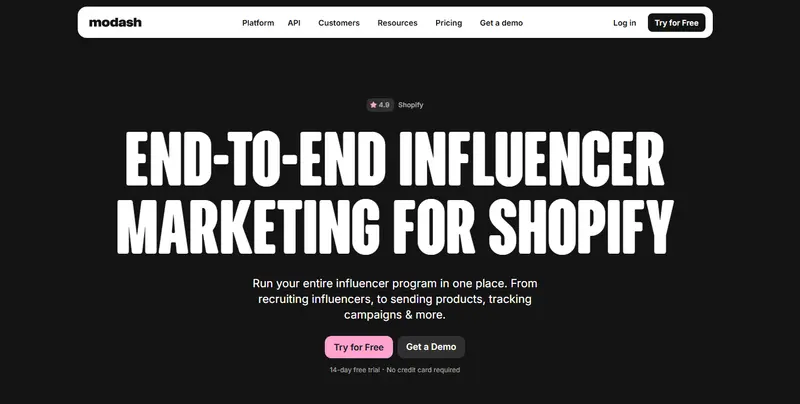
1. Modash

Modash

Best For: In-house marketers at ecommerce brands using in-house influencer programs that prioritize creator discovery and outbound outreach

Content Model: Influencer-led content sourced through direct creator partnerships

Primary Channels: Instagram, TikTok, YouTube

Platform Focus: Always-on influencer seeding, paid partnerships, creator content for ads

Pricing: From $199

Demo: Yes

Notable Clients: Birkenstock, Joom, Stanley 1913, Montblanc

Modash is a self-serve influencer marketing platform built around large-scale creator discovery and relationship management. It is typically adopted by brands that want direct ownership over how creators are sourced, vetted, and activated, without relying on a managed execution layer.

The platform is designed to support teams that already have clear campaign processes and prefer tooling over services.

From a strategy standpoint, Modash leans heavily into outbound influencer selection. Brands use database filters, audience authenticity signals, and performance indicators to identify creators that align with specific campaign goals.

Outreach, negotiations, and relationship management remain fully in-house, which gives teams flexibility but also places more responsibility on internal resources.

Creator content is generated through these influencer partnerships rather than ordered as predefined deliverables. Modash tracks creator activity and content output, but creative direction, briefing depth, and asset iteration are handled outside the platform. This makes it a practical option for brands that already have strong creative guidelines in place.

On the measurement side, Modash focuses on audience quality, engagement metrics, and campaign-level performance. While it supports visibility into results, it does not extend into paid media execution or amplification workflows.

Pros

  • Extensive creator discovery and filtering capabilities
  • Strong transparency into audience authenticity and metrics
  • Well-suited for mature, in-house influencer teams

Cons

  • No built-in managed content production
  • Requires internal bandwidth to run campaigns effectively

How Modash Compares to Twirl

Compared to Twirl’s more guided content workflows and structured approvals, Modash favors autonomy and scale in creator sourcing. It fits brands that want to run influencer and creator programs independently, rather than relying on platform-led UGC production structures.

Key Features: Campaign Management, Influencer Discovery, Influencer Analytics, Influencer Campaign Monitoring, Influencer Management,


2. Humanz
Humanz

Best For: Medium and Large brands; Agencies managing influencer and creator campaigns across multiple markets with an emphasis on collaboration

Content Model: Influencer and creator partnerships managed through a centralized workflow

Primary Channels: Instagram, TikTok, YouTube

Platform Focus: Influencer activations, creator collaborations, scalable UGC programs

Pricing: Upon request

Demo: Yes

Notable Clients: Disney, Visa, eBay, L’Oreal, Zara

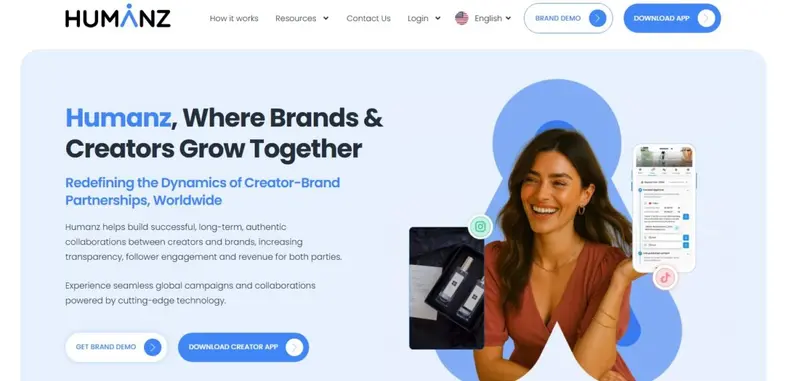
Humanz is an influencer and creator marketing platform designed to support end-to-end campaign management, from creator discovery through execution and reporting. It is often used by brands that want a more guided workflow than pure self-serve discovery tools, without moving into an agency-led execution model.

The platform places strong emphasis on collaboration between brands and creators. Creator sourcing combines database discovery with application-based participation, which can reduce outbound effort for teams that prefer inbound interest.

Campaign setup, communication, and approvals are handled within the platform, helping centralize activity across multiple stakeholders.

Creator content is produced through structured briefs and managed timelines rather than open-ended partnerships. Humanz supports content submission and approval flows, making it easier for teams to maintain consistency across campaigns. However, creative strategy and final direction still sit with the brand.

Humanz also places more weight on performance visibility across campaigns. Reporting includes engagement metrics and creator-level insights, but paid media execution and amplification remain outside the platform.

Pros

  • Strong campaign and collaboration workflows
  • Supports both inbound and outbound creator sourcing
  • Well-suited for multi-market brand teams

Cons

  • Less flexible for highly custom influencer processes
  • Limited native paid media integration

How Humanz Compares to Twirl

Compared to Twirl, Humanz offers a broader campaign management layer and more collaborative workflows. It can be a better fit for brands running larger, multi-market creator programs that need structure without moving to a managed service model.

Key Features: Influencer Marketplace, Search/Discovery, Automated Recruiting, Influencer Lifecycle Management, Influencer Relationship Management, Team Collaboration Tools, Content Review, Content Library, Campaign Management, Campaign Reporting, Influencer Analysis, Audience Analysis, E-commerce Tools, Product/Gifting Tools, Fake Follower/Fraud Detection, Payment Processing, Competitor Research, Exportable reports,


3. Creator.co
Creator.co

Best For: Brands and Agencies of all sizes looking to combine creator discovery, outreach, and campaign management in one platform

Content Model: Influencer and creator partnerships supported by structured workflows

Primary Channels: Instagram, TikTok, YouTube

Platform Focus: Influencer campaigns, creator-led UGC, performance-driven collaborations

Pricing: From $460

Demo: Yes

Notable Clients: Nike, Gen3, NEFT, Moores, Best Buy, Taco Time

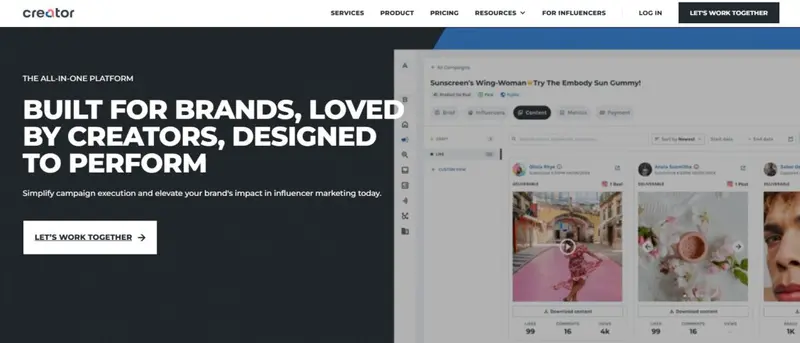
Creator.co positions itself as an all-in-one influencer marketing platform designed to reduce operational friction for brand teams. It is typically used by marketers who want to centralize creator discovery, communication, payments, and reporting without stitching together multiple tools.

The platform supports both outbound creator discovery and inbound creator applications, giving brands flexibility in how they source partners. Outreach and relationship management are handled directly within the platform, which can streamline execution for teams managing recurring campaigns or multiple creators at once.

Creator content is produced through structured briefs and managed deliverables. Creator.co supports content submissions, approvals, and timelines, helping brands maintain consistency while still allowing creators creative flexibility. The platform is more execution-oriented than discovery-only tools, but creative ownership remains with the brand.

On the performance side, Creator.co provides campaign-level reporting focused on engagement and creator output. While it supports performance visibility, it does not extend into paid media buying or advanced creative testing workflows.

Pros

  • Consolidates multiple influencer workflows in one platform
  • Flexible creator sourcing options
  • Useful for teams running repeatable campaigns

Cons

  • Less specialized for high-volume UGC production
  • Paid media activation handled externally

How Creator.co Compares to Twirl

Compared to Twirl, Creator.co offers a broader influencer management toolkit with more emphasis on ongoing creator relationships. It suits brands that want centralized control over influencer operations rather than a platform primarily optimized for structured UGC delivery.

Creator.co

Key Features: Search/Discovery, Automated Recruiting, Influencer Relationship Management, Influencer Marketplace, Content Review, Content Library, Campaign Management, Campaign Reporting, Influencer Analysis, Audience Analysis, E-commerce Tools, Product/Gifting Tools, Fake Follower/Fraud Detection, Payment Processing, Social Listening, Competitor Research, Creator Marketplace,

Channels: Instagram, YouTube, TikTok


4. Billo

Billo

Best For: Small and Medium Brands  that need fast, repeatable video UGC for paid social and ecommerce

Platform Model: Pre-scoped UGC video orders fulfilled by vetted creators

Primary Channels: TikTok, Instagram, Facebook

Campaign Focus: Paid social creatives, product demos, short-form UGC ads

Pricing: Upon request

Demo: No

Notable Clients: AdoreMe, Good Protein, Udemy, Costco, Natural Intelligence

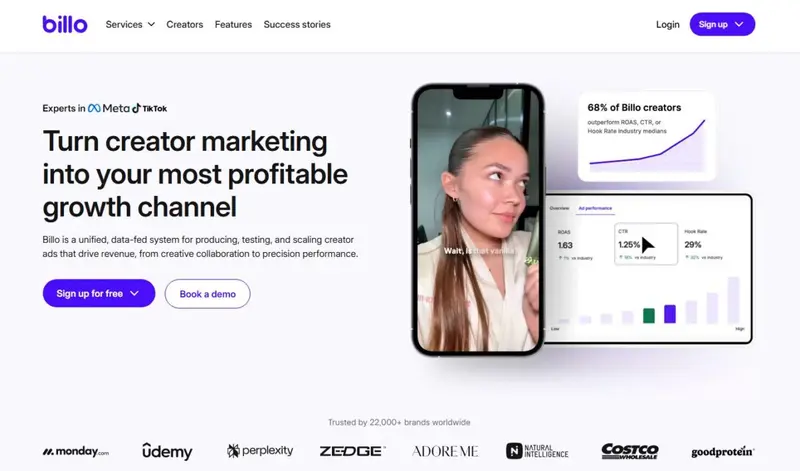
Billo is a UGC video platform built around speed and volume rather than long-term influencer relationships. It is commonly used by performance-focused teams that need a steady stream of short-form video assets for testing and iteration, especially in paid social environments.

Instead of sourcing creators through open-ended discovery, brands post UGC briefs and receive video submissions from vetted creators within the Billo marketplace. This model reduces outbound outreach and simplifies production timelines, making it easier to plan content output in advance.

Creative production is tightly scoped. Brands define deliverables, talking points, and usage rights upfront, and creators submit videos against those requirements. While this structure supports efficiency, it offers less flexibility for collaborative influencer storytelling.

Billo’s platform is primarily content-centric. It does not manage influencer relationships or community building, and performance insights focus on asset delivery rather than downstream media results. Paid media execution and testing are handled outside the platform.

Pros

  • Fast turnaround for UGC video assets
  • Predictable production model
  • Strong fit for performance marketing teams

Cons

  • Limited influencer relationship depth
  • Less suitable for brand storytelling campaigns

How Billo Compares to Twirl

Compared to Twirl’s more collaborative creator workflows, Billo is optimized for speed and standardized UGC production. It fits brands that prioritize rapid creative output over ongoing creator partnerships or campaign collaboration.

Billo logo

Key Features: Influencer Search & Discovery, Campaign Management, Influencer Marketplace, Influencer Content Amplification, Global Influencer Payment, Insights/Analytics, Influencer Discovery, Content Amplification, Data/Analytics, Influencer whitelisting, Freelancer/Creator Marketplace, Search/Discovery, Team Collaboration Tools, Content Review, Content Library, Campaign Management, Campaign Reporting, E-commerce Tools, Product/Gifting Tools, Forms and Compliance, Payment Processing, Faceted Search / Filtering, Forms & Compliance,

Channels: Tiktok, Instagram, Facebook, Youtube


5. Collabstr
Collabstr

Best For: Brands that want a self-serve marketplace to book creators quickly

Platform Model: Fixed creator packages purchased directly from creator profiles

Primary Channels: Instagram, TikTok, YouTube

Campaign Focus: One-off creator collaborations, UGC for ads, sponsored posts

Pricing: Free plan included; Paid plans from $299

Demo: Yes

Notable Clients: Hopper, McDonald’s, ClickUp, United Nations

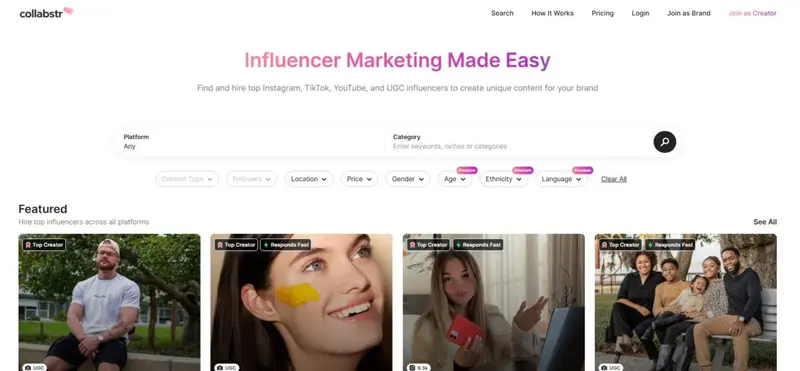
Collabstr operates as a self-serve creator marketplace rather than a full campaign management platform. It is commonly used by brands that want to browse creators, review predefined content packages, and book collaborations without running structured, multi-step campaigns.

Creator sourcing is entirely inbound and on-demand. Brands search creator profiles, evaluate audience metrics, and purchase listed deliverables directly. This model reduces negotiation time and makes budgeting more predictable, but it also limits customization beyond what creators offer in their packages.

Content production is transactional. Creators deliver agreed assets, and Collabstr facilitates communication and payment, but briefing depth, creative iteration, and approvals are lightweight compared to workflow-driven platforms. This makes the platform better suited for straightforward UGC needs rather than complex creative programs.

Reporting is minimal and primarily focused on campaign completion rather than performance analysis. Brands typically evaluate results externally using native platform analytics or paid media tools.

Pros

  • Simple, fast creator booking process
  • Transparent deliverables and pricing structures
  • Low operational overhead

Cons

  • Limited campaign management capabilities
  • Minimal performance reporting

How Collabstr Compares to Twirl

Compared to Twirl’s structured briefs and approval workflows, Collabstr prioritizes speed and simplicity. It fits brands that want quick, transactional creator collaborations rather than guided UGC production and campaign oversight.


6. Insense

Insense

Best For: Small and Medium e-commerce brands running structured UGC and influencer campaigns with repeatable workflows

Platform Model: Creator collaborations managed through briefs, submissions, and approvals

Primary Channels: Instagram, TikTok, Facebook

Campaign Focus: UGC production, influencer partnerships, paid social creatives

Pricing: From $500

Demo: Yes

Notable Clients: Revolut, Babbel, Black Paris, Parivie, LARQ

Insense is a UGC and influencer marketing platform designed for brands that want more structure around creator collaboration without moving to an agency-led model. It is often adopted by teams that manage recurring campaigns and need consistency across briefs, timelines, and approvals.

Creator sourcing combines marketplace-style discovery with campaign applications, allowing brands to attract creators who opt into specific briefs. This reduces manual outreach while still giving teams control over creator selection and campaign fit.

Content production is one of Insense’s core strengths. Brands define creative requirements, usage rights, and timelines upfront, and creators submit assets directly through the platform for review. This makes Insense well-suited for teams producing UGC at scale while maintaining brand consistency.

Reporting focuses on campaign execution and creator output, with engagement metrics available for performance visibility. However, paid media buying and amplification are handled externally.

Pros

  • Strong briefing and approval workflows
  • Efficient creator application model
  • Well-suited for repeatable UGC production

Cons

  • Less emphasis on long-term influencer relationships
  • Paid media activation not included

How Insense Compares to Twirl

Compared to Twirl, Insense places greater emphasis on structured UGC production and creator submissions. It can be a better fit for brands that prioritize repeatable content workflows over flexible, relationship-driven creator programs.

insense

Key Features: Content Amplification, Search/Discovery, Automated Recruiting, Influencer Relationship Management, Influencer Marketplace, Content Review, Content Library, Campaign Management, Campaign Reporting, Influencer Analysis, Audience Analysis, E-commerce Tools, Product/Gifting Tools, Fake Follower/Fraud Detection, Payment Processing, Influencer Whitelisting, Creator Marketplace,

Channels: TikTok, Instagram, Facebook


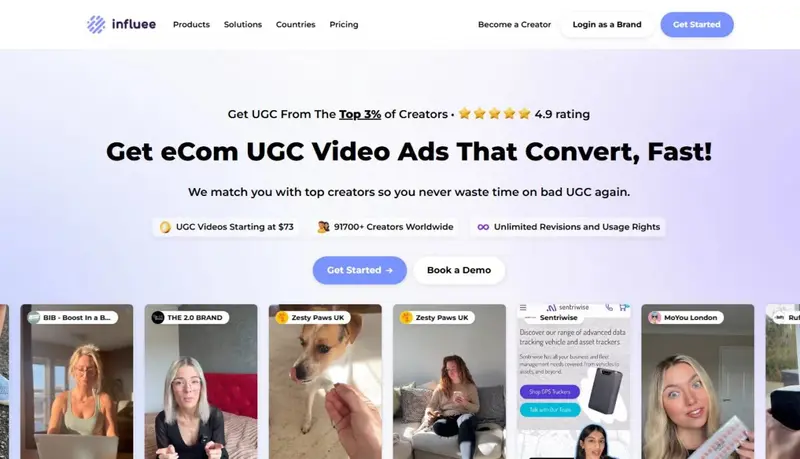
7. Influee

Influee

Best For: Brands that want to source UGC efficiently from a global pool of creators

Content Model: Brief-based UGC creation fulfilled by opted-in creators

Primary Channels: Instagram, TikTok

Campaign Focus: Scalable UGC production, creator-led content for ads and social

Pricing: From $299

Demo: Yes

Notable Clients: Lipton, AXE, Preply, Hunter, Enso Rings

Influee is a UGC-focused creator platform designed to simplify how brands source content from a broad, international creator base. It is typically used by teams that want to produce UGC at scale without managing one-to-one influencer relationships or complex outreach processes.

Creator sourcing is primarily inbound. Brands publish briefs outlining deliverables, timelines, and usage requirements, and creators apply to participate. This approach reduces operational overhead and helps brands maintain predictable content pipelines, especially for short-form video.

Content production follows a standardized workflow. Creators submit assets through the platform, and brands review and approve content before final delivery. While this supports consistency and speed, creative iteration and deeper storytelling collaboration are more limited than in relationship-driven influencer platforms.

Reporting focuses on content delivery and basic engagement visibility. Influee does not manage paid media execution, and performance optimization typically happens outside the platform.

Pros

  • Efficient inbound creator sourcing
  • Scales well across multiple markets
  • Low operational complexity for UGC programs

Cons

  • Limited flexibility for custom creative collaboration
  • Not designed for long-term influencer partnerships

How Influee Compares to Twirl

Compared to Twirl, Influee is more narrowly focused on scalable UGC production through inbound creator participation. It suits brands that prioritize speed and volume of content over deeper creator relationships or campaign customization.


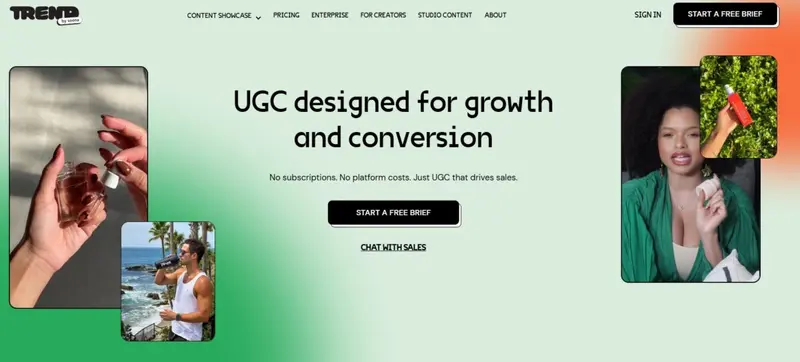
8. Trend.io

Trend.io

Best For: Brands that want predictable UGC output without managing creator outreach

Platform Model: Brief-based UGC production fulfilled by vetted creators

Primary Channels: Instagram, TikTok, Facebook

Campaign Focus: Product-focused UGC, paid social creatives, ecommerce content

Pricing: From $550

Demo: Yes

Notable Clients: Bobbie, Harney & Sons, Kettle & Fire, Tea Drops

Trend.io is a UGC platform built for brands that want a hands-off approach to sourcing creators while maintaining control over creative requirements. It is commonly used by eCommerce and performance marketing teams that need consistent UGC delivery without investing time in creator discovery or relationship management.

Rather than relying on outbound outreach, Trend.io operates on an inbound model. Brands submit briefs outlining deliverables, timelines, and usage rights, and vetted creators apply to produce content. This reduces operational complexity and helps brands plan content volume more reliably.

Creative production is tightly defined. Brands specify messaging, formats, and asset requirements upfront, and creators submit content for review within the platform. While this structure supports efficiency and consistency, it leaves less room for iterative collaboration or long-term creator partnerships.

Reporting is focused on fulfillment and asset delivery, with limited insight into downstream performance. Paid media execution and optimization remain outside the platform.

Pros

  • Predictable and scalable UGC production
  • Minimal creator management required
  • Clear, structured content workflows

Cons

  • Limited flexibility for creative experimentation
  • Performance measurement handled externally

How Trend.io Compares to Twirl

Compared to Twirl’s more collaborative creator workflows, Trend.io is optimized for streamlined UGC fulfillment. It fits brands that value efficiency and predictability over ongoing creator relationships or flexible campaign structures.


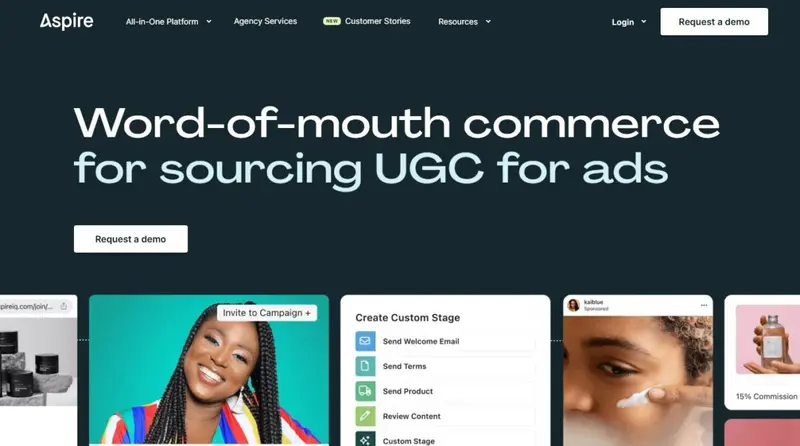
9. Aspire.io

Aspire.io

Best For: Brands managing long-term influencer programs with structured internal workflows

Platform Model: Influencer and creator partnerships managed across ongoing campaigns

Primary Channels: Instagram, TikTok, YouTube

Campaign Focus: Influencer programs, creator-led content, ambassador initiatives

Pricing: Upon request

Demo: Yes

Notable Clients: Samsung, Hello Fresh, Dyson, Owlet, Monos

Aspire.io is an influencer marketing platform built for brands that treat creator partnerships as an ongoing channel rather than a series of one-off campaigns. It is typically adopted by teams that want to centralize creator discovery, relationship management, content tracking, and reporting in a single system.

Creator sourcing combines database discovery with CRM-style relationship management. Brands can track past collaborations, manage outreach at scale, and organize creators into segments based on performance or strategic value. This makes Aspire.io well-suited for brands running ambassador or repeat-collaboration models.

Content creation is managed as part of broader influencer relationships rather than isolated UGC orders. Aspire.io supports content tracking and approvals, but creative execution and iteration remain brand-led. The platform is less rigid than brief-first UGC tools, offering more flexibility for evolving creator partnerships.

Reporting focuses on campaign performance, creator impact, and historical relationship data. While it provides strong visibility into influencer programs, paid media buying and amplification are handled externally.

Pros

  • Strong influencer relationship management capabilities
  • Scales well for ongoing creator programs
  • Flexible structure for long-term partnerships

Cons

  • Less optimized for high-volume UGC production
  • Requires internal process ownership

How Aspire.io Compares to Twirl

Compared to Twirl’s more production-oriented UGC workflows, Aspire.io emphasizes long-term influencer relationships and program continuity. It fits brands that view creators as an ongoing channel rather than a content supply mechanism.


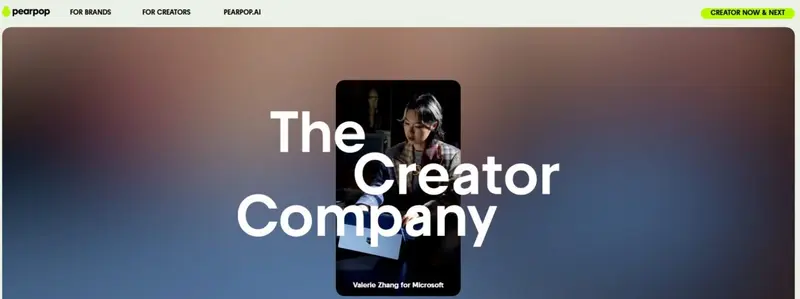
10. Pearpop

Pearpop

Best For: Brands looking to activate creators quickly through campaign-based collaborations

Platform Model: Opt-in creator participation around predefined campaign concepts

Primary Channels: TikTok, Instagram, YouTube

Campaign Focus: Social-first activations, creator-led campaigns, short-form content pushes

Pricing: Upon request

Demo: No

Notable Clients: Microsoft, Alphabet, American Eagle, Activision, Klarna

Pearpop is a creator collaboration platform built around campaign-style activations rather than traditional influencer management. It is commonly used by brands that want to spark participation from a wide creator base around a shared concept, challenge, or launch moment.

Creator sourcing is largely inbound. Brands publish campaigns with defined creative direction, and creators opt in to participate. This model reduces outreach effort and allows brands to tap into creator momentum quickly, especially for time-bound or trend-driven campaigns.

Content production is centered on the creator’s interpretation rather than tightly controlled briefs. While brands set high-level guidelines, creators retain flexibility in how they execute content. This makes Pearpop well-suited for social-native campaigns, but less predictable for brands that require strict asset specifications or guaranteed output volume.

Reporting focuses on participation, reach, and engagement at the campaign level. Pearpop does not manage paid media execution, and brands typically evaluate performance using external analytics tools.

Pros

  • Fast creator participation and activation
  • Strong fit for trend-driven campaigns
  • Low-friction creator onboarding

Cons

  • Less control over individual asset specifications
  • Limited suitability for structured UGC production

How Pearpop Compares to Twirl

Compared to Twirl’s more controlled content workflows, Pearpop prioritizes creator momentum and participation. It fits brands that want to activate creators around shared campaign ideas rather than manage tightly scoped UGC production pipelines.


Which Twirl Alternative Best Fits Your Brand?

Choosing the right alternative depends on how your team prefers to run creator and UGC campaigns.

  • Brands prioritizing large-scale creator discovery and outbound outreach often align with Modash
  • Teams running multi-market campaigns with collaborative workflows may prefer Humanz
  • Marketers seeking an all-in-one influencer operations platform often choose Creator.co
  • Performance teams needing fast, repeatable video output tend to use Billo
  • Brands looking for quick, transactional creator bookings often lean toward Collabstr
  • Teams producing repeatable UGC with structured briefs may favor Insense
  • Brands scaling inbound UGC across regions often align with Influee
  • Ecommerce teams needing predictable UGC fulfillment frequently use Trend.io
  • Brands managing long-term influencer programs typically select Aspire.io
  • Teams launching social-first or trend-driven campaigns often choose Pearpop

Platform

Best For Core Strength Content Model Primary Channels

Pricing

Modash In-house influencer teams Creator discovery depth Influencer partnerships Instagram, TikTok, YouTube $199
Humanz Multi-market campaign teams Collaboration workflows Managed creator campaigns Instagram, TikTok, YouTube Upon request
Creator.co Centralized influencer operations End-to-end campaign management Structured creator workflows Instagram, TikTok, YouTube $460
Billo Performance marketing teams Fast UGC video production Pre-scoped UGC orders TikTok, Instagram, Facebook Upon Request
Collabstr Quick creator bookings Marketplace simplicity Fixed creator packages Instagram, TikTok, YouTube Free; $299
Insense Repeatable UGC production Briefing and approvals Creator submissions Instagram, TikTok, Facebook $500
Influee Scalable inbound UGC Global creator access Brief-based UGC Instagram, TikTok $299
Trend.io Predictable UGC fulfillment Vetted creator pool Brief-based production Instagram, TikTok, Facebook $550
Aspire.io Long-term influencer programs Creator relationship management Ongoing partnerships Instagram, TikTok, YouTube Upon request
Pearpop Social-first activations Creator participation momentum Campaign-based opt-in TikTok, Instagram, YouTube Upon request

Choosing the Right Twirl Platform Alternative

Choosing a Twirl alternative is ultimately about alignment, not feature count. Each platform reviewed here supports a different execution style, from high-volume UGC production to long-term influencer relationship management. The right choice depends on how your team operates today and where you expect your creator program to go next.

Brands with mature in-house processes often benefit from platforms that offer flexibility and control, while teams prioritizing speed or predictability may prefer more structured production models. What matters most is clarity around ownership, workflow, and scalability.

When the execution model fits your internal reality, creator platforms become enablers rather than bottlenecks, helping teams scale content and campaigns with confidence rather than complexity.

Frequently Asked Questions

Are Twirl alternatives suitable for small internal marketing teams?

Yes. Many platforms are designed specifically for lean teams, and some influencer marketing platforms for small businesses prioritize simplicity, automation, and reduced operational overhead.

Do any Twirl alternatives work well for B2B creator campaigns?

They can, especially when the platform supports long sales cycles, niche creators, and relationship tracking, which is a common requirement across B2B influencer marketing platforms.

Which platforms are better suited for ecommerce brands?

Ecommerce teams often benefit from tools that integrate with storefronts and paid media workflows, which is why many brands evaluate eCommerce influencer marketing software platforms when scaling UGC.

Can micro-influencer campaigns be managed effectively on these platforms?

Yes. Several alternatives emphasize creator authenticity and volume over reach, aligning closely with the use cases covered by micro-influencer platform solutions.

What should brands prioritize when comparing influencer platforms?

Execution model matters more than feature lists, especially when applying guidance similar to how to choose the right influencer marketing platform for your internal setup.

How important is influencer performance tracking when switching platforms?

It becomes critical as programs scale, which is why many brands assess influencer tracking platforms before committing to a long-term solution.

Should brands consider creator earnings transparency when choosing a platform?

Understanding creator economics can influence outreach and negotiations, and tools like an Instagram money calculator help brands set realistic expectations.

Do Twirl alternatives integrate with ecommerce platforms like Shopify?

Some do, particularly those aligned with direct-to-consumer workflows, making Shopify influencer marketing integrations a key evaluation factor for ecommerce brands.

About the Author
Kalin Anastasov plays a pivotal role as an content manager and editor at Influencer Marketing Hub. He expertly applies his SEO and content writing experience to enhance each piece, ensuring it aligns with our guidelines and delivers unmatched quality to our readers.