Most of the brands use an influencer marketing platform to search for influencers and manage their campaigns. Be it a mega or micro-influencer, every brand has one or a number of influencers in its marketing strategy.
Due to the extensive use of influencer marketing platforms by brands, the influencer marketing industry is expected to grow to exceed its $32.55 billion evaluation in 2025. And according to our 2026 Influencer Marketing Benchmark Report, the 72% of marketers expect their influencer marketing budgets to grow by 50% or more in 2026.
However, these platforms can often come with a hefty price tag, making it difficult for small businesses and startups to afford them. But don't worry, there are plenty of free influencer marketing tools that are either fully free or offer a freemium model.
The latter allows you to use the basic features for free, but if you want extra perks, then you need to pay. Let's look at some of these tools to help you find and connect with influencers for your next campaign.
To make influencer discovery more accessible for all brands, Influencer Marketing Hub has collaborated with HypeAuditor to introduce their Rankings tool, which provides a free way to find TOP Influencers by Country and Category, helping brands of all sizes connect with the right influencers for their campaigns.
 Top Authentic Influencers Ranking


- 1. Modash
- 2. Ainfluencer
- 3. Resonate by Linqia
- 4. Shopify Collabs (Formerly Dovetale)
- 5. Swavy
- 6. Discover.ly
- 7. Alltop
- 8. Podbay.fm
- 9. Crowdfire
- 10. Hunter.io
- 11. Similar Web
- What Are Influencer Marketing Tools?
- What to Do When You Find Potential Influencers for Your Brand?
- Top Industries Benefiting the Most from Influencer Marketing
- Budget Breakdown: Comparing Free Influencer Marketing Tools to Paid Influencer Campaigns
- Conclusion
- Frequently Asked Questions
1. Modash
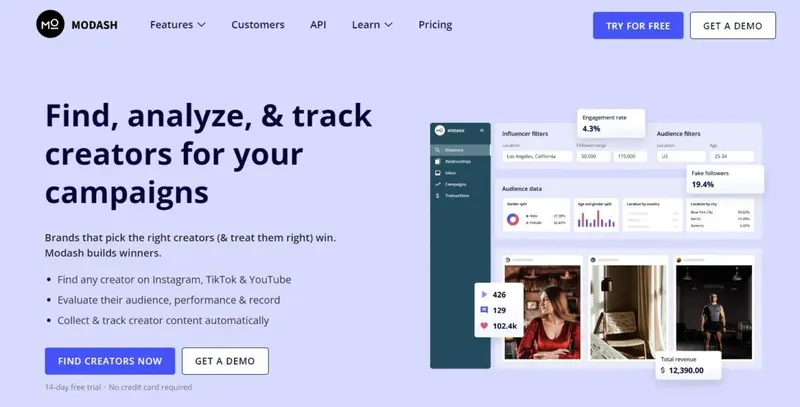
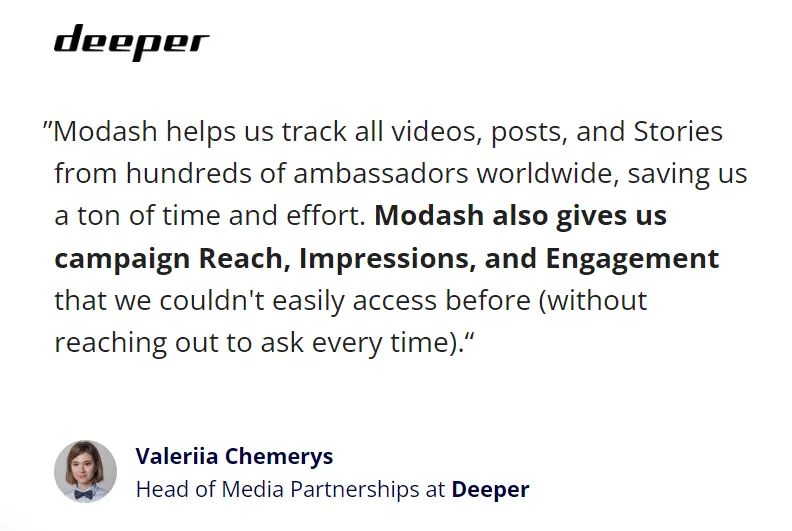
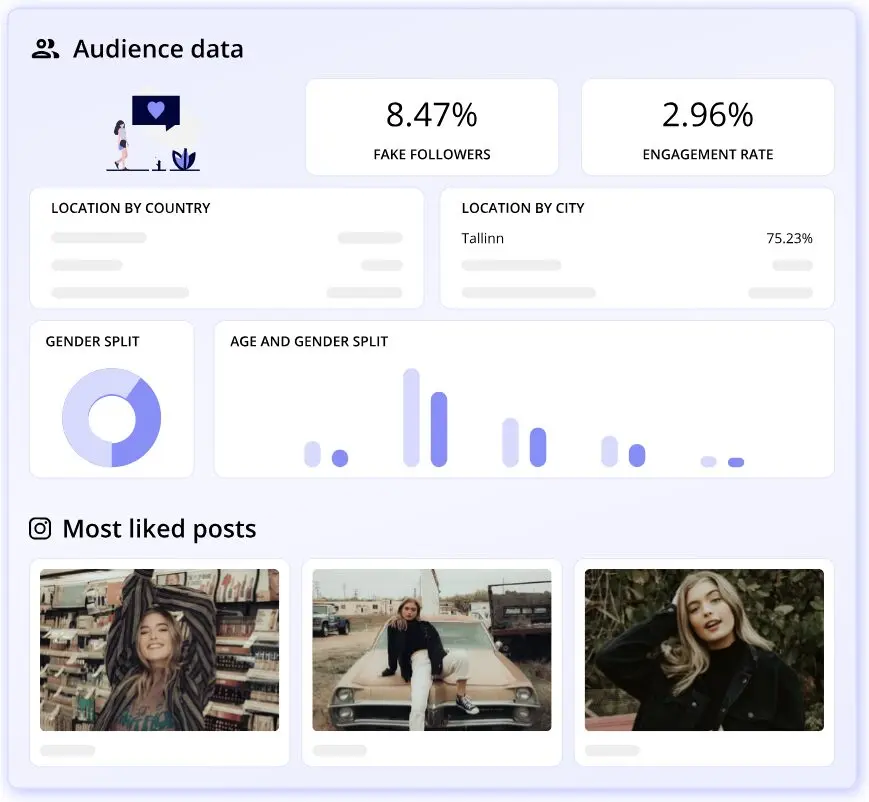
Modash is an influencer marketing platform that provides a comprehensive suite of tools for discovering, analyzing, and monitoring influencers on Instagram, YouTube, and TikTok. With a database covering 250 million profiles, Modash is designed to help brands identify the right creators for their campaigns, evaluate their performance, and track the content they produce.
The tool has been around since 2018 and has worked with some of the biggest names in the tech industry, from Google to Surfshark and NordVPN. But tech isn’t the only industry in which Modash operates. Quite the contrary, Modashs’ client list also includes the likes of Victoria’s Secret, Wolt, Charles & Keith, Joom, Mont Blanc, Airbnb, and more.
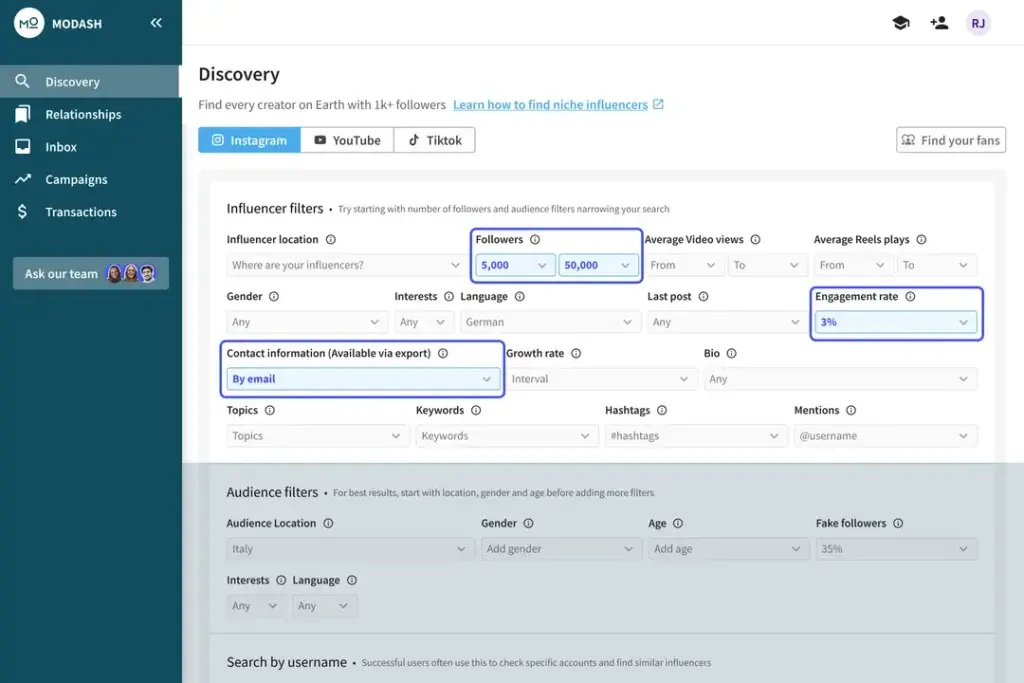
Key Features: Campaign Management, Influencer Discovery, Influencer Analytics, Influencer Campaign Monitoring, Influencer Management,
2. Ainfluencer
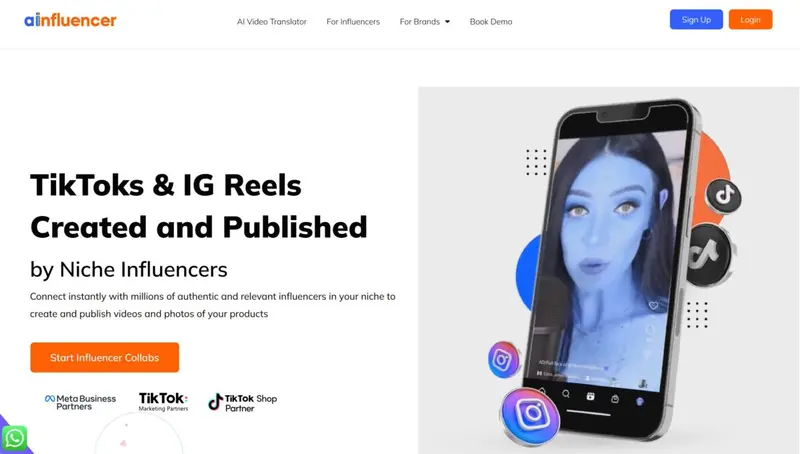
Ainfluencer is a free, self-serve influencer marketplace designed for Instagram and TikTok short-form video and UGC creation. Brands can publish campaigns, invite unlimited creators, negotiate directly in-platform, secure payments in escrow, and track results once content is live.
The workflow is built for efficiency: campaign → invite → offer → delivery → review.
Ecommerce teams in particular benefit from a native Shopify integration that simplifies product gifting, affiliate tracking, and order fulfillment, while Amazon sellers gain access to affiliate-style collaboration options. For companies seeking a more hands-off approach, Ainfluencer also provides a fully managed service where an agency team oversees scouting, contracting, and reporting.
Read More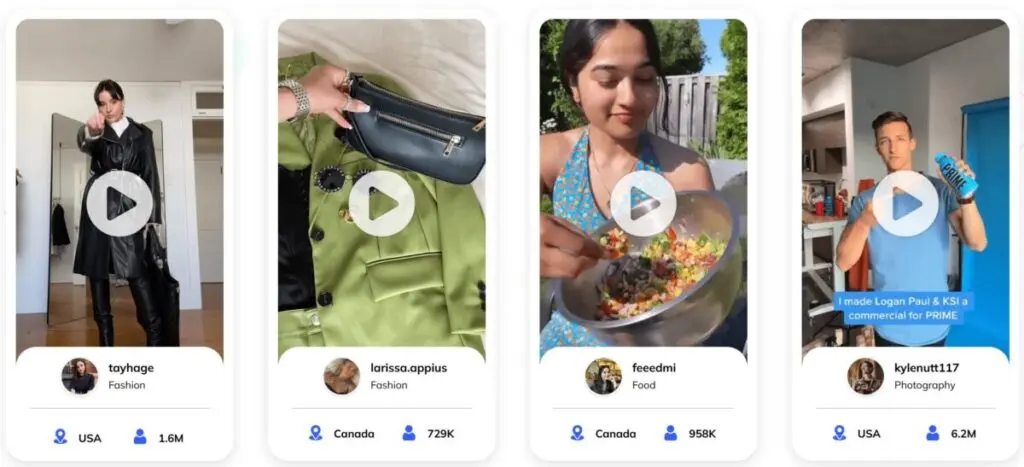
3. Resonate by Linqia
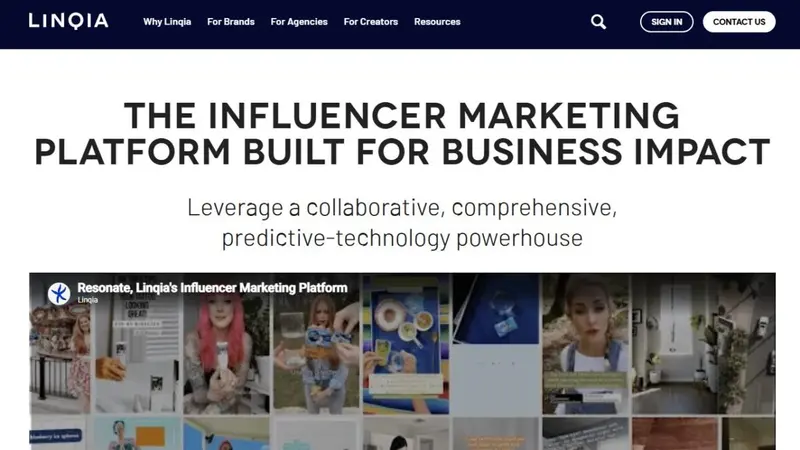
Linqia is an enterprise-focused influencer marketing platform designed to deliver measurable results rather than basic creator discovery. Founded in 2012, the company has executed campaigns for over 650 brands and driven more than $2B in products added to cart.
Its approach combines influencer marketing, content production, and paid media into a single system, with performance tied to predefined KPIs.
The platform is powered by over 1.5B data points and analyzes 25M+ influencer posts to inform creator selection and campaign strategy. Linqia uses image, video, and text recognition to evaluate both influencer content and audience composition, enabling more precise targeting.
Campaign performance is tracked in real time across organic and paid channels, with optimization applied during execution through multivariate testing.
Read More
Key Features: Influencer Search & Discovery, Campaign Management, Fraud Detection and Audience Health, Audience Analysis, Influencer Analytics, Paid Media Amplification, Purchase Funnel Comment Analysis, Google Vision Product/Logo Detection, Conversational AI Campaign Assistance (Marco AI),
Channels: Instagram, TikTok, YouTube, Facebook, Pinterest
4. Shopify Collabs (Formerly Dovetale)

Shopify is among the leading e-commerce platforms out there. But it’s not merely that. Its integrations make it more feature-rich, with offerings like influencer outreach, customer sentiment analysis, and more.
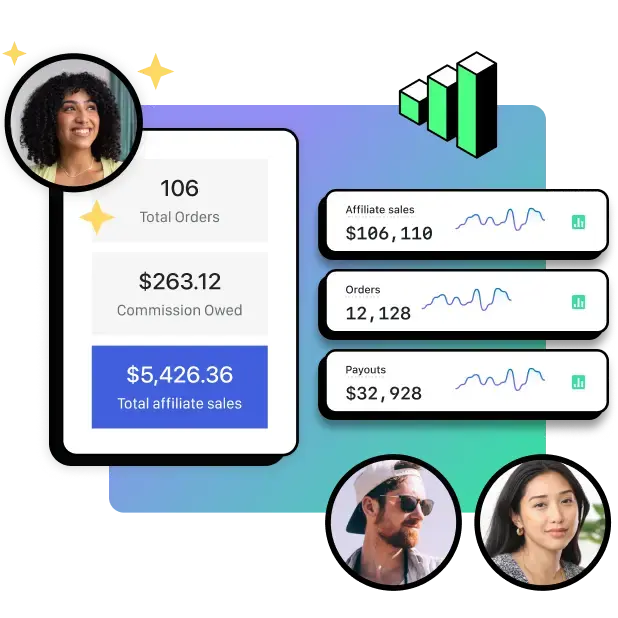
Shopify Collabs, previously known as Dovetale, is one particular integration that helps brands make the most of influencer marketing on Shopify. It’s an all-in-one solution that helps you find influencers and run affiliate campaigns without leaving the Shopify Admin panel.

- Shopify Collabs
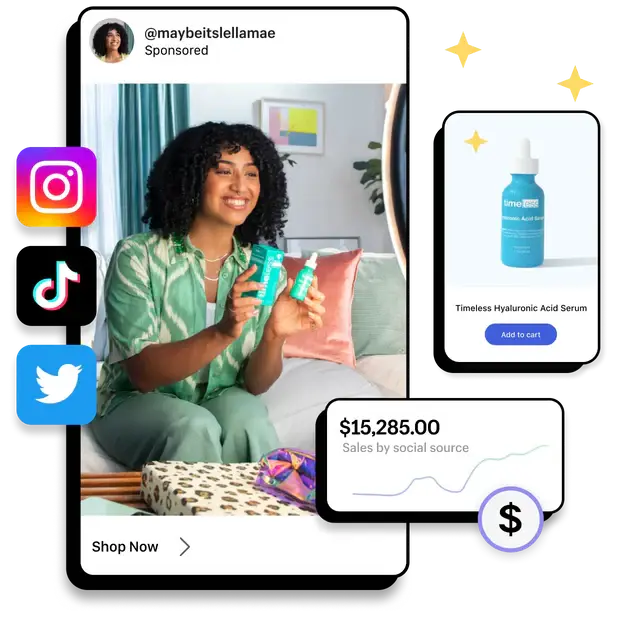
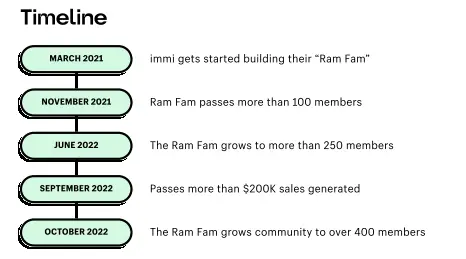
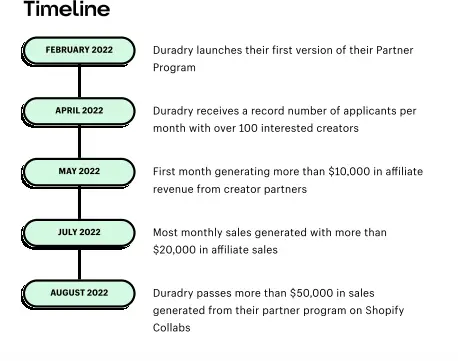
Shopify Collabs is free to install for merchants who already sell on the platform. Many of the Shopify brands like Moonboon, Duradry, and Kyte, use this integration to run their influencer marketing campaigns.
Read More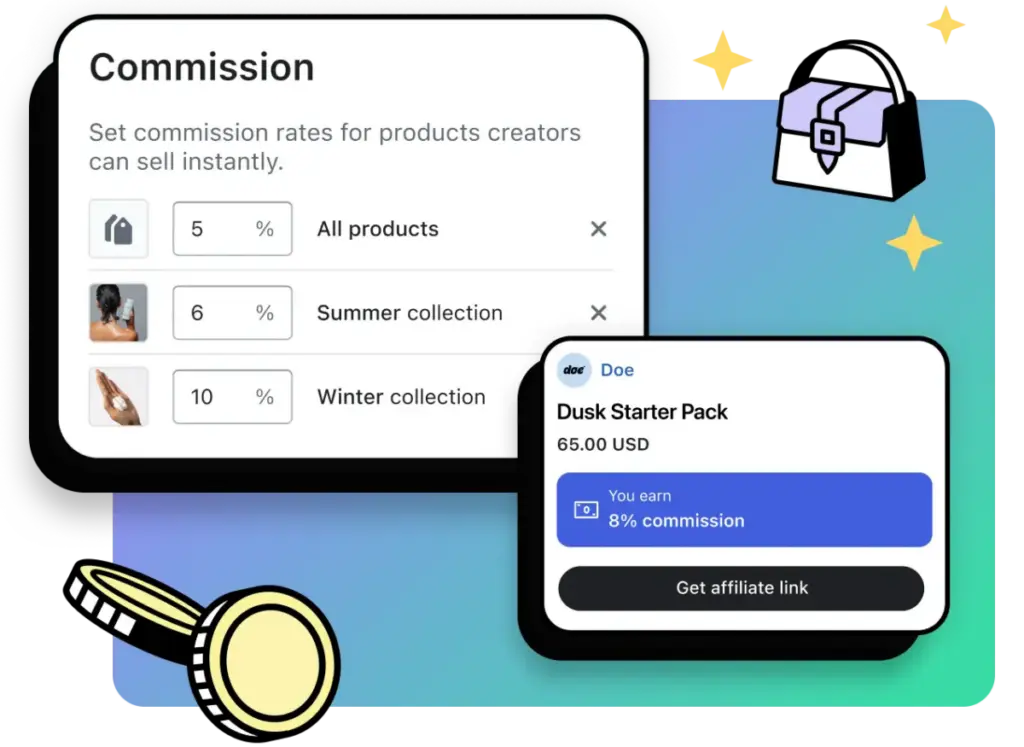
5. Swavy
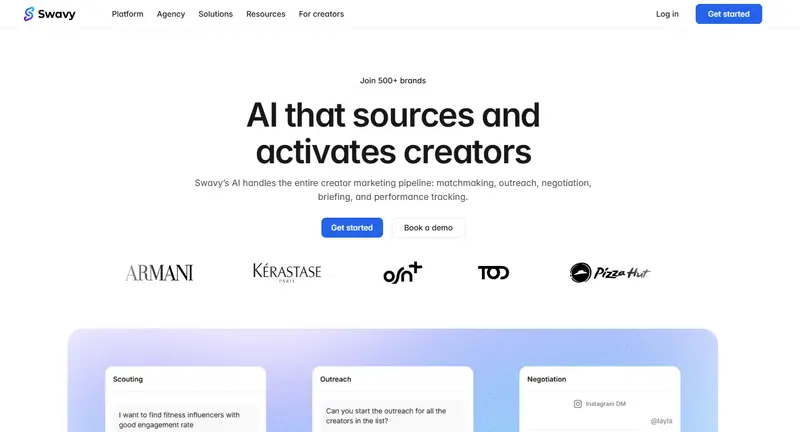
Swavy offers a collection of free influencer marketing tools that brands can use without creating an account. Rather than functioning as a free version of its complete platform, these tools help marketers evaluate individual creators and make better-informed discovery decisions.
Users can enter creator handles directly instead of manually collecting and calculating public performance data.
The free toolkit includes Swavy’s Authenticity Checker, which evaluates audience quality and flags signs of suspicious follower activity, alongside an engagement rate calculator for Instagram, TikTok, and YouTube that compares creator performance with relevant benchmarks. Its brand-fit checker also scores the compatibility between two accounts using factors such as niche, tone, geography, and audience.
Read More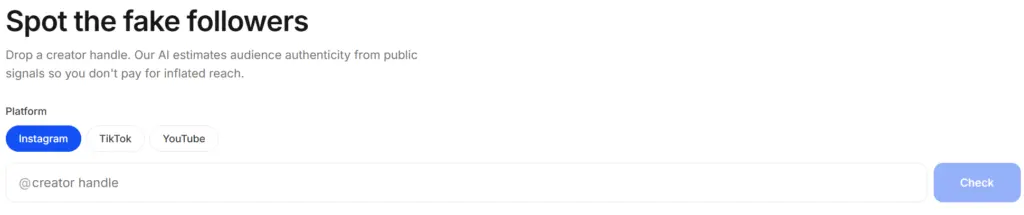

Key Features: Influencer Search & Discovery, Influencer Outreach and Engagement, Global Influencer Payment, Fraud Detection and Audience Health, Influencer Relationship Management, Campaign Management, AI Agent,
Channels: TikTok, Instagram, Snapchat, YouTube
6. Discover.ly
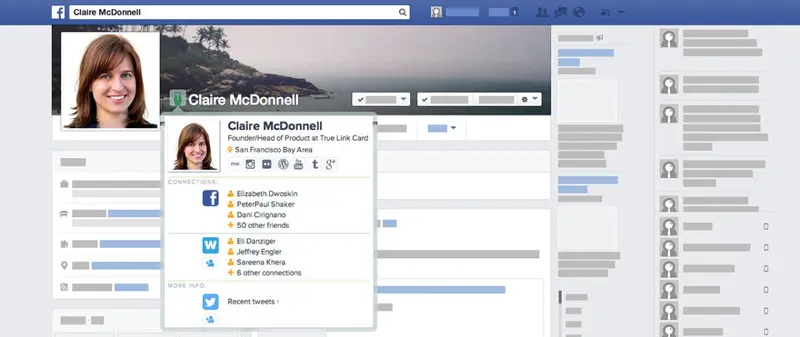
Discover.ly is a Chrome plugin that helps you with your networking. You can use it to see your email recipients, LinkedIn, and Facebook connections’ social accounts and updates in a sidebar. This means, for instance, that you can see mutual Facebook friends for somebody you connect with on LinkedIn.
You can also see your connections’ social media accounts on a wide range of other social media channels and platforms.
One use for Discover.ly is to see if any of your existing contacts have connections with influencers in your niche. If you find any connections, you could then leverage your contacts to introduce you the influencers.
Read More7. Alltop
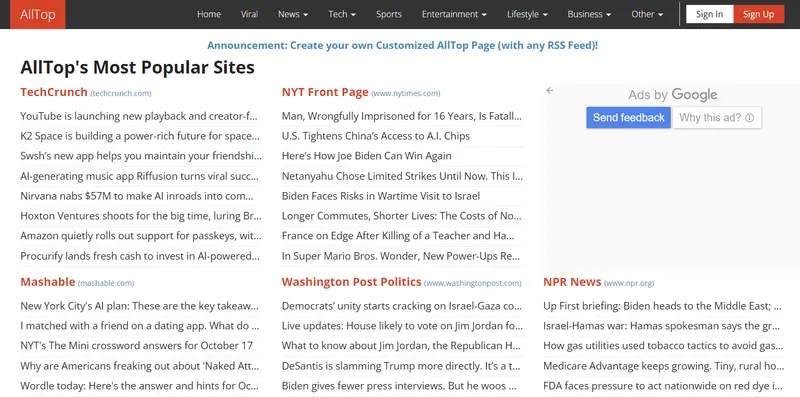
If you are looking for influential blogs, a Google search can be something of a hit or miss affair. It records all different types of websites in its results, and blogs are mixed in with everything else, from sales pages to forums. Alltop can help you here as it simply aggregates blog posts.
It is curated by people, not by an algorithm, who search for the top blog posts each day in particular niches.
You can use it to find the top posts in your niche, which should help give you an idea of the most influential blogs on your topic.
Read More8. Podbay.fm
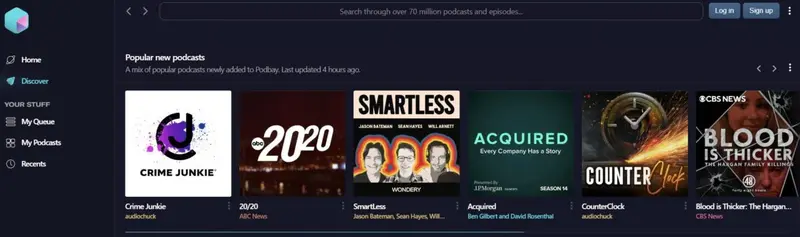
When we talk about influencer marketing we rarely think about podcasting. But podcasting has grown dramatically over the last few years, and quite a few influencers now host their own regular podcast show.
The easiest way to listen to podcasts on iOS devices is via iTunes. On Android, Stitcher is a well-rated app for this purpose.
But, these apps are not so good at helping you find the most influential podcasters in your niche.
Podbay.fm is useful because it ranks podcasts within various genres. Search for the category that best fits your niche.
You may want to find a podcast that uses an interview format so you can request the host to add you to the relevant podcast’s interview list.
Read More9. Crowdfire
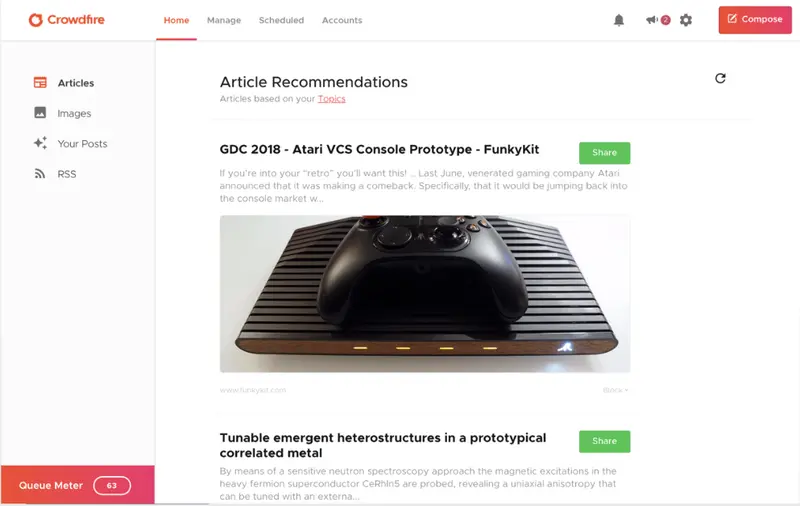
Crowdfire is a freemium social media management platform that comes with powerful features for content search, analytics, and publishing. You can use the platform to discover popular content across the web in the topic of your choosing. This is a great way to discover influential content creators in relevant niches.
Read More
10. Hunter.io
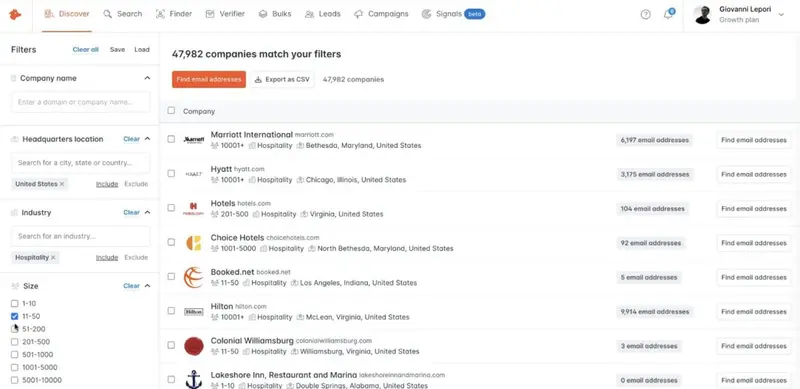
Hunter.io finds email addresses for you. You enter a domain name into their search engine and Hunter.io will do its best to find the email addresses attached to that domain.
Hunter.io can be particularly helpful for finding the email addresses of people who may be of value to your organization. For instance, as part of your influencer campaign, you may wish to ask for a guest blogging post on an influential blog in your niche. It can be difficult at times to find the correct email address when you need to approach them with your request. You can enter a person’s name company website into Hunter.io, and it will come up with a suggested email address.
Read More11. Similar Web

SimilarWeb can be particularly useful if you are trying to find out the demographics that relate particular bloggers. SimilarWeb provides extensive website, industry, and app analysis so you can unlock performance insights for an influencer’s blog. While you need a paid plan to use SimilarWeb on a frequent basis, they do offer a tool that lets you order a free report about any website or app. The free version provides results based on three months of web traffic data.
Obviously, you will want to use other tools to determine which potential influencers’ sites you wish to investigate first before you use up your free allocation of Similarweb research.
Read MoreWhat Are Influencer Marketing Tools?
Influencer marketing tools are essential software platforms that empower brands to discover, connect with, and manage influencer relationships and campaigns effectively.
These tools simplify tasks, streamline processes, and offer valuable insights to enhance the success of influencer marketing efforts.
Key features of influencer marketing tools include:
- Influencer Discovery: Easily find the right influencers for your brand by filtering based on location, hashtags, interests, audience demographics, and engagement rates. For example, Modash enables users to search across multiple social platforms to identify influencers that meet specific criteria.
- Influencer Outreach: Streamline communication with potential influencers by sending pre-written email pitches and tracking online conversations about your brand. Kitly Business facilitates seamless outreach, enabling effective collaboration with partners.
- Campaign Management: Keep track of campaign progress, stay organized, and manage influencer relationships from onboarding to execution. HypeAuditor provides a comprehensive campaign management system to help brands oversee their influencer collaborations efficiently.
- Analytics and Reporting: Gain in-depth insights to track progress, analyze influencer success, measure ROI, and refine future campaigns. Shopify Collabs (formerly Dovetale) offers detailed analytics to help brands understand their campaign performance and optimize strategies.
- Free Influencer Marketing Tools: Take advantage of free tools like Storyclash, which allows brands to identify trending content and monitor influencer campaigns without any financial investment.
- Platform Compatibility: Leverage tools like Creator.co that offer extensive platform compatibility, enabling brands to manage influencer campaigns across multiple social media networks seamlessly.
- Search and Filter Capabilities: Utilize Influence.co's robust search and filter features to pinpoint influencers based on specific niches, engagement metrics, and audience demographics.
What to Do When You Find Potential Influencers for Your Brand?
Influencer marketing is a great way to connect with a target audience and drive engagement. It is also a great way to build a relationship of trust and collaboration.
Once you use these free tools to find influencers who are relevant to your niche, here are four tips to help you get started:
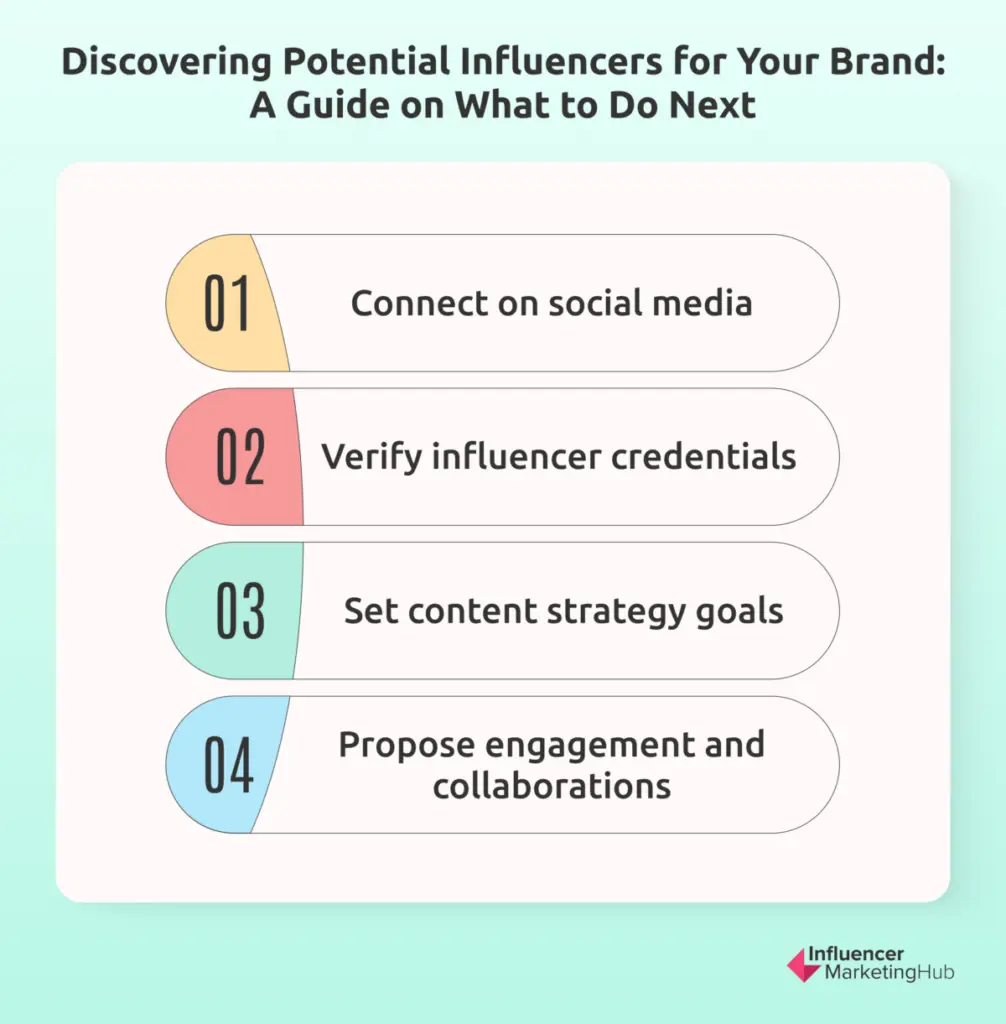
1. Connect with them on their social media platforms like Facebook and Instagram.
Social media is a great way to connect with potential influencers and get to know them better. By following them and engaging with their content, you can start to build rapport and develop a relationship.
Take the time to get to know them and build rapport before asking for anything. Always be respectful of their time and space, and do not bombard them with messages. If you show that you are sincere and genuine, the likelier they will work with you in the future.
2. Verify their influencer credentials.
As influencer marketing continues to grow in popularity, more and more businesses are looking to jump on the bandwagon. However, influencer marketing is not without its challenges, and many businesses make avoidable mistakes that can jeopardize their campaigns.
One of the most common mistakes is failing to verify an influencer's credentials. With so many influencers out there, it can be tempting to work with anyone who seems popular. However, it's important to make sure that an influencer brings relevant value to your brand and that their audience demographics are relevant to your products or services. Otherwise, you could end up wasting time and money on a campaign that doesn't generate any results.
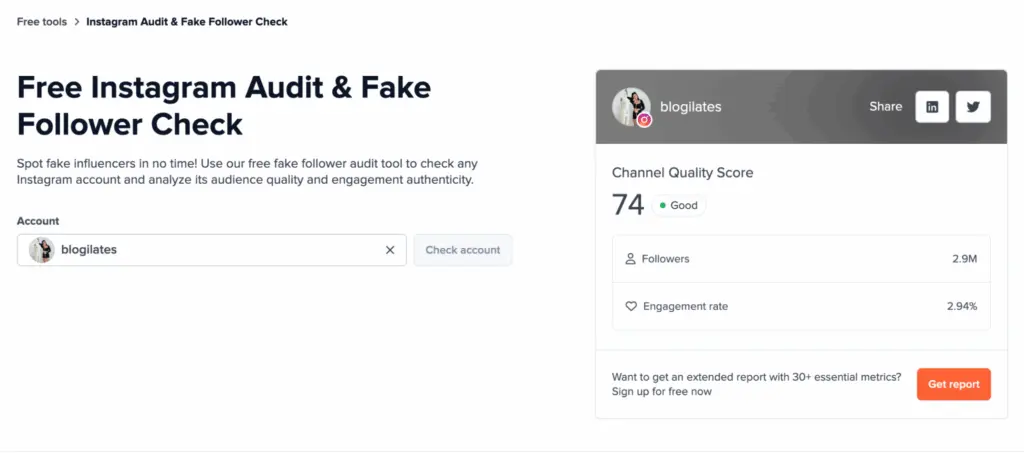
Luckily, HypeAuditor can help you access data on an influencer's audience demographics, engagement rates, and authenticity scores. This tool helps you identify genuine influencers with real followers and meaningful engagement, reducing the risk of partnering with those who might have inflated metrics or a misaligned audience.
3. Create content strategy goals for your influencer campaign.
Before you start reaching out to influencers, it's important to have a content strategy in place. What are your goals for the campaign? Are you looking to increase brand awareness, drive traffic to your website, or boost sales?
With a goal in mind, it will be easier to pitch your campaign to your future influencer. Once you've decided on your goals, be sure to include information about your content strategy and how it can help them achieve their own goals.
4. Make a proposal for engagement and collaborations.
Once you have shortlisted and vetted influencers for your brand, you can prepare to make a proposal for engagement and collaborations.
A well-crafted proposal is essential when pitching to an influencer. You'll need to demonstrate that you understand their audience and have something valuable to contribute. Be specific about the topics you're interested in, and be sure to offer something of real value—either through content or engagement.
Keep in mind that influencers are busy people, so be respectful of their time and resources. If you can make a strong case for why working with you would be beneficial, you're more likely to secure a collaboration.
Top Industries Benefiting the Most from Influencer Marketing
Although influencer marketing has benefited brands across various industries, its usage has been particularly visible in certain sectors. Fashion bloggers, for instance, came to prominence in the mid-2000s and were the driving force for the mainstream popularity of modern influencer marketing. However, the influencer marketing landscape has changed over time with the rise of new social media platforms and changes in media consumption habits.
Now, the beauty and personal care industry seems to be thriving off of influencer marketing. In fact, 32% of all beauty influencer followers come from the United States, cementing the country as a hotbed for influencer content. In alignment with this finding, HypeAuditor also found that brands in the beauty industry are seeing the most influencer mentions. While these mentions aren’t necessarily all sponsored, it gives us context into how actively influencers are talking about brands in this category.
Beauty brands like Glossier can attest to the effectiveness of influencer marketing for this industry. Since the brand was launched in 2014, creators in the space played a significant role in popularizing their products and gaining mainstream reach. The brand activated micro-influencers and content creators relevant to the industry and turned them into advocates to help raise awareness and reach their target audience.
The clothing industry is also benefiting from influencer endorsements. It is estimated that Instagram influencers have the highest audience engagement rates of all social platforms, with 60 times higher engagement than Facebook and 2,000% higher than Twitter. This shows that Instagram is particularly effective for influencer clothing and accessory promotions.
One notable example is Tentree, an eco-friendly clothing brand that leveraged influencer marketing to create worldwide brand awareness and build a community of brand advocates. Initially focusing on traditional sponsored posts, Tentree evolved its strategy to target nano and micro-influencers, producing realistic and relatable user-generated content.
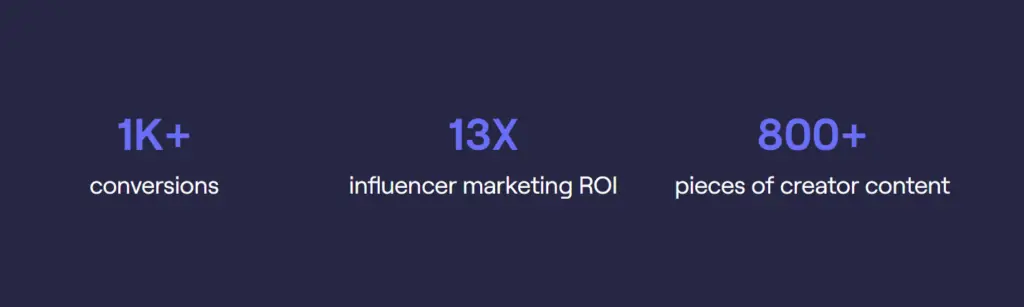
This shift aligned with the authenticity movement, resonating deeply with consumers who favor genuine and trustworthy content. Tentree's influencer marketing campaign managed through GRIN, achieved significant success, with over 1,000 conversions, more than 800 pieces of creator content, and a 13x return on investment.

Meanwhile, the HypeAuditor report ranks clothing and outfits as the third most active brand category in influencer marketing. In this report, music was the second biggest brand category.
It’s important to note that the HypeAuditor study only specifically looks at brand mention frequency in influencer posts to conduct this study. While this is an effective measurement of the popularity of influencer marketing in certain industries, it doesn’t paint a complete picture.
For instance, it may not be able to account for topics that interest people on video platforms such as YouTube. In fact, when measured by success, gaming is the leading niche on YouTube. This isn’t surprising considering how big gaming influencers are on platforms like YouTube.
In fact, gaming influencers were behind the viral success of Resident Evil 4 VR. For its first AAA release in VR, Meta Quest partnered with influential gamers to revive the franchise and reignite the hype. With gameplay compilations, livestreams, and interactive content, gaming influencers managed to drive 61.2 million impressions and 15.8 million views. As a result, Resident Evil 4 VR turned into one of the most anticipated releases of the year.
The way different industries make use of influencer marketing platforms can also give us a better picture of which industries get the most benefit from it. According to Grand View Research, fashion and lifestyle brands dominate the influencer marketing platform market. Influencer marketing platforms also see significant adoption among brands in the food and entertainment and travel and holiday segments.
Budget Breakdown: Comparing Free Influencer Marketing Tools to Paid Influencer Campaigns
When you’re working on a limited budget, spending a few hundred bucks just for influencer identification may feel like a waste. So leveraging these free influencer marketing tools can be a viable solution if all you need is some basic identification capabilities along with essential performance metrics such as engagement rate. This is particularly true for small-scale campaigns involving just a handful of influencers that you can manually manage yourself.
Most influencer marketing tools will set you back at least $200-$300 per month for access to more advanced features, which may vary from platform to platform. In some cases, paid plans can grant you access to more searches and more advanced audience insights whereas some will even offer tools for campaign management and influencer payment.
But your influencer marketing costs won’t end there as you’ll also need to pay influencer fees and other campaign expenses, which can ultimately add up to cost thousands of dollars. Moreover, you may not necessarily run influencer marketing campaigns on an ongoing basis, which means those monthly payments become unnecessary expenses.
Here’s a quick budget breakdown of a hypothetical campaign involving 20 influencers paid $100 each using a tool that costs $350 per month.
- Platform costs - $350
- Influencer payments - 20 x $100 = $2,000
Total expenses = $2,350
So if you only need to find a few influencers for a one-off campaign and you only have a few basic selection criteria, a free influencer marketing tool may be able to provide everything you’re looking for.
That said, you should be capable of dedicating time and resources into other aspects of your influencer campaign such as communicating with influencers, managing your campaign, monitoring performance, paying influencers, and more. This makes it ideal for those that are just starting out as it gives them the opportunity to experiment with this marketing strategy.
Here's another budget breakdown of a hypothetical campaign also involving 20 influencers paid $100 each.
- Platform costs - $0
- Influencer payments – 20 x $100 = $2,000
Total expenses = $2,000
For businesses that have to run large-scale campaigns and work with a bunch of influencers on an ongoing basis, it helps to invest in an influencer marketing platform to save time and streamline your campaign management, as Tentree did with GRIN.
While Tentree initially had 20 creators in their influencer program, GRIN helped them scale this number to 80. Managing such an increase could have been daunting and costly, but GRIN’s influencer management platform streamlined the process, making tasks like sharing commission links seamless and resolving many of the management challenges Tentree faced. This efficient management ultimately contributed to Tentree achieving an impressive 13x return on investment from the campaign.
Others may even see the benefit in outsourcing everything to an influencer marketing agency instead of paying for their own tool. This will allow you to set a budget and have experts work around it while you save time and resources to focus on other aspects of your business. There are no recurring expenses and you only pay when you’re running a campaign.
Conclusion
Influencer marketing tools offer features like influencer discovery, campaign management, and performance analysis to enhance marketing efforts. Explore the sections below for an overview of other influencer marketing tools and platforms you need in your arsenal to enhance your marketing strategies: Yes, you can find influencers without using expensive agencies by leveraging social media platforms and online tools. Start by using platform-specific search features, such as Instagram's Explore page or TikTok's Discover page, to identify influencers who align with your brand. Additionally, utilize free or low-cost tools like HypeAuditor and Social Blade to analyze influencer metrics and find suitable partners for your campaigns. Influencer marketing tools help brands identify the right influencers by providing advanced search and filtering capabilities that allow users to find influencers based on specific criteria like location, audience demographics, interests, and engagement rates. These tools offer data-driven insights and analytics, enabling brands to evaluate an influencer's authenticity and relevance to their target audience, ensuring effective and impactful collaborations. For small businesses looking to engage in influencer marketing, Modash and HypeAuditor are excellent free tools to consider. Modash offers a robust suite of features for discovering and analyzing influencers across major platforms like Instagram and TikTok, while HypeAuditor provides essential metrics and AI fraud detection to ensure genuine influencer partnerships. Businesses should use influencer marketing tools to identify the right influencers for their niche, manage collaborations, track performance metrics, and ensure ROI by leveraging audience insights and engagement data.Frequently Asked Questions
Comparing Influencer Marketing Tools
Is there a way to find influencers without using expensive agencies?
How do influencer marketing tools help in identifying the right influencers?
What are the best influencer marketing tools for small businesses?
How can businesses effectively use influencer marketing tools?


