Email remains the highest-ROI channel in digital marketing, but choosing the right software has never been more complex. With AI-generated email copy, predictive segmentation, omnichannel automation, and enterprise-grade deliverability becoming standard expectations, how do you know which platforms actually move the needle for your brand?
And with pricing models shifting across subscriber-based, send-based, and usage-based tiers, how can teams accurately forecast their true costs in 2026?
This guide to the best email marketing software platforms for 2026 breaks down how the industry is evolving and what today’s top tools really offer in practice.
From AI-powered email creation to e-commerce-native automation, integrated CRM suites, and creator-focused monetization systems, new patterns have emerged that separate modern email leaders from traditional ESPs.
Alongside detailed reviews, you’ll also find our Email Marketing Cost Estimator Tool to help you budget with clarity and pick a platform built for your next stage of growth.
Summary
Platform:
Best For:
Pricing:
Flodesk
View
Omnisend
E-commerce marketers
From $16
View
Campaigner
Small to medium-sized businesses (SMBs), although also viable for larger companies
From $59
View
SMTP
Small to medium-sized businesses (SMBs), although also viable for larger companies
From $25
View
EmailOctopus
Organisations and businesses
From $8
View
Top Email Marketing Software & Platforms
To create and execute your email marketing strategy successfully, you'll need to find the best email marketing software platform for your business. Here’s a look at the best 31 email marketing software platforms and what makes each a good pick.
Best for: Brand-focused businesses, creators, and visually driven ecommerce brands
Key Email Marketing Value: Patented email design infrastructure with custom fonts, branded templates, and consistently rendered layouts across inbox providers
Pricing: Free plan available; paid plans start at $25/month
Free Trial: Yes — 14 days, no credit card required
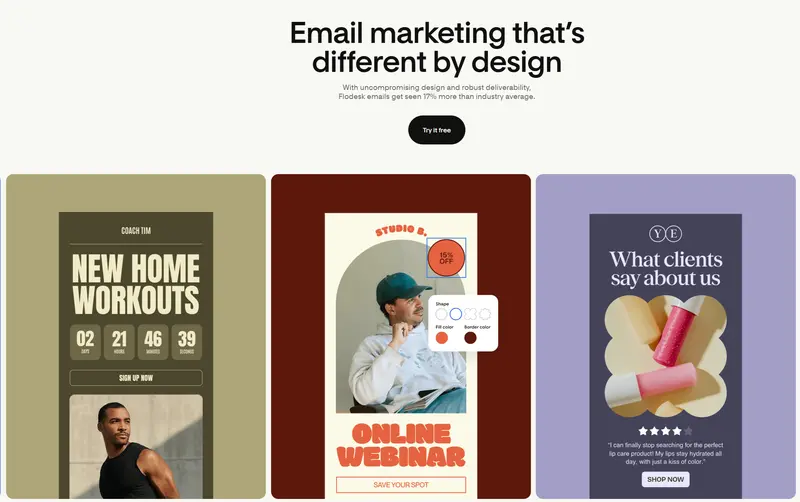
Flodesk is one of the few email marketing platforms that differentiates itself through design rather than automation complexity or enterprise functionality. The platform was built around the idea that email should be an extension of a brand experience, allowing businesses to use custom fonts, branded color systems, image-heavy layouts, and professionally designed templates without sacrificing deliverability.
Most email platforms force marketers to compromise between design and inbox performance. Flodesk’s patented layout technology was built specifically to maintain visual consistency across Gmail, Apple Mail, Outlook, and mobile devices.
Key capabilities include:
Custom font uploads
Brand color management
Drag-and-drop editor
Canva integration
Countdown timers
Polls
Mobile-optimized templates
For businesses where trust is built visually, this creates a significant advantage over more template-constrained platforms.
Deliverability Without Sacrificing Design
A common concern with highly visual emails is deliverability. Flodesk reports approximately 99% deliverability platform-wide and average open rates between 36% and 47%, compared to industry averages near 21%. The company also states that image-rich emails do not negatively impact inbox placement when properly authenticated.
A Growing Platform Ecosystem
Beyond email creation, Flodesk now includes forms, landing pages, automations, analytics, and ecommerce checkout functionality.
Data shows:
100,000+ businesses using the platform
13 billion emails sent during the past year
314 million subscribers added by members
$36M+ ARR while remaining bootstrapped
Pros
Industry-leading email design flexibility
Custom font support
Unlimited email sends
Strong deliverability reputation
Built-in forms and landing pages
Clean user experience
Cons
Smaller integration ecosystem than Mailchimp
No SMS marketing
No click heatmaps
Limited enterprise functionality
No standalone A/B campaign testing
Why Choose Flodesk?
Choose Flodesk if your email program is part of your brand strategy. While many competitors compete on automation depth or enterprise functionality, Flodesk’s biggest advantage is helping businesses create emails that look like a natural extension of their brand rather than another marketing template.
Best For: Email designers, marketing teams, and agencies focused on scalable email production
Pricing: Free plan available; paid plans from $20 per month
Demo: Yes, demo available
Key Email Marketing Offering: Drag-and-drop email template builder with advanced HTML editing and export-ready templates
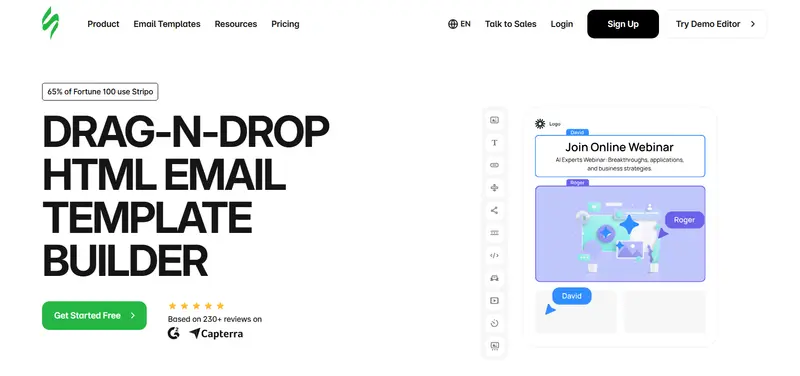
Stripo is an email design and production platform built to simplify how marketing teams create high-quality email templates.
Instead of functioning as a traditional email service provider, Stripo focuses on the email production workflow, helping teams design responsive templates that can be exported to a wide range of email marketing platforms.
With a combination of drag-and-drop design tools, full HTML editing, reusable modules, and built-in collaboration features, the platform helps marketers and developers work together on complex email campaigns.
This makes Stripo particularly valuable for agencies and teams managing multiple brands, campaigns, or email marketing systems.
Drag-and-Drop Builder with Developer-Level Customization
Stripo offers a hybrid email creation environment that supports both visual design and code-based development. Marketers can build layouts using drag-and-drop blocks, while developers can refine templates with full HTML and CSS editing.
This flexibility allows teams to create responsive, highly customized email templates without relying entirely on developers.
It also makes it easier to maintain design standards across campaigns while still enabling advanced customization when needed.
Modular Email Design and Reusable Components
One of Stripo’s key productivity features is modular email design. Teams can create reusable elements such as headers, product blocks, footers, and promotional banners that can be inserted into future campaigns.
These modules help reduce production time while keeping branding consistent across newsletters, transactional emails, and promotional campaigns.
For organizations managing high email volumes or multiple clients, reusable components can significantly streamline the production process
Cross-Platform Export and Email Client Testing
Stripo is designed to work alongside existing email marketing platforms rather than replace them. Once templates are created, they can be exported directly to many major ESPs and marketing tools.
The platform also includes testing capabilities that preview emails across dozens of devices and email clients. This helps teams identify rendering issues before deployment, ensuring consistent email performance across inbox environments.
Proof of Performance
Flowium, an ecommerce email marketing agency, reported 75% growth in flow revenue and a 150% increase in returning customers after improving their email workflows using Stripo.
Cleverbridge achieved strong campaign performance metrics, including a 10.3% open rate, a 5% click-to-conversion rate, and a 0.3% unsubscribe rate after implementing Stripo-generated email templates.
Cooperto also saw a significant operational improvement after integrating Stripo into its workflow, achieving a 200% increase in emails sent compared to the previous year.
Pros and Cons
Pros
Drag-and-drop builder combined with full HTML and CSS editing
Large library of customizable email templates
Reusable modules that speed up campaign production
Collaboration tools for teams and agencies
Export compatibility with many major email marketing platforms
Email testing across multiple devices and clients
Cons
Does not function as a full email marketing platform or ESP
Requires integration with another platform for campaign sending and automation
Advanced capabilities may require some familiarity with email development workflows
Why Choose Stripo?
Stripo stands out as a dedicated email design and production platform rather than a traditional email marketing service provider.
For teams that already use platforms like Mailchimp, ActiveCampaign, or other ESPs, Stripo adds a powerful layer focused specifically on email creation, testing, and template management.
Key Email Marketing Value: Omnichannel automation that unifies email, SMS, and push to increase ecommerce revenue
Pricing: Paid plans begin at $16 per month
Demo: Yes
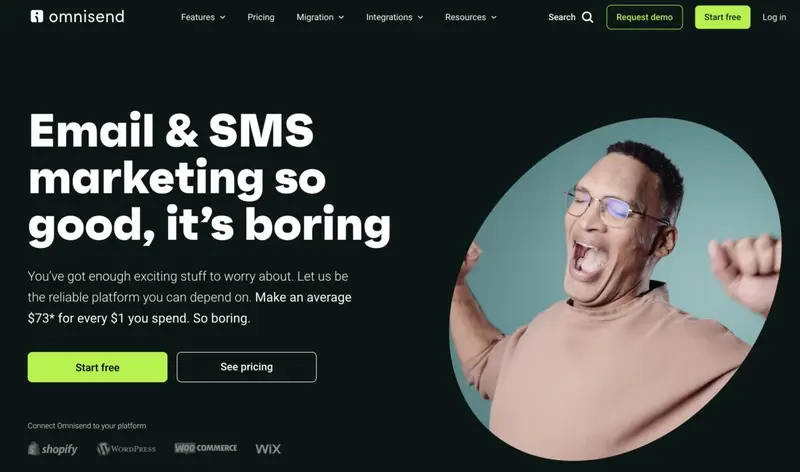
Omnisend is an e-commerce-firstemail marketing and automation platform used by more than 150,000 brands. Its core value lies in unifying email, SMS, and push into a single revenue engine, enabling merchants to run omnichannel lifecycle journeys without stitching multiple tools together.
Recognized as a top-rated e-commerce ESP, Omnisend supports high-growth stores on Shopify, BigCommerce, WooCommerce, and other leading platforms. Their internal analysis shows merchants generating an average of $68 for every dollar spent, underscoring its strong revenue impact for transactional and promotional email programs.
AI-Powered Content and Personalization
Omnisend’s AI tools generate subject lines, preheaders, product copy, and even full email drafts based on past performance and brand tone. This removes creative bottlenecks and increases speed while maintaining consistency. For ecommerce teams that send frequent campaigns, AI-powered variations support rapid A/B testing and a stronger engagement lift.
E-commerce Native Automation
Unlike general ESPs, Omnisend’s workflows are built around ecommerce intent signals like browse abandonment, product views, cart recovery, and SKU-based triggers.
Revenue tracking ties every message to sales, enabling marketers to quickly identify the highest-earning automation paths. Brands routinely use these flows to convert first-time buyers and lift CLV without manual intervention.
Cross-Channel Delivery in One Platform
Omnisend consolidates email, SMS, and push under a single dashboard, allowing synchronized messages without juggling multiple tools. This reduces operational friction, improves attribution visibility, and creates unified customer journeys. Cross-channel analytics show how each touchpoint contributes to conversions, making optimization more actionable.
Proof of Performance
CLVmaxers: 52% open rate on welcome automation, 7.5% conversion rate, 1,000-plus first-time orders in 12 months.
Pasignia: 25% revenue growth, 50% faster campaign launch, 55% average open rates.
Dukier: 525% revenue increase from Omnisend, 55% of revenue from automations, 0.36% unsubscribe rate.
Pros
Powerful ecommerce-native automation
Integrated email, SMS, and push in one platform
Strong AI content creation tools
Excellent revenue attribution and reporting
High deliverability and segmentation depth
Cons
Best suited for e-commerce, not ideal for non-commerce industries
SMS costs vary by region
Advanced automation may require onboarding time for beginners
Why Choose Omnisend?
Omnisend stands out by delivering true omnichannel automation purpose-built for ecommerce brands seeking scalable, revenue-driven email marketing. Its AI tools, deep ecommerce integrations, and proven automation performance make it a strong choice for merchants wanting measurable growth without complex setup.
For brands focused on lifecycle revenue, CLV expansion, and unified messaging across channels, Omnisend is one of the best platforms available.
This all-in-one email marketing automation platform is focused around helping ecommerce companies grow. Omnisend makes it easy to create personalized emails and automate your email marketing to focus on converting visitors to customers.
Ratings
Features & Pricing
Pros and Cons
Ratings
Features
3.8
Ease of Use
4.7
Support
4.7
Overall Score
4.4
Features & Pricing
A/B Testing
Analytics/ROI Tracking
Customizable CTAs
Drip Campaigns
Dynamic Content
Landing Pages/Web Forms
Sales Intelligence
Segmentation
Social Marketing
Website Visitor Tracking
Email Marketing
Marketing Automation
SMS
Web push notifications
Popups & Forms
Reports
Audience sync for ads
Price starting at:$16
Pros and Cons
SMS marketing integration
Contact sync for ads
eCommerce integrations
No RSS feature limits blog connectivity in campaigns
Support can be slow
Unlimited email sends only offered in Pro plan
Best for: E-commerce marketers
4.4 out of 5 stars
This all-in-one email marketing automation platform is focused around helping ecommerce companies grow. Omnisend makes it easy to create personalized emails and automate your email marketing to focus on converting visitors to customers.
Key Email Marketing Value: Deep personalization and multi-channel automation built to increase conversions
Pricing: Starts at $14 per month for the Starter plan; free 30-day trial available
Demo: Yes
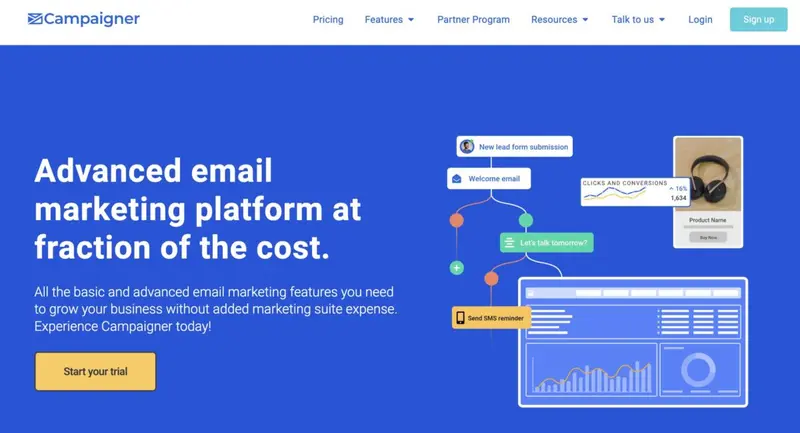
Campaigner is an advanced email marketing service platform with more than 20 years of experience and thousands of customers across industries. Positioned as a high-power ESP without the marketing-suite price tag, it offers enterprise-grade automation, SMS integrations, AI-driven insights, and list verification tools.
Its new AI Insight Builder and Capture by Campaigner add behavioral, demographic, and identity enrichment capabilities that most competitors do not offer. Campaigner is especially strong for marketers who want granular automation and lead-capture technology without paying enterprise pricing.
AI Insight Builder for Deep Contact Intelligence
Campaigner’s AI Insight Builder allows marketers to uncover attributes like income, dwelling type, education, net worth, job title, and more using plain-language queries.
This transforms generic lists into segmented, high-precision audiences. Few ESPs provide demographic and enrichment data at this depth, making Campaigner a strong choice for brands needing highly targeted personalization or advanced lifecycle automation.
Capture by Campaigner for Anonymous Visitor Identification
Capture identifies anonymous website visitors and turns them into marketable contacts, a major differentiator for brands losing traffic without conversions. It retargets visitors who abandon sessions or carts without submitting email information, enabling list growth at significantly lower cost. For e-commerce and finance brands, this unlocks audience volume that would otherwise disappear.
High-Performance Automation Workflows
Campaigner’s visual workflow builder supports email and SMS triggers, validation checks, and multi-branch customer journeys. Users commonly see up to 6x more conversions versus basic drip sequences. Its automation engine includes personalization, behavior tracking, and dynamic content, placing it alongside the strongest workflow tools in the market.
Proof of Performance
Capture accounted for 65% of total list growth for a US financial-services brand.
List growth from Capture grew 176% over 3 months versus standard campaigns.
Campaign generated 80 new registrations at a 25% conversion rate and 186 repeat registrations at a 74.2% conversion rate, with a $0.047 cost per lead across 176,666 leads.
Pros
Advanced enrichment and personalization
Strong automation and SMS support
Capture for anonymous-visitor conversion
High deliverability with Reputation Defender
30-day full-feature trial
Cons
Interface can feel complex for beginners
SMS pricing varies by region
Fewer e-commerce-native features than specialist ESPs
Why Choose Campaigner?
Campaigner is ideal for brands that want powerful automation, contact intelligence, and multi-channel workflows without enterprise pricing. Its AI Insight Builder and Capture functionality provide audience data and acquisition capabilities that most ESPs simply do not offer.
For marketers who rely on segmentation, behavioral triggers, and cost-efficient list growth, Campaigner delivers strong performance and exceptional value.
Campaigner helps you drive sales and revenue using advanced marketing automation, intuitive reporting, and powerful personalization through email and SMS. It even offers a version for eCommerce firms that features Shopify and Magento integration.
Ratings
Features & Pricing
Pros and Cons
Ratings
Features
4.4
Ease of Use
4.4
Support
4.6
Overall Score
4.5
Features & Pricing
Dynamic Content
Segmentation
Landing Pages
Email Templates
Automation Workflows
Conversion Tracking
Drag & Drop Builder
Reusable Content Blocks
Advanced Segmentation
Forms
Reputation Defender
Content Blocks
Geolocation
Conditional Content
Preference Management
Price starting at:$59
Pros and Cons
Lengthy free review period
Intuitive interface and user-friendly
Wide range of features
No forever-free plan for small users
Accessing the free trial isn't always as simple as you'd expect
Template navigation can be challenging
Best for: Small to medium-sized businesses (SMBs), although also viable for larger companies
4.5 out of 5 stars
Campaigner helps you drive sales and revenue using advanced marketing automation, intuitive reporting, and powerful personalization through email and SMS. It even offers a version for eCommerce firms that features Shopify and Magento integration.
Key Email Marketing Value: Premium deliverability for transactional and API-triggered emails
Pricing: Starts at $25 per month for 50,000 emails; free quote available for high-volume plans
Demo: No
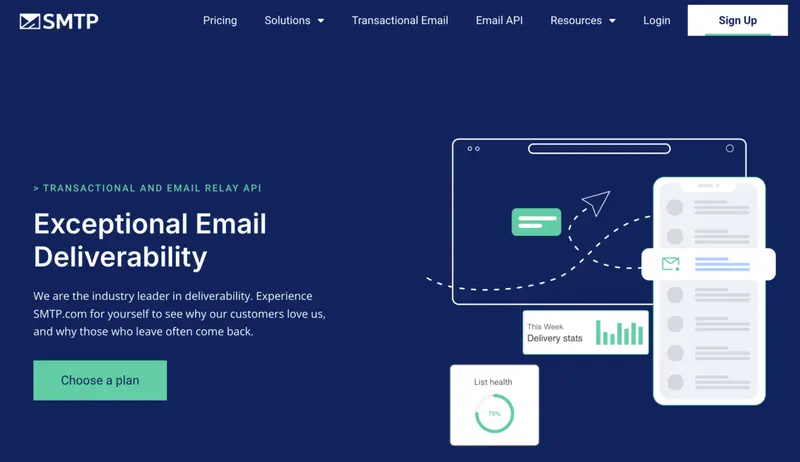
SMTP.com is a dedicated transactional email delivery platform with more than 20 years of expertise in inbox placement and sender reputation management. It is trusted by companies sending high-volume authentication messages, notifications, order confirmations, and system-generated emails that must reach inboxes with near-perfect reliability.
SMTP.com maintains strong relationships with major ISPs and offers a secure, scalable infrastructure that supports everything from thousands to billions of monthly sends. The platform is widely used by SaaS companies, marketplaces, and senders requiring robust API performance.
SMTP.com’s core advantage is its long-standing IP reputationbuilt over two decades. The platform is engineered specifically for high-volume transactional email, focusing on consistent inbox placement rather than marketing automation.
This specialization results in stronger performance for time-sensitive messages like authentication and order confirmations, where latency and deliverability directly affect user experience.
Dedicated Instances and Scalable Sending
Every customer receives a private, secure cloudinstance rather than a shared environment. This architecture gives businesses more control over their domain reputation and allows scalability based on changing send volumes. High-volume senders also receive tailored IP warming, volume ramp-up plans, and account manager support.
Reputation Defender for List and Domain Protection
SMTP.com includes an optional add-on called Reputation Defender, which validates email addresses before sending and suppresses invalid contacts. This protects domain and IP reputation, reduces bounce rates, and improves inbox placement over time.
Businesses sending millions of emails benefit significantly from proactive list hygiene and automated monitoring.
Pros
Exceptional deliverability for transactional emails
Scalable infrastructure for large senders
Private cloud instances for all customers
Dedicated account management for high-volume users
Reputation Defender for proactive list hygiene
Cons
Not designed for advanced marketing automations
No visual email builder
Demo not available
Why Choose SMTP.com?
SMTP.com is an excellent choice for businesses where email deliverability is mission-critical, especially for transactional communications. Its private infrastructure, long-standing IP reputation, and proactive domain protection give it advantages over general-purpose ESPs.
For SaaS products, fintech apps, marketplaces, and enterprises that depend on reliable authentication and notification delivery, SMTP.com delivers exceptional consistency and scale.
SMTP.com claims ISPs believe them to be one of the internet's most reliable and trusted senders. They maintain an impeccable reputation among mailbox providers by proactively vetting out spam and maintaining high delivery rates. Their highly responsive infrastructure ensures virtually no latency and over 99% system uptime.
Ratings
Features & Pricing
Pros and Cons
Ratings
Features
4.3
Ease of Use
4.5
Support
4.6
Overall Score
4.5
Features & Pricing
Segmentation
List Management
Reputation Defender
SMTP Email API
Transactional emails
Managed email delivery
SMTP for developers
Geolocation
API Integrations
Activity Tracking
Email Management
Migration
Reporting & Analytics
Price starting at:$25
Pros and Cons
Ensures your emails aren't mixed up with spam
Easy to set up
Helpful customer service
No free (or very cheap) plan for those with modest needs
Reporting not as in-depth as some competitors
Email-only – no recognition of SMS
Best for: Small to medium-sized businesses (SMBs), although also viable for larger companies
4.5 out of 5 stars
SMTP.com claims ISPs believe them to be one of the internet's most reliable and trusted senders. They maintain an impeccable reputation among mailbox providers by proactively vetting out spam and maintaining high delivery rates. Their highly responsive infrastructure ensures virtually no latency and over 99% system uptime.
Key Email Marketing Value: Affordable email marketing with easy design tools and simple automation
Pricing: Starts free for up to 2,500 subscribers and 10,000 emails per month; paid plans begin at $10 per month
Demo: No
EmailOctopus is a lightweight, budget-friendly email marketing platform trusted by more than 102,000 companies and organizations. Built for simplicity and affordability, it offers intuitive design tools, subscriber growth features, segmentation, and basic automation without the complexity or cost of larger ESPs.
Popular among bloggers, creators, community brands, and small ecommerce stores, EmailOctopus delivers essential email marketing capabilities while keeping pricing highly accessible. Notable users include Popbitch, which sends newsletters to 300,000 subscribers through the platform.
Cost-Effective Email Marketing for Growing Lists
EmailOctopus differentiates itself with one of the most generous free plans on the market and low-cost paid tiers. This makes it especially appealing for new brands or creators who need reliable email sending without high monthly fees. For nonprofits, bloggers, and side projects, EmailOctopus provides core features at a fraction of the price of mainstream ESPs.
Simple Drag-and-Drop Builder and Templates
The platform includes customizable templates and an intuitive drag-and-drop builder, allowing users to create polished emails quickly. This keeps the learning curve low and reduces production time for small teams. Its editor is designed for speed and usability, making it ideal for users without design or technical skills.
Audience Growth Tools and Easy Onboarding Automation
EmailOctopus includes embeddable signup forms, landing pages, and seamless subscriber imports, helping users build and manage lists effectively. Its simple automation workflows support welcome sequences and basic onboarding, ensuring new subscribers receive timely, relevant messages without manual effort.
Proof of Performance
Dreamville Records saves $1,000 per month after switching to EmailOctopus.
Independent author Liz Gavin saves more than $700 per year using EmailOctopus instead of higher-cost ESPs.
Pros
Very affordable with a strong free plan
Easy-to-use drag-and-drop builder
Good for bloggers, creators, and small teams
Clean segmentation and data-driven personalization
Minimal setup and fast onboarding
Cons
Limited automation compared to advanced ESPs
No SMS or multi-channel capabilities
Not ideal for complex e-commerce workflows
Why Choose EmailOctopus?
EmailOctopus is an excellent option for creators, small businesses, and nonprofits that need simple, affordable email marketing without unnecessary complexity. Its intuitive builder, list-growth tools, and straightforward automation make it a practical choice for anyone starting or scaling on a budget.
For teams that prioritize cost efficiency and ease of use, EmailOctopus offers remarkable value.
EmailOctopus is a low-cost email marketing platform that helps individuals and companies grow their mailing list and engage their audiences. Their simple platform empowers users to build effective campaigns with a personal touch for less.
Ratings
Features & Pricing
Pros and Cons
Ratings
Features
4.0
Ease of Use
4.6
Support
4.6
Overall Score
4.4
Features & Pricing
Analytics/ROI Tracking
Drip Campaigns
Dynamic Content
Landing Pages/Web Forms
Segmentation
List Management
Segmentation and Tags
Import Email Lists
Drag and drop Email Editor
Developer API
App Integrations
GDPR Compliant
Campaigns builder
Landing page builder
Analytics integrations
Automation
Reporting
Price starting at:$8
Pros and Cons
Affordable pricing with good pro plan.
Great Customer Service with email and live chat.
Good responsiveness to different devices.
No landing page builder.
Limited Segmentation.
Direct integration not available.
Best for: Organisations and businesses
4.4 out of 5 stars
EmailOctopus is a low-cost email marketing platform that helps individuals and companies grow their mailing list and engage their audiences. Their simple platform empowers users to build effective campaigns with a personal touch for less.
Key Email Marketing Value: Easy-to-use email builder with templates, automation, and strong engagement tools
Pricing: Starts at $12 per month for Lite, $35 per month for Standard, and $80 per month for Premium; 14-day free trial available
Demo: Yes
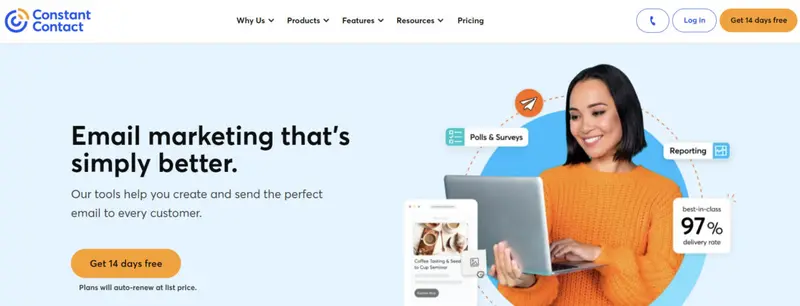
Constant Contact is one of the longest-standing email marketing platforms. Known for its simplicity, large template library, and strong educational resources, it helps teams create polished campaigns quickly.
Its drag-and-drop editor, 600-plus templates, social posting tools, and automated journeys make it accessible to beginners while offering more advanced segmentation and reporting for mid-market users. Constant Contact’s mobile-responsive designs and brand-building features make it especially popular among event-driven businesses, local organizations, and fundraising groups.
Large Template Library and Fast Drag-and-Drop Creation
Constant Contact offers one of the largest design libraries in the email marketing industry. Templates automatically pull in brand colors, logos, and visuals, enabling teams to build professional emails in minutes. Its PDF-to-email converter and BrandKit capabilities further speed up creation.
Built-In Social Media and Multi-Channel Tools
Unlike many entry-level ESPs, Constant Contact includes social publishing, SMS features, and cross-platform sharing, allowing users to repurpose emails into native posts for Facebook, Instagram, and LinkedIn. This multi-channel flexibility makes it attractive for smaller teams that want to streamline marketing across channels.
Strong Support, Education, and Community Resources
Constant Contact provides extensive help materials, phone support, webinars, and community forums. Beginners can quickly onboard, and nonprofits gain access to dedicated resources, including fundraising templates and donor communication workflows.
Proof of Performance
Flavorman achieved 11% list growth, 11% open rate growth, and a 10% higher open rate than industry average.
WellingtonBrewery generated a 50x ROI, $2,300 in average weekly sales, and $36,000 in yearly automation revenue.
Pros
Very easy to use with 600 plus templates
Strong for nonprofits, events, and local businesses
Built-in social publishing and SMS
Robust support and educational resources
Reliable deliverability and mobile-responsive emails
Cons
Less advanced automation compared to higher-end ESPs
Pricing increases with list size
Limited ecommerce automation depth
Why Choose Constant Contact?
Constant Contact is ideal for small businesses, nonprofits, and community-focused brands that need quick, professional email marketing without technical complexity. Its extensive template library, fast editor, and integrated social tools make it a go-to platform for teams managing newsletters, events, and fundraising campaigns.
For organizations that value ease of use, strong support, and dependable engagement results, Constant Contact remains a trusted and proven choice.
Pricing: Starter plans from €11.15 per month; 14-day free trial available
Demo: Yes
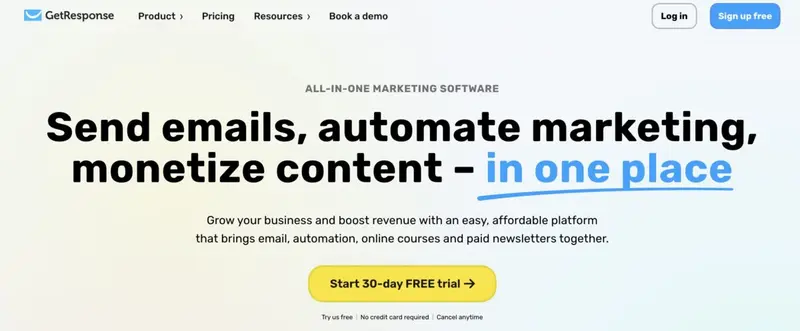
GetResponse is an AI email marketing and automation platform trusted by more than 350,000 businesses worldwide. It helps brands create newsletters, autoresponders, transactional emails, and advanced automation workflows in one easy interface.
Known for its 99% deliverability rate across 160-plus countries, GetResponse is built for teams that need fast creation, high inbox placement, and scalable sending. With features like AI email generation, e-commerce automation, and webinar hosting, it integrates directly into modern digital marketing stacks across retail, SaaS, and publishing.
GetResponse uses AI to generate subject lines, body copy, and design-ready email layouts based on your audience, keywords, and goals. This significantly speeds up campaign production and improves consistency. Their AI can also evaluate tone and relevance, reducing time spent drafting and revising emails.
Enterprise-Grade Deliverability and Volume Handling
Brands that send millions of emails per month choose GetResponse for its 99% deliverability and ability to handle up to 2M emails per hour. Dedicated IP options, authentication protocols, and real-time reputation monitoring give enterprise senders confidence that critical messages reach inboxes reliably.
Behavior-Based Automation for E-commerce
From abandoned cart sequences to product recommendations and transactional updates, GetResponse’s automation engine is built for revenue generation. Dynamic segments update in real time based on browsing and purchasing activity, enabling personalized workflows that boost conversion rates.
Proof of Performance
Livrarias Curitiba achieved a 200% revenue increase from email marketing in 1 year using GetResponse.
GOG sends millions of emails monthly at a 99% deliverability rate, including up to 2M emails per hour.
Pros
AI-powered email and content generation
Strong automation and ecommerce workflows
99% deliverability and high-volume scalability
200-plus templates and drag-and-drop editor
Extensive integrations and webinars
Cons
More advanced features locked behind higher tiers
Learning curve for complex automations
Pricing increases with list size
Why Choose GetResponse?
GetResponse stands out for teams that need fast email creation, reliable inbox placement, and advanced automation without enterprise-level complexity. Its AI tools reduce production time, while its high-volume capabilities make it ideal for ecommerce, publishers, and global brands.
If your priority is personalization at scale and consistent deliverability, GetResponse is a top-tier choice.
GetResponse helps users create automated marketing workflows based on their customers and their customers' behavor. Their easy-to-use system helps deliver a more personalized experience to better engage customers and grow sales.
Ratings
Features & Pricing
Pros and Cons
Ratings
Features
4.0
Ease of Use
3.9
Support
4.0
Overall Score
4
Features & Pricing
A/B Testing
Analytics/ROI Tracking
Drip Campaigns
Dynamic Content
Landing Pages/Web Forms
Lead Scoring
Segmentation
Website Visitor Tracking
Email Marketing
SMS Marketing
Marketing Automation
Signup Forms
Web push notifications
Lead funnels
Price starting at:$13.12
Pros and Cons
Comprehensive conversion funnels to build leads
Excellent list management and segmentation
Advanced automation features
Host webinars through the platform
Poor deliverability rates
Limited pricing points; no free plan
Emails from GetResponse go to "Promotions" in user's inbox
Lack of campaign visualization
Best for: Small and large companies
4 out of 5 stars
GetResponse helps users create automated marketing workflows based on their customers and their customers' behavor. Their easy-to-use system helps deliver a more personalized experience to better engage customers and grow sales.
Key Email Marketing Value: Simple, fast email automation and list growth tools built for beginners
Pricing: Plans from $12.50 per month
Demo: No
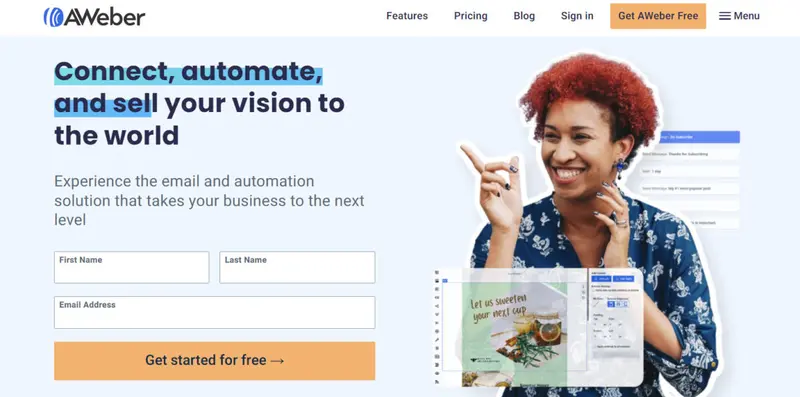
AWeber is one of the longest-standing email marketing platforms, serving businesses since 1998. Known for its simplicity and reliability, it helps small teams design emails, automate sequences, build landing pages, and collect payments without needing technical expertise.
More than 2,000 reviews rate AWeber 4.9 out of 5, reflecting its strong reputation for usability and support. With 750-plus integrations and free account migrations, AWeber fits seamlessly into creator, ecommerce, and coaching workflows.
AWeber’s prebuilt automations come 90% ready, allowing users to launch welcome sequences, upsell flows, abandoned-cart emails, and nurture campaigns with minimal setup. For small teams without technical skills, this drastically reduces onboarding time and boosts campaign performance.
On-Brand Email and Landing Page Creation
The drag-and-drop builder includes templates for newsletters, e-commerce, and lead magnets. Their AI Writing and Subject Line Assistant helps users generate engaging copy faster, ensuring consistent output even without a dedicated designer or writer.
Built-In E-commerce & Payments
AWeber allows users to create simple digital storefronts, accept payments in 100+ currencies, and set up subscriptions or payment plans. This makes the platform a strong fit for creators selling digital products or solopreneurs offering services.
Pros
Very beginner-friendly
AI writing assistance
750 plus integrations
Built-in landing pages and payments
Free migrations and 24/7 support
Cons
Automations are simpler than higher-end competitors
Limited advanced segmentation options
Not ideal for enterprise-scale sending
Why Choose AWeber?
AWeber excels for creators, solopreneurs, and small businesses that want an intuitive platform with everything they need to launch quickly. It removes complexity, offers excellent support, and includes ready-to-use automations that help users grow without steep learning curves.
If you want dependable email marketing without enterprise-level features or costs, AWeber is an ideal fit.
Key Email Marketing Value: E-commerce grade personalization and automation that drives repeat purchases
Pricing: Starts at $39 per month; 14-day free trial available
Demo: Yes
Drip is an e-commerce-focused email marketing and automation platform used by brands like Loebe Shop, Vero Moda, Rainier Watch, and Levels Health. It is built specifically for DTC and retail companies that rely on lifecycle email, segmentation, and high deliverability to maximize sales.
Drip’s editor allows users to pull live product data directly into emails, while its dedicated deliverability team maintains a documented 99.8% inbox rate across the platform. With smart workflows, onsite forms, and dynamic product feeds, Drip plays a central role in helping ecommerce and creator-led businesses grow repeat revenue.
E-commerce Native Personalization
Drip integrates deeply with Shopify, WooCommerce, BigCommerce, and custom storefronts, allowing marketers to add real-time product blocks, cart URLs, and customer-specific data directly into campaigns.
This produces highly personalized messages that outperform standard batch and blast emails and help brands turn shoppers into multi-purchase buyers.
Advanced Visual Workflow Builder
The visual automation builder allows e-commerce marketers to launch highly targeted flows for browse abandonment, post-purchase journeys, winbacks, replenishment reminders, and VIP segmentation. Behavior and lifecycle segments update automatically, ensuring every message is timely and relevant.
Dedicated Deliverability Team
Drip stands out with a specialized deliverability team that actively monitors accounts and provides direct optimization support. The platform maintains a 99.8% delivery rate, giving ecommerce brands confidence that revenue-driving emails will reach the inbox.
Pros
E-commerce native workflows
Dynamic product blocks
Dedicated deliverability support
Easy visual automation builder
Free migrations for larger lists
Cons
Pricing rises quickly for large lists
Not ideal for non-ecommerce industries
Limited landing page capabilities
Why Choose Drip?
Drip is built for e-commerce teams that want smarter segmentation, personalized automations, and high deliverability that directly impacts revenue. Its product-centric tools help brands create experiences that customers genuinely respond to.
If your priority is scaling retention, repeat orders, and lifecycle email performance, Drip is one of the strongest e-commerce-focused options available.
Key Email Marketing Value: Beautiful design tools and flexible automations without complexity or high cost
Pricing: Free plan available; paid plans start at $7.50 per month; 14-day free trial available
Demo: No
MailerLite is an easy-to-use email marketing platform trusted by more than 1M businesses and creators. Known for its clean interface, intuitive drag and drop builder, and generous library of 70+ content blocks, it enables users to create visually polished newsletters, landing pages, and websites quickly.
MailerLite also supports digital product sales, paid newsletters, surveys, quizzes, and advanced automations. With ISO 27001 certification, 24/7 support, and consistently high usability scores, it is a top choice for creators and small brands seeking a powerful yet affordable tool.
Best in Class Design Tools
MailerLite was built by designers, which shows in its pixel-perfect templates, flexible layout controls, and large content block library. Users can embed countdown timers, image carousels, quizzes, galleries, and coupons without external tools.
Accessible but Advanced Automation
Despite its simplicity, MailerLite offers unlimited workflows, multi-step triggers, and conditional content for deeper personalization. Smart Sending uses machine learning to optimize send times automatically.
Integrated List Growth and Monetization
MailerLite combines pop-ups, landing pages, websites, and paid newsletter features in one place. Users can also sell digital products natively, eliminating the need for third party sales tools.
Proof of Performance
Buildcamp recorded an 86% open rate and 7% CTR using MailerLite
100daysofnocode saw a 51% open rate and 11% click rate across 12,000 learners
Privyr increased newsletter open rates by 15% to 20% after migrating to MailerLite
KC Tool achieved a 72% open rate and 7% click rate through ongoing testing
Pros
Extremely easy interface
Strong automation for the price
Large template and content block library
Integrated landing pages and digital product sales
24/7 live support on paid plans
Cons
No built-in CRM
Limited advanced e-commerce features
Some features only in higher tiers
Why Choose MailerLite?
MailerLite gives creators and small businesses powerful design, automation, and monetization tools without complexity or high cost. It is ideal for anyone who values ease of use and polished email experiences while still needing smart personalization and reliable deliverability.
Best for: Entrepreneurs and Medium-Sized Businesses
Key Email Marketing Value: Behavior-based automations tied directly to CRM data
Pricing: Starts at $299 per month for the Pro plan
Demo: Yes
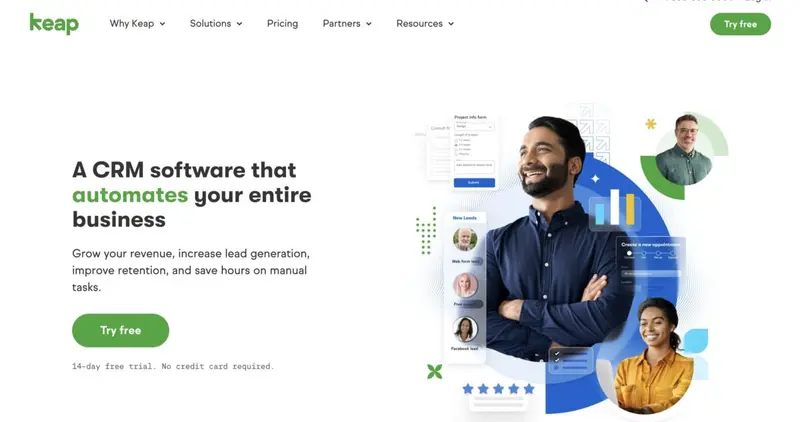
Keap is an all-in-one CRM, sales automation, and email marketing platform. Unlike standalone email tools, Keap integrates contact management, payments, lead capture, segmentation, and automated follow-ups within a single environment.
This makes it a strong option for service-based companies that need nurture sequences linked to customer activity rather than one-off broadcasts.
Keap treats email as part of a broader lifecycle. Contacts are automatically tagged and segmented when they register or submit a form, triggering personalized welcome emails, nurture paths, or sales follow-ups tied to specific behaviors.
Behavior-Based Messaging
Emails can be sent based on client actions, including form submissions, product interest, or pipeline updates. This helps businesses move prospects from awareness to purchase to repeat revenue with minimal manual work.
Template Library for Faster Creation
Keap provides a wide range of modern, styled templates for newsletters and promotions, allowing teams to send polished emails without design expertise.
Pros
CRM and email automation combined
Advanced behavioral triggers
Strong segmentation
Free migration support
Designed for service businesses
Cons
Higher starting price than typical email tools
Overkill for simple newsletters
Fewer e-commerce-specific features
Why Choose Keap?
Keap is ideal for businesses that need more than email broadcasts and want true follow-up automation tied to CRM data. It removes the chaos of manual client management by centralizing contacts, segmentation, invoicing, payments, pipelines, and automated email sequences in one system.
Keap is an email marketing and sales platform intended for small businesses. Business owners can use Keap to help manage customers, customer relationships, marketing projects, and ecommerce goals.
Ratings
Features & Pricing
Pros and Cons
Ratings
Features
4.4
Ease of Use
3.5
Support
4.0
Overall Score
4
Features & Pricing
Segmentation
Calendar/Reminder System
Email Marketing
Marketing Automation Integration
Quotes/Proposals
Territory Management
CRM
Landing Pages
Email Management
Migration
Reporting & Analytics
AB Testing
Easy-to-setup automations
Price starting at:$159
Pros and Cons
User-friendly campaign building
Simple payment platform
Constant follow-up reminders
Custom reporting and visualization
Difficult to set up automation
No user permissions customization
Landing page builder can be clunky
Best for: Entrepreneurs
4 out of 5 stars
Keap is an email marketing and sales platform intended for small businesses. Business owners can use Keap to help manage customers, customer relationships, marketing projects, and ecommerce goals.
Key Email Marketing Value: AI and data-driven insights that improve campaign performance
Pricing: Free plan available; Pricing starts at $6.50 per month
Demo: Yes
Mailchimp is one of the most widely adopted email marketing platforms, powering hundreds of thousands of businesses with automations, templates, segmentation, and analytics.
As a long-standing category leader, it delivers more than 500M emails daily and offers predictive segmentation, multivariate testing, and advanced optimization tools. Its integrations with Shopify, Salesforce, WooCommerce, and 300+ apps make it a versatile choice for teams scaling their email revenue.
Mailchimp analyzes past purchase, engagement, and lifecycle data to predict which subscribers are most likely to buy. This allows marketers to send behavior-aligned messages that lift conversions without manual segmentation work.
Customer Journey Builder and Advanced Automations
The Customer Journey Builder enables branching paths based on clicks, purchases, and site activity. Mailchimp reports up to 4X more orders for users who switch from bulk sends to automated journeys, making this a core differentiator.
Industry-Leading Data Insights and Optimization
Mailchimp recommends send times, subject line improvements, and content adjustments based on real performance benchmarks from top-performing campaigns in each industry. These suggestions help marketers refine emails without advanced analytics skills.
Proof of Performance
Club Soda reports that nearly every campaign directly drives purchases
Yuool recorded a 7.4% click-through rate in welcome flows and 13% of online sales generated via email
Mailchimp claims users see up to 4X more orders when shifting to automated journeys
Pros
300+ integrations
Predictive segmentation and AI insights
Strong automation suite
Wide template library
High deliverability (>99%)
Cons
Pricing scales quickly with list size
Some advanced features locked behind higher tiers
Interface can feel heavy for simple newsletters
Why Choose Mailchimp?
Mailchimp is ideal for marketers who want data-backed optimization without hiring an analytics team. Its predictive segmentation, guided insights, and automation tools turn engagement and purchase data into revenue-focused campaigns.
The platform’s ecosystem and deliverability strength make it dependable for scaling brands that need both ease of use and enterprise-grade features.
Mailchimp has been doing email marketing since the beginning of email marketing, and you’d better believe they know a thing or two about how to do it right.
Ratings
Features & Pricing
Pros and Cons
Ratings
Features
5.0
Ease of Use
4.5
Reporting
5.0
Overall Score
4.8
Features & Pricing
CRM
Email Marketing
Price starting at:$13
Pros and Cons
Free plan that’s actually useful
Tons of automations; you can even automate some of the automations
Creative Assistant enables even the most artless users to send good-looking emails
Several ways to target mailings to the right people
No onboarding or configuration services available
Limited support at the lower end of the subscriptions
Workflow is unclear
Best for: Small, Medium, and Large Businesses
4.8 out of 5 stars
Mailchimp has been doing email marketing since the beginning of email marketing, and you’d better believe they know a thing or two about how to do it right.
Key Email Marketing Value: Industry-leading inbox placement and flexible compliance
Pricing: Starts at $7.49 per month
Demo: Yes
SendX is an email marketing and automation platform designed for businesses that require reliable deliverability, strong compliance, and an intuitive campaign builder.
Trusted by 3,000+ businesses across e-commerce, SaaS, blockchain, media, and regulated categories, SendX emphasizes sender reputation monitoring and advanced deliverability tools.
Industry Leading Deliverability and Sender Protection
SendX invests heavily in deliverability with features like automatic IP warming, sender reputation monitoring, and spam testing. These safeguards ensure inbox placement even for high-volume senders, making it a standout option for businesses that cannot risk hitting spam filters.
Unlike many email platforms that ban crypto, adult, CBD, or gaming businesses, SendX accepts any legitimate operation that follows relevant laws. This makes it uniquely valuable for marketers who are routinely rejected by mainstream ESPs and need a compliant but permissive provider.
Human First, Responsive Support
SendX positions its support as a competitive advantage, offering fast response times, dedicated account managers for large senders, and personalized deliverability guidance. For industries that require high-touch support, this reduces operational risk and accelerates onboarding.
Pros
Exceptional deliverability tools
Accepts regulated industries
Strong segmentation and workflows
Responsive human support
Cons
Fewer e-commerce native features than specialist tools
Template library not as extensive as larger competitors
Limited built in AI compared to newer ESPs
Why Choose SendX?
SendX excels where reliability, deliverability, and compliance matter most. If your business operates in a sensitive category or sends at scale, the platform’s permissive policies and deliverability focus offer a level of stability that mainstream ESPs often cannot match.
It is a strong fit for marketers who need dependable inbox performance and real human service rather than restrictive automation-led platforms.
SendX is a budget-friendly, intuitive email marketing software intended for marketers and business owners. With dozens of features, this tool provides a powerful automation plan and 24/7 live support for their users.
Ratings
Features & Pricing
Pros and Cons
Ratings
Features
4.6
Ease of Use
4.7
Support
4.7
Overall Score
4.7
Features & Pricing
A/B Testing
Drip Campaigns
Dynamic Content
Landing Pages/Web Forms
Customer Surveys
Subscriber Management
Reporting/Analytics
CAN SPAM Compliance
Event Triggered Email
Mobile Optimized Emails
WYSIWYG Email Editor
Auto-Responders
Image Library
List Management
Template Management
Email Campaigns
Embedded Sign Up Forms
Email Drip Campaigns
Email Pop Up Forms
Email Automation
WYSIWYG Drag & Drop Email Editor
Dedicated IP
Price starting at:$7.49
Pros and Cons
Excellent customer support
Comprehensive autoresponder tool to schedule follow-up emails
500,000+ free stock images
Seamless drag-and-drop editor
Limited responsive features for emails
Lack of email templates compared to competition
Expensive price point
Best for: Affordable email marketing
4.7 out of 5 stars
SendX is a budget-friendly, intuitive email marketing software intended for marketers and business owners. With dozens of features, this tool provides a powerful automation plan and 24/7 live support for their users.
Pricing: Starts at $8 per month, free plan includes up to 15,000 emails to 500 subscribers
Demo: Yes
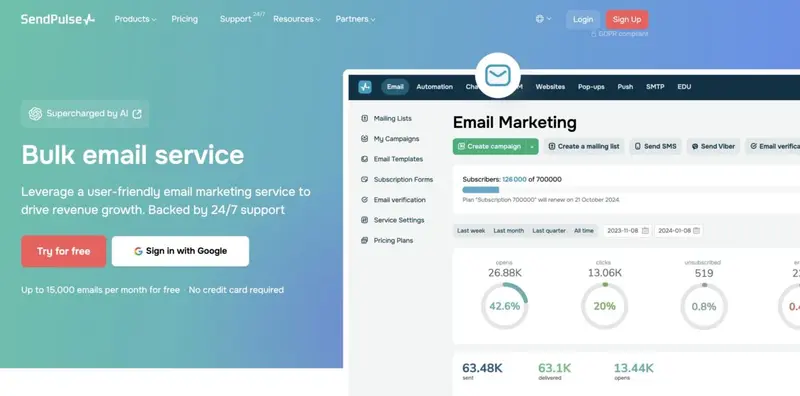
SendPulse is an email marketing and multichannel automation platform trusted by 3M+ users worldwide. Known for its generous free plan and powerful bulk email features, SendPulse helps brands send high-performing campaigns using drag-and-drop templates, dynamic segmentation, and AI-enhanced content creation tools.
Its broader ecosystem includes landing pages, chatbots, CRM, and SMS, making it an accessible all-in-one growth stack.
SendPulse stands out with Automation 360, enabling brands to build workflows combining email, SMS, web push, and chatbot messaging. This multi-touch approach helps marketers orchestrate complex customer journeys using behavioral triggers without needing separate automation tools.
AI-Powered Email Creation and Translation
The platform integrates AI tools to generate body copy, refine content, rewrite subject lines, or translate emailsinto 10 languages. This accelerates campaign production and is valuable for global brands managing multilingual lists.
Robust Segmentation and Real-Time Dynamic Updates
SendPulse supports advanced segmentation using tags, variables, and behavioral criteria. Dynamic segments automatically update based on subscriber actions, enabling targeted messaging such as abandoned cart reminders, inactivity follow-ups, or language-based personalization.
Pros
Generous free plan
Strong automation capabilities
AI content tools and translation
Multichannel workflows
Cons
Interface can feel busy for beginners
Advanced features require paid tiers
Less e-commerce depth than specialist ESPs
Why Choose SendPulse?
SendPulse is ideal for brands that want an affordable, scalable tool that combines email with SMS, chatbots, and push notifications under one platform. Its Automation 360 engine and AI features make it especially strong for teams that want to build sophisticated customer journeys without enterprise complexity.
SendPulse goes beyond email marketing to build a feature-rich platform to help boost their users' marketing strategies. Try out their SMS messaging, web push notifications, chatbots, or drap-and-drop email editor to build a robust campaign.
Ratings
Features & Pricing
Pros and Cons
Ratings
Features
4.0
Ease of Use
4.4
Support
4.3
Overall Score
4.2
Features & Pricing
A/B Testing
Reporting/Analytics
List Management
Template Management
Email Monitoring
CRM
Landing Pages
SMS
Email Campaigns
Online Course Creator
Chatbots
Web Push
Price starting at:$5.20
Pros and Cons
Designed for multiple platforms: email, chatbots, SMS
Great email editor
Sales features integrated to build leads
Chatbot integration for messenger campaigns
Limited pricing range
Free plan has strict limitations
Customer support can be slow and unhelpful
Best for: Small and medium business
4.2 out of 5 stars
SendPulse goes beyond email marketing to build a feature-rich platform to help boost their users' marketing strategies. Try out their SMS messaging, web push notifications, chatbots, or drap-and-drop email editor to build a robust campaign.
Key Email Marketing Value: Unlimited monthly email sends inside a full CRM suite
Pricing: Free plan available; paid plans start at $491 per month (flat fee for all users)
Demo: Yes
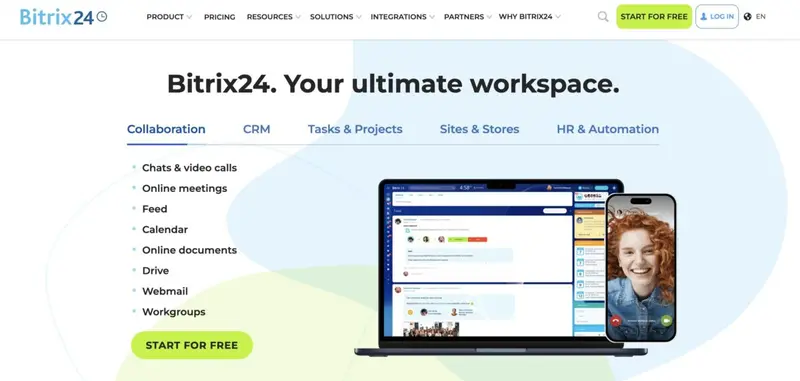
Bitrix24 is not a standalone email marketing platform but an all-in-one CRM and communications workspace used by more than 15M users worldwide. Its email marketing module is integrated directly into the CRM, allowing teams to send promotional, transactional, and automated emails without relying on third-party providers.
Bitrix24 also includes SMS, telephony, landing pages, social ads, and segmentation in a unified system, making it well-suited for businesses seeking an end-to-end customer operations hub.
Bitrix24 allows up to 1,000,000 bulk emails per month with no external ESP required. Marketers can build campaigns using editable HTML templates, segment audiences, and track open and click-through rates, all tied back to CRM records. This makes Bitrix24 compelling for teams that want email and customer data tightly integrated.
Multichannel Outreach Under One Roof
Beyond email, Bitrix24 includes landing pages, SMS marketing, telemarketing via built-in VoIP or SIP connections, and social ad management for Facebook, Instagram, and Google. Marketers can create lookalike audiences, sync CRM segments to ad platforms, and automate messaging across channels through CRM triggers.
Automation + AI-Driven Landing Pages
The platform features rule-based automation for email and SMS, allowing teams to trigger follow-ups based on order updates, payments, and lifecycle events. Bitrix24’s CoPilot AI can generate landing page layouts, copy, forms, and images in minutes, which sync directly into the CRM as leads.
Pros
Unified CRM + email + SMS + telephony + ads
Up to 1,000,000 emails per month
AI-assisted landing pages
Predictable flat pricing for all users
Cons
Not purpose-built for advanced email analytics
Deliverability relies on built-in infrastructure unless integrated with a third-party ESP
Why Choose Bitrix24?
Bitrix24 is ideal for operations-heavy teams that want CRM data, marketing channels, sales workflows, and landing pages in one system. It suits businesses that prioritize multichannel automation rather than deep email-specific features, and teams that want predictable pricing with no per-user fees.
Bitrix24 is a collaborative software that provides a unified platform to manage files, projects, tasks, and contacts. Register for an account and invite colleagues to start collaborating.
Ratings
Features & Pricing
Pros and Cons
Ratings
Features
4.4
Ease of Use
3.8
Support
3.8
Overall Score
4
Features & Pricing
Cataloging/Categorization
Discussion Boards
Knowledge Base Management
Collaboration
Decision Tree
Full Text Search
Self Service Portal
CRM
Import & Export
Instant messengers
Telemarketing
Website widget
Activity Dashboard
Calendar Management
Email Campaign Management
Price starting at:$49
Pros and Cons
Project management tracking
File sharing features
Sales visualization
Some functionality is slow or buggy
Visualization can lack features
Best for: Companies and small businesses
4 out of 5 stars
Bitrix24 is a collaborative software that provides a unified platform to manage files, projects, tasks, and contacts. Register for an account and invite colleagues to start collaborating.
Key Email Marketing Value: Highly personalized, behavior-driven email campaigns built directly on unified customer data
Pricing: Custom pricing; free trial available
Demo: Yes
User.com is an all-in-one marketing automation and CRM platform designed for personalized email campaigns at scale. The platform integrates email marketing, customer data, analytics, automation, and live chat into one unified system, allowing brands to send targeted messages based on real-time behavior, attributes, and engagement.
Customers like DobryMechanik report significant list growth and improved email-driven revenue after adopting the platform.
User.com enables hyper-personalized email campaigns using snippet tags, dynamic content, and behavioral triggers. Marketers can pull in a subscriber’s name, browsing history, past interactions, or event data to send emails that feel personally tailored.
This reduces spam risk and increases engagement because content reflects real user intent, not generic messaging.
Unified CRM + Email + Automation
Unlike standalone ESPs, User.com centralizes email marketing inside a native CRM. Every open, click, and unsubscribe is logged directly in each contact profile. This closed-loop structure allows teams to create advanced automations such as lead nurturing, onboarding, or ecommerce flows using email behavior as a trigger.
It also eliminates tool fragmentation by combining CRM, email, analytics, and automation in a single system.
Highly Flexible Email Creation Tools
Marketers can build emails using a drag-and-drop editor, prebuilt layouts, imported ZIP templates, or full HTML. This flexibility supports everything from simple broadcast campaigns to custom-designed branded newsletters.
Integration with Gmail and external SMTP providers adds further versatility, letting businesses maintain existing workflows while upgrading to User.com’s analytics and automation capabilities.
Pros
Strong personalization and behavioral automation
Unified CRM + email + analytics in one system
Flexible editor with HTML and custom layout imports
GDPR and CCPA compliant
Cons
Pricing is not publicly listed
Can feel complex for small teams with simple needs
Requires initial setup time to fully leverage CRM-based automations
Why Choose User.com?
User.com is ideal for businesses that want to unify CRM data, behavior tracking, and email marketing into a single, automated engine. The platform excels when personalization, segmentation, and customer lifecycle automation matter more than basic email broadcasting.
If your team wants deeper insights, tailored messaging, and multi-touch automations without stitching together separate tools, User.com provides a scalable all-in-one solution.
This all-in-one email marketing automation platform helps boost engagement and improve conversion rates. The platform looks at each user and targets them through different communication channels, including email, live chat, push notifications, dynamic page content, and more.
Ratings
Features & Pricing
Pros and Cons
Ratings
Features
4.4
Ease of Use
4.3
Support
4.8
Overall Score
4.5
Features & Pricing
Dynamic Content
Website Visitor Tracking
Canned Responses
Geo Targeting
Proactive Chat
Third Party Integration
Customizable Branding
Offline Form
Transfers/Routing
CRM
Automation
Push Notifications
Live Chat
Analytics
Price on request
Pros and Cons
Excellent automated marketing tools
Sales and lead generation intgrations
Simple to use
Customer service can be slow
Automation can require technical skills to set up
Slow desktop and mobile platforms
Best for: Small businesses, Startups, Enterprises, Agencies
4.5 out of 5 stars
This all-in-one email marketing automation platform helps boost engagement and improve conversion rates. The platform looks at each user and targets them through different communication channels, including email, live chat, push notifications, dynamic page content, and more.
Key Email Marketing Value: High-performance email creation, sending, and tracking in a Mac-optimized, all-in-one desktop app
Pricing: Starts at $20 per month or per email; free trial available
Demo: No
Direct Mail is a Mac-onlyemail marketing app used by organizations such as Ubisoft, MaxMara, Stanford University, Duke University, VMware, and SAP. Built natively for macOS, it offers a polished, fast, and offline-capable workflow not found in web-based ESPs.
The platform provides email design tools, automated sequences, built-in deliverability infrastructure, real-time analytics, and cloud sync for collaboration. For Mac-centric teams, it delivers a streamlined, reliable, and privacy-oriented email marketing experience.
Native Mac Experience With Professional Email Tools
Direct Mail leverages macOS capabilities for superior performance, smooth UI, and tight system integration. Users get a desktop-class editor, offline access, local caching, and lightning-fast rendering that web apps cannot match. For Mac-first businesses, this improves efficiency and eliminates latency found in browser-based platforms.
Fast, Reliable Sending Infrastructure
The platform provides high-deliverability sending with built-in bounce handling, unsubscribe management, complaint processing, and IP-level reputation protection. Users do not need external SMTPs or plugins. Real-time open and click tracking helps marketers monitor performance the moment emails hit inboxes.
Advanced Automation Without Complexity
With autoresponders, timed sequences, and behavior-triggered messages, teams can deploy welcome flows, birthday emails, onboarding drip campaigns, and recurring outreach. Automations are intuitive, making them accessible to freelancers and small teams without needing a dedicated marketing ops specialist.
Pros
Fully native macOS experience
Strong deliverability and real-time analytics
Easy-to-use automation and template tools
Cloud sync supports team collaboration
Cons
Mac-only; not suitable for Windows or cross-OS teams
Limited enterprise-grade automation compared to all-in-one CRMs
No live demo
Why Choose Direct Mail?
Direct Mail stands out for Mac users who want a fast, intuitive, and reliable email marketing tool without the overhead of browser-based platforms. Its polished macOS design, strong deliverability, and powerful automation capabilities make it ideal for freelancers, creators, agencies, and small businesses that operate primarily on Apple devices.
If your workflow lives on the Mac ecosystem, Direct Mail provides one of the most seamless and efficient email marketing experiences available.
Direct Mail is a macOS app that features a host of powerful email marketing tools. Features include their easy-to-use email template editor, mailing list sign-up forms, advanced list management tools, and analytics.
Ratings
Features & Pricing
Pros and Cons
Ratings
Features
4.0
Ease of Use
4.8
Support
4.7
Overall Score
4.5
Features & Pricing
Drip Campaigns
Dynamic Content
Landing Pages/Web Forms
Subscriber Management
Reporting/Analytics
CAN SPAM Compliance
Event Triggered Email
Mobile Optimized Emails
WYSIWYG Email Editor
Auto-Responders
Image Library
List Management
Template Management
Price starting at:$15
Pros and Cons
Easy-to-use platform
Offline campaign editing
Simple and comprehensive reporting
Poor customer service
Reporting tools lack comparative features
Email templates can be difficult to use
Best for: All size business
4.5 out of 5 stars
Direct Mail is a macOS app that features a host of powerful email marketing tools. Features include their easy-to-use email template editor, mailing list sign-up forms, advanced list management tools, and analytics.
Key Email Marketing Value: Deep personalization using native CRM data
Pricing: Free plan available, paid plans start at €792 per month
Demo: Yes
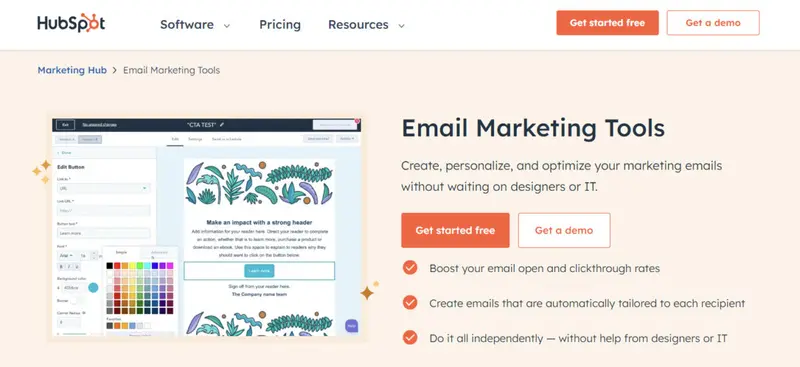
HubSpot’s email marketing stack is part of its broader CRM and Marketing Hub ecosystem, giving teams the benefit of unified data, AI tools, and automation in one platform.
With 248,000+ customersacross 135 countries, HubSpot is trusted for its professional-grade email builder, CRM enriched personalization, and strong analytics. The platform’s AI features help teams generate subject lines, write email copy, and optimize send times without relying heavily on designers or technical support.
HubSpot’s biggest advantage is its tight CRM integration. Marketers can pull in attributes like lifecycle stage, company, past engagement, or deal status to personalize emails at scale. Conditional CTAs and smart content blocks allow each subscriber to receive tailored versions of the same campaign.
AI Tools for Faster Production and Optimization
HubSpot includes an AI email writer and AI subject line generator, streamlining content creation. Premium tiers add messaging insights, which analyze delivery and engagement patterns and recommend improvements. Combined with A/B testing, teams can refine campaigns with data driven precision.
Goal-Based Templates and Drag and Drop Editing
HubSpot provides templates for newsletters, events, promotions, and nurture sequences. The drag and drop interface offers brand consistency and responsive layouts, enabling non-technical users to ship polished campaigns across devices.
Pros
Deep CRM integration
Strong AI writing and optimization tools
Enterprise-grade segmentation and automation
High-quality templates
Cons
Pricing increases quickly as contacts scale
Advanced automation locked behind higher tiers
Some users find the ecosystem overwhelming initially
Why Choose HubSpot?
HubSpot is ideal for businesses that want CRM powered personalization, unified customer data, and AI supported email creation in one scalable platform. It suits teams that want to automate nurture sequences, analyze performance deeply, and run email as part of an integrated marketing system.
Key Email Marketing Value: Easy drag-and-drop email creation supported by AI writing, advanced automations, and strong personalization features
Pricing: Starts at $9 per month; free trial available
Demo: Yes
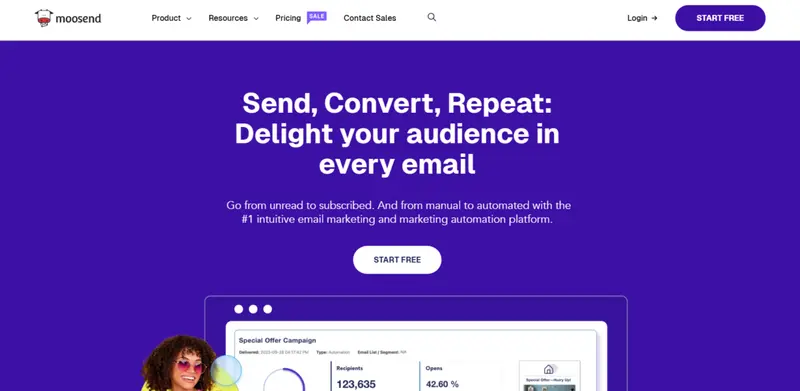
Moosend is an email marketing and automation software platform used by over 100,000 customers worldwide. Its appeal lies in a clean, intuitive drag-and-drop editor paired with advanced personalization, behavioral segmentation, and strong deliverability tools.
The platform includes 110+ responsive templates, AI-powered writing assistance, and a library of pre-built automation “recipes” that help businesses quickly deploy welcome flows, abandoned-cart sequences, onboarding journeys, and product recommendation emails.
With real-time tracking, ecommerce data syncing, and custom reporting, Moosend offers a high-performance stack at an accessible price point.
User-Friendly Email Builder Enhanced With AI
Moosend’s editor allows marketers to build polished emails without code. The AI writer improves subject lines, checks copy, and generates messaging variations, reducing creative bottlenecks. Its responsive templates ensure brand consistency across devices.
Advanced Personalization and Segmentation
Beyond basic name tagging, Moosend supports dynamic content blocks, behavioral targeting, interest-based segmentation, and ecommerce-driven personalization. These tools allow brands to send hyper-relevant campaigns that improve engagement and conversions.
Automation Library Designed for Growth
Moosend provides templates for common workflows such as welcome series, product recommendations, repeat purchase nudges, and RSS-to-email updates. Users can also build custom automations with real-time triggers based on browsing, purchases, or engagement.
Pros
Affordable pricing with strong automation tools
AI writer built directly into the editor
110+ customizable, responsive templates
Real-time tracking and detailed analytics
Strong ecommerce integrations and product recommendation engine
Cons
Not as advanced as enterprise CRMs
Fewer native integrations compared to larger ESPs
Template editor can feel limited for heavy custom HTML users
Why Choose Moosend?
Moosend is ideal for teams that want a powerful, budget-friendly email marketing platform without sacrificing modern capabilities like AI writing, advanced segmentation, and revenue-focused automation.
With strong deliverability, intuitive design tools, and an expanding ecommerce feature set, it helps brands execute campaigns that scale without complexity. For marketers who need performance and affordability in the same package, Moosend delivers one of the strongest value propositions in the email marketing space.
Key Email Marketing Value: Beautiful drag-and-drop email design paired with strong deliverability, simple automation, and clear campaign analytics
Pricing: Starts at $11 per month; free trial available (limited features)
Demo: Yes
Campaign Monitor is known for its beautifully crafted templates, user-friendly drag-and-drop builder, and industry-leading deliverability. Thousands of brands worldwide use it for its clean UI, dependable sending infrastructure, and well-designed customer journey builder.
The platform includes features like personalized content, behavioral triggers, dynamic segmentation, transactional email support, and the unique Marketing Monitor, a benchmarking tool that compares your open, click, and bounce rates against industry standards with tactical recommendations.
Campaign Monitor’s drag-and-drop email builder is one of the most design-forward tools in the ESP market. Every template is responsive and fully customizable. Teams can lock sections to maintain brand guidelines while allowing internal contributors to update only the approved parts.
Approachable yet Capable Automation
Automation is structured through a visual journey designer that is beginner-friendly but still supports essential workflows, including welcome series, post-purchase follow-ups, VIP offers, win-back flows, and multi-step customer journeys. This approachability makes automation achievable for smaller teams that may find other tools overwhelming.
Benchmarking and Actionable Analytics
The platform’s Marketing Monitor provides comparative performance insights and tactical recommendations based on your industry category. Combined with real-time dashboards for every campaign, automation, and transactional email, Campaign Monitor helps teams continuously improve their strategy.
Pros
Best-in-class email template designs
Intuitive drag-and-drop builder
Strong deliverability and reliable infrastructure
Useful benchmarking via Marketing Monitor
Easy automation for non-technical teams
Cons
Pricing scales upward as lists grow
Fewer advanced CRM features since it’s not an all-in-one platform
No true free plan aside from testing with limited functionality
Why Choose Campaign Monitor?
Campaign Monitor is ideal for brands and teams who prioritize professional-quality design, reliable inbox placement, and streamlined workflows. It is particularly strong for publishers, ecommerce teams, and nonprofits that need polished email campaigns without investing in a complex CRM-automation suite.
Key Email Marketing Value: Enterprise-grade deliverability and a powerful email API paired with marketer-friendly campaign tools
Pricing: Starts at $19.95 per month; free trial available for 60 days
Demo: Yes
SendGrid, now part of Twilio, is one of the world’s most trusted email-delivery infrastructures, powering over 148B+ emails per month for brands ranging from startups to global enterprises.
It is best known for its developer-friendly APIs, rock-solid deliverability, and scalable sending environment. With dedicated IP options, real-time reputation monitoring, built-in authentication setup, and expert consulting, the platform is engineered for inbox placement at extreme scale.
On the marketer side, features like the email design editor, automation flows, segmentation, and behavioral triggers make it a versatile solution for lifecycle marketing.
Enterprise-Level Deliverability at Scale
SendGrid consistently ranks among the strongest global infrastructures for inbox placement. Features include automatic IP warmup, bounce management, link branding, SPF/DKIM configuration, and suppression list management. High-volume senders often adopt SendGrid specifically because of its long-standing deliverability reputation.
The Most Developer-Friendly Email API
SendGrid’s RESTful email API, SMTP relay, official language libraries, and extensive documentation make it one of the easiest transactional email tools to implement. Its Event Webhook gives engineering teams real-time insights into opens, clicks, bounces, spam reports, and delivery outcomes.
Marketing Campaign Tools for Non-Technical Teams
Despite its API heritage, SendGrid offers a full marketer suite: drag-and-drop email creator, templates, A/B testing, segmentation, automation, and send-time optimization. The interface is built to accommodate both simple newsletter sends and sophisticated behavior-based journeys.
Pros
Best-in-class API and developer ecosystem
Extremely reliable at high volumes
Strong deliverability tools and reputation management
Full marketer suite with campaigns, automation, and testing
Scalable architecture suitable for startups through enterprise
Cons
More technical compared to purely marketer-focused ESPs
Advanced features (dedicated IPs, expert services) add cost
Interface is less modern than design-centric competitors
Why Choose SendGrid?
Choose SendGrid if your business depends on timely, reliable, high-volume email delivery across both marketing and transactional channels. The platform excels where scale, performance, and deliverability are non-negotiable.
It is particularly strong for SaaS companies, subscription products, ecommerce brands, and apps that require automated triggers, real-time notifications, or lifecycle messaging.
Key Email Marketing Value: Enterprise-grade personalization and cross-channel orchestration powered by AI and CRM data
Pricing: Starts at $25 per month
Demo: Yes
Salesforce Marketing Cloud Engagement, with Email Studio at its core, is one of the most advanced and scalable enterprise email platforms available. Built for organizations that need real-time personalization across massive datasets, Salesforce seamlessly connects email with CRM records, mobile, advertising, loyalty, and omnichannel journey orchestration.
It excels at sending high-volume, highly dynamic campaigns, supporting more than 4B messages per day globally.
The platform is designed for brands that rely on precise segmentation, real-time triggers, and advanced decisioning. Its AI engine, Einstein, generates subject lines, analyzes performance, predicts engagement likelihood, and automates content selection at a scale that few ESPs can replicate.
Enterprise Personalization and Dynamic Content Capabilities
Salesforce allows marketers to personalize every element of an email using AMPscript, dynamic content blocks, data extensions, event data, and real-time CRM history. These tools enable triggered email experiences that adapt to subscriber behavior, lifecycle stage, purchase history, or predictive engagement scoring.
Unmatched Scale and Infrastructure
With high-volume clients sending billions of messages per day, Salesforce is engineered for performance. The platform is built to handle enterprise loads during seasonal spikes, global campaign rollouts, and complex segmentation logic — all without performance degradation.
AI-Powered Content, Decisioning, and Optimization
Einstein AI supports copywriting, send-time optimization, predictive scoring, engagement likelihood models, and next-best-action recommendations. Salesforce’s generative email tools can instantly create subject lines, full email layouts, or optimized variations tailored to brand-specific tone and historical performance.
Pros
Best-in-class enterprise personalization and omnichannel automation
AI-powered optimization and content creation
Deep CRM integration with native sales, service, and loyalty data
Built for extreme send volumes and global complexity
Mature ecosystem with thousands of integrations and partners
Cons
High cost compared to SMB-focused ESPs
Requires technical expertise (SQL, AMPscript, complex data models)
Overkill for small teams or simple newsletter workflows
Why Choose Salesforce Marketing Cloud?
Choose Salesforce Marketing Cloud if email is only one part of a much larger lifecycle strategy that spans mobile, advertising, CRM, sales, loyalty, and service. This is one of the few platforms capable of ingesting massive datasets, personalizing content in real time, and orchestrating email alongside complex omnichannel journeys.
Key Email Marketing Value: Extremely intuitive editor with transparent pricing and human-powered support
Pricing: Free plan available; paid plans start at approximately $37 per month (varies by list size)
Demo: No
Benchmark Email is a streamlined email marketing platform built for marketers who want to get campaigns out the door quickly, without fighting clunky software or complex pricing tiers. Its philosophy is simple: make email marketing effortless by removing friction from the design, segmentation, and sending experience.
Benchmark is frequently praised for its clean interface, mobile-first templates, intuitive drag-and-drop editor, and lightning-fast campaign setup. Unlike many ESPs that bury users in onboarding wizards or upsells, Benchmark focuses on clarity and speed, helping teams create professional emails in minutes.
Intuitive, Distraction-Free Email Creation
Benchmark’s editor emphasizes efficiency: build layouts freely, reuse blocks, access image libraries, and apply personalization without navigating unnecessary menus. Busy teams can go from concept to send in a fraction of the time compared to bulkier platforms.
Transparent Pricing Without Confusion
A key differentiator for Benchmark is its straightforward pricing. Users avoid multi-layered plan structures, hidden add-ons, and unexpected upgrade prompts. This predictability makes the platform especially appealing for SMBs and nonprofits managing tight budgets.
Human Customer Support (No Chatbots)
Benchmark provides real support from real experts. Users consistently highlight fast, personable assistance that avoids ticket queues and AI responses. This reliability reduces campaign delays and offers peace of mind for teams with limited technical resources.
Pros
Extremely easy and fast to use
Clean, intuitive editor with mobile-optimized templates
Transparent pricing structure
Real human support with no chatbots
Strong segmentation and tagging tools
Cons
Limited advanced automation compared to enterprise platforms
Fewer integrations than larger ESPs
No built-in ecommerce-specific workflows
Why Choose Benchmark?
Benchmark is ideal for marketers who want email marketing to feel lightweight, fast, and frustration-free. Its intuitive editor, predictable pricing, and human-centric support make it a standout choice for small to midsize teams who value simplicity without sacrificing core functionality.
If your priority is speed, reliability, and a no-nonsense user experience, Benchmark is one of the easiest platforms to recommend.
Key Email Marketing Value: Affordable, privacy-forward email and SMS marketing with deep CRM integration
Pricing: Free plan available; paid plans start at $3 per month; 14-day free trial available
Demo: Yes
Zoho Campaigns is a lightweight, highly cost-efficient email and SMS marketing platform designed for businesses that want automations, templates, segmentation, and compliance features without enterprise-level complexity or pricing.
Part of the wider Zoho suite, it naturally integrates with Zoho CRM, Zoho Books, Zoho Meeting, and other native applications, making it especially powerful for teams who want a fully connected marketing and sales workflow.
The platform offers responsive templates, pre-built workflows, SMS messaging through Zoho’s own gateway, A/B testing, behavioral segmentation, and strong analytics.
Privacy-First Email and SMS Marketing
Zoho Campaigns is one of the few ESPs that does not rely on external tracking software and does not monetize user data. All analytics, forms, segments, and reports run inside Zoho’s own data centers, making compliance with GDPR, CCPA, and global privacy laws straightforward.
Deep Native Integrations with Zoho Apps
Zoho Campaigns becomes significantly more powerful when used alongside Zoho CRM or Zoho Marketing Automation. Contact syncing, lead scoring, purchase data, and automated workflows can all be tied together for seamless sales and marketing coordination.
All-In-One Email + SMS Platform
With built-in SMS gateway configuration, teams can manage both channels in one interface. This includes automations, personalization, and unified analytics across email and SMS campaigns.
Strong Template and Workflow Library
The platform includes pre-built workflows for onboarding, re-engagement, post-purchase, event reminders, and more. Templates are clean, mobile-optimized, and cover a wide range of use cases such as ecommerce, education, local services, agencies, and seasonal campaigns.
Pros
Extremely affordable, including a robust forever-free plan
Privacy-forward infrastructure with no third-party trackers
Smooth native integration with Zoho CRM and other Zoho products
Built-in SMS marketing and automation
Easy-to-use templates and visual workflows
Cons
Not as advanced as enterprise automation suites
Some features (like advanced segmentation or deeper ecommerce logic) require pairing with Zoho CRM
Interface feels less modern than top-tier competitors
Why Choose Zoho Campaigns?
Choose Zoho Campaigns if you want a budget-friendly email and SMS platform that is simple to use, fully compliant with global privacy laws, and seamlessly integrated with the Zoho ecosystem. It is ideal for SMBs and growing companies that need automation, segmentation, and strong deliverability without paying enterprise prices.
If your team already uses Zoho CRM, Books, or Marketing Automation, Zoho Campaigns becomes one of the most efficient and cost-effective email tools available.
Key Email Marketing Value: Industry-leading pre-send testing, live personalization elements, and deliverability diagnostics
Pricing: Custom and tiered plans; quote-based for most organizations
Demo: Yes
Litmus is not a traditional email service provider. Instead, it is a premium email optimization, testing, collaboration, and personalization platform that integrates with your existing ESP. Its value lies in improving everything that happens before you send, helping teams catch rendering issues, broken links, deliverability risks, and personalization errors that would otherwise harm performance and revenue.
Best-in-Class Testing and QA Across 100+ Email Clients
Litmus previews let marketers validate rendering across Gmail, Outlook, Apple Mail, mobile clients, legacy devices, and Dark Mode variations. These tests help avoid costly template breakage, broken images, accessibility issues, and layout inconsistencies that can tank CTR and conversion rates.
Live Personalization Tools That Increase Engagement
With no-code elements like live polls, image personalization, countdown timers, and scratch-off reveals, Litmus gives teams tools to stand out in the inbox and lift engagement. These interactive components sync with your ESP and update dynamically.
24/7 Monitoring With Instant Error Alerts
Litmus Monitor flags broken links, blocklist issues, spam risks, and inbox placement threats before subscribers experience them. This reduces revenue loss from unnoticed errors and helps teams troubleshoot immediately.
Proof of Performance
Kate Spade New York achieved a 50% increase in conversion rate
Emerson reported a 50% decrease in review and approval time
GasBuddy resolved deliverability issues in under 48 hours using Litmus alerts
Pros
Unmatched email rendering previews and QA tools
Powerful deliverability testing and blocklist monitoring
No-code personalization tools that boost engagement
Centralized review and approval workflow
Integrates with all major ESPs
Cons
Not an ESP; requires pairing with an email sending platform
Pricing can be expensive for small teams
Best suited for organizations with established email volume
Why Choose Litmus?
Choose Litmus if your team wants to reduce errors, improve personalization, accelerate approvals, and send more polished, higher-performing email campaigns. It is the gold standard for pre-send QA, deliverability diagnostics, and email rendering tests.
Brands that cannot risk mistakes—or that want to lift conversions with interactive inbox experiences—will get measurable value from Litmus layered on top of their existing ESP.
Key Email Marketing Value: AI-powered open-rate optimization via OpenGen, RoblyAI, and RoblyEngage
Pricing: Tiered plans starting from $15 per month; 14-day free trial
Free Trial: Yes
Robly is an email marketing platform known for its proprietary open-rate optimization technology. Unlike traditional ESPs that rely solely on segmentation and send-time optimization, Robly uses three proprietary systems — OpenGen, RoblyAI, and RoblyEngage — designed to increase open rates by re-sending messages to non-openers, predicting subscriber behavior, and suppressing unengaged contacts to protect deliverability.
AI-Powered Open-Rate Optimization
Robly’s signature stack — OpenGen, RoblyAI, and RoblyEngage — is built to lift open rates by as much as 50%, according to the platform.
OpenGen: Automatically re-sends campaigns to non-openers with a new subject line
RoblyAI: Predicts when each subscriber is most likely to open
RoblyEngage: Identifies unengaged subscribers to improve deliverability
Exit-Intent Pop-Ups for List Growth
Robly claims businesses can grow their lists up to 5x faster by using its exit-intent widgets and content-upgrade pop-ups. These tools integrate directly with the campaign builder and segmentation engine.
Beginner-Friendly Campaign Builder
The campaign creation workflow requires only four steps, making deployment accessible even to first-time email marketers. Templates are mobile-optimized and designed for higher CTR.
Pros
AI-assisted open-rate improvement up to 50%
24/7 US-based customer support
Simple, intuitive campaign builder
Strong list-growth pop-ups and widgets
Hundreds of useful integrations
Cons
Automation is less advanced than platforms like ActiveCampaign or Klaviyo
Not ideal for complex ecommerce segmentation
Smaller template library compared with larger ESPs
Why Choose Robly?
Choose Robly if your priority is increasing open rates, improving engagement, and growing your list quickly with minimal complexity. Its proprietary open-rate algorithms stand out among SMB-focused ESPs, and its hands-on support model makes it ideal for businesses that prefer rapid help from real humans.
If your campaigns are underperforming on opens — or you want a platform that “just works” without overpowering you with options — Robly is a strong fit.
Which Email Marketing Software Platform Best Fits Your Brand?
Finding the right email marketing platform depends on your audience size, revenue goals, and the extent to which you want to utilize automation, personalization, or ecommerce-driven emails.
Below are high-clarity use cases that let you instantly match your needs to the platform engineered to solve them.
Omnichannel ecommerce automations with revenue attribution → Omnisend
Simple, affordable email marketing for small teams and beginners → Brevo
Advanced personalization, deep behavioral segmentation, and enriched audience data → Campaigner
High-volume transactional email with industry-leading deliverability → SMTP.com
Budget-friendly newsletters, creators, nonprofits, and lightweight automation → EmailOctopus
Enterprise-grade AI workflows, lifecycle automation, and top-tier inbox placement → ActiveCampaign
Creator-focused tagging, digital product sales, and high-engagement newsletters → ConvertKit
All-in-one CRM plus email automation for small and midsize teams → EngageBay
E-commerce-ready AI content, advanced automated funnels, and global deliverability → GetResponse
Platform
Best For
Pricing
Demo
Key Email Marketing Offering
Use For
Omnisend
E-commerce marketers
Paid plans from $11.20 per month
Yes
Omnichannel automation across email, SMS, and push with ecommerce-native triggers
Choose Omnisend if you need revenue-driving ecommerce workflows in one unified platform
Brevo (Sendinblue)
Small businesses
Paid plans from $17 per month
Yes
Accessible email marketing with strong deliverability and easy automation
Choose Brevo if you want affordable email tools with dependable inbox placement
Campaigner
Small to midsize businesses
Paid plans from $14 per month
Yes
Deep personalization, AI enrichment, and multi-channel automation
Choose Campaigner if you need powerful segmentation and behavioral automation on a budget
SMTP.com
Small to midsize businesses
Paid plans from $25 per month
No
High-deliverability transactional and API-triggered email infrastructure
Choose SMTP.com if your priority is mission-critical deliverability for transactional emails
EmailOctopus
Nonprofits, creators, and small organizations
Free for up to 2,500 subscribers; paid from $10 per month
No
Low-cost email marketing with simple automation and fast drag-and-drop creation
Choose EmailOctopus if you want a budget-friendly platform for newsletters and basic sequences
ActiveCampaign
Businesses of all sizes
Paid plans from $29 per month
Yes
Advanced automation, AI content creation, and industry-leading deliverability
Choose ActiveCampaign if you want enterprise-level personalization and powerful automation
Constant Contact
Beginners and small businesses
Paid plans from $12 per month
Yes
Easy templates, social posting, events, and beginner-friendly automation
Choose Constant Contact if you want the simplest platform for polished newsletters and events
ConvertKit (Kit)
Creators, authors, and solo entrepreneurs
Free plan available; paid from $39 per month
Yes
Creator-centric tagging, visual automations, and digital product sales
Choose ConvertKit if your business relies on audience trust, newsletters, or selling digital products
EngageBay
Small to midsize businesses
Free for 15 users; paid from $12.74 per month
Yes
All-in-one CRM with AI email creation, automation, and segmentation
Choose EngageBay if you want CRM plus email automation in one low-cost suite
GetResponse
Small and large companies
Starter plans from €11.15 per month
Yes
AI email generation, advanced ecommerce automation, and global deliverability
Choose GetResponse if you want scalable automations and reliable inbox placement at high volume
As we've already mentioned, email marketing has one of the best ROI of any marketing channel. Even though email marketing has been around for decades, it still earns an ROI of 4400%.
For every $1 you spend on email marketing, you have the potential to earn back $42 in return. Some reports even put email marketing ROI closer to 54%! When you consider that about 4 billion people around the world use email (Statista), this isn't a surprise.
With such a large audience spread across different demographics, it would be shocking if email marketing didn't have a great ROI. ROI aside, email marketing helps you reach more customers and subscribers, increase your sales, and improve brand recognition.
No matter your industry, email marketing will help you get your marketing message out to the right people and give you a way to stay connected with your target audience after they've left your website. Here are a few more reasons why your brand should be using email marketing:
Loyalty. Email gives you the chance to get website visitors back to your site again and again. And people who come back to your website are more likely to become customers than those visiting your site for the first time.
Returning visitors. About 97% of the people who visit and leave your website will never come back. That's a sobering statistic for most online businesses. However, by building an email list, you can encourage repeat visitors (and increase our first bullet point, loyalty).
Increased revenue. Email marketing gets excellent conversion rates. Barilliance reports that the average conversion rates for email marketing in 2022 were 8.17%. Plus, purchases resulting from email marketing campaigns tend to be larger.
What's an Email Marketing Platform?
Now that you're convinced email marketing is worth it, you're probably wondering what an email marketing platform actually is and why using one matters. An email marketing platform is a software that lets you create and manage your email marketing campaigns. Simple enough, right?
Email marketing platforms are typically SaaS (Software as a Service) tools that are cloud-based. A high-quality email marketing platform makes it easy for you to send out any email communication, from email newsletters to promotional emails to abandoned cart recovery emails.
What Should Email Marketing Platforms Do?
Your email marketing platform should ultimately make your life easier, helping you automate your emails and marketing campaigns and making it easy to create beautiful and engaging emails to send to your customers and subscribers.
We recommend looking forthe following features when choosing the best email marketing platform for your brand:
User interface
Email marketing platforms are supposed to make the life of an email marketer easier. Look for an email marketing platform that has an easy-to-use interface with a low learning curve to ensure that you're able to utilize all the features you need quickly and easily.
A drag-and-drop email editor is a wonderful feature to have. And, if you have email designers, you'll want to choose a platform that allows for HTML email templates. If you don't have people to design your emails, make sure that the email marketing platform you choose has a collection of templates you can customize to create emails that showcase your brand.
Segmentation
Email segmentation is one of the top email marketing strategies and dramatically increases the ROI of your email campaigns. You can create targeted marketing campaigns and promotional emails for the specific audiences that will be most interested in them based on demographics, location, behavior, and more.
Some email marketing platforms even operate on AI and machine learning, so the software can evaluate user behavior in real-time and fine-tune your email campaigns on the fly.
Personalization
Segmentation is important if you want to personalize your email marketing campaigns. And you definitely want to personalize your email marketing campaigns. Find an email marketing platform that includes merge tags to make it easy to personalize your email subject lines as well as the email copy.
There are even some email marketing platforms that use dynamic content, so you can create and send a single email that automatically includes certain content depending on the segment the email is being sent to.
Automation
Email marketing has a lot of moving parts, many of which are manual, repetitive tasks. Fortunately, many of the best email marketing platforms include automation features that can help you save tons of time.
Email automation includes things like email scheduling, delivery receipts, engagement tracking, text analytics, role-based account access for your marketing team, and even intelligent segmentation/re-segmentation based on response to your email marketing campaigns.
Testing
One of the most important steps to take to ensure that your email marketing campaigns are getting the best ROI is testing.
Many of the top email marketing platforms include A/B and split testing functionality that lets you test different elements of your marketing emails against one another to ensure that you have the best possible combination of subject lines, copy, calls to action, email design, and format.
Reports and analytics
There are several email marketing benchmarks you'll want to track to ensure that your email marketing is meeting your goals. However, tracking this information manually can be a full-time job. Choose an email marketing platform that includes reporting and analytics so you can track open rates, click-through rates, bounce rates, and more.
Extra Features Available Today
Basic functionality aside, there’s a new wave of features that are becoming increasingly available. When added to email marketing software, these features transform platforms from email marketing platforms and into enhanced marketing communications solutions. There’s also a good chance that you’ve seen them promoted before.
These features are:
SMS marketing
SMS services woven into email marketing allow brands to engage buyers at different points in the buyer’s journey. As a permission-based promotional tool, SMS marketing is also highly effective. SMS open rates can be as high as 98%, are shorter and easier to reply to, and 75% of consumers are comfortable with the idea of receiving text messages.
When SMS is paired with a strong email marketing campaign, brands can create a well-orchestrated and layered communications strategy.
Website and landing page builders
Website and landing pages are quintessential components of online marketing. They’re necessary for promoting products, services, and building email lists. And while there are third-party tools that can integrate with email marketing platforms via plugins and scripts, using one tool that does email and can build and host landing pages is better.
Today, most email marketing platforms offer landing page builders that are easy to use and altogether cheaper than spending money on a third-party tool.
Built-in CRM
CRMs have always been more of a sales tool but that’s changing. As the lines between sales and marketing blur, brands have started paying attention to all the data CRMs can collect. Using enriched profiles, marketers can deliver personalized emails and content, something consumers want more of.
Website personalization
Website personalization allows marketers to deliver unique buyer experiences. And this is critical today. As much as 88% of marketers have seen improvements in customer experience from personalization, while 72% of consumers will only engage with personalized messaging.
Website personalization allows brands to deliver buyer-specific content in the moment. From the right blog post to help buyers along their journey, to a discount coupon for those ready to make a purchase, you can present buyers with targeted marketing engagements that increase conversions.
Digital advertising
Paid ad creation tools streamline marketing tasks. Like built-in CRM landing page and website builders, paid ad creation tools make it easier to track and measure conversions in one platform. Today, email marketing platforms allow you to create ads for social media and search engine platforms.
Chat and chatbot functionality
Chat isn’t a new technology but it’s transforming the way brands engage buyers. As the idea of conversational marketing grows, integrating chat into an email marketing platform doesn’t seem farfetched. With chat, brands open a door to interested buyers, and with smart email automation, those buyers can be guided along a path to a sale much quicker.
There’s much to consider when picking a platform. To help, we’ve identified a list of 14 categories. They cover small, medium, and enterprise recommendations. We also dive into which platforms are best suited for eCommerce brands, which are easiest to use, deliverability numbers, and more.
1. Recommended Email Marketing Platforms for Creators and Small Businesses
Small businesses often have to balance affordability and functionality more than most. But that doesn’t mean you have to lose out on functionality. To strike a balance between both, here are three platforms we’ve found to be the best for small businesses and solopreneurs.
Each platform allows you to send personalized emails, build landing pages, is easy to use, comes at a great price, and allows you to scale as your brand grows:
ConvertKit - Perfect for driving engagement and sales
Mailchimp - Ideal for small businesses, creators and rolling out paid ads
Aweber - A smart choice for small businesses that want reliability and a clean platform to work in and automation
Here’s a snapshot of key features platforms in this segment offer:
Feature
ConvertKit
MailChimp
Aweber
Email Builder
Yes
Yes
Yes
Landing Page Builder
Yes
Yes
Yes
Campaign Builder
Yes
Yes
Yes
Automation
Yes
Yes
Yes
Autoresponder
Yes
Yes
Yes
Price*
$39/mo
$6.50/mo
$12.50/mo
2. Medium Business Email Marketing Platforms to Use
Our research points to medium-sized businesses wanting greater reliability, functionality, and that pricing isn’t a major drawback if these requirements are met.
These platforms make our list of the best for medium businesses, along with features that make them good choices:
Drip - A powerful solution for small- to medium-sized eCommerce businesses, offering SMS, segmentation functionality, and revenue attribution
Keap - Smart automations and CRM functionality allow email personalization based on CRM fields
SendX - Advanced email sequences and a click heatmap
In addition to all featuresoffered by platforms in the small business segment, here’s a snapshot of key features platforms in the medium business segment offer:
Larger brands require reliability, especially as they run multiple campaigns. While most platforms offer similar features, those targeted at large businesses are more robust and offer advanced features.
Here are three platforms best suited for large businesses:
SendPulse - Includes multi-channel integrations and automation that allows for better buyer engagement
User.com - Built with user engagement as a core function and enables personalization based in unified CRM data
ActiveCampaign - Powerful for segmenting lists and using dynamic content to customize emails
4. Recommended for eCommerce
eCommerce email marketing is still email marketing, but brands rely on a collection of connected features. Here’s our list of essential features and the platforms that we recommend for eCommerce brands.
Feature
Drip
Omnisend
MailerLite
Landing Page Builder
No
Yes
Yes
Campaign Builder
Yes
Yes
Yes
Automation
Yes
Yes
Yes
Autoresponder
Yes
Yes
Yes
Segmentation
Yes
Yes
Yes
A/B Split Testing
Yes
Yes
Yes
Revenue Attribution
Yes
Yes
Yes
Price*
$39/mo
$16/mo
$7.50/mo
5. Best Overall Integrations
We live in a world where apps have to talk to each other. These email platforms offer the best overall integration and platform experience:
Retargeting isn’t the first thing that comes to mind when considering which platforms to choose, but it’s a powerful feature. Email marketing platforms have begun to offer pixels for major platforms to help brands remarket to subscribers. Here are platforms with the best retargeting options:
GetResponse offers a social media platform and ad creation tool. It’s an extension of Facebook and Google’s platforms, allowing you to create ads for both platforms (including Instagram), and provides retargetting options.
Bitrix allows Google, Facebook, and Instagram ad creation. These options are integrations using the GA Connector. You can leverage Facebook and Instagram Lead Ads, and create Google Search Ads. Remarketing capabilities are available for each ad platform.
Mailchimp provides a tool that mirrors Facebook and Google’s ad creation platforms. With it, you can develop ads and pixels for remarketing opportunities.
7. Best Survey Tools
Surveys are a quintessential tool for businesses. Put them together with email and you’ve got an almost perfect combo for finding out what your buyers think and want. While few platforms offer built-in survey tools, we’ve found that integrations are your best bet right now. Integrations with more advanced survey apps allow for a wider, bug-free feature set.
Here’s our list of the best email platforms with survey tools:
Survey Functionality
Mailchimp
MailerLite
Brevo*
Built-in or Integration
Built-in &Integration
Built-in
SurveySparrow
Polls
Yes
Yes
Yes
Conversational Forms
Yes w/Integration
Yes
Yes
Embedded Surveys
Yes
Yes
Yes
8. Best Templates and Builder Functionality
Great UI and UX are critical today. Our top three make the list for overall experience when building emails and working with templates. They each offer a clean and intuitive feel, and you’ll never wonder off or get frustrated trying to get stuff done. Here’s a look at what the best email marketing platforms offer in the line of templates and builder functionality:
Builder Features
ConvertKit
MailerLite
ActiveCampaign
Type of builder
Drag-and-Drop
Drag-and-Drop
Drag-and-Drop
Number of Templates
9
47
125+
Customizable
Yes
Yes
Yes
HTML& CSS Access
Yes
Yes
Yes
9. Best List Management
List management best practices often provide a great deal of value. But when in your platform, you need features to help identify who you’re emailing to generate positive results. While not all platforms listed include features like predictive commerce insights and predicted demographics, they make the list for their ease of use and functionality.
It’s also worth noting that while segmentation includes segmentation by demography, features like predicted demographics and predictive commerce insights differ. The former relates to pooled data via a large audience across an email platform’s base. The latter offers predictive insights on future purchase behavior.
List Management Features
Mailchimp
Omnisend
MailerLite
Tags
Yes
Yes
Yes
Segmentation
Yes
Yes
Yes
Behavioral Targeting
Yes
Yes
Yes
Predictive Commerce Insights
Yes
No
No
Predicted Demographics
Yes
No
No
10. Easiest to Use
UI and UX make or break products. Email marketing platforms balance a collection of features, and often, the more they offer, the more complex it is to make a platform easy to use. We’ve found the following three platforms to be the easiest to use, with a feature that stands out for us.
They aren’t just intuitive, they’re also easy to use if you get stuck and need help from an online knowledge base.
Mailchimp: Easy to navigate through all features and gives you access to specific tools on your account home page.
Omnisend: Offers a clean email and campaign builder.
SendPulse: Provides an easy-to-use drag-and-drop campaign builder.
11. Value for Money
Affordability is subjective. Sure, you could opt for the cheapest solution with the most features, but your choice may not do everything you need it to do well. We’ve stacked all platforms and here are three we think offer the best value for money in each segment:
Creators: ConvertKit - Flexible and built with all you need to grow your business
Small business: MailerLite - Feature rich and intuitive. From $10/mo.
Medium Business: Mailchimp - Easy to use and scale with your brand. From $9.99/mo
Large businesses: SendPulse - Powerful feature set and robust platform. From $8/mo
eCommerce (small, medium and large businesses): Drip - Best revenue attribution and offers SMS marketing to drive campaign engagement. From $19/mo
12. Best Analytics and Reporting
The best email marketing campaigns are derived from actionable data. Today, that data changes fast. Email marketing platforms need to be able to not only gather data but also present it all in a way that’s easy to understand and use. Platforms we’ve found to offer the best analytics and reporting are:
ActiveCampaign: Provides clean and clear results, giving you fast insights on campaign performance
Mailchimp: Offers predictive analytics on commerce customers
MailerLite: Provides all you need to track performance down to email clients your subscribers use
13. Best Onboarding and Support
While most platforms are not complex, some require hand-holding to get started. Good onboarding makes you want to learn more and succeed with your choice. These platforms offer the best combination of support we’ve found.
Email automation is a given today and offered by almost every platform. What makes these stand out is how other key features compliment automation. CRM integration helps with personalization, and segmentation makes for smarter, more targeted marketing, powered by drip email marketing. Add tagging and revenue attribution, and you can pinpoint how much customers spend.
Here are our top picks for automation along with why:
ConvertKit is the perfect tool for creators who need to quickly create campaigns and let automation do the rest
Drip’s revenue attribution and eCommerce-first platform design and integrations with eComm platforms makes it a powerful tool for eCommerce brands.
Keap is powered by Infusionsoft, making it a strong automation platform. You can handle everything from payments to tracking sales via a pipeline.
Feature
ConvertKit
Drip
Keap
CRM Integration
Yes
Yes
Yes
Segmentation
Yes
Yes
Yes
Tagging
Yes
Yes
Yes
Revenue Attribution
Yes
Yes
Yes
Drip Campaigns
Yes
Yes
Yes
How to Choose the Best Email Marketing Software Platform
Picking the right tool can be a little daunting. As you can tell, there’s a lot to consider when shopping for your email platform. A smarter way to pick your next platform is to create a list of what your brand needs and wants to accomplish with email marketing.
To help, we’ve created thisframework you can use:
Establish your goals
Email marketing is part of a larger goal: marketing success. Finding a tool that will help get you there is better done by identifying your goals. Here are the most common goals marketers aim for:
Increase open rates
Improve click rates
Leverage automation
Drive site traffic
Create more personalized customer journeys
Integrate email with CRM for enriched profiles
Nurture leads
Increase leads and sales conversions
In-depth analytics with revenue attribution
Match features to goals
With an idea of what you want to achieve, it’s time to find platforms that offer what you’re looking for. There are hundreds of platforms out there and the only way to develop actionable intelligence is by gathering data. Create a spreadsheet with what you want and add platforms you find to it.
For example, if your goal is to save time, look for a platform that offers as many automation features as possible. On the other hand, if you’re more concerned about nurturing leads, investing in a platform that makes it easy to grow your subscriber list and send engaging newsletters will be the way forward. In this case, features like a landing page builder, forms, and newsletter templates will come in handy.
Ask your network
Basically everyone uses email. If you’re not using it to consume info, you’re the one behind the campaign. Other users will give you a better understanding of the finer nuances of a specific platform that a list of features can’t quite encapsulate.
Your direct competitors might not want to share their tech stack, but a digital marketing agency will be more willing to recommend tools. You can also ask on professional networks like LinkedIn. In addition to asking your own contacts, reading case studies and online reviews will also shed more light on what the user experience and customer support are really like.
Sign up for a free trial first
Most email marketing platforms offer some type of free trial. The standard is usually 14 days, but in some cases it can be as long as 30 days. Only rarely does a tool restrict it to only a week or offer no trial whatsoever.
Even if it’s only seven days, use it. Not to save money, but to try out the features before you “buy”. It will give you a good idea of ease of use and capabilities.
Plus, you can also use this trial as an opportunity to test their customer support. Did they respond quickly? Were they knowledgeable? Was there a language or time zone barrier? These are the types of questions you can get answered for real during your trial.
Pick the right plan
Email marketing plans include a few common elements. Here’s a look at what to expect when aligning your budget to your tool of choice:
Pricing options
Typically email platform pricing comes in two options: monthly and annual. Monthly pricing is also typically based on a pay-as-you-go model, meaning no fixed contracts, and you can cancel at any time.
Annual plans require a little more attention. These come with discounted monthly pricing and are paid for upfront. A word of advice: where possible, test your new platform before committing to an annual plan. Demos are great, but, as mentioned earlier, we recommend trials that offer all functionality you need. This way, limitations are identified before you’re locked into a year-long commitment.
Subscriber counts
Plans are also often based on how many subscribers you have. As a transactional business, email marketing platforms use the number of subscribers and emails you’ll send as a measure of how much to bill you for access to features and functionality.
Methodology
There are hundreds of email marketing software solutions available on the market. So, this is by no means an exhaustive list of tools that you can check out. However, it’s a good place to start and, what we believe, the best ones at the moment.
This belief is based on first-hand experience. Combining the interactions that our team has had with the software with the personal experiences of other users, we could highlight pros and cons of each platform and make suggestions for which tool would be best suited for which use case.
Basically, you can think of this list as a summary of all the thousands of online reviews.
As the email marketing software category grows, so too will this list. So, be sure to bookmark this article and refer back to it from time to time to see which new tools you can check out and which new features established players have introduced.
The Smartest Way to Choose Your Email Marketing Platform
Selecting the right email marketing software ultimately comes down to matching your brand’s goals with the strengths of each platform. Some tools excel at e-commerce automation, others shine in creator workflows, while a few prioritize enterprise-grade deliverability or all-in-one CRM consolidation.
The key is understanding what drives your revenue today and what will unlock the next stage of growth tomorrow.
Whether you need omnichannel lifecycle journeys, AI-powered content creation, transactional email reliability, or creator-friendly segmentation, the platforms in this guide give you a clear path forward.
Each solution brings a different advantage, but all help brands communicate more effectively, personalize at scale, and convert subscribers into loyal customers. With the right platform in place, your email program becomes more than a channel—it becomes a long-term growth engine for your business.
Frequently Asked Questions
What’s the most effective way for brands to structure their first email automation sequence?
Start with a simple welcome flow, then build toward engagement nudges using proven frameworks found in email marketing best practices.
How can e-commerce brands improve repeat-purchase behavior through email?
Merchants often see higher returns when pairing product recommendations with lifecycle triggers grounded in e-commerce email marketing tips.
What makes an email campaign feel relevant to subscribers without overwhelming them?
Relevance improves when brands personalize timing and message intent following core principles outlined in email marketing tips.
Do B2B companies need different email strategies than B2C brands?
B2B teams typically prioritize lead qualification and value-led nurturing, which aligns closely with specialized B2B email marketing.
When should a small business consider outsourcing its email production?
Once weekly sends strain internal bandwidth, many teams turn to structured email marketing campaign services to maintain consistency.
Is cold outreach still viable if done respectfully and legally?
Cold outreach works best when aligned with compliant targeting and high-deliverability workflows supported by reputable cold email software tools.
What email formats perform best for small, local companies?
Jacinda Santora is a copywriter, marketing consultant, and owner of JMS Copy. She enjoys using her SEO expertise combined with experience in and a deep love for all things marketing to create high-quality marketing-related content